New Study Shows 5 Factors Push Social Behavior and Not So-Called Influencers – Are Kred and Klout Wrong?

See on Scoop.itTwitter & Social Media

Social influence is driven by 5 factors: message type, message form, device, time, and user engagement, according to new research by Lucule Consulting. So are you still counting on finding people with high “influence scores?

Duane Tilden‘s insight:

Indexes like Klout and Kred that are trying to prop up that idea are desperately trying to retro-fit more and more sources of social data to keep, well, their cred intact.  But according to Pente they have the problem exactly backwards: it’s not the “influencer” who changes behavior, it’s much more about the message–and the recipient.

Their statistical analysis indicates that the influence score accounted for only 3% of the variation in response. […]

Instead, consumers are more prone to react positively if a relevant message is received in a certain format (“News you Can Use,” for example) at certain times of the day when the level of engagement with a particular device is optimal (smart phones during the day, tablets in the evenings.)

We want to leave the idea of “sender” as influence,” says Klepic. “The mere fact that someone sends a message is too simplistic in social media. Just cause a message goes out in the “ether” doesn’t mean it has any impact at all. It is just broadcast.”

See on socialmediatoday.com

US president aims to add 40GW to 82GW of installed CHP capacity by 2020

See on Scoop.itGreen Energy Technologies & Development

Low gas prices, state incentives, environmental regulations and the retirement of old power plants helps fuel rising investment in combined heat and power (CHP) installations in the US, according to a Department of Energy (DOE) and Environmental Protection Agency (EPA) report.


Duane Tilden‘s insight:

Obama’s CHP initiative

The 40GW CHP expansion goal is based on a 2012 Executive Order from Obama which encourages the Departments of Energy, Commerce, and Agriculture, and the EPA […] to coordinate policies in order to encourage investment in industrial efficiency measures such as CHP.

The installation of a further 40MW of capacity would save about 1 quadrillion Btu of energy annually, eliminate over 150 million metric tons of CO2 emissions and save energy users some $10 billion a year.

Shale gas revolution helps spur CHP growth

Currently about 8 percent of US power generation capacity and 12 percent of MWh generated annually comes from CHP, according to the DOE report, while 87 percent of CHP installations support manufacturing plants.

The recent US shale gas revolution has helped spur renewed interest in the sector, after investment in new CHPs slowed down between 2004 and 2005, mainly due to volatile gas prices and an uncertain economic outlook.

See on gastopowerjournal.com

California’s Secret To Green Jobs And A Thriving Clean Economy? It’s Policy.

See on Scoop.itGreen & Sustainable News

Gov. Jerry Brown signs bill requiring California utilities to get a third of their power from renewable sources, the country’s most aggressive clean energy standard (AP Photo)

Duane Tilden‘s insight:

Green jobs are growing four times faster than the rate of all other jobs nationwide, with the majority happening in California according to the Bureau of Labor Statistics. EDF’s analysis of California’s clean economy finds that jobs in core sectors like energy efficiency, renewable energy, clean transportation, and advanced storage and materials have not only remained resilient during the worst of the Great Recession (2008-2010), they outpaced all other job growth and grew 109 percent from 1995 to 2010.

Green jobs are also good jobs in California. They are diverse, across a wide range of education-level and skills, and almost half of all jobs in the clean economy don’t require a college degree according to the Brookings Institution. On average, green jobs offer a higher median wage and career advancement opportunities. An analysis by Philip Romero, the former Dean of CSU Los Angeles College of Business and Economics finds that “workers command wages with a 50-to-100 percent premium over the average job,” and estimates that the overall clean economy will grow “by at least 60-to-100 percent” by the late 2030’s.

See on thinkprogress.org

USGBC Adds Green Building Finance Expert | U.S. Green Building Council

See on Scoop.itGreen Building Design – Architecture & Engineering

Washington, D.C. — (April 8, 2013) — The U.S. Green Building Council (USGBC) announced today that Dan Winters recently joined the organization as Senior Research Fellow for Business Strategy and Finance.

Duane Tilden‘s insight:

Winters, a 20-year veteran of real estate finance and one of the first LEED Accredited Professionals in the financial industry, is the previous recipient of the 2012 USGBC Mark Ginsberg Sustainability Fellowship. Now with USGBC as a full-time staff member, Winters will utilize his background in institutional real estate finance, alongside his capital market perspectives, to foster and strengthen the growing relationships between the green building and investment communities.

“Dan is one of the foremost minds among those who develop high-performance buildings, the commercial brokerage community and the institutional financiers who seek to incorporate sustainable properties into real estate investment portfolios,” said Chris Pyke, vice president of research, USGBC.

See on www.usgbc.org

green building news – London’s green building sector opens its doors for Green Sky Thinking

See on Scoop.itGreen Building Design – Architecture & Engineering

latest green building news – London’s green building sector opens its doors for Green Sky Thinking

Duane Tilden‘s insight:

A free week-long programme of events focused around sustainable building will take place next week throughout London. 

Green Sky Thinking will cover topics on implementing green building projects, promoting green building policy, and creating green infrastructure. […] Hosted by Open City, a London based architecture education organisation, in all 50 events will take place throughout the week, and will include workshops, debates, tours and even a pub quiz. 

See on www.greenwisebusiness.co.uk

Report Claims Renewable Energy Policy Bad For Washington State

See on Scoop.itGreen & Sustainable News

Olympia, Wash. — A conservative Washington state political think tank’s study says our state’s renewable energy policy is bad for the economy and environment.

Duane Tilden‘s insight:

Currently, Washington is required to draw 15-percent of its energy from renewable sources by 2020.

Washington Policy Center Director Todd Myers says the study concludes Washington could lose up to 12,000 jobs in the next seven years, and energy costs for households and businesses could skyrocket.

Myers says the study estimates a reduction in real disposable income by about $1-billion.

He says the state currently draws nearly 80-percent of its energy from hydro-energy sources, which current legislation does not define as renewable.

See on kgmi.com

There’s cash in that trash

See on Scoop.itGreen & Sustainable News

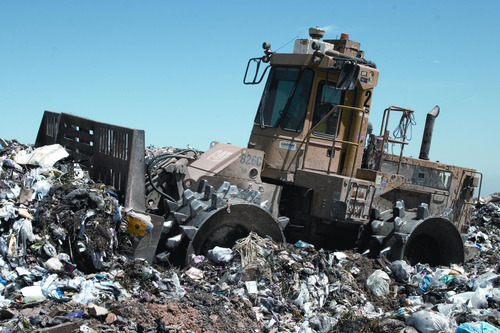
There could be big bucks in waste disposal and management, Bank of America/Merrill Lynch figures.

Duane Tilden‘s insight:

Lets look at some of the opportunities BofA/ML has identified:

– Disposal and recycling of municipal solid waste (rubbish, in common parlance) is currently worth $400 billion but over the next decade,  $87 billion in investments are expected in this sector.

– Waste-to-energy (energy recovery from waste): One ton of rubbish can create 500-750 kilowatts of power. This market is worth $7.4 billion in 2013 and  could grow to $81 billion by 2022.

– Sustainable packaging: Accounts for a third of solid waste in developed countries. Worth almost $109 billion in 2011, the market is expected to grow to $178-212 billion by 2015-18.

– e-waste (discarded electrical or electronic devices):  Recycling/reuse of e-waste components was worth $13.9 billion in 2012 but could grow to between $25 and 44.3 billion by 2017-20. One example of how lucrative this can be – -recycling one million mobile phones can recover 24 kg of gold, 250 kg of silver and more than 9,000 kg of copper.

Wastewater and sewage treatment:  The biggest investments are needed in the developing world but in the United States alone, infrastructure of $1 trillion could be needed over the next 25 years, BofA says, citing research from the American Waterworks Association.

See on blogs.reuters.com

Waste fat will power UK’s biggest sewage works | Energy Live News

See on Scoop.itGreen & Sustainable News

Waste fat and oil from restaurants and clogged up drains underground (pictured) will soon power the UK’s largest sewage works. A new power station at Beckton in East London opening …

Duane Tilden‘s insight:

Thames Water says it has agreed to buy 75 GWh of this output to run its Beckton sewage works, which serves roughly 3.5 million people, as well as a nearby desalination plant […]

The water firm has committed to provide the power station with 30 tonnes a day of fat, oil and grease (FOG) enough to fill a six metre-long shipping container. That’s at least half of the fuel the generator needs to run.

Developed and run by ‘green’ utility 2OC, it’s set to produce 130 Gigawatt hours (GWh) a year of renewable electricity – enough to run 39,000 average-sized homes.

See on www.energylivenews.com

Report: Global waste industry could double to $2tn by 2020

See on Scoop.itGreen Energy Technologies & Development

Bank of America Merrill Lynch analysis predicts boom in global waste industry as resource crunch bites

Duane Tilden‘s insight:

“We are seeing a shift away from waste as a mandatory public service to waste management as a sustainable business opportunity,” the report states. “We see the fastest growth in the next decade coming from diversion, recycling, recovery of valuable secondary raw materials, waste-to-energy, e-waste and sustainable packaging – as well as from emerging markets. We see considerable low hanging fruit potential given that 70 per cent plus of global waste is currently landfilled. ‘Greening’ waste management will require increasing MSW recycling by a factor of 3.5 times and doubling industrial waste recycling.”

See on www.businessgreen.com

Sol Voltaics uses nanotechnology to make solar energy 25 percent more efficient

See on Scoop.itGreen Energy Technologies & Development

Swedish company with Silicon Valley talent has raised $11 million to make solar power more efficient.

Duane Tilden‘s insight:

Two advances make it possible. The team, led by founder Lars Samuelson (a Lund University professor), created a technology known as Aerotaxy, which makes it cheaper to make nanomaterials. With that, they are creating gallium arsenide nanowires that can serve as solar collectors and that they can integrate directly into solar wafers, known as solar cells. The smarts happens at the atomic level.

[…] manufacturers don’t have many options for bringing down the costs of solar. […] The cells themselves must become more efficient to lower costs.

See on venturebeat.com