Oil price loss seen as gain for consumers: ‘What is saved at the pumps will be spent at malls’

The petrodollar effect: Just how much is the loonie tied to oil prices?

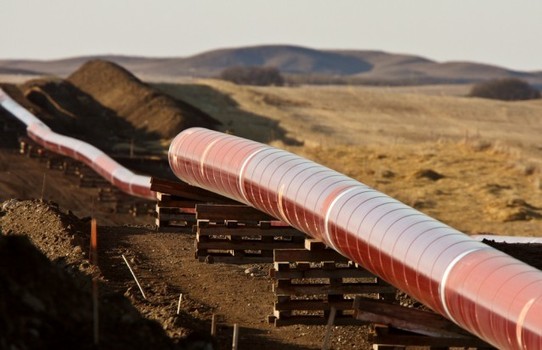
Leaked Documents Reveal Industry PR Push For “Energy East” a Larger Canadian Pipeline after Keystone XL

With the debate still raging over Keystone XL, the company behind the pipeline is already hard at work promoting a PR strategy for its larger and entirely Canadian pipeline, Energy East.

Source: thinkprogress.org

See on Scoop.itGreen & Sustainable News

Lightweight ‘solar cloth’ photovoltaics for Integration with Building Structures

A Cambridge start-up believes its flexible solar panelling solution could fundamentally change the landscape of solar installation in the commercial sector.

The Solar Cloth Company’s award winning flexible thin film photovoltaics (FTFP) are a few micrometres thick and can be integrated into flexible and lightweight tensile structures called building integrated photovoltaics (BIPV). In doing so, they provide an alternative to traditional photovoltaic panels that are heavy and cumbersome.

Source: www.theengineer.co.uk

See on Scoop.itGreen Building Design – Architecture & Engineering

CAN NYC REDUCE ITS CARBON FOOTPRINT 90% BY 2050?

“The building sector is the source of 75 percent of New York City’s greenhouse gas emissions. 90 by 50’s modeling of eight typical building types shows that heating and cooling loads can be reduced through retrofit measures to a point where all thermal loads can be met by heat pumps, eliminating building fuel use. The resulting electric energy used in 2050, supplied by carbon-free sources, will be slightly more than today’s, while peak demand will increase significantly. “

RO Engineers & Architects's avatarRO Engineers & Architects

In an article by urban green council,

“The building sector is the source of 75 percent of New York City’s greenhouse gas emissions. 90 by 50’s modeling of eight typical building types shows that heating and cooling loads can be reduced through retrofit measures to a point where all thermal loads can be met by heat pumps, eliminating building fuel use. The resulting electric energy used in 2050, supplied by carbon-free sources, will be slightly more than today’s, while peak demand will increase significantly. “

How will we meet this goal when there are a number of behavioral, institutional and infrustructural issues?

Let’s name a few…..

  1. The NYC subway still has outdated lighting with T12 with magnetic ballasts
  2. A large # of residential buildings the tenants leave their window a/c units installed year round which results in heat loss
  3. Alternate side parking- numerous places throughout the city people sit and idle their…
View original post 174 more words

The financial case for energy efficiency

“The report, Building the Future, has piled pressure on Ministers to act to fix Britain’s badly insulated homes. The report shows that a much more ambitious energy efficiency investment programme would pay for itself and significantly boost the UK economy.

The programme would add £13.9 billion annually to the UK economy by 2030, with GDP boosted by £3.20 for every £1 invested by the Government. A national scheme to make homes super-energy efficient would result in £8.6 billion in energy savings per year by 2030, an average energy saving of £372 per household. After taking into account loan repayments this would result in £4.95 billion in financial savings per year for Britain’s households.”

Efficient HVAC Systems

Gallery

This gallery contains 15 photos.

Originally posted on Energy Systems & Sustainable Living:
Heating, Ventilation and Air Conditioning systems (HVAC) controls the indoor climate by adding or extracting heat and adding or removing mass (e.g. water vapour and dust). To combat summer heat and winter…

Could desalination solve California’s water problem?

Desalination would seem to answer every prayer to fix California’s water shortages. But turning the sea into drinking water is not so easy. The state’s first major desalination plant, under construction in Carlsbad, is a major test for the industry and wary environmental groups.

Source: www.sacbee.com

See on Scoop.itsustainability and resilience

Google Gives San Francisco Free Wi-Fi in Public Places

“On Wednesday, San Franciscans were able to hook their gadgets up to free Wi-Fi that launched in 32 new public locations.”

Google invests $145 million in new 82MW Southern California solar power plant