Unleash Active Daylighting Benefits for Your Green Building with Ciralight SunTracker | Eco-Business.com

See on Scoop.itGreen Building Operations – Systems & Controls, Maintenance & Commissioning

Green buildings in tropical regions such as Indonesia will benefit from active daylighting.

Duane Tilden‘s insight:

Now, what is active daylighting?

95% of available systems are passive in nature – meaning they use static, non-moving/tracking systems unable to adjust for the sun’s angle throughout the day; creating uneven lighting, roaming hot spots, and obtrusive glare.

Active Daylighting is a system that mechanically tracks the sun throughout the day and redirects sunlight inside buildings at an intensity that allows artificial lighting to be turned off. Ciralight’s active daylighting system significantly outperforms passive systems when comparing the amount of daylight directed into a building; upwards of 300% more.

See on www.eco-business.com

Capital Power gives community funding to ACW Ontario Townships

See on Scoop.itGreen & Sustainable News

The K2 Wind Power project and the Township of Ashfield-Colborne-Wawanosh (ACW) executed a Community Benefits Fund Agreement (CBFA) and a Road Use Agreement on March 19, with respect to the proposed K2 Wind Power Project.

Duane Tilden‘s insight:

As outlined in the CBFA, K2 Wind will provide an annual payment of approximately $700,000 to ACW. This payment is in addition to the yearly municipal property taxes the Project will pay. Funds from the CBFA can be directed towards community based initiatives such as community and protective services; education and job training programs; public recreation facilities; land steward initiatives; energy sustainability projects; and property tax relief for residents. ACW Township will have broad discretion in the use of these funds.

See on www.lucknowsentinel.com

Is Gasification Better Than Incineration? Read: Global Markets for Gasifiers – WSJ.com

See on Scoop.itGreen Energy Technologies & Development

NEW YORK, April 15, 2013 /PRNewswire/ — Reportlinker.com announces that a new market research report is available in its catalogue:

Global Markets for Gasifiers

Duane Tilden‘s insight:

INTRODUCTION

Gasification is a centuries–old thermochemical energy conversion technology that has slowly achieved modernity over the decades. The technology is undergoing its third evolutionary surge. Fuel shortages in WWII spurred widespread adoption for vehicle fuels. The oil crisis 1973 spurred a re–evaluation and renewed development. Rising oil prices, globally increasing fuel demand, and overwhelming scientific evidence of climate change have spurred this last leg to full industrialization.

The central concept of gasification is that by raising carbon–rich materials to high temperatures in an oxygen–deficient containment, the material will break down thermochemically instead of burning. If the same material is combusted (burned), it emits carbon monoxide and a host of pollutants, besides being incompletely consumed. If gasified, the products are hydrogen (H2), carbon monoxide (CO) and carbon dioxide (CO2). This is synthetic gas, simply called “syngas.” It can be burned, captured, stored, or its molecules rearranged to form fuels and chemical feedstocks.

The process is moderately more efficient than incineration, has significantly fewer emissions and waste, and the syngas can be shaped into a myriad of products for power production, chemical industries, liquid fuels, and heat.

Feedstock for gasification can be coal, the organic components of municipal waste, industrial waste streams, chemical feedstocks, forestry residues, forest products and crop residues, medical waste, unrecycled plastic or, in the case of plasma gasifiers, almost any nonradioactive material.

A gasifier is the central component of a gasification plant. Surrounding it are the feedstock conditioning and delivery systems, oxygen, steam and air input systems, waste removal components, syngas cooling and cleaning systems, power plants, heat recovery units, Fischer–Tropsch molecule rearrangers, and so on. This report focuses on the markets for gasifier units that are in place and will be installed by application segment and geographic location through the year 2017.


See on online.wsj.com

GE links up with Coca Cola in Brazil – Cogeneration & On-Site Power Production (Combined Heat & Power)

See on Scoop.itGreen Energy Technologies & Development

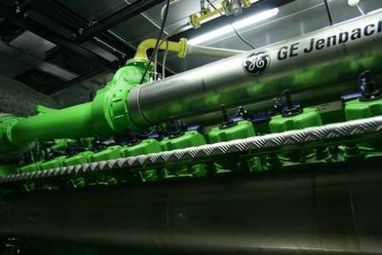
The 12 MW facility will provide all of the plant’s on-site heat and power needs. Brazilian energy company Light Esco will install three ecomagination-qualified Jenbacher J624 engines at the Andina Brasil-Coca-Cola bottling facility.

Duane Tilden‘s insight:

The power plant is expected to begin operating in November 2013 and will also produce cold water, carbon dioxide (CO2) and nitrogen to support the bottling operations.

By installing quadgeneration technology to recover food-grade CO₂, factories can reduce emissions by up to an additional 40 percent when compared to using separate power and heat generating equipment.

See on www.cospp.com

#Landfill methane-to-energy project gets national award – #Renewable #Energy

See on Scoop.itGreen Energy Technologies & Development

Lycoming County was one of seven places in the country to receive the U.S. Environmental Protection Agency’s award for excellence in landfill gas energy projects for 2012.

Duane Tilden‘s insight:

Yaw, who was present at Thursday’s presentation at the commissioners’ meeting, said he frequently became frustrated when driving by the landfill and seeing excess methane being flared off.

“We’re utilizing all of the landfill methane (now). We’re not flaring anything,” said Tucker.

The county’s waste gas-to-energy project produces enough electricity to power 4,000 homes a year and has the equivalent reduction of 80,000 barrels of oil a year, according to PPL Renewable Energy.

Donna Zickefoose, Allenwood Federal Correctional Complex warden, said the local institution is the first federal prison to be involved in such a project. She said it will save the prison $5 million during the next decade.

See on www.sungazette.com

UK firm to install landfill gas to energy plant in Ireland | Energy Live News

See on Scoop.itGreen Energy Technologies & Development

A UK energy company has won a contract to deliver a landfill gas to energy plant in Ireland. Based in Knowsley near Liverpool, Clarke Energy signed the agreement with Irish …

Duane Tilden‘s insight:

…Irish utility Bord na Mona for a 5.6MW plant – equivalent to powering 14,000 households – at the Drehid landfill site. The project will use landfill gas that originated from household waste to produce renewable energy.

John Curley, General Manager of Clarke Energy in Ireland said: “This significant project will create up to 25 jobs during construction, in addition to sustained employment for operations.

See on www.energylivenews.com

Social Dellight: From social media presence to a social business

See on Scoop.itTwitter & Social Media

Dell is a social media pioneer, jumping in before the first tweet was ever sent. The man who spearheads their efforts, Richard Margetic tells B&T how to improve your brand’s presence.

Duane Tilden‘s insight:

How are brands stumbling on social media?

From the very beginning we realised social was not a traditional marketing tool, and if you treat it as a broadcast medium you’re going to fail. So many brands continue to do that today, despite the fact the medium requires engagement and authenticity and organic communications which are two-way.

The core things companies need to know are whether people are talking about your brand, product or area, and, if that’s the case, you need to establish a presence in social media. […]

Another is curation. Right now there’s so much being generated you need a curator to make sure the amount of time you’re spending is used on things that are important to you. User curation with influential users, will become stronger too.

Then there’s individual social capital. For years people have been talking about influencers, but for us the direction is more along the lines of understanding a complete profile of an individual: his or her levels of expertise, areas of interest and, secondarily, his or her level of influence.

There’s too much grey stuff around understanding influence, but the data and signals generated by individuals will become more embedded across any social media campaign across the company.

See on www.bandt.com.au

New Study Shows 5 Factors Push Social Behavior and Not So-Called Influencers – Are Kred and Klout Wrong?

See on Scoop.itTwitter & Social Media

Social influence is driven by 5 factors: message type, message form, device, time, and user engagement, according to new research by Lucule Consulting. So are you still counting on finding people with high “influence scores?

Duane Tilden‘s insight:

Indexes like Klout and Kred that are trying to prop up that idea are desperately trying to retro-fit more and more sources of social data to keep, well, their cred intact.  But according to Pente they have the problem exactly backwards: it’s not the “influencer” who changes behavior, it’s much more about the message–and the recipient.

Their statistical analysis indicates that the influence score accounted for only 3% of the variation in response. […]

Instead, consumers are more prone to react positively if a relevant message is received in a certain format (“News you Can Use,” for example) at certain times of the day when the level of engagement with a particular device is optimal (smart phones during the day, tablets in the evenings.)

We want to leave the idea of “sender” as influence,” says Klepic. “The mere fact that someone sends a message is too simplistic in social media. Just cause a message goes out in the “ether” doesn’t mean it has any impact at all. It is just broadcast.”

See on socialmediatoday.com

US president aims to add 40GW to 82GW of installed CHP capacity by 2020

See on Scoop.itGreen Energy Technologies & Development

Low gas prices, state incentives, environmental regulations and the retirement of old power plants helps fuel rising investment in combined heat and power (CHP) installations in the US, according to a Department of Energy (DOE) and Environmental Protection Agency (EPA) report.


Duane Tilden‘s insight:

Obama’s CHP initiative

The 40GW CHP expansion goal is based on a 2012 Executive Order from Obama which encourages the Departments of Energy, Commerce, and Agriculture, and the EPA […] to coordinate policies in order to encourage investment in industrial efficiency measures such as CHP.

The installation of a further 40MW of capacity would save about 1 quadrillion Btu of energy annually, eliminate over 150 million metric tons of CO2 emissions and save energy users some $10 billion a year.

Shale gas revolution helps spur CHP growth

Currently about 8 percent of US power generation capacity and 12 percent of MWh generated annually comes from CHP, according to the DOE report, while 87 percent of CHP installations support manufacturing plants.

The recent US shale gas revolution has helped spur renewed interest in the sector, after investment in new CHPs slowed down between 2004 and 2005, mainly due to volatile gas prices and an uncertain economic outlook.

See on gastopowerjournal.com

California’s Secret To Green Jobs And A Thriving Clean Economy? It’s Policy.

See on Scoop.itGreen & Sustainable News

Gov. Jerry Brown signs bill requiring California utilities to get a third of their power from renewable sources, the country’s most aggressive clean energy standard (AP Photo)

Duane Tilden‘s insight:

Green jobs are growing four times faster than the rate of all other jobs nationwide, with the majority happening in California according to the Bureau of Labor Statistics. EDF’s analysis of California’s clean economy finds that jobs in core sectors like energy efficiency, renewable energy, clean transportation, and advanced storage and materials have not only remained resilient during the worst of the Great Recession (2008-2010), they outpaced all other job growth and grew 109 percent from 1995 to 2010.

Green jobs are also good jobs in California. They are diverse, across a wide range of education-level and skills, and almost half of all jobs in the clean economy don’t require a college degree according to the Brookings Institution. On average, green jobs offer a higher median wage and career advancement opportunities. An analysis by Philip Romero, the former Dean of CSU Los Angeles College of Business and Economics finds that “workers command wages with a 50-to-100 percent premium over the average job,” and estimates that the overall clean economy will grow “by at least 60-to-100 percent” by the late 2030’s.

See on thinkprogress.org