U.S. Tidal Energy Project requires Proximity Standard

See on Scoop.itGreen Energy Technologies & Development

A planned tidal energy project off the coast of Washington state in the US has come under fire over the lack of a standard defining how close such projects can be to existing underwater cables.

Duane Tilden‘s insight:

>There is currently no U.S. standard for the distance tidal energy projects need to be from other subsea installations. The Federal Communications Commission has stated that neither it nor FERC has the expert guidance necessary to make an informed decision about what a safe separation distance would be. The FCC has charged an advisory committee, the Communications Security, Reliability and Interoperability Council (CSRIC), to work with the industry to develop guidance, delegating a special submarine cable working group to address the issue.

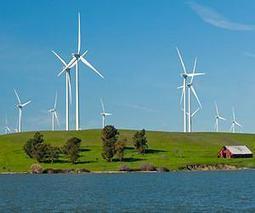
Distance guidelines do exist for offshore wind turbines in the U.S. The FCC and industry groups have suggested that these standards, which require 500 metres between offshore wind turbines and submarine cables, should be used in this case.

In its comment to the FERC, Pacific Crossing invoked a UK guideline, Subsea Cables UK Guideline number 6, which recommends proximity limits of 200-400 metres from an existing subsea structure for marine energy development. The North American Submarine Cable Association has urged U.S. regulatory agencies to apply the UK guidelines to all U.S. marine energy projects, including tidal energy projects.<

See on www.renewableenergyworld.com

Surplus fossil fuels expected to exceed carbon budget

See on Scoop.itGreen & Sustainable News

It won’t be difficult to blow by the 1-trillion ton threshold based on the amount of fossil fuels still in the ground. As Amy Myers Jaffe remarks, “scarcity will not be the force driving a shift to alternative energy. Climate and energy policy initiatives will have to take into consideration the possibility of oil and gas surpluses and lower fossil fuel prices.”

Duane Tilden‘s insight:

>The lesson here is that the economics are still in favor of producing fossil fuels. The cyclical nature of energy prices suggests that higher prices will spur development of technologies to reach more difficult energy deposits. This doesn’t mean that oil and natural gas prices will be low for the rest of time, but it does reflect how high energy prices in the 2000s led not only to funding and research in alternative fuels (particularly biofuels), but also in oil and gas technologies. This investment coupled with decades of U.S. government and academic research proved fruitful with the combination of horizontal drilling and hydraulic fracturing becoming a deployable technology.

We have now entered a period of energy surplus where we produce energy from “unconventional sources” using technological breakthroughs like horizontal drilling and hydraulic fracturing in places like North Dakota, south Texas, Lousiana, and Pennsylvannia. (and soon to be California?).<

See on blogs.scientificamerican.com

Algae Biofuel Emits at Least 50% Less Carbon than Petroleum Fuels

See on Scoop.itGreen Energy Technologies & Development

Algae-derived biofuel can reduce life cycle CO2 emissions by 50 to 70 percent compared to petroleum fuels, and is approaching a similar Energy Return on Investment (EROI) as conventional petroleum according to a new peer-reviewed paper published in…

Duane Tilden‘s insight:

>The study entitled Pilot-scale data provide enhanced estimates of the life cycle energy and emissions profile of algae biofuels produced via hydrothermal liquefaction (HTL) is the first to analyze data from a commercial-scale algae-to-energy farm. Researchers examined field data from Sapphire Energy facilities in Las Cruces and Columbus, New Mexico.

Researchers at the Pacific Northwest National Laboratory recently concluded that 14 percent of land in the continental United States, or the combined area of Texas and New Mexico, could be used to grow and produce algae for conversion into transportation fuels. In 2008, the U.S. Department of Energy found that for algae fuel to completely replace petroleum in the United States it would need roughly 30,000 square kilometers of land, or half the area of South Carolina, so the potential is certainly there for a massive transition from dirty oil-based transportation fuels to cleaner burning domestic green crude from algae.<


See on inhabitat.com

Robotic Technologies Applied to Solar Energy Market – Installation and Maintenance

See on Scoop.itGreen Building Design – Architecture & Engineering

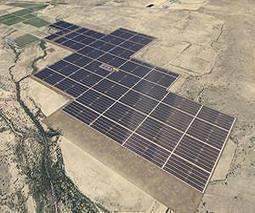
Mountain View CA (SPX) Sep 20, 2013 – … robotic technologies deliver revolutionary installation and cleaning services at highly competitive prices … for building and maintenance of utility-scale solar plants..

Duane Tilden‘s insight:

>The typical installation process for utility-scale projects is similar to that of a small-scale, 20-panel, residential installation. Despite incremental improvements to the process, a 200,000-panel installation has retained many of the characteristics of a 20-panel installation.

They are both labor-intensive, and require repetitive bolt-tightening and glass-hauling. While these are minor flaws in a 20-panel system, they create significant inefficiencies in 20,000- or 200,000-panel systems.

Alion Energy has plugged the shortcomings of the current installation methods by changing the materials and design used in the mounting structure as well as by automating the installation. By combining robotic installation technology with established construction practices, Alion Energy has built a system twice as fast and 75 percent more labor-efficient that lowers solar electricity’s levelized cost of energy (LCOE) to compete with traditional energy sources.<

See on www.solardaily.com

World Record Solar Cell with 44.7 Percent Efficiency (news)

See on Scoop.itGreen Energy Technologies & Development

Freiburg, Germany – The Fraunhofer Institute for Solar Energy Systems ISE, Soitec, CEA-Leti and the Helmholtz Center Berlin jointly announced on late Monday having achieved a new world record for the conversion of sunlight into electricity using a new solar cell structure with four solar subcells. …

Duane Tilden‘s insight:

>These solar cells are used in concentrator photovoltaics (CPV), a technology which achieves more than twice the efficiency of conventional PV power plants in sun-rich locations. The terrestrial use of so-called III-V multi-junction solar cells, which originally came from space technology, has prevailed to realize highest efficiencies for the conversion of sunlight to electricity. In this multi-junction solar cell, several cells made out of different III-V semiconductor materials are stacked on top of each other. The single subcells absorb different wavelength ranges of the solar spectrum.<

See on renewable-energy-industry.com

Climate change & Global warming: IPCC issues warning to Governments

See on Scoop.itGreen & Sustainable News

Call to ‘stop dithering about fossil fuel cuts’ as expert panel warns entire globe is affected

Duane Tilden‘s insight:

>The scientists’ warning – the most comprehensive and convincing yet produced by climate scientists – comes at a time when growing numbers of people are doubting the reality of global warming. Last week, the UK Energy Research Centre (UKERC) published a survey showing that the proportion of British people who do not think the world’s climate is changing has almost quadrupled since 2005.

Asked if they thought Earth’s climate was changing, 5% of respondents said “no” in 2005, a figure that rose to 11% last year and reached 19% this year.

But as the IPCC report underlines, scientists are becoming more and more certain that climate change poses a real danger to the planet.

Many believe the disconnection between popular belief and scientific analysis has been engineered by “deniers” explicitly opposed to the lifestyle changes – including restrictions on fossil fuel burning – that might be introduced in the near future.

“There are attempts by some politicians and lobbyists to confuse and mislead the public about the scientific evidence that human activities are driving climate change and creating huge risks,” said Stern.

“But the public should be wary of those who claim they know for certain that unmanaged climate change would not be dangerous. For they are not only denying 200 years of strong scientific evidence – the overwhelming view of the world’s scientific academies and over 95% of scientific papers on the subject – but they are often harbouring vested interests or rigid ideologies as well.”

The report will be discussed this week by political leaders meeting in Stockholm. The study – the work of more than 200 scientists – outlines the physical changes that are likely to affect Earth’s climate this century.<

See on www.theguardian.com

Energy from tides and currents: Arranging underwater Tidal Sails

See on Scoop.itGreen & Sustainable News

In the long sprint to find new sources of clean, low-cost power, slow and steady might win the race — the slow-moving water of currents and tides, that is.

Duane Tilden‘s insight:

>The system, developed by a Norwegian company called Tidal Sails AS, consists of a string of submerged blades or sails, connected via wire ropes, angled into the oncoming current. The rushing current generates large lift forces in the sails, and as they are pushed along through a continuous loop, they drive a generator to produce electricity. […]

In their analysis, the researchers found that the maximum amount of power could be generated using blades with a chord length (the width of the blade at a given distance along its length) equal to the separation between each individual blade, that are positioned at about a 79 degree angle relative to the oncoming current, and that move at a speed about one and half times faster than the current.<

See on www.sciencedaily.com

UK government rejects current Severn tidal barrage plans

See on Scoop.itGreen & Sustainable News

Ministers say major changes must be made to the scheme if it is to be revived and given serious consideration

Duane Tilden‘s insight:

>Concerns over the impact of such a barrage on marine life played a major part in the rejection, with the government agreeing with MPs that better studies were needed to establish the effects on fish.

The response was: “It is for the developers to do the necessary work to prove that their design is ‘fish-friendly’ and will not jeopardise the UK’s obligations under the water framework directive and habitats directive. Such studies will need to take account of the wide variation in vulnerability of different fish species arising from to their different morphology, physiology and behaviour.”

The government said Hafren would need to provide much more detailed, credible evidence of the proposal, including a study of the environmental impacts and information on turbines, as well as information on allaying fears of flooding that could be worsened by any barrage. The coalition said it would consider the proposal further if this information was provided, but added that legal hurdles would mean the consortium’s current proposals were likely to be subject to delay.

Ministers reiterated their view that there should be no firm commitments of public financial support – in the form of the “strike price” of a premium for low-carbon power that has been confirmed for wind power and is expected soon for nuclear energy – for tidal barrage schemes until 2019 at the earliest.<

See on www.theguardian.com

Stanford Scientists Analyse Life Cycle Costs of Energy Storage vs Curtailment for Renewables

See on Scoop.itGreen Energy Technologies & Development

Stanford CA (SPX) Sep 17, 2013 –
Renewable energy holds the promise of reducing carbon dioxide emissions. But there are times when solar and wind farms generate more electricity than is needed by consumers.

Duane Tilden‘s insight:

>”We calculated how much energy is used over the full lifecycle of the battery – from the mining of raw materials to the installation of the finished device,” Barnhart said. “Batteries with high energetic cost consume more fossil fuels and therefore release more carbon dioxide over their lifetime. If a battery’s energetic cost is too high, its overall contribution to global warming could negate the environmental benefits of the wind or solar farm it was supposed to support.”

For this study, he and his colleagues calculated the energetic cost of grid-scale photovoltaic solar cells and wind turbines.

“Both wind turbines and photovoltaics deliver more energy than it takes to build and maintain them,” said GCEP postdoctoral scholar Michael Dale, a co-author of the study. “However, our calculations showed that the overall energetic cost of wind turbines is much lower than conventional solar panels, which require lots of energy, primarily from fossil fuels, for processing silicon and fabricating other components.” […]

To find out, the researchers compared the energetic cost of curtailing solar and wind power, versus the energetic cost of grid-scale storage. Their calculations were based on a formula known as “energy return on investment” – the amount of energy produced by a technology, divided by the amount of energy it takes to build and maintain it.

Using that formula, the researchers found that the amount of energy required to create a solar farm is comparable to the energy used to build each of the five battery technologies. “Using batteries to store solar power during periods of low demand would, therefore, be energetically favorable,” Dale said.

The results were quite different for wind farms. The scientists found that curtailing wind power reduces the energy return on investment by 10 percent. But storing surplus wind-generated electricity in batteries results in even greater reductions – from about 20 percent for lithium-ion batteries to ?more than 50 percent for lead-acid.<

See on www.solardaily.com

Revisiting The North American Hydropower Opportunity

See on Scoop.itGreen Energy Technologies & Development

It is no secret that many renewable energy advocates are not in favor of large hydropower.

Duane Tilden‘s insight:

>[…] there exists a threat that is even more worrisome to endangered species, a threat that has the potential to cause destructive flooding and destroy ecosystems: climate change.  […]

Perhaps that’s why in May of this year, the World Bank reversed its stance on large-scale hydropower. Whereas the major international development bank was once a staunch opponent of large-scale hydro, recognition that developing regions like Africa and Southeast Asia desperately need power have forced it to reconsider.  The world needs energy to lift people out of poverty and building more fossil fuel-fired electricity plants will only serve to exacerbate the problems already associated with climate change. Hydropower is an answer.

Maybe it is time for the renewable energy industry to take a second look at hydropower development. The clean energy it can provide is a vast improvement over the dirty energy we get from fossil fuels. Hydropower already meets about 8 percent of U.S. electricity demand and with improved technologies that already exist the National Hydropower Association (NHA) estimates that we can double the amount of energy we get from hydropower without building any more dams.<

See on www.renewableenergyworld.com