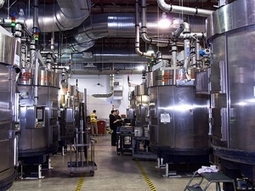
Intelligent Efficiency: Evolution of the Energy Efficiency Market

In the past, energy efficiency was seen as a discrete improvement in devices,” says Skip Laitner, an economist who specializes in energy efficiency. “But information technology is taking it to the next level, where we are thinking dynamically, holistically, and system-wide.

Source: www.greentechmedia.com

>” […] This emerging approach to energy efficiency is information-driven. It is granular. And it is empowering consumers and businesses to turn energy from a cost into an asset. We call this new paradigm “intelligent efficiency.”

That term, which was originally used by the American Council for an Energy-Efficient Economy in a 2012 report, accurately conveys the information technology shift underway in the efficiency sector.

The IT revolution has already dramatically improved the quality of information that is available about how products are delivered and consumed. Companies can granularly track their shipping fleets as they move across the country; runners can use sensors and web-based programs to monitor every step and heartbeat throughout their training; and online services allow travelers to track the price of airfare in real time.

Remarkably, these web-based information management tools are only now coming to the built environment in a big way. But with integration increasing and new tools evolving, they are starting to change the game for energy efficiency.

Although adoption has been slow compared to other sectors, many of these same technologies and applications are driving informational awareness about energy in the built environment. Cheaper sensors are enabling granular monitoring of every piece of equipment in a facility; web-based monitoring platforms are making energy consumption engaging and actionable; and analytic capabilities are allowing companies to find and predict hidden trends amidst the reams of data in their facilities and in the energy markets.

This intelligence is turning energy efficiency from a static, reactive process into a dynamic, proactive strategy.

We interviewed more than 30 analysts and companies in the building controls, equipment, energy management, software and utility sectors about the state of the efficiency market. Every person we spoke to pointed to this emerging intelligence as one of the most important drivers of energy efficiency.

“We are hitting an inflection point,” says Greg Turner, vice president of global offerings at Honeywell Building Solutions. “The interchange of information is creating a new paradigm for the energy efficiency market.”

Based on our conversations with a wide range of energy efficiency professionals, we have identified the five key ways intelligent efficiency is shaping the market in the commercial and industrial (C&I) sector:

The decreased cost of real-time monitoring and verification is improving project performance, helping build trust among customers and creating new opportunities for projects;Virtual energy assessments are bringing more building data to the market, leveraging new lead opportunities for energy service professionals;Web-based energy monitoring tools are linking the energy efficiency and energy management markets, making efficiency a far more dynamic offering;Big data analytics are creating new ways to find trends amidst the “noise” of information, allowing companies to be predictive and proactive in efficiency;Open access to information is strengthening the relationship between utilities and their customers, helping improve choices about efficiency and setting the foundation for the smart grid.


[…]”<
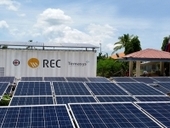
See on Scoop.itGreen Energy Technologies & Development

Asia-Pacific Microgrid Market on ‘threshold of exponential growth’

According to the report, the market generated revenues of US$84.2 million in 2013 and Frost & Sullivan predicts that by 2020 this will rise almost tenfold to US$814.3 million, forecasting a compound annual growth rate of 38.3%.

Source: www.pv-tech.org

>” […] This growth is expected to come from activity in establishing microgrids for rural electrification in developing countries, and from commercial microgrids in the developed ones. The report cites the examples of Australia and Japan among the developed countries.

Mining operations in remote parts of Australia are one example of reliance on microgrids, powered by on-site generation. This has come traditionally from diesel generators, which are being combined with or replaced by solar-plus-storage. According to several sources the economics for this are already compelling.

Countries with a strong recent history in rural electrification referred to by Frost & Sullivan include Indonesia, the Philippines and Malaysia. In the example of Indonesia, the country’s utilities are aiming to bring electrification to 90% of the rural population by 2025. In total the report covered the countries of Japan, South Korea, Indonesia, Malaysia, the Philippines, and Australia.

However, despite this recent activity, the report highlights several barriers that are preventing the market reaching its potential. One such example is the high capital cost of installing microgrids in tandem with energy storage systems.  […]

[…] rising electricity prices in many regions would lead utility companies away from diesel and onto renewables to run their microgrids. It could also encourage “stronger governmental support through favorable regulations, funds and subsidies”, as the use of renewable energy for microgrids would require some forms of energy storage, which are still expensive to install […]

“The utilisation of renewable energy sources, either in standalone off-grid applications or in combination with local micro-grids, is therefore recognised as a potential route for rural farming communities to develop, as well as an opportunity to tackle the health issues associated with kerosene and biomass dependence. For example, the Indian Government aims to replace around 8 million existing diesel fuelled groundwater pumps, used by farmers for irrigation, with solar powered alternatives,” according to Fox. […]”<

See on Scoop.itGreen Energy Technologies & Development

Microgrid Integration with Public Transportation

Superstorm Sandy crippled much of New Jersey’s critical infrastructure two years ago. Stuck without power at home, many also couldn’t get to work because the operations center for New Jersey Transit flooded, damaging backup power systems, emergency generation, and the computers that control train operations.

Source: theenergycollective.com

>” […] After a highly competitive grant process, NJ Transit last week received $1.3 billion in federal funds to improve the resilience of the state’s transportation system in the event of devastating future storms. The funds include $410 million to develop the NJ TransitGrid into a first-of-its-kind microgrid capable of keeping the power running when the electric grid goes down.

Microgrids are different from traditional electric grids in that they generate electricity on-site or nearby where it’s consumed. They can connect to the larger grid or island themselves and operate independently.

The NJ TransitGrid will not only generate power on-site but will incorporate a range of clean energy technologies such as renewable energy, energy storage, and distributed generation. This microgrid will also allow NJ Transit and Amtrak trains running on Amtrak’s Northeast Corridor, the country’s busiest train line, to keep operating during an outage.

Environmental Defense Fund joined state and federal stakeholders, such as New Jersey Governor’s Office of Recovery and Rebuilding and the U.S. Department of Energy, in the early stages of NJ TransitGrid planning. EDF also wrote a letter in support of New Jersey’s application for the funds from the Federal Transit Administration.

The $1.3 billion in total federal funds received by NJ Transit will go toward a range of resiliency and restoration projects across the system, including flood protection, drawbridge replacement, train storage and service restoration, and making train controls more resilient. These funds will also be used to fortify critical Amtrak substations.

Serving almost 900,000 passengers daily, NJ Transit is the third largest transit system in the country connecting travelers to the tri-state area of New York, New Jersey, and Pennsylvania. An independent microgrid for NJ Transit will prepare the state for future extreme weather events, which are happening more frequently due to climate change. Furthermore, the use of clean energy resources will make this microgrid a less polluting and more efficient operation for New Jersey’s day-to-day needs.”<


See on Scoop.itGreen & Sustainable News

UK Renewable Energy Subsidy Underwrites Development

Energy secretary, Ed Davey, says new subsidy scheme will help underwrite green energy and reduce reliance on imported gas

Source: www.theguardian.com

>”[…] “Solar has been the rising star in the coalition’s renewable energy programme and has been championed recently by the Prime Minister at the UN and by Ministers at conference,” said Paul Barwell, chief executive of the STA.

“Why is the UK government putting this industry’s incredible achievements on solar power at risk? To curtail its growth now is just perverse and unjustified on budgetary grounds – solar has only consumed around 1% of the renewables obligation budget,” he added.

He was supported by Friends of the Earth, whose renewable energy campaigner, Alasdair Cameron, argued the government move would be bad news for jobs, the climate and people wanting to plug into clean power.

“Solar could be cheaper than fossil fuels in just a few years, but it needs a little more help from government to get it there. Failure to invest now will mean a huge missed opportunity for the UK economy,” he said.

The raised budget to £300m has been welcomed by the wider renewable power sector but industry officials said the complex structure and cost would unfairly benefit large utilities at the expense of smaller and medium-sized enterprises (SMEs). […]”<

See on Scoop.itGreen & Sustainable News

Google Gives San Francisco Free Wi-Fi in Public Places

“On Wednesday, San Franciscans were able to hook their gadgets up to free Wi-Fi that launched in 32 new public locations.”

Combined Heat & Power Drives Biomass Demand

New analysis from the International Renewable Energy Agency (IRENA) forecasts CHP and industrial heat demand are set to drive global bioenergy consumption over the coming decade and more.

Source: www.cospp.com

>”The trend towards modern and industrial uses of biomass is growing rapidly, the report notes, adding that biomass-based steam generation is particularly interesting for the chemical and petrochemical sectors, food and textile sectors, where most production processes operate with steam. Low and medium temperature process steam used in the production processes of these sectors can be provided by boilers or CHP plants. Combusting biogas in CHP plants is another option already pursued in northern European countries, especially in the food sector, where food waste and process residues can be digested anaerobically to produce biogas, IRENA adds. A recent IRENA analysis (2014b) estimated that three quarters of the renewable energy potential in the industry sector is related to biomass-based process heat from CHP plants and boilers. Hence, biomass is the most important technology to increase industrial renewable energy use, they conclude.

In industry, demand is estimated to reach 21 EJ in the REmap 2030, up to three-quarters of which (15 EJ) will be in industrial CHP plants to generate low- and medium-temperature process heat (about two-thirds of the total CHP output). In addition to typical CHP users such as pulp and paper other sectors with potential include the palm-oil or natural rubber production sectors in rapidly developing countries like Malaysia or Indonesia where by-products are combusted in ratherinefficient boilers or only in power producing plants.

As a result, installed thermal CHP capacity would reach about 920 GWth with an additional 105 GWth of stand-alone biomass boilers and gasifiers for process heat generation could be installed worldwide by 2030. This is a growth of more than 70% in industrial biomass-based process heat generation capacity compared to the Reference Case.

Biomass demand for district heating will reach approximately 5 EJ by 2030 while the power sector, including fuel demand for on-site electricity generation in buildings and on-site CHP plants at industry sites, will require approximately another 31 EJ for power generation (resulting in the production of nearly 3,000 TWh per year in 2030, according to IRENA.

The total installed biomass power generation capacity in Remap 2030 reaches 390 GWe. Of this total, around 178 GWe is the power generation capacity component of CHPs installed in the industry and district heating sectors.”<


See on Scoop.itGreen Energy Technologies & Development

10 Most Efficient Renewable Energy Devices

DOE Proposes Major Energy Efficiency Changes for Commercial Air Conditioners

The White House announced a number of commitments to energy efficiency this morning, not the least of which is a proposed energy efficiency standard for rooftop air conditioners that could produce the largest electricity savings under any U.S. appliance efficiency…


image courtesy of http://akbrown.com/?page_id=278

Source: switchboard.nrdc.org

>”[…] NRDC strongly applauds today’s White House’s efficiency and clean energy announcements which come the same week that a new energy-savings standard became effective for refrigerators and freezers, with the majority of models cutting their energy use by 20 to 25 percent, thanks to a 2010 consensus recommendation to the Department of Energy (DOE) from refrigerator manufacturers, efficiency advocates, consumer groups and states.

According to the White House, the rooftop air conditioner proposed standard announced would help cut carbon pollution by more than 60 million metric tons, and could save consumers nearly $10 billion on their energy bills through 2030.  […]

The announcement follows significant groundwork by DOE in this product category, including DOE’s High Performance Rooftop Unit Challenge, a competition among manufacturers to produce efficient cooling units that cut their energy use almost in half and are still affordable in the commercial and industrial real estate space. DOE worked with members of its Commercial Building Energy Alliances (CBEA), which includes many large commercial building owners, to create a challenge specification that rooftop air conditioning manufacturers could meet. As part of the challenge, CBEA members, including Target, Walmart, Macy’s and McDonald’s, expressed strong interest in potentially purchasing high-efficiency roof-top units, helping to drive buyer support for the challenge levels. Manufacturers Daikin McQuay and Carrier succeeded in producing rooftop ACs that met the challenge specifications and resulted in substantial energy reductions.

Also included in today’s announcement are further savings from building energy codes. DOE will issue its final determination that the latest commercial building energy code – ASHRAE 90.1-2013 – saves energy compared to the previous version. Once DOE issues a positive determination that the new code saves energy compared to the previous code, individual states will consider the code for adoption leading to energy savings in new buildings and major retrofits in those states. DOE will also issue its preliminary determination on the latest residential energy-saving building code – the IECC 2015. DOE estimates that the updated commercial building standards will reduces energy bills for states and the federal government, while cutting emissions by 230 million metric tons of carbon dioxide through 2030.  […]”<

See on Scoop.itGreen Building Design – Architecture & Engineering

Fossil Fuel Development in the Arctic is a Bad Investment

Source: www.earth-policy.org

>”Currently, about 10 percent of the world’s oil and one-quarter of its natural gas production come from the Arctic region, which has warmed by more than 2 degrees Celsius since the mid-1960s. Countries that border the Arctic Ocean are staking claims to expand their rights beyond the traditional 200-mile exclusive economic zone in anticipation of future oil and gas prospects. According to current estimates, the United States has the largest Arctic oil resources, both on and offshore. Russia comes in second for oil, but it has the most natural gas. Norway and Greenland are virtually tied for third largest combined oil and gas resources. Canada comes in fifth, with almost equal parts oil and natural gas.

In developing these resources, Russia is leading the pack. Production has started at almost all of the 43 large oil and natural gas fields that have been discovered in the Russian Arctic, both on land and offshore. Russia drew its first oil from an offshore rig in Arctic waters in December 2013. […]

[…] operating in the Arctic brings great risks. The shrinking Arctic sea iceallows waves to become more powerful. The remaining ice can be more easily broken up into ice floes that can collide with vessels or drilling platforms. Large icebergs can scour the ocean floor, bursting pipes or other buried infrastructure. Much of the onshore infrastructure is built on permafrost—frozen ground—that can shift as the ground thaws from regional warming, threatening pipe ruptures. Already, official Russian sources estimate that there have been more than 20,000 oil spills annually from pipelines across Russia in recent years.  Arctic operations are far away from major emergency response support. The freezing conditions make it unsafe for crews to be outside for extended periods of time. Even communication systems are less reliable at the far end of the Earth. Why take such risks to pursue these dirty fuels when alternatives to oil and gas are there for the taking?

Rather than searching for new ways to get oil, we can look for better ways to move people and goods. Bus rapid transit, light rail and high-speed rail can move more people for less energy than a car can. And for the cars that remain on the road, electric and plug-in hybrid electric vehicles—powered by a clean energy grid—are much more efficient than those with a traditional internal combustion engine. Encouraging bicycle use through bike lanes andbike-sharing programs gets people active and out of cars.

Natural gas, which is mainly used to produce electricity, can be replaced with power generated by wind, solar, and geothermal projects. Many countries are demonstrating what is possible with renewables. Denmark already gets one-third of its electricity from wind. Australia is now dotted with 1 million rooftop solar systems. Iceland generates enough geothermal power to meet close to 30 percent of its electricity needs. These are just a few examples of looking past the old familiar solution to a better cleaner one. The risky search under every rock and iceberg for oil and gas deposits is a costly distraction from investing in a clean energy future.”<

See on Scoop.itGreen & Sustainable News

6 Schemes to Implement for Plant ISO 50001 Certification

During a webcast  […] representatives from the US Department of Energy and Underwriters Laboratories walked through the details of the just-released energy management standard, and how companies can get on board, quickly.

Source: www.greenbiz.com

>”When the standard achieves widespread adoption, it’s estimated that ISO 50001 could influence up to 60 percent of the world’s energy use.  […]

ISO 50001 requires continuous improvement, but not specific requirements, which is where the ITP program comes in, to have specific requirements of improvement. The value of the certification, Scheihing said, is that for the first time it provides a framework for continual improvement for facilities on energy performance, and across the entire organization.

To be certified, you have to conform to the ISO 50001 management standard, and you have to improve your energy performance, and get both aspects certified under a third party. There are 24 companies working in the pilot mode of ISO 50001, across all types of manufacturing sectors and at all sizes.

Between 2008 and 2010, five initial facilities in Texas were piloted, and have been certified to date. Scheihing said the energy improvements achieved at the facilities ranged from 6.5 percent to 17.1 percent over a three-year period.

Among the initial feedback from the pilot project include the benefits of having a cross-functional plant energy management team that goes beyond just operations or engineering means that energy management becomes a shared responsibility, and that makes it much easier to incorporate significant changes in energy use.

One of the biggest shifts that the pilot projects found was that as a result of going through ISO 50001 certification, energy management became a way of doing business, instead of a project-by-project undertaking.  […]


Scheihing laid out six steps that any organization can take to get started on ISO 50001 today:

Secure support from top management;Collect, track, and analyze energy data;Identify key energy uses;Establish a baseline;Identify energy-saving opportunities;Prioritize opportunities

The Department of Energy has created a new website for energy management, which lays out an overview of ISO 50001 and offers case studies and tools to help companies undertake those first steps.

Jerry Skaggs from UL DQS followed on Scheihing’s presentation to walk through each of the six steps, as well as a checklist for organizations to follow once they’ve gone through the process to ensure proper implementation and follow-through.

In the end, there are a number of benefits to effectively implement an energy management system, including:

• Reduced operational and overhead costs lead to increased profitability
• Reduced air emissions, such as GHGs
• Increased efficiency of energy sources
• Increased assurance of legal, internal compliance
• Variables affecting energy use and consumption are identified
• Increased understanding of energy use and consumption via defined methods, processes of data collection

UL DQS, which brings the Management Systems Solutions division of Underwriters Laboratories together with DQS, a German management certification company, offers a number of specialized services for helping companies assess and implement opportunities for energy management, including ISO 50001 certification.  […] “<

See on Scoop.itGreen Building Operations – Systems & Controls, Maintenance & Commissioning