Retro-fit NYC Office Building Achieve’s LEED-EB Gold Rating

A $9 million retrofit that included $1.5 million in improvements that can be directly or indirectly linked to energy and water savings has elevated the building to a select group that includes 1440 Broadway, 498 Seventh Avenue and 345 Hudson Street.

Source: www.rew-online.com

>” […] Built in 1919, the 22-story tower with a block-through arcade of service shops for tenants, has undergone a plethora of changes to improve sustainability to achieve Gold Certification that include reducing water use by over 25 percent annually, saving over 536,800 gallons a year; recycling over 79 percent of ongoing consumable waste; recycling 100 percent of electronics waste; achieving Energy Star Label and Energy Star Scores of 86 and 83 in 2013 and 2014, respectively; and purchasing green power and carbon offsets from US-generated wind energy and landfill gas capture projects representing over 50% of the property’s two-year energy use

“The LEED-EB Gold Certification at 28 West 44th Street demonstrates APF Properties’ ongoing commitment to providing its tenants with a sustainable, modern and healthy environment in which to work,” said John Fitzsimmons, vice president/director of Real Estate Operations at APF Properties.

“Our overall goal is to achieve Energy Star and LEED Certification throughout our commercial office building portfolio in New York, Philadelphia and Houston.

[…]

LEED was developed to define and clarify the term “green building” by establishing a common standard of measurement — a benchmark for the design, construction, and operation of high-performance buildings.

To earn LEED certification, a building must meet certain prerequisites and performance criteria within five key areas of environmental health: 1) sustainable site development, 2) water savings, 3) energy efficiency, 4) materials selection, and 5) indoor environmental quality. Projects are awarded Certified, Silver, Gold, or Platinum certification, depending on the number of credits achieved.”<

See on Scoop.itGreen & Sustainable News

Energy Efficiency, Smart Buildings & Wireless Control Systems

Energy efficient technology and services for the building sector will double by 2022, according to a new report …

Source: www.climatecontrolnews.com.au

>”[…] Since buildings account for a large portion of national energy consumption, most of the governments in the Asia Pacific region have taken steps to promote energy management and energy efficiency in both new construction and existing buildings. […]

“With about 40 per cent of the world’s building stock, Asia Pacific represents a major portion of global real estate,” he said.

“Growing concerns about air pollution in Chinese cities, in particular, is expected to further drive investment in energy efficiency technologies to reduce China’s demand for coal-based electricity.

“The market for energy efficient buildings is expected to double in the next eight years, reaching nearly $92 billion in annual revenue by 2022.”

The largest segment of the energy efficient buildings market in Asia Pacific today is advanced lighting […]

“The commercial buildings sector in the region will experience a significant increase in the adoption of these products in the coming years,” Bloom said. Entitled“Energy Efficient Buildings: Asia Pacific”, the report examines the trends for energy efficient building technology and services in the Asia Pacific region.

It covers three main areas of technology – HVAC, energy efficient lighting, and commercial building automation – as well as the energy service company (ESCO) sector.

The convergence of building automation, information technology, and wireless communications is another area of growth identified by Navigant Research.

A separate report examines the state of the global wireless building controls industry, including global market forecasts for wireless node unit shipments and revenue through 2023.

Wireless controls can be used to link devices found in a variety of building systems, including heating, ventilating, and air conditioning (HVAC), lighting, fire and life safety, and security and access.

In addition, they often provide networked control in buildings or areas where wired controls are simply too challenging or expensive to install.

Worldwide revenue from wireless control systems for smart buildings is expected to grow from $97 million annually in 2014 to $434 million in 2023.  […]

While the adoption and deployment of wireless systems based on standard technologies and protocols, such as Wi-Fi, Zigbee, and EnOcean, are increasing, most wireless devices and control networks used today utilize proprietary, vendor-specific wireless communications technology.

That is likely to change as the demand for interoperability grows, according to the “Wireless Control Systems for Smart Buildings” report. “<

See on Scoop.itGreen Building Operations – Systems & Controls, Maintenance & Commissioning

Built in 1928 Chicago Apartment Building Energy Retrofit Achieves EPA Energy Star Certification

To say the 55-unit building in Chicago’s South Shore neighborhood was in disarray when it was changing hands in 2009 would be an understatement.

Source: www.chicagotribune.com

>” […] the building is among the first in the Midwest — and only three in Chicago — to achieve the Environmental Protection Agency’s new Energy Star certification for multifamily buildings. Also receiving the designation were two condominium buildings in Chicago, 680 N. Lake Shore Drive and River City, at 800 S. Wells.

[…] Jeffery Parkway also stands as an example of how an older, smaller, affordable apartment building can be made more comfortable for its tenants while saving its owner cash in the long run.

Seeking a neutral third party to help them figure out the entire scope of a rehab project, the Soods obtained a free energy audit of the building and its systems from Elevate Energy, a Chicago-based nonprofit that works with consumers and businesses to improve energy efficiency.

Elevate looks at historical analyses of a building’s energy use and compares it with similar buildings in terms of age and size. Then it performs an on-site performance assessment of the existing heating, cooling and lighting systems and makes recommendations for potential improvements. […]

“The average cost of a retrofit is about $2,500 to $3,000 a unit,” Ludwig said. “We’re not talking about huge-ticket items. A lot of times we are trying to identify the most cost-effective retrofit measures, how can we tighten the building envelope. It doesn’t have to mean a new boiler is going in the basement.”

However, in the case of Jeffery Parkway, it did mean a new steam boiler and new water heaters, among other upgrades.

The project was financially feasible because of a loan from nonprofit Community Investment Corp.’s Energy Savers loan program, which offers a seven-year loan with a 3 percent fixed interest rate for qualified upgrades made to buildings in the seven-county Chicago area and Rockford. […]

“We will cover any of the recommendations that show up in the energy assessment, and we’ll also do other energy-related improvements,” said Jim Wheaton, manager of the Energy Savers program. “This is not a program designed for the North Lake Shore Drive high-rise. It’s designed for buildings affordable for working folks.”

Multifamily buildings receive an Energy Star score of 1 to 100, and those that score above 75 can apply for the certification. Nautilus’ building received a score of 99.

“The savings are tremendous,” Sandeep Sood said. “We were facing, just on the gas bill, a $60,000 bill a year. As of last year, our bill was $18,000. It was an unbelievable savings.” […]”<

See on Scoop.itGreen Building Operations – Systems & Controls, Maintenance & Commissioning

Leaked Documents Reveal Industry PR Push For “Energy East” a Larger Canadian Pipeline after Keystone XL

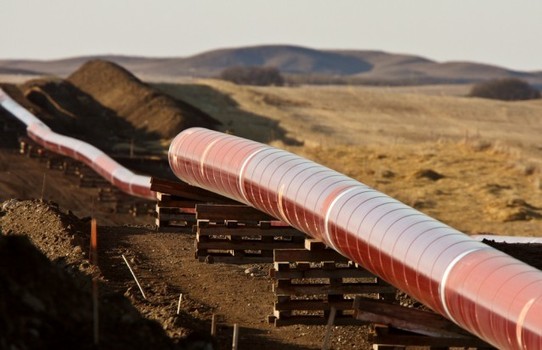
With the debate still raging over Keystone XL, the company behind the pipeline is already hard at work promoting a PR strategy for its larger and entirely Canadian pipeline, Energy East.

Source: thinkprogress.org

See on Scoop.itGreen & Sustainable News

Ice Energy Storage Solution Awarded 16 Contracts by SCE

Santa Barbara – Ice Energy today (Nov 5, 2014) announced it has been awarded sixteen contracts from Southern California Edison (SCE) to provide 25.6 megawatts of behind-the-meter thermal energy storage using Ice Energy’s proprietary Ice Bear system.

Source: www.ice-energy.com

>” […] Ice Energy was one of 3 providers selected in the behind-the-meter energy storage category, which was part of an energy storage procurement by SCE that was significantly larger than the minimum mandated by the California Public Utility Commission (CPUC). SCE is one of the nation’s leaders in renewable energy and the primary electricity supply company for much of Southern California.

The contract resulted from an open and competitive process under SCE’s Local Capacity Requirements (LCR) RFO. The goals of the LCR RFO and California’s Storage Act Mandates are to optimize grid reliability, support renewables integration to meet the 2020 portfolio standards, and support the goal of reducing greenhouse gas emissions to 20% of 1990 levels by 2050.

“SCE’s focus on renewable energy is critical to helping meet California’s long-term goals, and Ice Energy is proud to be part of the solution with these contracts,” said Mike Hopkins, CEO of Ice Energy, the leading provider of distributed thermal energy storage technology. “Using ice for energy storage is not new, we’ve just made it distributed, efficient, and cost-effective. The direct-expansion AC technology is robust and proven, which is important because SCE and other utilities require zero risk for their customers.”

In 2013, 22 percent of the power SCE delivered came from renewable sources, compared to 15 percent for other power companies in the state. The utility is on track to meet the state’s goal of 33 percent, and procuring energy storage helps them meet those targets while maintaining a robust and reliable grid.

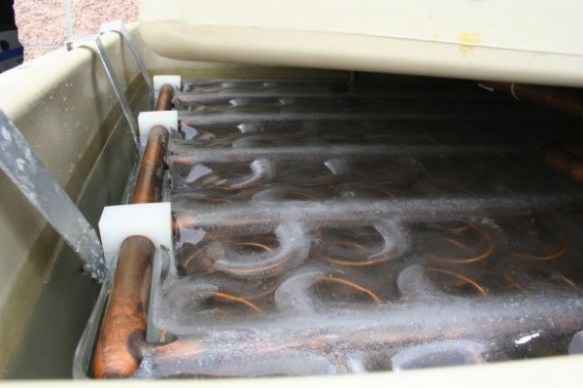
Ice Energy’s product, the Ice Bear, attaches to one or more standard 5-20 ton commercial AC units. The Ice Bear freezes ice at night when demand for power is low, capacity is abundant and increasingly sourced from renewables such as wind power. Then during the day, stored ice is used to provide cooling, instead of the power-intensive AC compressor. Ice Bears are deployed in smart-grid enabled, megawatt-scale fleets, and each Ice Bear can reduce harmful CO2 emissions by up to 10 tons per year. Installation is as quick as deploying a standard AC system.

“Ice Bears add peak capacity to the grid, reduce and often eliminate the need for feeder and other distribution system upgrades, improve grid reliability and reduce electricity costs,” Hopkins said. “What’s special about our patented design and engineering is the efficiency and cost. It’s energy storage at the lowest cost possible with extraordinary reliability.”

See on Scoop.itGreen Energy Technologies & Development

Coal Power Plants Get Repowered With Natural Gas

Old U.S. coal-fired power plants, the target of new anti-pollution rules, aren’t necessarily shutting down. Many are getting a second life as they’re “repowered” with natural gas.

Source: news.nationalgeographic.com

>” […] In the past four years, at least 29 coal units in 10 states have switched to natural gas or biomass, according to SNL Financial, a market data firm. Another 54 units, mostly in the U.S. Northeast and Midwest, are slated to be converted over the next nine years. The future and completed conversions represent more than 12,000 megawatts of power capacity, enough to power all the homes in New England for one year.

By switching to natural gas, plant operators can take advantage of a relatively cheap and plentiful U.S. supply. The change can also help them meet proposed federal rules to limit heat-trapping carbon dioxide emissions from power plants, given that electricity generation from natural gas emits about half as much carbon as electricity from coal does. […]

While conversion advocates say natural gas is a “bridge” fuel that buys time for a transition to clean energy, others argue its use is hindering renewables by delaying them. Many of the planned repowering projects will extend the already long service of fossil-fuel facilities. (Related: “Switch to Natural Gas Won’t Reduce Carbon Emissions Much, Study Finds.”)

“Do you pump a whole bunch of the public’s money into outdated, inefficient infrastructure, or do you say it’s time to move forward and invest in renewable energy and upgraded transmission to move that renewable energy around?” said Kim Teplitsky, deputy secretary of the Northeast Sierra Club’s Beyond Coal campaign. Teplitsky’s group is opposed to the revivals of New York’s Dunkirk, Danskammer, and Cayuga power plants.

Power providers and regulators, on the other hand, point to the need for reliability, especially in extreme weather conditions. “The system requires a certain amount of megawatts and a certain amount of reserve margin to ensure that the system will be stable and reliable at all times,” said Gaier of NRG, which operates both renewable and fossil-fuel units. “The number of megawatts is simply not replaceable in the short term with renewables.” […]”<


See on Scoop.itGreen & Sustainable News

Why Electric Vehicles are not 100% Green

In 2013 Tesla’s [time-stock symbol=TSLA] Model S won the prestigious Motor Trend Car of the Year award. Motor Trend called it “one of the quickest American four-doors ever built.” It went on to say that the electric vehicle “drives like a sports car, eager and agile and instantly responsive.”

Source: time.com

>” […]

The secret behind Tesla’s success

While the power driving Tesla’s success might be its battery, that’s not the real secret to its success. Instead, Tesla has aluminum to thank for its superior outperformance, as the metal is up to 40% lighter than steel, according to a report from the University of Aachen, Germany. That lighter weight enables Tesla to fit enough battery power into the car to extend the range of the Model S without hurting its performance. Vehicles made with aluminum accelerate faster, brake in shorter distances, and simply handle better than cars loaded down with heavier steel.

Even better, pound-for-pound aluminum can absorb twice as much crash energy as steel. This strength is one of the reasons Tesla’s Model S also achieved the highest safety rating of any car ever tested by the National Highway Traffic Safety Administration.

But it’s not all good news when it comes to aluminum and cars.

Aluminum’s dirty side

[…]  Before alumina can be converted into aluminum its source needs to be mined. That source is an ore called bauxite, which is typically extracted in open-pit mines that aren’t exactly environmentally friendly. Bauxite is then processed into the fine white powder known as alumina, and from there alumina is exposed to intense heat and electricity through a process known as smelting, which transforms the material into aluminum.

Aluminum smelting is extremely energy-intense. It takes 211 gigajoules of energy to make one tonne of aluminum, while just 22.7 gigajoules of energy is required to produce one tonne of steel. In an oversimplification of the process, aluminum smelting requires temperatures above 1,000 degrees Celsius to melt alumina, while an electric current must also pass through the molten material so that electrolysis can reduce the aluminum ions to aluminum metals. This process requires so much energy that aluminum production is responsible for about 1% of global greenhouse gas emissions, according to the Carbon Trust.

There is, however, some good news: Aluminum is 100% recyclable. Moreover, recycled aluminum, or secondary production, requires far less energy to produce than primary production, as the […] chart shows. […]”<


See on Scoop.itGreen Energy Technologies & Development

Keystone XL Pipeline Climate Backgrounder

Pembina Institute Backgrounder, January 2013

Source: www.documentcloud.org

>”The climate implications of the proposed Keystone XL oilsands pipeline

by Nathan Lemphers

At a Glance Canada’s oilsands industry is growing quickly, with plans to nearly triple production from 1.8 to 5.2 million barrels a day by 2030.

To realize this substantial growth, pipelines to export markets are essential. TransCanada’s Keystone XL pipeline from the oilsands to a new market on the U.S. Gulf Coast is the most significant proposal awaiting approval. If built, Keystone XL will be a key driver for oilsands growth.

Other alternatives to ship oilsands to the west or east coast of Canada will, for the short to medium term, play a less dominant role in accelerating oilsands development.  These other proposals are smaller in pipeline capacity than Keystone XL, are in the very early stages of development, or face major public opposition. Regardless of whether other oilsands transport options move ahead, approval of Keystone XL will lead to substantial expansion of oilsands production and therefore an increase in global greenhouse gas emissions.

Filling Keystone XL with oilsands will cause a 36 per cent increase from current oilsands production, for which the higher upstream emissions alone will be equivalent to the annual emissions from 6.3 coal-fired power plants or over 4.6 million cars. This value will be higher when the additional emissions from upgrading and refining in the U.S. are considered.

In the absence of a credible plan for responsible development of the oilsands, including mitigating GHG emissions growth to a level that would allow Canada to meet its international climate commitments, the United States should not go ahead with the proposed Keystone XL pipeline.

[…]”<

See on Scoop.itGreen & Sustainable News

Commodity Copper Price Forecast Drops on Rising Dollar, Falling Oil

Copper prices will fall next year as a strengthening U.S. dollar and weaker oil prices push down marginal production costs, according to Goldman Sachs Group

Source: www.hellenicshippingnews.com

>” […]

Copper for delivery in three months on the London Metal Exchange fell 0.3 percent to $6,682 a ton at 12:44 p.m. in Shanghai. Prices are down 9.2 percent this year and headed for a second annual decline.

The bank said prices could fall below its estimates to average $5,600 a ton if China’s state stockpiling agency stops buying copper. The State Reserve Bureau will buy 500,000 tons of refined copper this year and 200,000 tons in 2015, supporting prices at around $6,200 to $6,300 a ton, according to the bank

The U.S. dollar’s rise will reduce marginal costs of copper mine production as 83 percent of operating costs are in local producing-country currencies, the bank said in the report. The Bloomberg Dollar Spot Index, which measures the greenback against a basket of 10 peers, is up 7.5 percent this year.

Lower energy and labor expenses, as well as the cost of equipment such as steel needed to grind copper ore and mining explosives, point to declining production costs over the next six to 12 months, the bank said. Brent crude, the global oil benchmark, has fallen 29 percent this year.

The bank lowered its six-month price forecast to $6,200 a ton from $6,600 and its 12-month outlook to $6,000 a ton from $6,200.”<

See on Scoop.itGreen & Sustainable News

Will Falling oil prices cause oil sands shut-downs in Alberta?

Alberta Premier Jim Prentice says his province’s oil companies are not facing closures, even as prices approach $70 a barrel.

Source: www.ctvnews.ca

>””We don’t see oilsands operations shutting down,” Prentice told CTV’s Question Period in an interview that aired Sunday. “These are massive capital investments that have been built on a 50-year time horizon.”

Crude oil prices have dramatically fallen since June, when prices reached this year’s high of $107.54 USD per barrel of West Texas Intermediate crude oil. On Friday, WTI oil was about $75.70 per barrel.

[…]

The report said falling oil prices have been caused by large supply, low demand, and strong U.S. dollar. In order for the price to stabilize, “further oil price drops would likely be needed for supply to take a hit — or for demand growth to get a lift,” it said.

Analysts suggest that once prices fall below $72 a barrel, companies will begin to face serious financial consequences, and that some may be forced to close. But Prentice said Albertan oilsands companies are expected to survive the continuing drop in prices, even if they reach that $72 threshold.

Conservative Alberta MP Kevin Sorenson, the minister of state for finance, disagrees, saying falling oil prices could hurt employment numbers.

“We know that if oil prices continue to fall … in the long term that’s going to be very difficult,” Sorenson told Question Period. “It’s not so much that $70 is the plateau, but if it continued to fall, we could expect that there would be job losses.”

Though Prentice was more optimistic about the “resilience” of Albertan companies, he also said falling prices are cause for concern.

“I don’t want to underestimate the importance of this. The low-price environment has a significant implication for all of us,” Prentice said.

The premier said new projects may need to be postponed, and that the Albertan government must be prepared to control spending and budgeting.

According to the Alberta government’s budget website, if oil prices drop even $1 per barrel over 12 months, it can result in more than $200 million less in revenue for the province.

[…]

But Alberta’s provincial government factors all these variables into their economic forecasts.

“People need to be aware it’s a time for fiscal prudence. It’s a time for caution,” Prentice said Sunday. “And it’s a time to control what we can control, which is our public expenditures.” “<

Read more: http://www.ctvnews.ca/politics/falling-oil-prices-won-t-cause-shut-downs-in-alberta-prentice-1.2104374#ixzz3JXBPxTA3

See on Scoop.itGreen & Sustainable News