“Personal Wipes” create toxic waste in Canadian sewers

See on Scoop.itGreen & Sustainable News

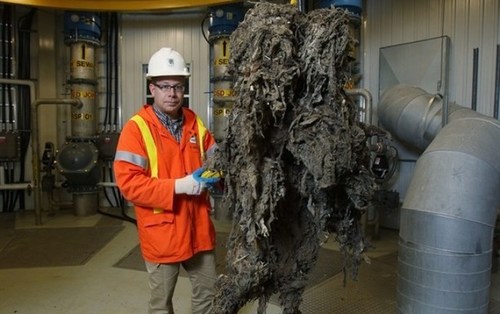
They’re billed as a fresh, clean alternative to toilet paper – but waste-water utilities across Canada say personal wipes are creating putrid sewage clogs that are costing Canadian ratepayers at least $250 million a year.

Duane Tilden‘s insight:

>MESUG members have set up traps across Ontario municipalities, Orr said, and they’re catching hundreds of flushable wipes. The situation is the same across the country, with officials in Penticton, B.C., recently complaining publicly about the wipes.

Canadian utilities aren’t alone in their battle against personal wipes.

In the U.S. capital region, the Washington Suburban Sanitary Commission has spent more than $1 million installing powerful grinders to shred wipes before they reach pumps on their way to treatment plants.

The utility has also devoted hundreds of man-hours to unclog pipes and repair broken sewer lines. It blames wipes for blockages that have caused sewage to overflow into streams or back up into residential basements.<

See on globalnews.ca

UK Proposed ban on Food Waste Landfill Disposal & Re-Purpose to Green Energy Feedstock

See on Scoop.itGreen & Sustainable News

Government, council and retailer-backed report says ban on landfill could save UK £17bn and heat 600,000 homes

Duane Tilden‘s insight:

>The ambition is to save the UK economy over £17bn a year through the reduction of food wasted by households, businesses and the public sector, preventing 27m tonnes of greenhouse gases a year from entering into the atmosphere.

The new study, Vision 2020: UK Roadmap to Zero Food Waste to Landfill is the culmination of more than two years’ work and has the backing and input of local authority and industry experts. It sets the framework for a food waste-free UK by 2020.

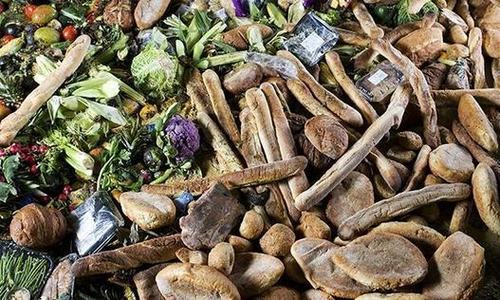
Last week official figures revealed the average UK family was wasting nearly £60 a month by throwing away almost an entire meal a day. A report from the government’s waste advisory group Wrap showed Britons were chucking out the equivalent of 24 meals a month, adding up to 4.2m tonnes of food and drink every year that could have been consumed. Almost half of this is going straight from fridges or cupboards into the bin, Wrap found. One-fifth of what households buy ends up as waste, and around 60% of that could have been eaten.

At the same time the UK’s largest retailer, Tesco, recently agreed to reduce its multi-buy items and other promotions after revealing that 35% of its bagged salad was being thrown out. It also found that 40% of apples were wasted, and just under half of bakery items.<

See on www.theguardian.com

The 10 Most Energy-Efficient U.S. States: The Forgotten ‘Fifth Fuel’

See on Scoop.itGreen & Sustainable News

Access to energy in the U.S. — and the effects of generating it — are a national concern.

Duane Tilden‘s insight:

>The Forgotten ‘Fifth Fuel’

Access to energy in the U.S. — and the effects of generating it — are a national concern. Debates persist over the most cost-effective and environmentally friendly mix of nuclear energy, coal, gas and liquid hydrocarbons and renewable sources.

Too often left out of these discussions is the so-called fifth fuel: energy efficiency. States have driven benefits for consumers and the environment with policies that both reduce energy use and encourage economic growth.

The American Council for an Energy-Efficient Economy (ACEEE) yesterday issued its annual scorecard for each state based on multiple factors, including reductions in greenhouse gas, energy codes for buildings and switching to cleaner fuels.<

See on www.bloomberg.com

Federal Energy Management Program: Online Training – Live & On-Demand – CEU’s

See on Scoop.itGreen & Sustainable News

FEMP trains Federal agency managers about the latest energy requirements, best practices, and technologies through eTraining Courses, First Thursday Seminars, and webinars.

See on apps1.eere.energy.gov

Clean Energy rebranded by DOE to Combined Heat and Power (CHP)

See on Scoop.itGreen Energy Technologies & Development

In a move that had been in the works for a while, the U.S. Department of Energy recently announced that its Clean Energy Application Centers have been rebranded as CHP Technical Assistance Partnerships, or CHP TAPs.

Duane Tilden‘s insight:

>The CHP TAPs maintain the same regional offices that existed under the former Clean Energy Application Centers:

  1. Pacific (California, Nevada);
  2. Southwest (Arizona, Colorado, New Mexico, Oklahoma, Texas, Utah, Wyoming);
  3. Northwest (Idaho, Montana, Oregon, Washington);
  4. Midwest (Illinois, Indiana, Iowa, Kansas, Michigan, Minnesota, Missouri, Nebraska, North Dakota, Ohio, South Dakota);
  5. Southeast (Alabama, Arkansas, Florida, Georgia, Kentucky, Louisiana, Mississippi, North Carolina, South Carolina, Tennessee);
  6. Mid-Atlantic (Delaware, Maryland, New Jersey, Pennsylvania, Virginia, West Virginia); and
  7. Northeast (Connecticut, Maine, Massachusetts, New Hampshire, New York, Rhode Island, Vermont).

With the new energy in these programs, now is the time to take advantage of the expertise offered by the Department of Energy and its CHP TAPs. Industrial users, municipalities, hospitals, college campuses and other large users of energy need to review and understand the significant benefits of CHP, district energy and waste heat capture technologies.<

See on www.natlawreview.com

DIY Reserve Study Site Launched

See on Scoop.itGreen Building Operations – Systems & Controls, Maintenance & Commissioning

CALABASAS, Calif., Oct. 24, 2013 /PRNewswire-iReach/ — Association Reserves, a well-known provider of reserve study services in the United States, recently announced its decision to launch a new website dedicated to their Do-it-Yourself Reserve Study kit.

Duane Tilden‘s insight:

>According to an article written using data from Association Reserves’ 30,000 reserve studies, 70 percent of associations in the United States are “underfunded.” This puts many organizations at an increased risk of special assessments, deferred maintenance, declining property values, and board member liability. According to the company, by accounting for the ongoing cost of common area deterioration and then properly funding reserves, boards are able to responsibly prepare for their associations’ future expenses.

“Our goal is to eliminate all excuses for board members not to be aware of the current strength of their Association’s reserve fund and the funding plan necessary to perform common area repairs & replacement in a timely manner,” says Robert Nordlund, PE, RS, the company’s founder. “The path from underfunded to appropriately-funded is a journey and a Reserve Study provides the necessary road map.”<

See on www.prnewswire.com

Lord Lawson declares UK’s climate model ‘flawed’

See on Scoop.itGreen & Sustainable News

Lord Lawson is calling for an independent review of the UK’s official climate predictions as he claims the model used to make the projections is “flawed”. Based on research published …

Duane Tilden‘s insight:

>The thinktank claims predictions made by it will “always produce high estimates of future warming” regardless of the data fed into the process.

The HadCM3 model is used for official UK Climate Projections (UKCP09), which provide information to help plan how to adapt to a changing climate. It generates a virtual representation of the global climate such as the greenhouse effect, evaporation of the oceans, rainfall and sunlight. By increasing the greenhouse gases in the model, predictions on how much warmer the planet will become in the future can be made.

The UK’s climate model is also used to help make investment decisions across the public and private sectors and as estimates of future warming generated by the Government’s model are “much higher than those implied by several recent studies”, they are likely to “lead to considerable malinvestments” of public and private funds, GWPF claims.

Andrew Montford, author of the GWPF briefing paper said: “There are potentially billions of pounds being misspent on the basis of these predictions. The Government has little choice but to withdraw them pending a review of the way they are put together.”

The Met Office defended its methods and rubbished the criticism.

The organisation said in a statement: “UKCP09 used a sophisticated method that used both model projections and observations to provide a range of potential future warming which attempts to take in the uncertainties in model parameters. The GWPF article fails to note that UKCP09 also used information from many other climate models and that the projections were independently reviewed prior to publication.”<

See on www.energylivenews.com

GE seeks to Clean up Fracking’s Dirty Water Problem

See on Scoop.itGreen & Sustainable News

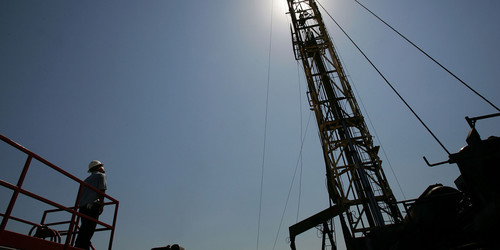
GE has demonstrated technology aimed at addressing one of the biggest challenges with fracking: water pollution.

Duane Tilden‘s insight:

>Concerns about water pollution and other environmental issues related to fracking have led some places, including France and New York State, to block the process. As fracking increases in dry areas and places that lack adequate treatment and disposal options, pressure to block it could grow.

“Water-treatment technology is going to become more and more critical as the industry moves forward,” says Amy Myers Jaffe, executive director of energy and sustainability at the University of California at Davis, and a new member of a GE environmental advisory board. She says the continued use of fracking depends on the “industry getting its act together to do it in an environmentally sustainable way.”

Better water-treatment options could change the way oil and gas producers operate by making it economical to treat water at fracking sites instead of trucking it long distances to large water-treatment facilities or disposal wells. The technology is specifically targeted to places such as the Marcellus shale, one of the largest sources of shale gas in the U.S., where wastewater is far too salty for existing on-site treatment options (see “Can Fracking Be Cleaned Up?” and “Using Ozone to Clean Up Fracking”).

Each fracking well can require two to five million gallons of fresh water, which is pumped underground at high pressure to fracture rock and release trapped oil and gas. Much of that water flows back out, carrying with it the toxic chemicals used to aid the fracking process, as well as toxic materials flushed from the fractured rock.

Producers currently reuse much of that water, but that involves first storing it in artificial ponds, which can leak, and then diluting it, a step that consumes millions of gallons of fresh water. Eventually they can’t reuse the water any more so they need to ship it, often over long distances, to specialized treatment and disposal locations. Transporting the wastewater is expensive, and it comes with a risk of spills. At disposal sites, the wastewater is injected deep underground in a process that can cause earthquakes.

The new technology would make it unnecessary to dilute the wastewater, or transport it for treatment or disposal. […]<
See on www.technologyreview.com

State’s First Fracking Regulation Will Go Into Effect Next Year

See on Scoop.itGreen & Sustainable News

By Sharon Bernstein SACRAMENTO, Calif., Sept 20 (Reuters) – California’s first regulations on fracking and related oil production practices will go into effect next year in the most populous U.S.

Duane Tilden‘s insight:

>State Senator Fran Pavely, a Democrat who represents the Los Angeles suburb of Agoura Hills and was the author of the new law, said the regulations would stop oil companies from fracking in the state without full disclosure of their methods.

“Oil companies will not be allowed to frack or acidize in California unless they test the groundwater, notify neighbors and list each and every chemical on the Internet,” Pavely said. “This is a first step toward greater transparency, accountability and protection of the public and the environment.”

Opposing the measure along with the environmentalists was the oil industry, which said the new law could make it difficult for California to reap the benefits offered by development of the Monterey Shale, including thousands of new jobs, increased tax revenue, and higher incomes for residents.

The law “could create conditions that will make it difficult to continue to provide a reliable supply of domestic petroleum energy for California,” said Catherine Reheis-Boyd, president of the Western State Petroleum Association, which represents oil companies in California.<

See on www.huffingtonpost.com

Coal opposes Senate Energy Commission Nomination

See on Scoop.itGreen & Sustainable News

Ronald J. Binz, nominated to lead the Federal Energy Regulatory Commission, is opposed by the coal industry because of his efforts to promote renewable energy.

Duane Tilden‘s insight:

>At the Electricity Consumers Resource Council, which represents large industrial customers, Marc Yacker, a vice president, said that the coal industry had some reason to be worried. The industry believes, he said, that “the whole idea of socializing the cost of new transmission necessary to get wind to population centers is anti-coal.”<

See on www.nytimes.com