Plastic bottle recycling exceeds 50 per cent | Resource magazine

See on Scoop.itGreen & Sustainable News

New data from a national charity RECycling of Used Plastics Ltd (Recoup), has found that 70 per cent of the 610,000 tonnes of plastics packaging recycled in 2011 came from domestic kerbside collections.

Duane Tilden‘s insight:

>Future outlook

The Department for Environment, Food and Rural Affairs (Defra) has issued yearly targets for businesses concerning the recycling of paper, glass, wood, steel, aluminium and plastics for the period 2013-2017. Although the targets for most of these materials remain static or see only slight increases, the targets for plastic recycling increase by five per cent each year.

This means the plastic recycling target for 2017 is 57 per cent – up from 32 per cent in 2012 – a figure that the British Polythene Industries (BPI) plc has warned is ‘unachievable’.<

See on www.resource.uk.com

Wind Power Urged to Compete with Fossil Fuels Head-on: Scientific American

See on Scoop.itGreen & Sustainable News

The industry must fight the perception that wind energy cannot compete with fossil fuels

Duane Tilden‘s insight:

>Borrowing a page from environmentalists

To that end, some wind power advocates argued that the industry should borrow a page from the environmental movement by challenging renewable energy naysayers head on and ratcheting up its rhetoric on wind energy’s environmental benefits relative to fossil fuels rather than seeking to peacefully coexist alongside the oil, coal and gas sectors.

Larry Schweiger, president of the National Wildlife Federation and one of several high-profile environmental leaders addressing the Chicago conference, told AWEA members that they represent “an insurgent industry” that is “taking on an incumbent industry that plays hardball.”

“I would urge you all to become more aggressive,” he added, “because if you don’t be more creative, more aggressive, more willing to take risks, this industry will move along at a pace that will not solve our problems.”

See on www.scientificamerican.com

EU European Commission agrees China solar panel duties in boldest move yet | alternative renewable energy Pakistan

See on Scoop.itGreen & Sustainable News

The European Commission agreed on Wednesday to impose punitive import duties on solar panels from China in a move to guard against what it sees as Chinese dumping of cheap goods in Europe.

Duane Tilden‘s insight:

>Shares in German manufacturers SolarWorld, Phoenix Solar and Centrotherm rose as much as 7 percent on the decision, while Frankfurt-listed shares in China’s Suntech were down more than 4 percent. The investigation into accusations of dumping is the biggest the commission has launched but Brussels is trying to tread a careful path, knowing it needs China, the EU’s second largest trading partner, to help the bloc pull out from recession.

China’s ambassador to the World Trade Organisation, Yi Xiaozhun, called the decision a mistake although he declined to comment on any possible retaliation by Beijing. “It will send the wrong message to the world that protectionism is coming,” Yi told Reuters in Geneva.

Given that Germany and France are seeking to increase exports to China, De Gucht will try for a negotiated solution with new Chinese Commerce Minister Gao Hucheng before an EU deadline in December to cement the levies for up to five years. […]

Chinese solar panel production quadrupled between 2009 and 2011 to more than the entire global demand. EU producers say Chinese companies have captured more than 80 percent of the European market from almost zero a few years ago, exporting 21 billion euros ($27 billion) to the European Union in 2011. <

See on alternativeenergy.com.pk

Honey bees under threat: a political pollinator crisis

See on Scoop.itGreen & Sustainable News

Daniel Lee Kleinman and Sainath Suryanarayanan: Recent controversies over honey bees remind us of their environmental and economic importance, but should also prompt us to reflect upon the structures of expertise we rely upon…

Duane Tilden‘s insight:

>Despite the conclusion of beekeepers across the globe, based on their field research, that neonicotinoid insecticides were likely contributing to increased bee mortality, some chemical company representatives, scientists and government regulators dismissed or disparaged their findings. Our view is that commercial beekeepers have real-time observational knowledge of the crisis facing honey bee pollinators and that we should take their research seriously (see our Social Studies of Science paper for more). Our point is not to say that commercial beekeepers always know best. Rather, it is to argue for more genuinely participatory research that brings beekeepers’ knowledge and scientists’ knowledge into a creative and egalitarian dialogue toward a fuller understanding of why honey bees are dying.

[…]

The US government has opposed taking neonicotinoid pesticides off the market in the absence of conclusive evidence of their adverse effects on honey bees. The UK has taken broadly the same position. This is a classic dilemma in science. But it is not simply a matter of data. The US and UK governments share a value-based preference for false negatives over false positives. A false negative amounts to incorrectly concluding that neonicotinoid pesticides are safe when they might not be. Advocates of the precautionary principle share a preference for the reverse. They have supported taking the neonicotinoid pesticides off the market in the face of suggestive evidence based on scientific laboratory and field studies, and beekeepers’ observations. Given what is at stake here, we are on the side of those who prefer to err on the side of caution. And as policymakers and citizens increasingly confront complex challenges fraught with tremendous risk, we may want to make a precautionary orientation our default position.

We all eat and so we should all be concerned about the alarming uptick of honey bee deaths, but the current crisis can also be an opportunity to consider how to do things differently.<

See on www.guardian.co.uk

Xcel Energy NCAR expand partnership on renewable energy forecasting – Pennenergy

See on Scoop.itGreen Energy Technologies & Development

In the next two years, NCAR scientists and engineers will develop custom forecasting systems to enable Xcel Energy control centers in Minneapolis, Denver, Golden, Colo., and Amarillo, Tex., to anticipate sudden changes in wind, shut down turbines ahead of potentially damaging icing events and even predict the amount of energy generated by private solar panels.

Duane Tilden‘s insight:

>To help utilities anticipate wind energy more reliably, NCAR began designing a wind energy prediction system for Xcel Energy in 2009 that saved the utility’s customers more than $6 million in 2010 alone. The specialized system relies on a suite of tools, including highly detailed observations of atmospheric conditions, an ensemble of powerful computer models, and artificial intelligence techniques to issue high-resolution forecasts for wind farm sites.

NCAR’s new agreement with Xcel Energy focuses on the following areas:

Forecasting major changes in wind energy over a few hours due to a passing front or another atmospheric event.Forecasting ice and extreme temperatures to predict the impacts of freezing rain on wind turbines, which cannot operate when coated in ice.Generating solar forecasts using a combination of computer models and specialized cloud observing tools to help Xcel Energy better anticipate when customers are getting power from their own panels.<

See on www.pennenergy.com

Canada loses WTO appeal in renewable energy case

See on Scoop.itGreen & Sustainable News

BRUSSELS (Reuters) – Canada lost an appeal at the World Trade Organization on Monday in a ruling on incentives offered to local companies, a case that has already led to legal challenges over suspicions…

Duane Tilden‘s insight:

>Ontario will have to bring its rules into line with the WTO rules or risk a claim for trade sanctions against Canada.<

>Canada’s defeat may spur more WTO disputes by countries which are desperate for economic growth and suspect their firms are being illegally locked out of infrastructure projects abroad.<

See on www.reuters.com

Untapped Market in Smaller Green Retrofits

See on Scoop.itGreen Building Design – Architecture & Engineering

While many “green” building techniques have become the norm for new construction, panelists at a recent ULI forum say significant opportunities exist for upgrading or retrofitting buildings with green systems and technology.

See on urbanland.uli.org

The Old Copper Smelting Plants

See on Scoop.itGreen & Sustainable News

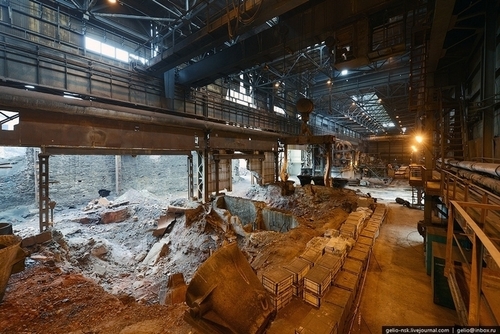
“Karabashmed” is one of the oldest copper smelting plants of the South Ural located in the city of Karabash. The main activity of the plant is making blister copper from copper concentrate with a preliminary enrichment of copper-zinc ores and also from recycled copper raw material.

Duane Tilden‘s insight:

Amazing photo journal of an Industrial Copper Refinery, including rare photo’s of old technological processes.

See on englishrussia.com

New Wyoming lithium deposit could meet all U.S. demand

See on Scoop.itGreen & Sustainable News

The U.S. currently imports more than 80% of the lithium it uses, with the silvery metal winding up in batteries from cell phones to electric cars.

Duane Tilden‘s insight:

“University of Wyoming researchers found the lithium while studying the idea of storing carbon dioxide under ground in the Rock Springs Uplift, a geologic formation in southwest Wyoming. University of Wyoming Carbon Management Institute director Ron Surdam stated that the lithium was found in underground brine. Surdam estimated the located deposit at roughly 228,000 tons in a 25-square-mile area. Extrapolating the data, Surdam said as the uplift covered roughly 2,000 square miles, there could be up to 18 million tons of lithium there, worth up to roughly $500 billion at current market prices.”

See on www.mining.com

Norway: A recycling-happy nation in dire need of trash

See on Scoop.itGreen & Sustainable News

Sweden isn’t the only nation in the throes of a serious trash deficit. As it turns out, Norway is also desperately seeking rubbish to burn in its cogeneration plants. Perhaps the U.S. could lend a helping hand?

Duane Tilden‘s insight:

Excerpts…

Norway’s garbage woes aren’t an anomaly in Scandinavia and across Northern Europe where the demand for trash to fuel garbage-burning incinerator plants is high but the supply is devastatingly low due in part to residents’ pertinacious recycling habits. In fact, Northern European countries only produce 150 million tons of trash annually, while the overall capacity of incinerating plants is 700 million tons and growing.

[…] While the burning of garbage is not an environmentally flawless method of producing energy, modern day cogeneration plants are relatively high-tech affairs and the pollution generated is far less than coal. This method also renders landfills nearly irrelevant.

See on www.mnn.com