New York to Retrofit 250,000 Streetlights With Energy-Saving LED Bulbs

See on Scoop.itGreen Energy Technologies & Development

The phaseout is part of a long-term plan to reduce greenhouse gas emissions by 30 percent by 2017 and, Mayor Michael R. Bloomberg said, would save taxpayers money.

Duane Tilden‘s insight:

>The news conference was on Eastern Parkway in Brooklyn, where lights have already been replaced, expecting to save more than $70,000 and nearly 248,000 kilowatt-hours a year in energy. Unlike standard lights, which last six years, LED bulbs can burn for 20 years before they need to be replaced, the administration said, and the project is expected to save $14 million a year in energy and maintenance costs. […]

“People tend to like them,” she said. “It’s clear. It’s bright. It really does a good job in providing fresher light.” The project is estimated to cost $76.5 million.

The project is the first to receive financing through the Accelerated Conservation and Efficiency initiative or “ACE,” the administration said, a $100 million competitive program that the Department of Citywide Administrative Services created to expedite such sustainability projects.<

See on www.nytimes.com

2015 IECC energy code raises requirements for efficiency, lighting controls, advanced HVAC in existing buildings

See on Scoop.itGreen Building Design – Architecture & Engineering

By Brianna Crandall, October 23, 2013—Hearings to finalize the 2015 International Energy Conservation Code (IECC) wrapped up in Atlantic City recently with big wins for higher efficiency requirements in existing buildings, controls for lighting and daylighting hardware and HVAC equipment specifications, according to a news release from the New Buildings Institute (NBI),

Duane Tilden‘s insight:

>The IECC is reviewed and updated every three years and serves as the model energy code for states and local jurisdictions across the country. The last version is the 2012 IECC.

In the United States, buildings account for about 40% of the energy consumed and 38% of all CO2 emissions, according to the U.S. Green Building Council. Cost-effective measures that cut the energy used by buildings represent a critical strategy to help building owners save money and curb the impacts of climate change, notes NBI.

“The updates related to existing and historic buildings clarify and further extend the code’s impact on the current building stock and will mean large energy savings growing over time,” said Jim Edelson, NBI senior manager of codes and policy. “Taken together, the approved code changes represent the most significant code revisions for energy consumption of existing buildings since the 1970s.”<

See on www.fmlink.com

Greening the Internet: Sustainable Web Design

See on Scoop.itTwitter & Social Media

Do you know your website’s carbon footprint? Or how to lower it?

Duane Tilden‘s insight:

>A growing number of industries are trying to reduce or at least curtail carbon footprints and energy use. Emissions standards have been set for the automotive, construction, and even telecommunications industries. Yet the internet’s carbon footprint is growing out of control: a whopping 830 million tons of CO2 annually, which is bigger than that of the entire aviation industry. That amount is set to double by 2020.

It is time for web designers to join the cause.

Right now, at least 332 million tons of CO2—40 percent of the internet’s total footprint—falls at least partially under the responsibility of people who make the web. It needn’t be that large, but with our rotating carousels, high-res images, and more, we have been designing increasingly energy-demanding websites for years, […]<

See on alistapart.com

Robotic Technologies Applied to Solar Energy Market – Installation and Maintenance

See on Scoop.itGreen Building Design – Architecture & Engineering

Mountain View CA (SPX) Sep 20, 2013 – … robotic technologies deliver revolutionary installation and cleaning services at highly competitive prices … for building and maintenance of utility-scale solar plants..

Duane Tilden‘s insight:

>The typical installation process for utility-scale projects is similar to that of a small-scale, 20-panel, residential installation. Despite incremental improvements to the process, a 200,000-panel installation has retained many of the characteristics of a 20-panel installation.

They are both labor-intensive, and require repetitive bolt-tightening and glass-hauling. While these are minor flaws in a 20-panel system, they create significant inefficiencies in 20,000- or 200,000-panel systems.

Alion Energy has plugged the shortcomings of the current installation methods by changing the materials and design used in the mounting structure as well as by automating the installation. By combining robotic installation technology with established construction practices, Alion Energy has built a system twice as fast and 75 percent more labor-efficient that lowers solar electricity’s levelized cost of energy (LCOE) to compete with traditional energy sources.<

See on www.solardaily.com

World Record Solar Cell with 44.7 Percent Efficiency (news)

See on Scoop.itGreen Energy Technologies & Development

Freiburg, Germany – The Fraunhofer Institute for Solar Energy Systems ISE, Soitec, CEA-Leti and the Helmholtz Center Berlin jointly announced on late Monday having achieved a new world record for the conversion of sunlight into electricity using a new solar cell structure with four solar subcells. …

Duane Tilden‘s insight:

>These solar cells are used in concentrator photovoltaics (CPV), a technology which achieves more than twice the efficiency of conventional PV power plants in sun-rich locations. The terrestrial use of so-called III-V multi-junction solar cells, which originally came from space technology, has prevailed to realize highest efficiencies for the conversion of sunlight to electricity. In this multi-junction solar cell, several cells made out of different III-V semiconductor materials are stacked on top of each other. The single subcells absorb different wavelength ranges of the solar spectrum.<

See on renewable-energy-industry.com

EPA sets terms for New Power Plant carbon emissions

See on Scoop.itGreen & Sustainable News

Frances Beinecke: We’re already paying the costs of climate change. The new power plant emissions standards could not be more timely

Duane Tilden‘s insight:

>The carbon standards announced Friday by Gina McCarthy, administrator of the US Environmental Protection Agency, will set reasonable limits on carbon pollution from the power plants of tomorrow, those that are yet to be built.<

See on www.theguardian.com

The Dark Side of Efficiency

zsturm's avatarInnovation in Business, Energy, and Environment

By Peter Brooks

In at least three of the cases we have studied so far (Maersk, Groom, Wal-Mart) efficiency was the one thing everyone seemed to agree on.  Investments in greater resource efficiency (energy, water, space) that cost less than future benefits are no-brainers; a company can save money while also preserving precious, finite resources (to say nothing of the safety, regulatory, aesthetic, and morale benefits of finding and fixing inefficiencies) and that is unequivocally a good thing.

Unfortunately there is a dark side to efficiency: it can be more destructive to the environment and speed the withdrawal and consumption of natural resources than if the investment were never made.  In the late 19th century, an English economist, William Jevons, made the startling discovery that technological improvements that increased the efficiency of coal-burning, led to an increased consumption of coal.  To put it another way, greater efficiency was used…

View original post 473 more words

Boston Leads Ranking of Energy-Efficient U.S. Cities by ACEEE

See on Scoop.itGreen & Sustainable News

A new ranking highlights Boston’s achievements in conserving energy as the Senate debates a bipartisan energy efficiency bill.

Duane Tilden‘s insight:

>ACEEE graded 34 cities for their efforts in five areas: buildings, transportation, energy and water utility programs, local government operations, and community-wide initiatives.  […]

The cities’ leap forward in energy-efficiency efforts has been a stark contrast to the slow movement on Capitol Hill, where the Energy Savings and Industrial Competitiveness Act of 2013, authored by Sen. Jeanne Shaheen (D-New Hampshire) and Sen. Rob Portman (R-Ohio) has been struggling to move forward.

The bill, […] would require the federal government—the nation’s single largest energy consumer—to update government buildings to improve energy efficiency, institute electricity-saving measures for government computers, and make it easier for agencies to switch to electric and natural-gas-powered vehicles. It also would provide training for workers in how to build more energy-efficient buildings for the private sector, and help finance private-sector renovations for energy efficiency. […]<

See on news.nationalgeographic.com

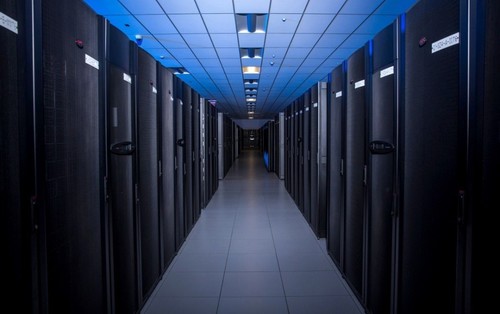
Inside look at General Motors’ new hyper-green data center

See on Scoop.itGreen Building Design – Architecture & Engineering

WARREN, Michigan—General Motors has gone through a major transformation … a three-year effort to reclaims its own IT after 20 years of outsourcing.

Duane Tilden‘s insight:

>The first physical manifestation of that transformation is here at Warren, where GM has built the first of two enterprise data centers. The $150 million Warren Enterprise Data Center will cut the company’s energy consumption for its enterprise IT infrastructure by 70 percent, according to GM’s CIO Randy Mott. If those numbers hold up, the center will pay for itself with that and other savings from construction within three years. […]

The data center is part of a much larger “digital transformation” at the company, Mott said. GM is consolidating its IT operations from 23 data centers scattered around the globe (most of them leased) and hiring its own system engineers and developers for the first time since 1996. Within the next three to five years, GM expects to hire 8,500 new IT employees with 1,600 of them in Warren. “We’re already at about the 7,000 mark for internal IT from our start point of about 1,700,” Mott said. […]

So far, three of the company’s 23 legacy data centers have been rolled into the new Warren data center. That’s eliminated a significant chunk of the company’s wide-area network costs. “We have 8,000 engineers at (Vehicle Engineering Center) here,” Liedel said. And those engineers are pushing around big chunks of data—the “math” for computer-aided design, computer aided manufacturing, and a wide range of high-performance computing simulations.

“Now with the data center on the same campus, we’re not paying for the WAN bandwidth we had before,” Liedel explained. “We’ve got dark fiber here on the campus, and the other major concentration of engineers is at Milford at the Proving Ground.” Milford and Warren are connected over fiber via dens wave division multiplexing, providing 10 channels of 10-gigabit-per-second bandwidth.<

See on arstechnica.com

Remote Wireless Power Systems for Buildings

See on Scoop.itGreen Building Operations – Systems & Controls, Maintenance & Commissioning

Mobile Technology News and Information

Duane Tilden‘s insight:

>Ossia’s patented smart antenna technology uses phased arrays to transfer power without the use of inductive coils, ultrasonic waves, magnetic resonance, charging pads or mats. The Cota technology consists of two parts: a charger and a receiver. The Cota-powered charger automatically locates Cota receivers built into devices or batteries, and delivers signals that are sent omnidirectionally. Once they hit the charger, these signals follow the same path back to the receiver, focusing energy at the exact location of the device. Cota continuously streams power to multiple devices, even as they move around a room. The laws of physics make the Cota technology inherently safe, naturally avoiding anything that absorbs energy, such as people, pets and even plants.<

See on www.mobiletechnews.com