DIY Reserve Study Site Launched

See on Scoop.itGreen Building Operations – Systems & Controls, Maintenance & Commissioning

CALABASAS, Calif., Oct. 24, 2013 /PRNewswire-iReach/ — Association Reserves, a well-known provider of reserve study services in the United States, recently announced its decision to launch a new website dedicated to their Do-it-Yourself Reserve Study kit.

Duane Tilden‘s insight:

>According to an article written using data from Association Reserves’ 30,000 reserve studies, 70 percent of associations in the United States are “underfunded.” This puts many organizations at an increased risk of special assessments, deferred maintenance, declining property values, and board member liability. According to the company, by accounting for the ongoing cost of common area deterioration and then properly funding reserves, boards are able to responsibly prepare for their associations’ future expenses.

“Our goal is to eliminate all excuses for board members not to be aware of the current strength of their Association’s reserve fund and the funding plan necessary to perform common area repairs & replacement in a timely manner,” says Robert Nordlund, PE, RS, the company’s founder. “The path from underfunded to appropriately-funded is a journey and a Reserve Study provides the necessary road map.”<

See on www.prnewswire.com

Basic optimising building orientation for performance

Good article on how building orientation and geometry in the planning stages of design affects the energy efficiency, consumption and equipment sizing for heating, ventilation and cooling.

firstgreenadmin's avatar

Building orientation plays a major role in the building envelop heat gain. A proper building orientation of the building will reduce the solar heat gain to your building and will make good use of day light as well. Hence it is important to consider the building orientation as well as material selection for the building envelop to optimise the building energy consumption. Maximum heat gain in the building is from the south façade/windows, hence the designers can also consider the extended shading devices in order to reduce the heat gain.

square shape

The plate size of the building also affects the building heat gain. If there is a building having the square plate size, the envelope surface area (peripheral area) will be minimum and if the building is having a long rectangular plate size, the envelop area will be larger. The larger surface area will lead to the larger heat gain in…

View original post 246 more words

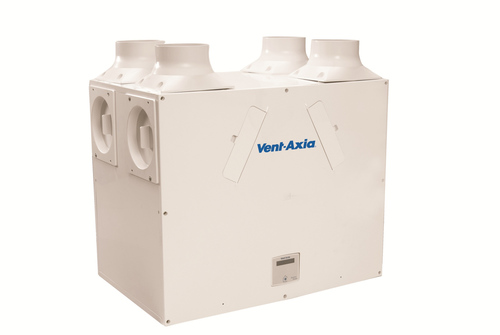
Manufacturer’s Energy Efficient Heat Recovery Unit Runs High in Energy Awards

See on Scoop.itGreen Building Design – Architecture & Engineering

Vent-Axia has made the final shortlist in the prestigious Energy Awards 2013, which recognise and reward companies leading the way in reducing carbon emissions. Vent-Axia’s Lo-Carbon Kinetic Plus E…

Duane Tilden‘s insight:

>Consuming as little as 20W, the Kinetic Plus E only costs around £20 a year to run, offering 94% thermal efficiency and potentially recovering 10 or 20 times more energy than it costs to operate. This offers homeowners an attractive cost saving as we enter the winter months and rising fuel costs.<

See on kirhammond.wordpress.com

Green financing for industry still a problem in the UK

Existing Building Energy Consumption: Current Situations, Trends, Legislature and Solutions …

mce68's avatarMichael C. English's Blog

After all this talk about how great energy audits and retro-commissioning is, let’s take a look at a case study which shows the power of these tools in action. We worked on a historic 555,000 sf museum, originally built in 1897. After an energy audit and retro-commissioning study, the facility will save approximately $520,000 in annual energy savings with a simple payback of a little over 2 years.

Major energy conservation measures (ECMs) that were found in the energy auditing process include: retrofitting gallery light fixtures from incandescent and halogen to CFL/LED lamps, upgrading the old pneumatic controls to direct digital controls (DDC) for AHUs and implementing several control strategy upgrades, such as gallery VFD speed optimization, economizer controls and demand control ventilation.

Through the retro-commissioning process, HEA determined several key retro-commissioning measures (RCMs). A selection of issues found include: non-functioning hand-off-auto switches, inactive BMS points, improperly wired supply and…

View original post 173 more words

2015 IECC energy code raises requirements for efficiency, lighting controls, advanced HVAC in existing buildings

See on Scoop.itGreen Building Design – Architecture & Engineering

By Brianna Crandall, October 23, 2013—Hearings to finalize the 2015 International Energy Conservation Code (IECC) wrapped up in Atlantic City recently with big wins for higher efficiency requirements in existing buildings, controls for lighting and daylighting hardware and HVAC equipment specifications, according to a news release from the New Buildings Institute (NBI),

Duane Tilden‘s insight:

>The IECC is reviewed and updated every three years and serves as the model energy code for states and local jurisdictions across the country. The last version is the 2012 IECC.

In the United States, buildings account for about 40% of the energy consumed and 38% of all CO2 emissions, according to the U.S. Green Building Council. Cost-effective measures that cut the energy used by buildings represent a critical strategy to help building owners save money and curb the impacts of climate change, notes NBI.

“The updates related to existing and historic buildings clarify and further extend the code’s impact on the current building stock and will mean large energy savings growing over time,” said Jim Edelson, NBI senior manager of codes and policy. “Taken together, the approved code changes represent the most significant code revisions for energy consumption of existing buildings since the 1970s.”<

See on www.fmlink.com

Robotic Technologies Applied to Solar Energy Market – Installation and Maintenance

See on Scoop.itGreen Building Design – Architecture & Engineering

Mountain View CA (SPX) Sep 20, 2013 – … robotic technologies deliver revolutionary installation and cleaning services at highly competitive prices … for building and maintenance of utility-scale solar plants..

Duane Tilden‘s insight:

>The typical installation process for utility-scale projects is similar to that of a small-scale, 20-panel, residential installation. Despite incremental improvements to the process, a 200,000-panel installation has retained many of the characteristics of a 20-panel installation.

They are both labor-intensive, and require repetitive bolt-tightening and glass-hauling. While these are minor flaws in a 20-panel system, they create significant inefficiencies in 20,000- or 200,000-panel systems.

Alion Energy has plugged the shortcomings of the current installation methods by changing the materials and design used in the mounting structure as well as by automating the installation. By combining robotic installation technology with established construction practices, Alion Energy has built a system twice as fast and 75 percent more labor-efficient that lowers solar electricity’s levelized cost of energy (LCOE) to compete with traditional energy sources.<

See on www.solardaily.com

Climate change & Global warming: IPCC issues warning to Governments

See on Scoop.itGreen & Sustainable News

Call to ‘stop dithering about fossil fuel cuts’ as expert panel warns entire globe is affected

Duane Tilden‘s insight:

>The scientists’ warning – the most comprehensive and convincing yet produced by climate scientists – comes at a time when growing numbers of people are doubting the reality of global warming. Last week, the UK Energy Research Centre (UKERC) published a survey showing that the proportion of British people who do not think the world’s climate is changing has almost quadrupled since 2005.

Asked if they thought Earth’s climate was changing, 5% of respondents said “no” in 2005, a figure that rose to 11% last year and reached 19% this year.

But as the IPCC report underlines, scientists are becoming more and more certain that climate change poses a real danger to the planet.

Many believe the disconnection between popular belief and scientific analysis has been engineered by “deniers” explicitly opposed to the lifestyle changes – including restrictions on fossil fuel burning – that might be introduced in the near future.

“There are attempts by some politicians and lobbyists to confuse and mislead the public about the scientific evidence that human activities are driving climate change and creating huge risks,” said Stern.

“But the public should be wary of those who claim they know for certain that unmanaged climate change would not be dangerous. For they are not only denying 200 years of strong scientific evidence – the overwhelming view of the world’s scientific academies and over 95% of scientific papers on the subject – but they are often harbouring vested interests or rigid ideologies as well.”

The report will be discussed this week by political leaders meeting in Stockholm. The study – the work of more than 200 scientists – outlines the physical changes that are likely to affect Earth’s climate this century.<

See on www.theguardian.com

India’s First LEED’s Green Building targets “Net Zero” with High Efficiency Solar Power

See on Scoop.itGreen Building Design – Architecture & Engineering

New Delhi, India (SPX) Sep 19, 2013 – SunPower has announced that Swadeshi Civil Infrastructure has completed the installation of a 930-kilowatt (kW) SunPower solar system on the rooftop of the Indira Paryavaran Bhavan building…

Duane Tilden‘s insight:

>The state-of-the art landmark will be India’s first net zero energy building. Its design emphasizes conservation featuring trees to reduce adverse environmental impact, adequate natural light and shaded landscaped areas to reduce ambient temperature.

The building is targeted to achieve Platinum from the Leadership in Energy and Environmental Design green building rating system, known as LEED INDIA. It also is expected to receive a five star Green Rating for Integrated Habitat Assessment from the rating system developed by the Energy and Resource Institute and supported by the Ministry of New and Renewable Energy, the nodal ministry of Indian government.<

See on www.solardaily.com

Boston Leads Ranking of Energy-Efficient U.S. Cities by ACEEE

See on Scoop.itGreen & Sustainable News

A new ranking highlights Boston’s achievements in conserving energy as the Senate debates a bipartisan energy efficiency bill.

Duane Tilden‘s insight:

>ACEEE graded 34 cities for their efforts in five areas: buildings, transportation, energy and water utility programs, local government operations, and community-wide initiatives.  […]

The cities’ leap forward in energy-efficiency efforts has been a stark contrast to the slow movement on Capitol Hill, where the Energy Savings and Industrial Competitiveness Act of 2013, authored by Sen. Jeanne Shaheen (D-New Hampshire) and Sen. Rob Portman (R-Ohio) has been struggling to move forward.

The bill, […] would require the federal government—the nation’s single largest energy consumer—to update government buildings to improve energy efficiency, institute electricity-saving measures for government computers, and make it easier for agencies to switch to electric and natural-gas-powered vehicles. It also would provide training for workers in how to build more energy-efficient buildings for the private sector, and help finance private-sector renovations for energy efficiency. […]<

See on news.nationalgeographic.com