Renewables & Energy Efficiency Can Cut Power Plants’ Water Use 97% by 2050

wupt-plantscherer-Coal-Fired-plantSee on Scoop.itGreen & Sustainable News

Investing in renewables and energy efficiency could reduce power plants’ water withdrawals by 97 percent from current levels by 2050 and cut carbon emissions 90 percent from current levels, according to a study by the Union of Concerned Scientists…

Duane Tilden‘s insight:

>The report warns that a “business-as-usual” approach would keep emissions within 5 percent of current levels and water withdrawals would not drop significantly until after 2030. And while utilities’ ongoing shift to natural gas would decrease water use in the coming decades, the study says its ongoing requirements could still harm water-strained areas. This shift to natural gas also would do little to lower the power sector’s carbon emissions.

More than 40 percent of US freshwater withdrawals are used for power plant cooling, the report says. These plants also lose several billion gallons of freshwater every day through evaporation.

Further, increasing demand and drought are putting a greater strain on water resources. Low water levels and high water temperatures can cause power plants to cut their electricity output in order to avoid overheating or harming local water bodies. Such energy and water collisions can leave customers with little or no electricity or with added costs because their electric supplier has to purchase power from elsewhere, as occurred during the past two summers.<

See on www.environmentalleader.com

Link

Twain in Tesla's Lab

Famous Quotations – American Personalities

Famous Quotations – American Personalities

Welcome to one of my quizzes on quotations. This quiz was created with the free version of Polldaddy.  There are 5 quiz questions relating to famous American personalities.  Each question will have a list of 3 or more quotes and the task is to choose the correct quotation attributed with the personality.

The purpose of the quiz is for fun and education.  More of the learning is in the doing than in achieving a perfect score, enjoy the quotes & have a great day… Duane Tilden

Energy Efficiency – Modems, routers & black boxes

See on Scoop.itGreen Energy Technologies & Development

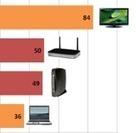
Your high-speed modem and router—those little blinking boxes that you use to stream video and get email—could be eating up as much energy as your TV, and twice as much as your laptop. What a waste.

Duane Tilden‘s insight:

How much energy does your cable modem consume?  Have you ever over-heated a router?

>At NRDC, we’ve worked with industry and government to help make home electronics more energy efficient, saving money for consumers and reducing carbon pollution from power plants. While we’ve made progress on cutting energy waste from televisions, computers, gaming systems and power supplies, until now, no one had looked at the energy use of devices like modems and routers.

It’s a good thing we did. There are 145 million of these small network devices in U.S. households. These seemingly insignificant little boxes are always on—and they consume more than $1 billion and 3 dirty coal power plants’ worth of electricity each year, according to a new analysis released by NRDC. […]<

See on theenergycollective.com

Innovations in waste water treatment processes to provide clean energy

See on Scoop.itGreen Energy Technologies & Development

The race is on to develop innovative, cost-effective ways to extract value from waste water instead of just dumping it, writes Sadhbh Walshe

Duane Tilden‘s insight:

>In a conventional treatment process, ammonia is converted back into nitrogen gas, a non-harmful gas which can be safely released into the atmosphere. The conversion process is expensive, however, and energy prohibitive.

What the Stanford team do, instead, is to use a less energy-intensive process to convert the ammonia into nitrous oxide (N2O), a powerful substance that is typically used to turbo-boost cars or fire rockets.

Normally, N2O is discouraged from forming because it is a harmful greenhouse gas, but when it is burned along with methane it becomes an energy source that can be used to power the treatment facility. According to Scherson, there is a double energy-saving benefit.

“Our process reduces energy input in nitrogen treatment and then the energy from nitrous oxide can potentially be used to power the plant making it energy neutral or even energy positive.”<

See on www.guardian.co.uk

China shortfall in processed Uranium puts pressure on Global Nuclear Fuel supplies

See on Scoop.itGreen & Sustainable News

BEIJING (Reuters) – The abrupt cancellation of a $6.5 billion uranium processing project in southern China has left Beijing with a headache as it tries to secure the fuel required to sustain an ambitious…

Duane Tilden‘s insight:

>China currently has 15 reactors with an aggregate installed capacity of 12.57 gigawatts (GW), but another 30 plants are under construction and due to go into operation between now and 2016, adding another 29 GW to the total.

Gaining more control over the global fuel supply chain is crucial to China’s plans to increase total nuclear capacity to 58 GW by 2020, and will require not only overseas acquisitions but also more enrichment capacity.

[…]

PROCESSING IMPORTS

While Beijing’s 2020 target for the amount of power to be generated from nuclear sources was scaled back after the Fukushima disaster in Japan, its 2030 target of around 200 GW remained intact. Analysts expect annual primary uranium demand to rise tenfold over the period to around 40,000 tonnes.

To meet that demand, CNNC and CGNPC have been exploring domestic uranium deposits, but a surge in imports is inevitable, and is expected to put pressure on global supplies.<

See on www.reuters.com

Green Computing – Business migration to Data Centers and the Cloud

>With the cloud computing scenario, time and power savings mean everything, in these huge scales, running hardly used servers is effectively throwing money away as well as annoying the environmentalists. In this scenario resource scheduling becomes amazingly effective. so we go back to our 5:30pm shutdown, but on this occassion the technology hosting the Virtual infrastructure kicks in, instead of sitting there half used, it will begin to migrate VM’s that no longer require resources to the same host, so although as a whole they may be using quite a lot of resource, it will enable hosts to be powered down and be sat in a ‘power saving’ state awaiting resources requirements to increase and as such power up from their slumber. Again, getting to the scale of this, you could effectively save power on as an example, 100 hosts – these hosts being the beefiest and most cutting edge servers available, are going to have requirements for a large amount of power, effectively turning these off when not used, is a god send to the idea of cloud computing. Why leave the light on in the attic if you have no intention of going there?

So that is effectively how these datacentres work from a green perspective, but from the company utilising this infrastructure, what do they save?

  • Downsize or offset office space.
  • Downsize onsite infrastructure requirements.
  • Expand the ability for users to work remotely (or globally dependent on your requirements)
  • Support the mobile workforce.
  • Reduce consumables use (printing, ink, paper, file storage costs).
  • Reduce hardware (desktop computers/server systems/UPS’s/cabling)


Green Computing – Office365 #greencomputing
.

Community Energy Storage Project Stalls

See on Scoop.itGreen & Sustainable News

Two years ago, AEP Ohio kicked off one of the largest community energy storage projects in the nation, funded in part by the U.S. Department of Energy. The pilot, however, did not go very far.

Duane Tilden‘s insight:

>AEP and S&C, which was the vendor for the pilot, declined to speak specifically about the project and the shortcomings of the batteries, although the two will continue to work together on a much smaller scale.

Small scale is exactly where community energy storage is at. It’s not only the scale of the batteries that are small (compared to megawatt, grid-level storage), but also the scale of utility uptake. “We haven’t seen any mass deployment,” said Mike Edmonds, vice president of strategic solutions for S&C. “It’s a very young market.” Instead, utilities are dipping their toes in the water by testing just a few units.<

See on theenergycollective.com

Congress and Light Bulb Regulation | The Energy Collective

See on Scoop.itGreen & Sustainable News

Light bulbs, as you may recall, have become a perennial excuse for certain federal legislators to whip up the conservative base, by railing again new federal energy efficiency standards.

Duane Tilden‘s insight:

Relamping projects have been an easy way to score energy efficiency gains in buildings since the 1990’s.  Inefficient incandescent light bulbs have given way to fluorescent tubes, compact fluorescent and now LED technology.

Within these stages of development each form of lighting have seen their own evolution.  The driving forces for these increases in lighting efficiency are economic starting back with the 1970’s energy crunch.

Taken from a blog on CFL development & history:

“In 1973-74 the oil crisis took place and lamp companies needed to reduce wattage in their linear (tube) lamps to compensate. Many people had four bulb fixtures and were removing two bulbs, to save energy, therefore dropping sales by half. This forced lamp companies to create energy efficient solution.

Ed worked on creating lamp with reduced wattage by adding krypton and a conductive tin coating inside. This helped lower the wattage from 40 to 35 watts but he wanted to get down to 30 watts. He continued to work and finally the wattage went from 35 to 34 and eventually 32 watts!”
http://bit.ly/149GANs

See on theenergycollective.com

It’s Time Our Policies Reflect The Fact That Energy And Water Are Fundamentally Intertwined

See on Scoop.itGreen & Sustainable News

For a long time, we’ve overlooked the inextricable relationship between water and energy use.  Coal, nuclear and natural gas plants use enormous amounts of steam to create electricity.  Producing all of that steam requires 190,000 million gallons of water per day, or 39% of all freshwater withdrawals in the nation.

Duane Tilden‘s insight:

>The longstanding division between energy and water considerations is particularly evident in the case of energy and water management.  These resources are fundamentally intertwined: Energy is used to secure, deliver, treat and distribute water, while water is used (and often degraded) to develop, process and deliver energy.

Despite the inherent connection between the two sectors, energy and water planners routinely make decisions that impact one another without adequately understanding the scientific or policy complexities of the other sector.  This miscommunication often hides joint opportunities for conservation to the detriment of budgets, efficiency, the environment and public health, and inhibits both sectors from fully accounting for the financial, environmental or social effects they have on each other.

This lack of collaboration between energy and water planners is especially dire considering Texas is in midst of an energy shortage that is exacerbated by the multi-year drought.  Without adequate planning, we could someday have to choose between keeping our lights on and turning on the faucet.<

See on blogs.edf.org

Climate Change Will Cause More Energy Breakdowns, U.S. Warns

See on Scoop.itGreen & Sustainable News

The national power supply is increasingly vulnerable to severe weather, according to a new Department of Energy study.

Duane Tilden‘s insight:

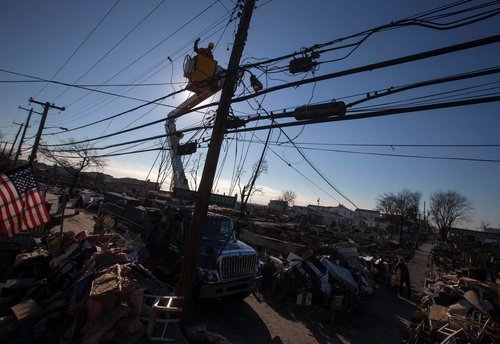
>The effects are already being felt, the report says. Power plants are shutting down or reducing output because of a shortage of cooling water. Barges carrying coal and oil are being delayed by low water levels in major waterways. Floods and storm surges are inundating ports, refineries, pipelines and rail yards. Powerful windstorms and raging wildfires are felling transformers and transmission lines.

“We don’t have a robust energy system, and the costs are significant,” said Jonathan Pershing, the deputy assistant secretary of energy for climate change policy and technology, who oversaw production of the report. “The cost today is measured in the billions. Over the coming decades, it will be in the trillions. You can’t just put your head in the sand anymore.”<

See on www.nytimes.com