Solar Energy Storage Added to Eight California Schools

Burton School District, in the heart of California’s sun-drenched San Joaquin Valley, will also house combined solar and energy storage systems[…]

Source: www.pvsolarreport.com

>”In the commercial sector, the cost of energy storage is now low enough that businesses are finding it a useful addition to solar. Generally, businesses’ peak energy consumption is when electricity is most expensive, which makes energy storage especially useful.

As the cost of energy storage continues to decline, large solar companies have been integrating it into their product offerings to complement a solar system. […]

The district will install solar and DemandLogic to generate and store its own clean, renewable electricity at eight schools. This will be the largest combined solar and energy storage installation SolarCity has undertaken to date. It will allow the district schools to reduce energy costs by using stored electricity to lower peak demand.

SolarCity will install the district’s solar systems and battery storage at eight elementary and middle schools, as well as additional solar generation at a district office. The solar installations will total more than 1.4 MW of capacity, with storage providing an additional 360 kW (720 kWh) of power to reduce peak demand. The new solar systems are expected to save the district more than $1 million over the life of the contracts, and the DemandLogic battery storage systems could save thousands more on demand charges each year.

[…]

The new SolarCity systems are expected to generate 2,300 MWh of solar energy annually, and enough over the life of the contract to power more than 4,000 homes for a year. The solar systems will also offset over 43 million pounds of carbon dioxide and save more than 203 million gallons of water, an especially important environmental benefit in the drought-stricken valley. The entire storage project is expected to be completed by May 2015.”<

See on Scoop.itGreen Energy Technologies & Development

Cove Point LNG Project Obtains Federal Approval and Opposition

Initially, Cove Point helped the United States overcome what was then an energy shortage. Now that our nation is developing a burgeoning surplus of natural gas, Cove Point can help send a small portion of that surplus to allied nation’s looking for stable supplies of clean energy, supporting economic development and replacing coal as a fuel.

Source: www.fierceenergy.com

>” […] The project offers significant economic, environmental and geopolitical benefits. The construction of the approximately $3.8 billion export project will create thousands of skilled construction jobs, an additional $40 million in annual tax revenue to Calvert County, and millions of dollars in new revenues for Maryland and the federal government, as well as a reduction in the nation’s trade deficit by billions of dollars annually.

Dominion’s project has faced and will continue to face significant and widespread grassroots opposition. Despite these benefits, environmental and community groups are denouncing FERC’s approval of the controversial project, claiming that the facility will incentivize environmental damage from fracking across the mid-Atlantic region and, according to federal data, would likely contribute more to global warming over the next two decades than if Asian countries burned their own coal.

Environmental groups, including the Chesapeake Climate Action Network, Earthjustice, and the Sierra Club are poised to petition FERC and potentially to sue the agency to challenge on the basis of an inadequate environmental review. These groups are assessing the issue upon which to file a motion for a rehearing, which needs to occur before an appeal can happen.

The groups claim that in its Environmental Assessment, which was limited at best, FERC omitted credible analysis of the project’s lifecycle global warming pollution, including all the pollution associated with driving demand for upstream fracking and fracked gas infrastructure.

The Dominion Cove Point project would be the first LNG export facility to be sited so close to a residential area and in such close proximity to Marcellus Shale fracking operations, and could trigger more global warming pollution than all seven of Maryland’s existing coal-fired power plants combined, the groups contend.

“FERC’s decision to approve Cove Point is the result of a biased review process rigged in favor of approving gas industry projects no matter how great the environmental and safety concerns,” said Mike Tidwell, director of the Chesapeake Climate Action Network, in a statement. “FERC refused to even require an environmental impact statement for this $3.8 billion facility right on the Bay. We intend to challenge this ruling all the way to court if necessary…we will continue to fight this project until it is stopped.”

Dominion must now review and accept the order. Upon completion, Dominion will file an implementation plan describing how it plans to comply with the conditions set forth in the order. Dominion expects to ask the FERC for a “Notice to Proceed” at that time and plans to begin construction when the notice is received. This process – from Dominion review through FERC’s notice – is expected to take several weeks.

Cove Point is the fourth liquefied natural gas export project to receive approval to site, construct and operate and is the first LNG export project on the East Coast. “<

See on Scoop.itGreen & Sustainable News

Energy Efficiency Gains, Backfire & The Rebound Effect – A Problem?

“Every few years, a new paper comes out about the rebound effect and the issue receives some short-term attention. (When a consumer or business buys an efficient car or air conditioner, they may use their energy-efficient equipment a little more often or may spend some of their energy bill savings on things that use energy—these are examples of rebound effects.)  […]”

Source: aceee.org

>” […] we found that rebound may average about 20%, meaning that 80% of the savings from energy efficiency programs and policies register in terms of reduced energy use, while the 20% rebound contributes to increased consumer amenities (for example, more comfortable homes) as well as to a larger economy.  […]

E2e, a joint initiative of three universities, released a working paper entitled “The Rebound Effect and Energy Efficiency Policy.” In it, they discuss various types of rebound and ways to analyze it. Much of their data relates to gasoline and oil prices and consumer and market responses to changes in those prices. They find that for developed countries, “most… studies fall […] in the range of 5 to 25 percent” direct rebound effect (where direct captures consumer response but not whole-economy effects). In developing countries, where incomes are lower and impose constraints on miles driven and other energy-consuming behavior, the E2e paper finds the “most common range” is 10-40% demand elasticity (related to but not exactly the same as direct rebound). They also discuss macroeconomic effects, emphasizing studies that show rebound of 11 percent and 21 percent due to economic growth. By way of comparison, the ACEEE paper estimates 10 percent direct rebound on average for the United States, noting the first of the two economic growth studies. In addition, in the case of oil prices, the E2e paper discusses how improvements in fuel economy soften oil prices, which can lead to a 20-30% increase in global oil use due to these price effects. Bottom line: The E2e paper sees modestly higher rebound effects than the earlier ACEEE paper.  […]

Regarding electricity use, Breakthrough discusses how electricity use has risen more quickly than generating plant efficiency has increased. The authors call this backfire, even as they acknowledge that these trends are also affected by rising incomes, urbanization, changes in consumer preferences, and other socioeconomic and demographic trends. They provide no evidence on the relative importance of energy efficiency relative to these other factors. Furthermore, they seem to mix up energy efficiency and economic efficiency.[…]

Breakthrough released their new report with an op-ed in the New York Times. The op-ed goes several steps further than the report. First, applying its claims of lighting backfire from the 1800s, it claims that LED lighting, for which the most recent Nobel Prize in physics was awarded, will increase lighting energy use, particularly in developing countries. As I wrote in a letter to the editor of the Times, LEDs are about six times more efficient than incandescent lamps, so in order to reach the backfire point, the average purchaser would need to increase the amount of lighting they use by a factor of six. While such an increase may well happen among the poorest households in developing countries, it is unlikely to be seen in developed countries, or even among the middle class in developing countries.

The Breakthrough op-ed also claims that the International Energy Agency and the Intergovernmental Panel on Climate Change find that “rebound could be over 50 percent globally.” While technically correct, their claim takes the upper end of the ranges found in recent IEA and IPCC studies. For example, IEA states, “Direct rebound can range from 0% to as much as 65%. However, estimates tend to converge between 10% and 30%.” It would be much more accurate if the institute would cite the full range, instead of looking only at the extreme. Applying that logic, I could argue that IEA supports ACEEE’s 10% direct rebound estimate–at least 10% is within IEA’s most likely range of 10-30%. IPCC estimates get similar treatment from Breakthrough.

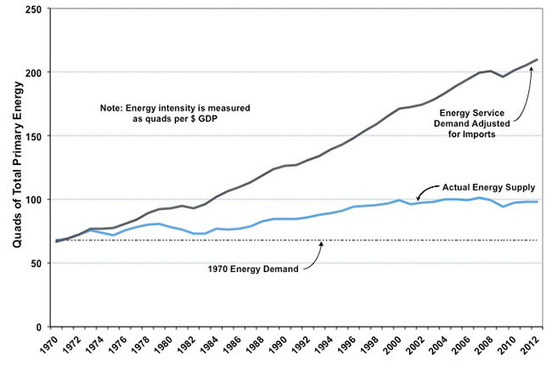
Bottom line: The E2e analysis is very reasonable, but Breakthrough appears to be more interested in exaggerating to make its case, rather than sticking to the facts. The truth is that for 40 years energy efficiency has had a dramatic effect on worldwide energy consumption. In the United States, if we were to use energy today at the rate we were in 1974, we would be consuming more than twice the amount that we are actually using. […]”<


See on Scoop.itGreen & Sustainable News

Electric Vehicle Market – Nissan Tests “Demand Response” Energy Management System

Nissan is assessing the potential of electric vehicles in energy management systems. […]  is participating in the “demand response” energy supply and demand system testing together with businesses and government authorities in Japan.

Source: green.autoblog.com

>”[…]  Demand response is a strategy to make power grids more efficient by modifying consumers’ power consumption in consideration of available energy supply. Since the Great East Japan Earthquake in March 2011 the supply and demand of electricity during peak use hours in Japan has drawn attention. Under the demand response scheme, power companies request aggregators* to use energy conservation measures, and they are compensated for the electricity that they save.

Usually when energy-saving is requested consumers may respond by moderating their use of air conditioning and lighting. However, by using the storage capacity of electric vehicles and Vehicle to Home (V2H) systems, consumers can reduce their use of power at peak times without turning off lights and appliances. This is particularly useful in commercial establishments where it is difficult to turn power off to save electricity.

The demand response scheme involves assessing the usefulness of energy-saving measures using V2H systems during peak-use periods and analyzing the impact of monetary incentives on business. For example, the testing involves a LEAF and LEAF to Home system which is connected to power a Nissan dealer’s lighting system during regular business hours using stored battery energy. This reduces electricity demand on the power grid. The aggregator is then compensated for the equivalent of the total amount of electricity that is saved. Two or three tests per month will be conducted on designated days for three hours’ each time sometime between 8:00 a.m. to 8:00 p.m. from October 2014 through January 2015.

Effective use of renewable energy and improvements in the efficiency of power generation facilities will enable better energy management in the future and help reduce environmental impact. Field tests using EVs’ high-capacity batteries that are being conducted globally are proving their effectiveness in energy management. Additionally, if similar compensation schemes for energy-saving activities were applied to EV owners it could accelerate the wider adoption of EVs and reduce society’s carbon footprint.

Nissan has sold more than 142,000 LEAFs globally since launch. The Nissan LEAF’s power storage capability in its onboard batteries, coupled with the LEAF to Home power supply system, is proving attractive to many customers. As the leader in Zero Emissions, Nissan is promoting the adoption of EVs to help build a zero-emission society in the future. Along with these energy management field tests, Nissan is actively creating new value through the use of EVs’ battery power storage capability and continuing to promote initiatives that will help realize a sustainable low-carbon society.

* Aggregators refers to businesses that coordinate two or more consumers (e.g. plants and offices) and trade with utility companies the total amount of the electricity they have succeeded in curbing.”<

See on Scoop.itGreen Energy Technologies & Development

US EPA Awards Energy Star to 3 CHP (Cogen) Projects

The US Environmental Protection Agency (EPA) has recognised three combined heat and power projects with ENERGY STAR CHP awards.

Source: www.cospp.com

>”[…] Eastman Chemical Company’s Kingsport, Tennessee, Campus plant (pictured) was recognised for its 200 MW CHP system, which includes 17 GE steam turbine generators. The Kingsport industrial campus, one of the largest chemical manufacturing sites in North America, employs nearly 7000 people […]

Seventeen boilers produce steam to support manufacturing processes, help meet the space heating/cooling needs of 550 buildings, and drive 17 GE and two ABB steam turbine generators with a combined design output of 200 MW. With an operating efficiency of more than 78%, the predominantly coal-fired system requires approximately 14% less fuel than grid-supplied electricity and conventional steam production, saving Eastman Chemical approximately US$45 million per year.

Janssen Research & Development, LLC, one of the Janssen Pharmaceutical Companies of Johnson & Johnson, was granted an award for its 3.8 MW CHP system, powered by a Caterpillar lean-burn low-emissions reciprocating natural gas generator set. The system supplies 60% of the annual power needs for the site and approximately 40% of the thermal energy used to support R&D operations and heat, cool, and dehumidify the facility’s buildings.

With an operating efficiency of more than 62%, the system requires approximately 29% less fuel than grid-supplied electricity and conventional steam production, saving approximately $1.1 million per year.

Merck’s CoGen3 CHP system at its West Point facility was also recognised by the EPA. A pharmaceutical and vaccine manufacturing, R&D and warehouse and distribution centre, the project is powered by a 38 MW GE 6B heavy-duty gas turbine and recovers heat to produce steam to heat, cool and dehumidify approximately 7 million square feet of manufacturing, laboratory and office space.

The system, designed by Burns & Roe, is the third CHP system that Merck has installed at the 400-acre West Point, Pennsylvania campus. With an operating efficiency of more than 75%, the natural gas-fired system requires approximately 30% less fuel than grid-supplied electricity and conventional steam production.”<


See on Scoop.itGreen Energy Technologies & Development

Intelligent Efficiency: Evolution of the Energy Efficiency Market

In the past, energy efficiency was seen as a discrete improvement in devices,” says Skip Laitner, an economist who specializes in energy efficiency. “But information technology is taking it to the next level, where we are thinking dynamically, holistically, and system-wide.

Source: www.greentechmedia.com

>” […] This emerging approach to energy efficiency is information-driven. It is granular. And it is empowering consumers and businesses to turn energy from a cost into an asset. We call this new paradigm “intelligent efficiency.”

That term, which was originally used by the American Council for an Energy-Efficient Economy in a 2012 report, accurately conveys the information technology shift underway in the efficiency sector.

The IT revolution has already dramatically improved the quality of information that is available about how products are delivered and consumed. Companies can granularly track their shipping fleets as they move across the country; runners can use sensors and web-based programs to monitor every step and heartbeat throughout their training; and online services allow travelers to track the price of airfare in real time.

Remarkably, these web-based information management tools are only now coming to the built environment in a big way. But with integration increasing and new tools evolving, they are starting to change the game for energy efficiency.

Although adoption has been slow compared to other sectors, many of these same technologies and applications are driving informational awareness about energy in the built environment. Cheaper sensors are enabling granular monitoring of every piece of equipment in a facility; web-based monitoring platforms are making energy consumption engaging and actionable; and analytic capabilities are allowing companies to find and predict hidden trends amidst the reams of data in their facilities and in the energy markets.

This intelligence is turning energy efficiency from a static, reactive process into a dynamic, proactive strategy.

We interviewed more than 30 analysts and companies in the building controls, equipment, energy management, software and utility sectors about the state of the efficiency market. Every person we spoke to pointed to this emerging intelligence as one of the most important drivers of energy efficiency.

“We are hitting an inflection point,” says Greg Turner, vice president of global offerings at Honeywell Building Solutions. “The interchange of information is creating a new paradigm for the energy efficiency market.”

Based on our conversations with a wide range of energy efficiency professionals, we have identified the five key ways intelligent efficiency is shaping the market in the commercial and industrial (C&I) sector:

The decreased cost of real-time monitoring and verification is improving project performance, helping build trust among customers and creating new opportunities for projects;Virtual energy assessments are bringing more building data to the market, leveraging new lead opportunities for energy service professionals;Web-based energy monitoring tools are linking the energy efficiency and energy management markets, making efficiency a far more dynamic offering;Big data analytics are creating new ways to find trends amidst the “noise” of information, allowing companies to be predictive and proactive in efficiency;Open access to information is strengthening the relationship between utilities and their customers, helping improve choices about efficiency and setting the foundation for the smart grid.


[…]”<

See on Scoop.itGreen Energy Technologies & Development

Asia-Pacific Microgrid Market on ‘threshold of exponential growth’

According to the report, the market generated revenues of US$84.2 million in 2013 and Frost & Sullivan predicts that by 2020 this will rise almost tenfold to US$814.3 million, forecasting a compound annual growth rate of 38.3%.

Source: www.pv-tech.org

>” […] This growth is expected to come from activity in establishing microgrids for rural electrification in developing countries, and from commercial microgrids in the developed ones. The report cites the examples of Australia and Japan among the developed countries.

Mining operations in remote parts of Australia are one example of reliance on microgrids, powered by on-site generation. This has come traditionally from diesel generators, which are being combined with or replaced by solar-plus-storage. According to several sources the economics for this are already compelling.

Countries with a strong recent history in rural electrification referred to by Frost & Sullivan include Indonesia, the Philippines and Malaysia. In the example of Indonesia, the country’s utilities are aiming to bring electrification to 90% of the rural population by 2025. In total the report covered the countries of Japan, South Korea, Indonesia, Malaysia, the Philippines, and Australia.

However, despite this recent activity, the report highlights several barriers that are preventing the market reaching its potential. One such example is the high capital cost of installing microgrids in tandem with energy storage systems.  […]

[…] rising electricity prices in many regions would lead utility companies away from diesel and onto renewables to run their microgrids. It could also encourage “stronger governmental support through favorable regulations, funds and subsidies”, as the use of renewable energy for microgrids would require some forms of energy storage, which are still expensive to install […]

“The utilisation of renewable energy sources, either in standalone off-grid applications or in combination with local micro-grids, is therefore recognised as a potential route for rural farming communities to develop, as well as an opportunity to tackle the health issues associated with kerosene and biomass dependence. For example, the Indian Government aims to replace around 8 million existing diesel fuelled groundwater pumps, used by farmers for irrigation, with solar powered alternatives,” according to Fox. […]”<

See on Scoop.itGreen Energy Technologies & Development

Microgrid Integration with Public Transportation

Superstorm Sandy crippled much of New Jersey’s critical infrastructure two years ago. Stuck without power at home, many also couldn’t get to work because the operations center for New Jersey Transit flooded, damaging backup power systems, emergency generation, and the computers that control train operations.

Source: theenergycollective.com

>” […] After a highly competitive grant process, NJ Transit last week received $1.3 billion in federal funds to improve the resilience of the state’s transportation system in the event of devastating future storms. The funds include $410 million to develop the NJ TransitGrid into a first-of-its-kind microgrid capable of keeping the power running when the electric grid goes down.

Microgrids are different from traditional electric grids in that they generate electricity on-site or nearby where it’s consumed. They can connect to the larger grid or island themselves and operate independently.

The NJ TransitGrid will not only generate power on-site but will incorporate a range of clean energy technologies such as renewable energy, energy storage, and distributed generation. This microgrid will also allow NJ Transit and Amtrak trains running on Amtrak’s Northeast Corridor, the country’s busiest train line, to keep operating during an outage.

Environmental Defense Fund joined state and federal stakeholders, such as New Jersey Governor’s Office of Recovery and Rebuilding and the U.S. Department of Energy, in the early stages of NJ TransitGrid planning. EDF also wrote a letter in support of New Jersey’s application for the funds from the Federal Transit Administration.

The $1.3 billion in total federal funds received by NJ Transit will go toward a range of resiliency and restoration projects across the system, including flood protection, drawbridge replacement, train storage and service restoration, and making train controls more resilient. These funds will also be used to fortify critical Amtrak substations.

Serving almost 900,000 passengers daily, NJ Transit is the third largest transit system in the country connecting travelers to the tri-state area of New York, New Jersey, and Pennsylvania. An independent microgrid for NJ Transit will prepare the state for future extreme weather events, which are happening more frequently due to climate change. Furthermore, the use of clean energy resources will make this microgrid a less polluting and more efficient operation for New Jersey’s day-to-day needs.”<


See on Scoop.itGreen & Sustainable News

Google Gives San Francisco Free Wi-Fi in Public Places

“On Wednesday, San Franciscans were able to hook their gadgets up to free Wi-Fi that launched in 32 new public locations.”

Combined Heat & Power Drives Biomass Demand

New analysis from the International Renewable Energy Agency (IRENA) forecasts CHP and industrial heat demand are set to drive global bioenergy consumption over the coming decade and more.

Source: www.cospp.com

>”The trend towards modern and industrial uses of biomass is growing rapidly, the report notes, adding that biomass-based steam generation is particularly interesting for the chemical and petrochemical sectors, food and textile sectors, where most production processes operate with steam. Low and medium temperature process steam used in the production processes of these sectors can be provided by boilers or CHP plants. Combusting biogas in CHP plants is another option already pursued in northern European countries, especially in the food sector, where food waste and process residues can be digested anaerobically to produce biogas, IRENA adds. A recent IRENA analysis (2014b) estimated that three quarters of the renewable energy potential in the industry sector is related to biomass-based process heat from CHP plants and boilers. Hence, biomass is the most important technology to increase industrial renewable energy use, they conclude.

In industry, demand is estimated to reach 21 EJ in the REmap 2030, up to three-quarters of which (15 EJ) will be in industrial CHP plants to generate low- and medium-temperature process heat (about two-thirds of the total CHP output). In addition to typical CHP users such as pulp and paper other sectors with potential include the palm-oil or natural rubber production sectors in rapidly developing countries like Malaysia or Indonesia where by-products are combusted in ratherinefficient boilers or only in power producing plants.

As a result, installed thermal CHP capacity would reach about 920 GWth with an additional 105 GWth of stand-alone biomass boilers and gasifiers for process heat generation could be installed worldwide by 2030. This is a growth of more than 70% in industrial biomass-based process heat generation capacity compared to the Reference Case.

Biomass demand for district heating will reach approximately 5 EJ by 2030 while the power sector, including fuel demand for on-site electricity generation in buildings and on-site CHP plants at industry sites, will require approximately another 31 EJ for power generation (resulting in the production of nearly 3,000 TWh per year in 2030, according to IRENA.

The total installed biomass power generation capacity in Remap 2030 reaches 390 GWe. Of this total, around 178 GWe is the power generation capacity component of CHPs installed in the industry and district heating sectors.”<


See on Scoop.itGreen Energy Technologies & Development