Scottish tidal power potential less than estimated, still Viable – new Study via Reuters

See on Scoop.itGreen Energy Technologies & Development

* Pentland Firth could generate maximum of 1.9 GW of power* 1 GW seen more realistic, vs prior estimates of 10-20 GW

LONDON, July 10 (Reuters) – Proposed tidal turbines in Pentland Firth, which separates…

Duane Tilden‘s insight:

>New research led by the University of Oxford suggests, however, that the maximum that Pentland Firth could produce would be 1.9 gigawatts, with 1 GW a more realistic target.

That is far below previous estimates of 10 GW to as much as 20 GW. […]  The study was less optimistic about the firth’s potential because it took into account factors such as how many turbines it would be feasible to build, how they would interact with each other and variations from tidal cycles.

“Our study provides the first robust data about how much energy it would be feasible to extract,” said Thomas Adcock, lead author of the report and fellow in engineering science at Oxford University.

Pentland Firth could still generate power equivalent to almost half of Scotland’s annual electricity consumption, which amounted to 37 terrawatt hours in 2011, Adcock added. […]<

See on www.reuters.com
Is Scotland’s Pentland Firth the World’s Best Site for Tidal Power

See on Scoop.itGreen Energy Technologies & Development

Tidal streams could bring large amounts of energy within a decade if government support is available, study says

Duane Tilden‘s insight:

>The world’s best site for tidal power, the Pentland firth, could provide half of Scotland’s electricity, according to the first robust estimate of its potential. The tidal streams, which surge through the firth at five metres per second, could bring large amounts of renewable energy in reach within a decade if enough government support is available, said the Oxford University engineer behind the new study.

From Anglesey to the Severn estuary to Portland Bill, the UK has the greatest potential for generating predictable, clean energy from tidal channels. Turbines are already operating at Strangford Loch in Northern Ireland and prototypes are being tested in the Menai Straits off Anglesey.

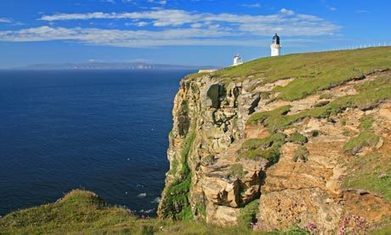
But the Pentland firth is the greatest resource. “It is almost certainly the best site for tidal stream power in the world,” said Thomas Adcock, at Oxford University, who led the new work published in the journal Proceedings of the Royal Society A. The water flow is rapid there because the tide shifting from the Atlantic into the North Sea is forced through a narrow eight-mile channel.<

See on www.guardian.co.uk

Three Types of Climate Action for Europe and Central Asia Region

See on Scoop.itGreen Energy Technologies & Development

Under current trajectories, the world is headed toward a world that will be 4 degrees warmer by the end of this century.

Duane Tilden‘s insight:

>[…] However, as we try to show in our recent publication, Growing Green: the Economic Benefits of Climate Action, strategic investment in climate action can benefit these countries in the medium- and long-terms – thus offsetting the negative consequences of these investments.

Above all, countries need to focus on three types of climate action: climate action as aco-benefit, climate action as an investment, and climate action as insurance.

This first area of climate action is simply a co-benefit of policies that make sense even if we were not concerned about climate change. These are things like supporting energy efficiency investments or restoring degraded soils to make agriculture more productive (while also increasing carbon storage in soils).

The second area is what we call climate action as an investment. This gets at the issue of how countries can benefit from greening their economies – doing well by doing good. What we have seen in the last few years is that new firms emerge in countries that have implemented ambitious green policies early and take advantage of the economic opportunities that have sprung from these policies. […]<

See on blogs.worldbank.org

Plan B Updates – 115: Peak Water: What Happens When the Wells Go Dry? | EPI

See on Scoop.itGreen Energy Technologies & Development

Peak oil has generated headlines in recent years, but the real threat to our future is peak water. There are substitutes for oil, but not for water. We can produce food without oil, but not without water.

See on www.earth-policy.org

Scientists Adding Color to Solar Panels

See on Scoop.itGreen Building Design – Architecture & Engineering

If you have noticed the design and layout of solar panels around, you would have thought a minute or two about its aesthetics. Though not too bad, the dark

Duane Tilden‘s insight:

>The Institute is developing a SIS (semiconductor-insulator-semiconductor) variety solar panel. The package consists of a silicon substrate which absorbs light and converts it into electricity.[…]

The change in color does not make solar cells less efficient. The cell’s working is also not affected by the thickness of the conductive oxide layer. The SIS cell has the same simulated efficiency of around 20%.

The technology might later on use a type of inkjet printing that deposits the oxide layer with more flexibility, which would allow complex designs too. With this, solar cells could turn out to be part of beautiful architectural designs in future.<

See on www.greenpacks.org

The Amazing Energy Race

See on Scoop.itGreen & Sustainable News

The United States is falling behind. To catch up, we need to reorder our priorities, find cleaner and smarter fuels and develop new technologies.

Duane Tilden‘s insight:

>“In reducing coal’s historic dominance, the president is formalizing a market trend that was already taking shape,” remarked Andy Karsner, who was an assistant secretary of energy in the last Bush administration. His bigger message, though, was “no matter where you find yourself on the political spectrum, it’s useful for the nation to discuss, debate and consider a strategy for climate change. The consequences of inaction are potentially greater than all the other noise out there.”<

See on www.nytimes.com

China opens city-sized shopping mall, with fake sun

See on Scoop.itGreen & Sustainable News

If you don’t care about authenticity, the New Century Global Center has everything you could want, including an artificial Mediterranean village. Read this article by Tim Hornyak on CNET.

Duane Tilden‘s insight:

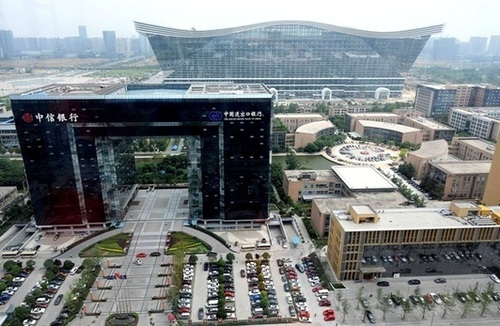
>The New Century Global Center building opened recently in Chengu, a city of more than 14 million people in southwest China’s Sichuan province. It’s described as “the world’s largest standalone structure” by Chinese officials and is 328 feet high, 1,640 feet long, and 1,312 feet wide.

While Boeing’s plant in Everett, Wash., is the world’s biggest building by volume, the Chinese mall seems to be tops in floor space. Almost the area of Monaco, its 420 acres of floor space could fit nearly three Pentagons, four Vatican Cities, or 20 Sydney Opera Houses.

The cavernous structure will feature a mix of retail outlets, a 14-screen movie theater, a university complex, offices, hotels, a water park called Paradise Island, a skating rink that’s big enough to host international competitions, a pirate ship, 15,000 parking spots, and even a fake Mediterranean village.<

See on news.cnet.com

Changes in the Electrical and Micro Grid

See on Scoop.itGreen & Sustainable News

Microgrids are becoming a worldwide phenomenon. Currently an estimated $4.5 billion market in the US alone with 1,459 MW online and 1,122 MW in planning or development, the microgrid market is expected to continue to grow as the world demands ever more electricity usage and the grid struggles to keep up. The truth is that the traditional grid was not built to cope with the extraordinary level and fluctuations of present-day demand, and microgrids present the perfect solution. The question (to the utilities) is whether we are ready to embrace the change and adapt.

See on theenergycollective.com

Fire Industry Protocol – are you in the loop? – BSEE – Building Services and Environmental Engineer

See on Scoop.itGreen Building Operations – Systems & Controls, Maintenance & Commissioning

Three decades ago, the protocol debate in building automation systems (BAS) did not exist. Every element of a BAS, from the sensors to the control devices…

See on www.bsee.co.uk

Concern about emissions trading scheme affecting the impact of renewables

See on Scoop.itGreen & Sustainable News

Deep problems in Europe’s carbon trading scheme – its flagship climate change policy – are set to cancel out over 700m tonnes of emissions saved through renewable energy and energy efficiency efforts, according to a new report.

The study, by carbon trading thinktank Sandbag, found that a huge oversupply of carbon pollution permits means many are being banked to enable emissions after 2020, when efforts to tackle global warming should be intensifying. These emissions, nearly equivalent to Germany’s annual carbon pollution, will cancel out efforts made in other areas to cut carbon.

The report also warns that Europe’s emissions trading scheme (ETS) is a “global dumping ground” for “dubious” carbon permits created by projects around the world.

See on energyindemand.com