Smart Grid: Utility sued due to Smart Meter opt-out program

See on Scoop.itGreen Energy Technologies & Development
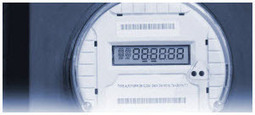
Smart Grid – BC Hydro offered customers who didn’t want to participate in its smart meter program the choice of opting out in mid-July. But that didn’t protect the utility from a lawsuit

Duane Tilden‘s insight:

>Just days after BC Hydro finally agreed to an opt-out program for smart meters, a customer is suing the utility for installing a smart meter last year even though she didn’t want one on her property. […]

The suit claims the installations caused the plaintiff “emotional distress,” because it “interfered with the quiet enjoyment of her property,” which she used to host yoga and meditation retreats. Opponents of smart meters believe the devices’ radio waves have health risks. The lawsuit further alleges that BC Hydro unlawfully leveraged its monopoly powers by imposing a smart meter on the plaintiff.

[…] The utility says that smart meters only broadcast several times a day, and that living next to a smart meter for 20 years would expose a resident to the same level of radiation as a 30-minute cell phone call.<

See on www.smartgridnews.com

Bakken Oil: North Dakota flaring burns 4 times Total National Consumption (2011 figure)

See on Scoop.itGreen & Sustainable News

NEW YORK (Reuters) – Oil drillers in North Dakota’s Bakken shale fields are allowing nearly a third of the natural gas they drill to burn off into the air, with a value of more than $100 million per month,…

Duane Tilden‘s insight:

An alarming state of affairs.  As per the article the flared Natural gas in North Dakota is reported to be 266,000,000,000 cfd (cubic feet per day) flared methane or 2750 x 10(9) cu m/year.

According to Wiki the 2011 US annual consumption for natural gas was 689.9 x 10(9) cu m, so apparently Bakken is actually burning 4 times the total 2011 national requirements.

>Roughly 29 percent of natural gas extracted in North Dakota was flared in May, down from an all-time high of 36 percent in September 2011. But the volume of natural gas produced has nearly tripled in that timeframe to about 900,000 million cubic feet per day, boosting flaring in the state to roughly 266,000 million cubic feet per day, according to North Dakota state and Ceres data.<

See on www.reuters.com

Dept of Interior Holds Inaugral Lease Sale for Renewable Energy in Federal Waters

See on Scoop.itGreen & Sustainable News
WASHINGTON, D.C. – …Secretary of the Interior Sally Jewell and Bureau of Ocean Energy Management (BOEM) Director Tommy P. Beaudreau today held the nation’s first-ever competitive lease sale for renewable energy in federal waters.  

Duane Tilden‘s insight:

>The provisional winner of today’s lease sale, which auctioned two leases for a Wind Energy Area of 164,750 acres offshore Rhode Island and Massachusetts for wind energy development, is Deepwater Wind New England, LLC. When built, these areas could generate enough combined energy to power more than one million homes.

“When you think about the enormous energy potential that Atlantic wind holds, this is a major milestone for our nation,” said Secretary Jewell. “A lot of collaboration and thoughtful planning went into getting to this point, and we’ll continue to employ that approach as we move forward up and down the coast to ensure that offshore wind energy is realized in the right way and in the right places. Offshore wind is an exciting new frontier that will help keep America competitive, and expand domestic energy production, all without increasing carbon pollution.”

The Wind Energy Area is located 9.2 nautical miles south of the Rhode Island coastline and has the potential to support 3,395 megawatts of wind generation. BOEM will hold its next competitive lease sale for offshore wind on Sept. 4, which will auction nearly 112,800 acres offshore Virginia, and is expected to announce additional auctions for Wind Energy Areas offshore Massachusetts, Maryland, and New Jersey later this year and in 2014.

Maps for these areas are available on BOEM’s website.<

See on www.doi.gov

US Senators back new bill pushing Energy Efficiency Legislation

See on Scoop.itGreen & Sustainable News

By SEN. JEANNE SHAHEEN and SEN. ROB PORTMAN | 7/29/13 9:25 PM EDT

For the past three years, we have worked together to develop the Energy Savings and Industrial Competitiveness Act, legislation that will go a long way toward making the United States more energy efficient and more economically competitive.

Duane Tilden‘s insight:

According to the Sen. Shaheen & Portman:

>Our bill curbs inefficient energy practices that cost the U.S. economy billions of dollars and millions of jobs every year. According to a recent study by the Emily Hall Tremaine Foundation, we waste an astonishing 86 percent of the energy we consume. Upgrading the energy efficiency of U.S. buildings alone could save $1 trillion over the next decade. Cutting down on energy waste represents an untapped resource that we have long ignored. Our legislation helps to change that.

Our bill promotes energy savings that Americans across the political spectrum can get behind. Energy efficiency has broad, bipartisan support from business, energy and environmental advocates alike, and the legislation we have developed helps to promote energy efficiency through a smart, pragmatic plan that can be implemented immediately.

There is one mandatory component to the bill: We are going to make Washington practice what it preaches. We’re going to make the federal government — the largest energy user in the country — adopt energy-saving techniques and best practices that make its operations more efficient. […]

These provisions will save money, make America more energy-independent and lower harmful emissions. For the private sector, the tools our bill deploys are entirely voluntary. This legislation will also not add to the deficit and its costs are fully offset.<

See on www.politico.com

Net Metering And Rooftop Solar For The Utility Of The Future

See on Scoop.itGreen Energy Technologies & Development

Net metering makes small-scale renewable energy, such as rooftop solar panels, more affordable by crediting the “distributed generation” owners for the excess energy they produce.

Duane Tilden‘s insight:

>Why the new focus on net metering?  The cost for rooftop solar panels has fallen 80% since 2008, including 20% in 2012 alone.  Installed rooftop solar energy has increased by 900% between 2000 and 2011.  As consumers install more rooftop solar panels and net meter them, utility revenues will decrease.

Net metering policies vary from state-to-state, including the amount of the payback for excess energy.  The most favorable policy for distributed generation owners is an excess energy credit equal to the full retail energy rate consumers pay for energy, i.e. the amount consumers are charged for using energy.  Most states use this measure.  However, utilities claim this prevents them from recovering their full costs and overpays distributed generation owners, unfairly shifting costs to other consumers.  Utilities say the credit should be equal to the utilities’ wholesale energy cost at the time of day when excess energy flows back to the grid.

Despite attempts by utilities to change net metering policies, state regulators are keeping these policies intact.  Earlier this month, the Idaho Public Utilities Commission rejected Idaho Power’s request to pay less than the full retail rate and to impose higher charges on net metering consumers.  Last month, the Louisiana Public Service Commission rejected similar requests by Louisiana utilities.  More recently, Arizona Public Service Company raised the issue in a ne[…]<

See on blogs.edf.org

Companies Fined for Greenhouse Gas (GHG) Emissions Reporting Errors | The National Law Review

See on Scoop.itGreen & Sustainable News

Nine companies were issued fines by the California Air Resources Board (ARB) for violating the State of California’s Mandatory Greenhouse Gas Reporting rule. The ARB adopted the reporting rule in 2007.

Duane Tilden‘s insight:

>The companies cited for violations were not concentrated in one industry sector.  Sources receiving fines included a refinery, a biomass generating plant, an oil and gas production company, a utility company, a lime manufacturing company, and a cement company, among others. <

See on www.natlawreview.com

Glut of Natural gas squeezes biofuel market

See on Scoop.itGreen Energy Technologies & Development

Farm Power Northwest has built five anaerobic digesters in Oregon and Washington in recent years, but the brothers who founded the company say the outlook for new projects has lost its luster.

Duane Tilden‘s insight:

>The Mount Vernon, Wash.-based company, founded by brothers Daryl and Kevin Maas, uses manure from dairy farms to create methane gas, then burns it in generators and sells the resulting electricity to power utilities.

[…]

While power utilities paid up to 9 cents per kilowatt-hour several years ago for digester-produced electricity, the rate has now fallen to 5 cents per kilowatt-hour, said Kevin Maas.

The reason is the price of natural gas — a common fuel for electrical generation — has plummeted as domestic production has skyrocketed. Natural gas is now trading at below $4 per thousand cubic feet, compared with nearly $13 per thousand cubic feet in 2008.

That’s because new technology known as hydraulic fracturing, or fracking, has greatly increased the amount of natural gas that can be economically extracted from the ground.

With the cost of natural gas so much lower, other energy feedstocks like biogas from digesters become less competitive, experts say.<

See on www.capitalpress.com

Renewable Energy or Efficiency for the Data Center: Which first? #GreenComputing

See on Scoop.itGreen & Sustainable News

New advancements in green technology and design are making the idea of a green data center into a reality.

Duane Tilden‘s insight:

>Without doubt, the facility is a triumph of advanced environmental design and will serve as a template for future construction. Indeed, activity surrounding renewable-based data infrastructure is picking up, with much of it being led by the burgeoning renewable energy industry itself. VIESTE Energy, LCC, for example, has hired design firm Environmental Systems Design (ESD) to plan out a series of data centers across the U.S. that run on 100 percent renewable energy. A key component of the plan is a new biogas-fed generator capable of 8 to 15MW performance. The intent is to prove that renewables are fully capable of delivering reliable, cost-effective service to always-on data infrastructure.

The question of reliability has always weighed heavily on the renewables market, but initiatives like the VIESTE program could help counter those impressions in a very important way, by establishing a grid of distributed, green-energy data supply. In fact, this is the stated goal of the New York State Energy Research and Development Authority (NYSERDA), which has gathered together a number of industry leaders, including AMD, HP and GE, to establish a network of distributed, green data centers that can be used to shift loads, scale infrastructure up and down and in general make it easier for data users to maintain their reliance on renewable energy even if supply at one location is diminished. In other words, distributed architectures improve green reliability through redundancy just as they do for data infrastructure in general.

But not everyone on the environmental side is convinced that renewables are the best means of fostering data center efficiency. In a recent article in the journal Nature Climate Change, Stanford researcher Dr. Jonathan Koomey argues that without populating existing infrastructure with low-power hardware and data-power management technology first, data operators are simply wasting precious renewable resources that could be put to better use elsewhere. For projects like the NWSC and VIESTE, then, renewables may make sense because they power state-of-the-art green technology. But not as an industry-wide solution–renewables won’t make sense until hardware life cycles run their course.<

See on www.itbusinessedge.com

Wireless Transmission of Energy in Buildings – Building Automation

See on Scoop.itGreen Building Operations – Systems & Controls, Maintenance & Commissioning

Energy harvesting wireless technology becomes more attractive for OEMs as a basis technology for products and solutions that contribute to a building’s efficient energy management. The wireless modules gain their power from the surrounding environment…

Duane Tilden‘s insight:

>Energy harvesting technology enables batteryless automation devices and systems to make buildings more energy-efficient based on sustainable, resource-saving technologies that eliminate the need for batteries. […]

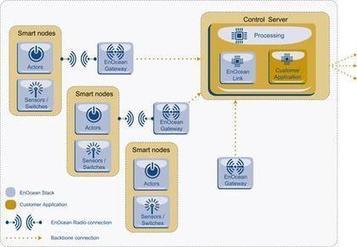
In a complex commercial building scenario, EnOcean Link can be implemented on a central device, like a control server, which controls the whole building, holds the automation intelligence, and can be physically located outside the building (in the cloud). Several gateways in the building record radio telegrams from thousands of distributed batteryless wireless sensors and relay receivers, and send back information or command data when needed. These gateways are connected to the control server by a backbone, which does not have to be based on EnOcean radio, or even be wireless. The middleware, located in the central unit, interprets all telegrams received by the gateways and provides them to the automation system.

High energy efficiency goals demand flexible automation systems for all kind of buildings that cover several areas. This particularly affects retrofit projects, where the intelligent control of energy consumption is the key factor for a building’s improved energy and carbon footprint. Energy harvesting wireless technology fulfills the demands for today’s and tomorrow’s automation and energy management systems. […]<

See on www.manufacturing.net

New Report: The Pulp and Paper Industry Can Save Jobs by Becoming More Energy Efficient

“The pulp and paper mill industry may be able to avoid large cuts in jobs by reducing energy costs.”

wklc's avatarWEST KOOTENAY LABOUR COUNCIL

http://inthesetimes.com   Saturday Jul 20, 2013 10:00 am

By Kari Lydersen

The pulp and paper mill industry may be able to avoid large cuts in jobs by reducing energy costs.   (Ann Baekken/ Flickr / Creative Commons).

The complex relationship between efficiency, productivity and employment has been debated at great length by academics and policymakers, who often come to widely differing conclusions about whether jobs will inherently be sacrificed as industry gets more efficient. A prime example is occurring in the U.S. pulp and paper industry, which, over the last decade, has seen productivity and exports grow, even as hundreds of mills closed and 100,000 workers—30 percent of the industry’s workforce—lost their jobs.

But a new report released last week by the environmental think tank World Resources Institute (WRI) proposes that by investing in overhauls that increase energy efficiency, thereby cutting costs on electricity and improving productivity, the country’s paper…

View original post 972 more words