ComEd’s “Smart Switches” Reducing Service Interruptions; “Self-healing” technology key to improving reliability – Electric Light & Power

See on Scoop.itGreen Energy Technologies & Development

Distribution Automation (Smart Switches) routes power around potential problem areas, often with no noticeable interruption in service.  Installation of these devices resulted in 82,000 fewer customer power interruptions in 2012. During the severe storms that hit the Chicago area in mid-April, DA devices prevented 20,000 service interruptions.

Duane Tilden‘s insight:

By remotely monitoring and controlling grid operations, Distribution Automation (DA) devices, or smart switches, are a central feature of smart grid technology and ComEd’s effort to reduce the frequency and duration of outages.

[…] if a tree were to fall on a utility pole resulting in an interruption, far fewer customers would be impacted because it enables us to better isolate the damaged section,” explained McMahan. “DA introduces a self-healing capability to the electric grid by allowing us to resolve issues before customers might even be aware of them, and that has a profoundly positive impact on people’s daily lives.”

When fully implemented, distribution automation and smart meters will communicate with ComEd’s operations center, alerting the utility of an outage and eliminating the need for customers to call to report they are out of power.  […]  To see how smart meters and DA devices work together, click this link http://youtu.be/L4xp7a1di7Y .

Under the smart grid law, ComEd committed to spend $2.6 billion over 10 years to strengthen and modernize the electric grid in northern Illinois. More than $1.3 billion is earmarked to deploy a Smart Grid system and install smart meters in four million homes and businesses to give customers greater control over their energy consumption and costs.  The current schedule calls for ComEd to begin installing smart meters in 2015. […]

See on www.elp.com

US #SmartGrid #Networks Exploiting Infrastructure to Provide #Wireless Broadband

See on Scoop.itGreen Energy Technologies & Development

The USDA Rural Development’s Rural Utilities Service (RUS) has now spent the $250 million committed for smart grid technologies.

Duane Tilden‘s insight:

This investment is helping smart grids to become the norm across the country. A side benefit is that utilities are also developing their smart grids for telecoms over and above that used by meters to send data to network controllers.

A hindrance to cities aiming to develop comprehensive WiFi networks has come from the powerful telecoms industry, which employs its lobbying clout to push for laws blocking or preventing municipalities from offering WiFi or fixed broadband services.

See on www.circleid.com

AirLink® LS300 Intelligent Gateway

AirLink® LS300 Intelligent Gateway.

NEMA Praises Introduction of Bill to Promote Energy Storage Technologies, National

See on Scoop.itGreen Energy Technologies & Development

April 25, 2013 – NEMA endorsed HR 1465, STORAGE 2013, which promotes adoption of state-of-the-art energy storage technologies, calling this legislation “carefully crafted” in its regard for entire range of energy storage technologies. …

Duane Tilden‘s insight:

“Energy storage is a key enabler of the Smart Grid and is transforming the way we think about electricity,” said NEMA President and CEO Evan R. Gaddis. “By getting us beyond the need to generate electricity at the same moment as it is used, energy storage delivers greater system efficiency, enhances reliability and resiliency, and fosters integration of renewable energy.”

STORAGE 2013 would offer a 30 percent investment tax credit for energy storage used in connection with the power grid, with no project eligible to receive more than $40 million, and the total program capped at $1.5 billion. For municipal utilities and electric cooperatives, the legislation would make energy storage eligible for new clean renewable energy bonds. To promote efficiency and distributed generation in the commercial and residential markets, the bill offers a 30 percent credit (up to $1 million) for onsite application of energy storage.

See on news.thomasnet.com

KW17 | IHS: Solar PV energy storage market to grow to USD 19 billion in 2017 – SolarServer

See on Scoop.itGreen Energy Technologies & Development

IHS Inc. (Englewood, Colorado, US) has released a new report which predicts that the market for energy storage to accompany solar photovoltaic (PV) generation will grow more than 100% annually to 7 GW in 2017, representing USD 19 billion in value.

Duane Tilden‘s insight:

Due to the energy storage subsidy, IHS expects Germany to play a leading role, as it did in the larger PV industry. The company predicts that 70% of installed storage in 2013 will be located in Germany.

IHS expects that if the program proves successful, other nations will pass similar subsidies. …

Market for storage with utility-scale PV as well

IHS also expects that storage will be used in larger PV systems, as connection requirements for PV become increasingly demanding. The company forecasts that utility-scale PV with storage will grow to more than 2 GW annually by 2017, led by Asia and the Americas.

See on www.solarserver.com

International Battery and Energy Storage Alliance Founded – Solar Novus Today

See on Scoop.itGreen Energy Technologies & Development

IPVEA and EuPD Research form International Battery and Energy Storage Alliance

Duane Tilden‘s insight:

The newly founded alliance plans to support and enable cooperation between companies from the fields of solar energy production, electrical energy storage and smart grid technologies. Together, the members of the International Battery and Energy Storage Alliance (IBESA) will create access to professional resources, market intelligence, new networks, and emerging markets. Over 70 members of the International PV Equipment Association (IPVEA) will immediately benefit from this strong partnership.

Alongside companies in the photovoltaic, battery and solar storage sectors, IBESA is also a valuable partner for energy providers, municipal utilities, installers, consulting firms and banks. …

Interested companies can contact the International Battery and Energy Storage Alliance directly in order to become members.

See on www.solarnovus.com

Lithium-polysulfide “Flow” battery helps solar and wind power the grid

See on Scoop.itGreen Energy Technologies & Development

Researchers from the U.S. Department of Energy’s (DOE) SLAC National Accelerator Laboratory and Stanford University have managed to design a low-cost, long-life battery that could enable solar …

Duane Tilden‘s insight:

The new Stanford/SLAC battery design uses only one stream of molecules and does not need a membrane at all. Its molecules mostly consist of the relatively inexpensive elements lithium and sulfur, which interact with a piece of lithium metal coated with a barrier that permits electrons to pass without degrading the metal.

When discharging, the molecules, called lithium polysulfides, absorb lithium ions; when charging, they lose them back into the liquid. The entire molecular stream is dissolved in an organic solvent, which doesn’t have the corrosion issues of water-based flow batteries.

“In initial lab tests, the new battery also retained excellent energy-storage performance through more than 2,000 charges and discharges, equivalent to more than 5.5 years of daily cycles,” Cui explained.

See on www.tgdaily.com

Zero Carbon Building Wins Hong Kong’s Inaugural Engineering Innovation Award

See on Scoop.itGreen Building Design – Architecture & Engineering

Image Source: Arup Hong Kong’s Zero Carbon Building (ZCB) has won the inaugural “Champion of the Innovation Award for the Engineering Industry” from the Hong Kong Institution of Engineers (HKIE). The ZCB employed a swath of integrated innovatio …

Duane Tilden‘s insight:

The ZCB employed a swath of integrated innovations to best meet the unique conditions of Hong Kong’ sub-tropical location and frenetic urban setting, incorporating a total of over 80 sustainability features to heighten its efficiency and diminish its environmental impact.

The roof of the three-storey building is almost completely covered in photovoltaic panels to take advantage of Hong Kong’s torrid climate for power generation purposes. In addition to solar power, the ZCB is also capable of producing energy using biodiesel derived from waste cooking oil, which is widely used in the city’s thriving culinary culture.

See on designbuildsource.com.au

Report: US Smart Grid Cybersecurity Spending to Reach $7.25B by 2020 : Greentech Media

See on Scoop.itGreen Energy Technologies & Development

Securing the new IT infrastructure of the power grid against cyber-attack is going to be big business, but that’s not because it makes money for the utilities that are buying it. Instead, today’s smart grid cybersecurity investments are mostly about meeting regulations, satisfying shareholders, and trying to justify the costs …

Duane Tilden‘s insight:

…one of the key tenets of cybersecurity is that you don’t talk about cybersecurity — at least, not the specifics of how you’re discovering, isolating, eliminating and building new protections against new intrusions and attacks that change from day to day.

Those threats can range in intent from simple intrusion and data theft, to full-scale attempts to take over control systems, and can vary in sophistication from cheesy password-stealing scams to sophisticated “advanced persistent threats” coming from shadowy government-backed, quasi-criminal “hacktivist” and mercenary groups.

In North America, much of that spending is being driven by the North American Electric Reliability Corporation (NERC)’s Critical Infrastructure Protection (CIP) requirements. Covering the U.S. and Canada, these rules come with stiff fines of up to $1 million per day for utilities that can’t prove they’re meeting security guidelines, and newer versions add a lot more serial-connected smart grid assets to their purview. The Department of Energy’s $4.5 billion in stimulus grants also came with cybersecurity strings attached, as outlined by the ongoing government-industry work being coordinated by the U.S. National Institute of Standards and Technology, or NIST.

See on www.greentechmedia.com

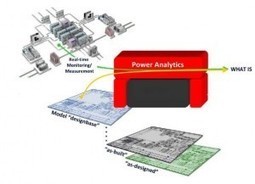
Power Analytics: The model based approach to availability, energy and resource management

See on Scoop.itGreen Energy Technologies & Development

As the reliance on the data center infrastructure continues to grow, organizations will need to use model-based analytics to help make better IT decisions.

Duane Tilden‘s insight:

Download this white paper to see how the use of model-based metrics is directly analogous to business analytics. With the complexity of today’s modern systems – without these metrics – management and financial decisions would be nearly impossible. As the reliance on the data center infrastructure continues to grow, organizations will need to use model-based analytics to help make better IT decisions. By utilizing model-based management, organizations will be able to see the powerful link to the overall value chain of designing, building and operating a data center.

See on www.datacenterknowledge.com