Inside look at General Motors’ new hyper-green data center

See on Scoop.itGreen Building Design – Architecture & Engineering
WARREN, Michigan—General Motors has gone through a major transformation … a three-year effort to reclaims its own IT after 20 years of outsourcing.

Duane Tilden‘s insight:

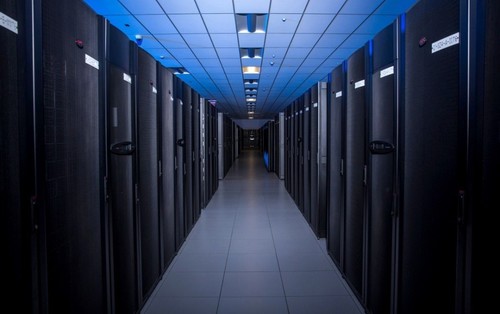
>The first physical manifestation of that transformation is here at Warren, where GM has built the first of two enterprise data centers. The $150 million Warren Enterprise Data Center will cut the company’s energy consumption for its enterprise IT infrastructure by 70 percent, according to GM’s CIO Randy Mott. If those numbers hold up, the center will pay for itself with that and other savings from construction within three years. […]

The data center is part of a much larger “digital transformation” at the company, Mott said. GM is consolidating its IT operations from 23 data centers scattered around the globe (most of them leased) and hiring its own system engineers and developers for the first time since 1996. Within the next three to five years, GM expects to hire 8,500 new IT employees with 1,600 of them in Warren. “We’re already at about the 7,000 mark for internal IT from our start point of about 1,700,” Mott said. […]

So far, three of the company’s 23 legacy data centers have been rolled into the new Warren data center. That’s eliminated a significant chunk of the company’s wide-area network costs. “We have 8,000 engineers at (Vehicle Engineering Center) here,” Liedel said. And those engineers are pushing around big chunks of data—the “math” for computer-aided design, computer aided manufacturing, and a wide range of high-performance computing simulations.

“Now with the data center on the same campus, we’re not paying for the WAN bandwidth we had before,” Liedel explained. “We’ve got dark fiber here on the campus, and the other major concentration of engineers is at Milford at the Proving Ground.” Milford and Warren are connected over fiber via dens wave division multiplexing, providing 10 channels of 10-gigabit-per-second bandwidth.<

See on arstechnica.com

Are current batteries cost effective for wind and solar power storage on the grid?

See on Scoop.itGreen Energy Technologies & Development

Renewable energy holds the promise of reducing carbon dioxide emissions. But there are times when solar and wind farms generate more electricity than is needed by consumers.

Duane Tilden‘s insight:

>”We calculated how much energy is used over the full lifecycle of the battery – from the mining of raw materials to the installation of the finished device,” Barnhart said. “Batteries with high energetic cost consume more fossil fuels and therefore release more carbon dioxide over their lifetime. If a battery’s energetic cost is too high, its overall contribution to global warming could negate the environmental benefits of the wind or solar farm it was supposed to support.” […]

In addition to batteries, the researchers considered other technologies for storing renewable energy, such as pumped hydroelectric storage, which uses surplus electricity to pump water to a reservoir behind a dam. Later, when demand for energy is high, the stored water is released through turbines in the dam to generate electricity. […]

Storage is not the only way to improve grid reliability. “Energy that would otherwise be lost during times of excess could be used to pump water for irrigation or to charge a fleet of electric vehicles, for example,” Dale said.

See on phys.org

Clay key to high-temperature supercapacitors

See on Scoop.itGreen Energy Technologies & Development

Clay, an abundant and cheap natural material, is a key ingredient in a supercapacitor that can operate at very high temperatures, according to researchers who have developed such a device.

Duane Tilden‘s insight:

>”Our intention is to completely move away from conventional liquid or gel-type electrolytes, which have been limited to low-temperature operation of electrochemical devices,” said Arava Leela Mohana Reddy, lead author and a former research scientist at Rice.

“We found that a clay-based membrane electrolyte is a game-changing breakthrough that overcomes one of the key limitations of high-temperature operation of electrochemical energy devices,” Reddy said. “By allowing safe operation over a wide range of temperatures without compromising on high energy, power and cycle life, we believe we can dramatically enhance or even eliminate the need for expensive thermal management systems.”

A supercapacitor combines the best qualities of capacitors that charge in seconds and discharge energy in a burst and rechargeable batteries that charge slowly but release energy on demand over time. The ideal supercapacitor would charge quickly, store energy and release it as needed.<

See on www.sciencedaily.com

Are developing Microgrids the Answer to supply next generation Electricity Markets?

See on Scoop.itGreen & Sustainable News

Managing the effect of intermittent renewables on the grid is one of the critical challenges we address in making the transition to renewables. One of the primary goals of grid modernization (aka “Smart Grid”) is to adapt grid management to account for the effects of intermittency in real time.

Duane Tilden‘s insight:

>Microgrids are one possible solution to these challenges. Microgrids, part of the Smart Grid toolbox, are autonomously managed and powered sections of the distribution grid that can be as small as a single building, or as large as a downtown area or neighborhood. Automation and digital communications are used to manage rooftop solar, small scale combined heat and power systems and storage systems, along with matching supply to demand.  Heating or cooling may also be a part of a microgrid. Microgrids can efficiently manage smaller sections of the grid, according to the local demand patterns and availability of renewable resources. They can also disconnect, or “island” from the larger grid to provide higher reliability.

Can microgrids reduce complexity and increase options for electricity market participants? What are the major barriers to microgrid implementation, and how might they be overcome? Are there other approaches, besides the microgrid, that might be employed as well?<

See on www.ourenergypolicy.org

Proliferation of wireless devices and networks detrimental to environment

See on Scoop.itGreen & Sustainable News

Cloud computing should be driving sustainable development, but its turning us into energy consuming monsters, write Stuart Newstead and Howard Williams

Duane Tilden‘s insight:

>There is a familiarity and comfort in our almost-everywhere connection to always-on communications networks and to the ever-increasing array of services they deliver us. We don’t just consume these network services directly, they give us what economists call “options” – options to connect, options to seek out new services, options to find new information. Clearly we don’t use this network services 24/7, but we value highly the options for instantaneous and simultaneous access at any time.

Cloud-based applications – those stored and managed by massive data centres run by the likes of Amazon, Google, Facebook or Apple – are providing step changes in the financial and environmental efficiency of delivering these services. But the centralising power of the cloud has its corollary in the dispersing effect of wireless networks and devices.

In wireless networks and devices we see fragmentation, duplication and a fundamental shift from mains power and green sources of energy to battery powered always-on devices. In environmental terms here lies the rub. Rather than the “aggregation of marginal gains” (the Sir Dave Brailsford strategy that has propelled success in British cycling), in which lots of tiny improvements add up to a large visible improvement, we are witnessing the aggregation of environmental disadvantages from billions of low-powered but fundamentally energy-inefficient antennas and devices providing the ‘last metre’ connectivity to global networks.

Wireless networks and devices, technologies that should drive sustainable development, are turning into energy-consuming monsters.<

See on www.theguardian.com

Energy Management – Determining Load Factor to Maximize Control

See on Scoop.itGreen Building Operations – Systems & Controls, Maintenance & Commissioning

Understanding load factor is an important component to energy management and learning how to take control of your electricity use.

Duane Tilden‘s insight:

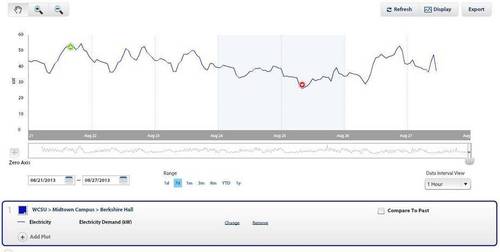
>Load factor is a ratio or percentage of the consistency of your electricity consumption – in other words, load factor is a way to answer the “how ‘spikey’ is your load?” question. The easiest way to understand your own load factor is by looking at your real-time energy data. Not only will your energy data indicate your load factor, but it will also highlight other important aspects of your electricity use over time that will enable you to make smarter energy management decisions.

While looking at your real-time energy data is the best way to accurately get your load factor, you can approximate it from your utility bill information. To manually find out your load factor, divide your total consumption (in kWh) by the number of hours in your billing period. Then, divide the result by your peak demand during the billing period, and the number you compute is your load factor. A load factor closer to 1, or 100%, indicates that you are using energy more evenly or consistently over time. It might also mean you are reducing your peak demand or otherwise avoiding spikes.<

See on energysmart.enernoc.com

Quantitative Analysis of Factors Contributing to Urban Heat Island Intensity

See on Scoop.itGreen Building Design – Architecture & Engineering

Ryu, Young-Hee, Jong-Jin Baik, 2012: Quantitative Analysis of Factors Contributing to Urban Heat Island Intensity. J. Appl. Meteor. Climatol., 51, 842–854.

Duane Tilden‘s insight:

>This study identifies causative factors of the urban heat island (UHI) and quantifies their relative contributions to the daytime and nighttime UHI intensities using a mesoscale atmospheric model that includes a single-layer urban canopy model. A midlatitude city and summertime conditions are considered. Three main causative factors are identified: anthropogenic heat, impervious surfaces, and three-dimensional (3D) urban geometry. Furthermore, the 3D urban geometry factor is subdivided into three subfactors: additional heat stored in vertical walls, radiation trapping, and wind speed reduction. To separate the contributions of the factors and interactions between the factors, a factor separation analysis is performed. In the daytime, the impervious surfaces contribute most to the UHI intensity. The anthropogenic heat contributes positively to the UHI intensity, whereas the 3D urban geometry contributes negatively. In the nighttime, the anthropogenic heat itself contributes most to the UHI intensity, although it interacts strongly with other factors. The factor that contributes the second most is the impervious-surfaces factor. The 3D urban geometry contributes positively to the nighttime UHI intensity. Among the 3D urban geometry subfactors, the additional heat stored in vertical walls contributes most to both the daytime and nighttime UHI intensities. Extensive sensitivity experiments to anthropogenic heat intensity and urban surface parameters show that the relative importance and ranking order of the contributions are similar to those in the control experiment.

Keywords: Urban meteorology

Received: May 7, 2011;<

See on journals.ametsoc.org

Renewable Energy or Efficiency for the Data Center: Which first? #GreenComputing

See on Scoop.itGreen & Sustainable News

New advancements in green technology and design are making the idea of a green data center into a reality.

Duane Tilden‘s insight:

>Without doubt, the facility is a triumph of advanced environmental design and will serve as a template for future construction. Indeed, activity surrounding renewable-based data infrastructure is picking up, with much of it being led by the burgeoning renewable energy industry itself. VIESTE Energy, LCC, for example, has hired design firm Environmental Systems Design (ESD) to plan out a series of data centers across the U.S. that run on 100 percent renewable energy. A key component of the plan is a new biogas-fed generator capable of 8 to 15MW performance. The intent is to prove that renewables are fully capable of delivering reliable, cost-effective service to always-on data infrastructure.

The question of reliability has always weighed heavily on the renewables market, but initiatives like the VIESTE program could help counter those impressions in a very important way, by establishing a grid of distributed, green-energy data supply. In fact, this is the stated goal of the New York State Energy Research and Development Authority (NYSERDA), which has gathered together a number of industry leaders, including AMD, HP and GE, to establish a network of distributed, green data centers that can be used to shift loads, scale infrastructure up and down and in general make it easier for data users to maintain their reliance on renewable energy even if supply at one location is diminished. In other words, distributed architectures improve green reliability through redundancy just as they do for data infrastructure in general.

But not everyone on the environmental side is convinced that renewables are the best means of fostering data center efficiency. In a recent article in the journal Nature Climate Change, Stanford researcher Dr. Jonathan Koomey argues that without populating existing infrastructure with low-power hardware and data-power management technology first, data operators are simply wasting precious renewable resources that could be put to better use elsewhere. For projects like the NWSC and VIESTE, then, renewables may make sense because they power state-of-the-art green technology. But not as an industry-wide solution–renewables won’t make sense until hardware life cycles run their course.<

See on www.itbusinessedge.com

Community Energy Storage Project Stalls

See on Scoop.itGreen & Sustainable News

Two years ago, AEP Ohio kicked off one of the largest community energy storage projects in the nation, funded in part by the U.S. Department of Energy. The pilot, however, did not go very far.

Duane Tilden‘s insight:

>AEP and S&C, which was the vendor for the pilot, declined to speak specifically about the project and the shortcomings of the batteries, although the two will continue to work together on a much smaller scale.

Small scale is exactly where community energy storage is at. It’s not only the scale of the batteries that are small (compared to megawatt, grid-level storage), but also the scale of utility uptake. “We haven’t seen any mass deployment,” said Mike Edmonds, vice president of strategic solutions for S&C. “It’s a very young market.” Instead, utilities are dipping their toes in the water by testing just a few units.<

See on theenergycollective.com

Changes in the Electrical and Micro Grid

See on Scoop.itGreen & Sustainable News

Microgrids are becoming a worldwide phenomenon. Currently an estimated $4.5 billion market in the US alone with 1,459 MW online and 1,122 MW in planning or development, the microgrid market is expected to continue to grow as the world demands ever more electricity usage and the grid struggles to keep up. The truth is that the traditional grid was not built to cope with the extraordinary level and fluctuations of present-day demand, and microgrids present the perfect solution. The question (to the utilities) is whether we are ready to embrace the change and adapt.

See on theenergycollective.com