How Real Estate Energy Managers Can Use Big Data to Schedule Building Energy Retrofits

See on Scoop.itGreen Building Operations – Systems & Controls, Maintenance & Commissioning

Big Data remains a fairly nebulous concept for many real estate professionals, including those who stand to gain tremendously from it right now: real estate energy managers.

Duane Tilden‘s insight:

>To effectively time energy retrofit measures, energy managers can first develop those measures. New energy analytical tools such as FirstFuel identify and develop measures, and even estimate a range for capital cost. It does this analysis remotely over the course of a day just by analyzing hourly electricity data (which is sometimes also stored by the utility); no time-intensive on-site energy audit is required. Another new tool is Retroficiency, which provides a high-level look at energy performance improvement potential using the same interval data and, with minimal additional data from the IWMS, can further develop retrofit measures to investment-grade level.

After identifying energy-retrofit measures for the portfolio using remote energy analysis tools or more standard on-site energy analysis, energy managers can create a new retrofit measures database in the IWMS. Having this new database on hand enables managers to integrate energy retrofit opportunities with space management, maintenance and capital upgrade needs, and potentially other real estate issues. Such integration drives down the incremental cost of an energy retrofit, which is the gross cost minus the avoided cost of otherwise required capital or space upgrades.<

See on blog.rmi.org
Connecticut Storm Proofing with Micro-Grid Developments

See on Scoop.itGreen Energy Technologies & Development

Press Release Gov. Dannel P. Malloy announced Oct. 30 that nine towns that are part of a pilot microgrid program, including Windham and Storrs, are eligible for additional funding.

Duane Tilden‘s insight:

>A pilot microgrid program, administered by the state Department of Energy and Environmental Protection, was created under Public Act 12-148 to increase the safety and quality of life for Connecticut residents during electric grid outage situations.

Microgrids provide electricity to critical facilities and town centers on a 24/7, daily basis. They will also include a system of “trips” and “transfers” to isolate the microgrid and provide power within its network even when there is a large-scale outage.

The first round of the program awarded $18 million in grants to microgrid projects in Bridgeport, Fairfield, Groton, Hartford, Middletown, Storrs/Mansfield, Windham and Woodbridge as part of the Governor’s Storm Legislation.

Those projects are expected to become operational over the course of the next 18 months, with the first projects slated to come online in early 2014. […]

“Our first-in-the-nation microgrid program is an essential tool to help minimize hardships to our residents and businesses when severe storms occur. We all know that it is not a question of if, but when the next super storm will strike, and it is essential we do everything we can to be prepared,” Gov. Malloy said.

Commenting on the additional funding, DEEP Commissioner Daniel C. Esty said, “It is essential to public safety that power be maintained to critical facilities and town centers even when the electric grid is down… Connecticut and the northeast continue to experience more severe and more frequent storms, so it is vital that the state aggressively pursues the development of microgrids statewide so that we are in a better position to provide critical services to the state’s residents and businesses.”<

See on mansfield.htnp.com

US GSA Recognizes two 3rd-party Green Building Certification Systems

See on Scoop.itGreen Building Design – Architecture & Engineering
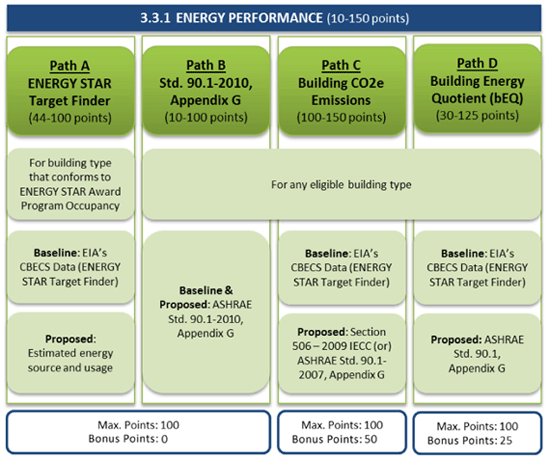
Green-Globes-NC-Building-Energy-Performance-Paths-chart

LEED and Green Globes approved as third party certification programs for federal facilities.

Duane Tilden‘s insight:

>In its recommendation to DOE, GSA recommended the Green Building Initiative’s Green Globes 2010 and the U.S. Green Building Council’s Leadership in Energy and Environmental Design (LEED) 2009 as the third party certification systems that the federal government can use to gauge performance in its construction and renovation projects. Other certification systems were not selected because they did not align with the government’s requirements. Additionally, under this recommendation, GSA will conduct more regular reviews in order to keep up with the latest green building tools that the market has to offer.

Third party certification systems like LEED and Green Globes help in measuring reduction targets for water, energy, and greenhouse gas emissions against industry standards. Agencies can use one of the two certification systems that best meet their building portfolios, which range from office buildings, to laboratories, to hospitals, to airplane hangars.

Federal construction and modernization projects must adhere to the government’s own green building requirements by law and executive orders. No one certification system meets all of the federal government’s green building requirements. Green building certification systems are just one tool that GSA uses to cut costs and meet sustainability and economic performance goals.<

See on www.todaysfacilitymanager.com

GBI’s Green Globes Recognized by Portland’s GSA as Equivalent to LEED for Green Building

See on Scoop.itGreen Building Design – Architecture & Engineering

PORTLAND, OR–(Marketwired – Oct 29, 2013) – The Green Building Initiative (GBI) applauds the General Services Administration on its recognition of Green Globes® alongside the U.S.

Duane Tilden‘s insight:

>GBI’s growth in the market is due to its commitment to the practicality of its tools for use by building owners, designers, and facility managers as well as its commitment to open, consensus-based review of its technical criteria. In 2010, GBI was recognized for developing Green Globes for New Construction as the first ever American National Standard for a commercial building rating system. As it continues to improve its rating systems based on changes in the market, GBI remains committed to using the American National Standards Institute (ANSI) approved consensus procedures.

“GBI is the only commercial building rating system developer to vet its technical criteria through the ANSI process,” stated GBI Chairman Tonjes. “This helps to ensure that GBI’s rating systems provide the opportunity to evaluate the widest range of buildings using an open, science-based approach to building performance.”

ANSI/GBI 01-2010, also known as Green Globes for New Construction, is due for revision before the end of 2015 based on ANSI periodic maintenance requirements. According to Tonjes, GBI’s ANSI-based rating system review process will begin before the end of this year with the filing of required documents followed by reformation of the technical review committee.

GBI’s tools have a significant focus on both the reduction and efficient use of energy and water in buildings. These, along with other criteria, help reduce building operating costs and their overall impact on the environment.

“Since 2005, the Green Globes product line has evolved to include several updated and expanded tools,” stated Erin Shaffer, vice president of federal outreach at GBI.<

See on www.marketwired.com

Qualifications and Documents for Comprehensive Reserve Fund Studies

See on Scoop.itGreen Building Operations – Systems & Controls, Maintenance & Commissioning

As of May 5, 2001, the Condominium Act 1998 requires all existing and new condominium corporations to have a “Reserve Fund Study” undertaken. This article outlines some of the key aspects of Reserve Funds and the Studies.

Duane Tilden‘s insight:

>[…]The regulations to the Condominium Act stipulate the minimum liability insurance requirements; $1,000,000.

6. What Information Does The Corporation Need To Provide?

Once you have hired a consultant, he/she will require information about the condominium corporation. This will include the following:

  • As-built drawings and specifications.
  • The Declaration and Description.
  • Reciprocal cost sharing agreements.
  • Previous reserve fund studies.
  • The most recent audited financial statements.
  • What the current annual contribution to the Reserve Fund is.
  • Repairs or replacements to the common elements that have already been completed and when.
  • Similarly, scheduled future work needs to be accounted for.
  • A summary of problems being encountered by the Corporation that should be reviewed.
  • As an example, water penetration concerns.

7. What Is The Process?

The process is as follows:

  • The consultant is provided the above information. One of the most important are the drawings. They will be reviewed prior to visiting the site in order for the consultant to become familiar with the overall design and construction schemes.
  • Site inspection. In order to have an understanding on the current condition of the common elements, visual inspections are undertaken. Problem areas noted above can be reviewed. After the first study, the next study update can be completed without a site inspection. The next update must include a site inspection.
  • The report is then prepared (see next question). The drawings are used to “take-off” quantities such as roofing, exterior wall cladding, asphalt, hallway finishes etc that will assist in preparing the replacement/repair cost budgets. It is recommended that a draft report should be submitted in order for the Board and Property Manager to review it prior to it being finalized. The consultant should be available to attend a meeting to review the report.
  • Upon receiving direction from the Board of Directors, the Reserve Fund Study is finalized and submitted. […] 

See on www.maytower.ca

DIY Reserve Study Site Launched

See on Scoop.itGreen Building Operations – Systems & Controls, Maintenance & Commissioning

CALABASAS, Calif., Oct. 24, 2013 /PRNewswire-iReach/ — Association Reserves, a well-known provider of reserve study services in the United States, recently announced its decision to launch a new website dedicated to their Do-it-Yourself Reserve Study kit.

Duane Tilden‘s insight:

>According to an article written using data from Association Reserves’ 30,000 reserve studies, 70 percent of associations in the United States are “underfunded.” This puts many organizations at an increased risk of special assessments, deferred maintenance, declining property values, and board member liability. According to the company, by accounting for the ongoing cost of common area deterioration and then properly funding reserves, boards are able to responsibly prepare for their associations’ future expenses.

“Our goal is to eliminate all excuses for board members not to be aware of the current strength of their Association’s reserve fund and the funding plan necessary to perform common area repairs & replacement in a timely manner,” says Robert Nordlund, PE, RS, the company’s founder. “The path from underfunded to appropriately-funded is a journey and a Reserve Study provides the necessary road map.”<

See on www.prnewswire.com

Supercritical CO2 refines cogeneration for Industry

See on Scoop.itGreen Energy Technologies & Development

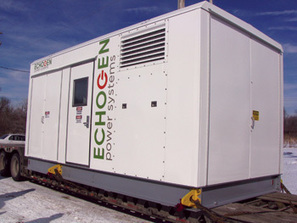
The first production unit of the EPS100 7.5 MWe heat engine is completing factory checkout tests at Dresser-Randbtd…

Duane Tilden‘s insight:

>Energy-intensive manufacturing

In an increasingly competitive environment, manufacturers are seeking to cut their costs. Fluctuating energy prices often channel this investment into cost-effective energy-saving technologies and practices that will reduce operating costs while maintaining or increasing product quality and yield.

Energy-efficient technologies often bring other benefits, such as higher productivity or environmental gains, reducing the regulatory ‘burden’. Waste heat can be captured from many industrial processes through waste heat recovery technology. […]

Waste heat recovery represents the greatest opportunity for reducing energy loss in these industries while simultaneously reducing their carbon footprint and associated greenhouse emissions with improved overall energy production efficiency.[…]

The outlook for scCO2

Supercritical CO2 heat engines are scalable across a broad system size range, from 250 kWe to 45 MWe and above, with net electrical output to support the widest possible variety of industrial and utility-scale applications.

The sCO2 Cycle is thermal source neutral − suitable with a wide range of heat sources from 200°C to 500°C with efficiencies up to 30%. New energy production can be offset with recovered energy without increasing greenhouse emissions while improving overall energy production efficiency. The scCO2 heat engine can add up to 35% more power to simple-cycle gas turbines, 10–15% more power to reciprocating engines, and can significantly improve the energy efficiency and bottom line performance at steel mills, cement kilns, glass furnaces and other fuel-fired industrial processes by converting previously wasted exhaust and flue gas energy into usable electricity.

Alex Kacludis is an Application Engineer at EPS LLC; www.echogen.com

See on www.cospp.com

Supercritical CO2 turbine for Power Production & Waste Heat Energy Recovery

See on Scoop.itGreen Building Design – Architecture & Engineering

A former scientist at Sandia National Lab is bringing the technology to market

Duane Tilden‘s insight:

>Because of its physical properties as a liquid, it has become a target fluid of opportunity to run turbines and thus make electricity. Steven Wright, Ph.D., who recently retired from Sandia National Laboratory (SNL), has set up a consulting company called Critical Energy LLC to bring this technology to a commercial level.

The objective of using supercritical CO2 (S-CO2) in a Brayton-Cycle turbine is to make it much more efficient in the transfer of heat. Wright points out that a steam turbine is about 33% efficient, but that an S-CO2 turbine could be as high as 48% efficient, a significant increase.

A closed loop supercritical CO2 system has the density of a liquid, but many of the properties of a gas. A turbine running on it, “is basically a jet engine running on a hot liquid,” says Wright.

“There is a tremendous amount of scientific and industrial interest in S-CO2 for power generation. All heat sources are involved…<

See on theenergycollective.com

Waste Heat Recovery using Supercritical CO2 turbines to create Electrical Power

See on Scoop.itGreen Building Design – Architecture & Engineering

Working fluids with relatively low critical temperature and pressure can be compressed directly to their supercritical pressures and heated to their supercritical state before expansion so as to obtain a better thermal match with the heat source.

Duane Tilden‘s insight:

>Chen et al. [1-3] did a comparative study of the carbon dioxide supercritical power cycle and compared it with an organic Rankine cycle using R123 as the working fluid in a waste heat recovery application. It shows that a CO2 supercritical power cycle has higher system efficiency than an ORC when taking into account the behavior of the heat transfer between the heat source and the working fluid. The CO2 cycle shows no pinch limitation in the heat exchanger. Zhang et al.  [4-11] has also conducted research on the supercritical CO2 power cycle. Experiments revealed that the CO2 can be heated up to 187℃ and the power generation efficiency was 8.78% to 9.45% [7] and the COP for the overall outputs from the cycle was 0.548 and 0.406, respectively, on a typical summer and winter day in Japan [5].

Organic fluids like isobutene, propane, propylene, difluoromethane and R-245fa [12] have also been suggested for supercritical Rankine cycle. It was found that supercritical fluids can maximize the efficiency of the system. However, detailed studies on the use of organic working fluids in supercritical Rankine cycles have not been widely published.

There is no supercritical Rankine cycle in operation up to now. However, it is becoming a new direction due to its advantages in thermal efficiency and simplicity in configuration.<

See on www.eng.usf.edu

Manufacturer’s Energy Efficient Heat Recovery Unit Runs High in Energy Awards

See on Scoop.itGreen Building Design – Architecture & Engineering

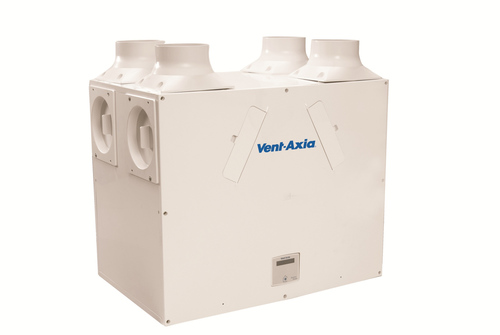
Vent-Axia has made the final shortlist in the prestigious Energy Awards 2013, which recognise and reward companies leading the way in reducing carbon emissions. Vent-Axia’s Lo-Carbon Kinetic Plus E…

Duane Tilden‘s insight:

>Consuming as little as 20W, the Kinetic Plus E only costs around £20 a year to run, offering 94% thermal efficiency and potentially recovering 10 or 20 times more energy than it costs to operate. This offers homeowners an attractive cost saving as we enter the winter months and rising fuel costs.<

See on kirhammond.wordpress.com