Crude Oil Spills From Pipeline Into Yellowstone River, Montana

Residents have reportedly smelled and tasted oil in their drinking water downstream from the spill, and the city’s water plant has stopped drawing from the river.

Source: thinkprogress.org

>” […] On Saturday morning, a pipeline in Montana spilled up to 50,000 gallons of crude oil into the Yellowstone River, the pipeline’s operator confirmed Sunday night. […]

The 12-inch diameter steel pipe breached and spilled anywhere from 12,600 to 50,000 gallons of oil nine miles upriver from the town of Glendive, with an unknown amount of it spilling into the partially frozen river, according to a statement from Bridger Pipeline LLC. The company said the spill occurred at 10 a.m. and they “shut in” the flow of oil just before 11 a.m. — meaning that though the pipeline section could still empty itself of its contents, no new addition oil would flow into the spilled area.

“Oil has made it into the river,” Bridger spokesperson Bill Salvin confirmed to the AP on Monday. “We do not know how much at this point.” Observers spotted oil, some of which was trapped under the ice, up to 60 miles downstream from Glendive. Paul Peronard, the EPA’s on-scene coordinator, said crews were attempting to use booms to prevent the spill from spreading further but the ice on top of the river was forcing them to “hunt and peck” through it.  […]

“We think it was caught pretty quick, and it was shut down,” said Montana Governor Steve Bullock spokesperson Dave Parker, noting that the river was frozen over near the spill, which could help isolate the spill.

Parker told MTN News that “the Governor is committed to ensuring that the river is completely cleaned up and the folks responsible are held accountable.”

In 2011, an Exxon Mobil pipeline spilled 63,000 gallons of crude oil into the Yellowstone near Laurel, Montana. Days after the spill, goat rancher Alexis Bonogofsky was hospitalized for acute hydrocarbon exposure after noticing oil slicks along the riverbank abutting her ranch. She lived far enough downstream that any evacuation order missed her, she said. There was concern then that the cause of the spill was related to climate-change-influenced raging floodwaters that exposed the normally deeply-buried pipe to damaging debris.

Even two years later, the state was still fighting with Exxon over damages to the area from the spill and the clean-up process, leaving fish, birds, and wildlife dead or injured and interrupting environmental studies, recreation, and fishing.

Bridger’s pipeline runs from the Canadian border down through Montana across the Missouri and Yellowstone rivers and east into North Dakota, dubbed the Poplar System. It is on the opposite side of Wyoming from, and downstream of, Yellowstone National Park, but the river empties into the Missouri River.

The proposed — and controversial — northern leg of the Keystone XL pipeline would bethree times the diameter of the breached Bridger pipeline, and pump more than 34 million gallons of oil per day through the Dakotas down into Nebraska and into the southern leg in Oklahoma and Texas. Many landowners and local residents are concerned about what a potential spill would mean for critical watersheds and aquifers — not to mention what subsequent increased tar sands oil production means for Canadian watersheds.”<


See on Scoop.itGreen & Sustainable News

Energy Efficiency, the Invisible fuel

THE CHEAPEST AND cleanest energy choice of all is not to waste it. Progress on this has been striking yet the potential is still vast. Improvements in energy…

Source: www.economist.com

>”[…] The “fifth fuel”, as energy efficiency is sometimes called, is the cheapest of all. A report by ACEEE, an American energy-efficiency group, reckons that the average cost of saving a kilowatt hour is 2.8 cents; the typical retail cost of one in America is 10 cents. In the electricity-using sector, saving a kilowatt hour can cost as little as one-sixth of a cent, says Mr Lovins of Rocky Mountain Institute, so payback can be measured in months, not years.

The largest single chunk of final energy consumption, 31%, is in buildings, chiefly heating and cooling. Much of that is wasted, not least because in the past architects have paid little attention to details such as the design of pipework (long, narrow pipes with lots of right angles are far more wasteful than short, fat and straight ones). Energy efficiency has been nobody’s priority: it takes time and money that architects, builders, landlords and tenants would rather spend on other things.

In countries with no tradition of thrifty energy use, the skills needed are in short supply, too. Even the wealthy, knowledgeable and determined Mr Liebreich had trouble getting the builders who worked on his energy-saving house to take his instructions seriously. Painstakingly taping the joins in insulating boards, and the gaps around them, seems unnecessary unless you understand the physics behind it: it is plugging the last few leaks that brings the biggest benefits. Builders are trained to worry about adequate ventilation, but not many know about the marvels of heat exchangers set in chimney stacks. […]

One answer to this market failure is to bring in mandatory standards for landlords and those selling properties. Another involves energy-service companies, known as ESCOs, which guarantee lower bills in exchange for modernisation. The company can develop economies of scale and tap financial markets for the upfront costs. The savings are shared with owners and occupiers. ESCOs are already a $6.5 billion-a-year industry in America and a $12 billion one in China. Both are dwarfed by Europe, with €41 billion ($56 billion) last year. Navigant Research, the consultancy, expects this to double by 2023.

That highlights one of the biggest reasons for optimism about the future of energy. Capital markets, frozen into caution after the financial crash of 2008, are now doing again what they are supposed to do: financing investments on the basis of future revenues. The growth of a bond market to pay for energy-efficiency projects was an encouraging sign in 2014, when $30 billion-40 billion were issued; this year’s total is likely to be $100 billion.

“The price of fossil fuels will always fluctuate. Solar is bound to get cheaper”

Solar energy is now a predictable income stream drawing in serious money. A rooftop lease can finance an investment of $15,000-20,000 with monthly payments that are lower than the customer’s current utility bill. SolarCity, an American company, has financed $5 billion in new solar capacity, raising money initially from institutional investors, including Goldman Sachs and Google, but now from individual private investors—who also become what the company calls “brand ambassadors”, encouraging friends and colleagues to install solar panels too.

The model is simple: SolarCity pays for the installation, then bundles the revenues and sells a bond based on the expected future income stream. Maturities range from one to seven years. The upshot is that the cost of capital for the solar industry is 200-300 basis points lower than that for utilities. […]”<

See on Scoop.itGreen & Sustainable News

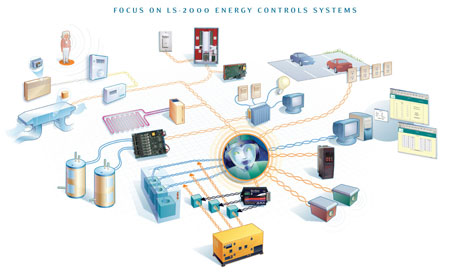
Continuous Monitoring Solution Designed for Facility and Energy Management

Verisae and Ecova partner to combine technology and service across nearly 3,000 facilities for an innovative and smart operational approach …


image source: http://energymanagementsystems.org/faqs-on-developing-energy-management-systems/

Source: www.virtual-strategy.com

>” Verisae, a leading global provider of SaaS solutions that drive cost reductions in maintenance, energy, mobile workforces, and environmental management, and Ecova, a total energy and sustainability management company, are pleased to announce the success of their growing partnership to help multisite companies solve their toughest energy, operations, and maintenance challenges.

The continuous monitoring solution combines Verisae’s Software-as-a-Service (SaaS) technology platform with Ecova’s Operations Control Center (OCC) to empower data-driven decision making. The solution analyses operational data in real-time, and has the capability to look for issues and anomalies to predict equipment failure and automatically identify inefficiencies causing higher energy consumption.

Ecova’s fully-staffed 24/7/365 OCC investigates inbound service calls, alarms, telemetry data, and work orders to determine the source of energy, equipment, and system faults and, where possible, corrects issues remotely before they escalate into financial, operational, or comfort problems. Trouble tickets and inbound calls are captured and tracked in the Verisae platform to provide companies with visibility into any operational issues. Combining data analytics that flag potentially troubling conditions with a service that investigates and resolves issues increases operational efficiencies and improves energy savings.

“Companies are constantly challenged to cut costs while maintaining quality, performance, and comfort,” says Jerry Dolinsky, CEO of Verisae. “Our combined solution helps clients address these challenges so they can reduce costs and improve operational efficiencies without impacting value.”

[…] “<

See on Scoop.itGreen Energy Technologies & Development

WTE Power Plant Saves 1.3 Million GPD of Water Daily with Tertiary Water Treatment & Recycling

Covanta’s Delaware Valley energy-from-waste facility in Chester, Pennsylvania, has saved 1.3 million gallons a day from local water supplies by installing Ge…

Source: www.environmentalleader.com

>” […] The Chester facility generates up to 90 megawatts of clean energy from 3,510 tons per day of municipal solid waste. Previously, the plant used 1.3 MGD — or nearly 5 million liters a day — of municipal drinking water in its waste conversion process, costing the company thousands of dollars in daily water purchases.

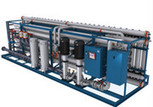
To reduce facility operating expenses and the consumption of local water resources, Covanta Delaware Valley upgraded the facility by installing GE’s RePAK combination ultrafiltration (UF) and reverse osmosis (RO) system as a tertiary treatment package. The new system enabled the plant to reuse 1.3 MGD of treated discharge water from a nearby municipal wastewater treatment plant for the facility’s cooling tower.

GE installed two RePAK-450 trains, each producing 450 gallons per minute of purified water. As a result, Covanta Delaware Valley has eliminated the need to purchase 1.3 MGD of local drinking water a day, which results in a substantial financial savings in addition to the environmental benefits.

GE’s RePAK equipment was delivered in 2014, with commissioning taking place the same year, making Covanta Delaware Valley the first North American company to deploy GE’s RePAK technology.

Covanta chose a combined water treatment technology approach because the typical organic and dissolved mineral content of the wastewater requires additional treatment to be suitable for use as cooling tower makeup. RO was selected as the technology of choice, and UF was required as the pretreatment solution.

GE’s RePAK combined treatment system reduces the equipment footprint up to 35 percent as compared to separate UF and RO systems. By combining the UF and RO into a common frame with common controls and GE’s single (patent-pending) multi-functional process tank, GE also is able to reduce the capital costs and field installation expenses when compared to the use of separate UF system and RO systems with multiple process and cleaning tanks, the company says.”<


See on Scoop.itGreen Energy Technologies & Development

Madrid upgrades with World’s largest street lighting project

To support its ambition of becoming a Smart City, the Spanish capital, Madrid, is embarking on the world’s largest street lighting upgrade project. Philips is providing the city’s government with 225,000 new energy-efficient lights for the renewal of the entire street lighting system.

Source: traffictechnologytoday.com

>”The products, which deliver 44% in energy savings, will finance the cost of the technology upgrade, providing Madrid with the best quality of street lighting for a brighter, safer and ‘smarter’ city at no additional cost to its citizens. The project has been conducted in collaboration with ESCO energy service companies hired by the Madrid city council through a public bidding process. […]”<

See on Scoop.itGreen & Sustainable News

Energy Efficiency Development and Adoption in the United States for 2015

The US wastes about 61% of the energy we produce — much of it due to how we generate, transmit, and distribute it.

Source: theenergycollective.com
I
mage Source:  http://www.seas.columbia.edu/earth/RRC/waste_material_utilization.html

>” […] Energy efficiency, simply put, is using less energy to get the same output or value. Ways of being more energy efficient include using appliances that use less energy or reducing air leakage from our homes and buildings. Programs to increase energy efficiency date back to the energy crises of the 1970s, and continue to be hugely successful today.

Take Michigan for example, where recent data from the Public Service Commission show that the $253 million Michigan utilities spent on energy efficiency programs in 2013 will yield a $948 million return in savings in the coming years. That’s an excellent investment, no matter who you talk to. And Michigan is by no means an anomaly.

We’ve seen states throughout the country see the same kinds of positive returns for their investments in energy efficiency, which continues to prove itself the cheapest “fuel” — investments in energy efficiency per unit of energy output are less costly than both traditional fossil fuels and clean renewable fuels.

Energy efficiency programs are administered by utilities, state agencies, or other third parties, and typically funded by modest charges on ratepayers’ energy bills. While some worry that this causes energy bills to go up, they also cause energy costs to go down, as widespread efficiency upgrades decrease the demand for energy across the state or the utility’s service area, reducing consumer costs. And the customers who participate directly in the programs reap the biggest savings.

It’s a wonder not all states are investing in these kinds of innovative, proven programs. But much of the resistance can be attributed to low energy prices and a lack of political will to charge customers a bit more, even if it does mean big returns. With energy prices steadily rising, such programs will become increasingly attractive to utility regulators and customers. Even historically lagging states like Arkansas and Kentucky are starting to jump on the energy efficiency bandwagon.

No matter where we live or what our personal circumstances are, there’s always room to make changes to improve our energy consumption, whether we make a big investment like installing better insulation, or small simple changes like turning down the thermostat a few degrees in the winter.

As we think about what changes we’re planning to make in 2015, we can look internally at how to reduce energy waste in our own homes and workplaces, as well as help our neighborhoods, communities, and local and state governments make informed decisions to invest in energy efficiency. Even as our energy starts coming from cleaner sources across the country, we can do our part to reduce waste in the energy we already generate — and efficiency is the quickest and cheapest place to look.”<

See on Scoop.itGreen Energy Technologies & Development

The Ripple Effect of Energy Efficiency Investment

“The term “multiple benefits” has emerged to describe the additional value that emerges with any energy performance improvement. The benefits that occur onsite can be especially meaningful to manufacturing, commercial, and institutional facilities. Energy efficiency’s positive ripple effects include increased productivity and product quality, system reliability, and more. ”


Source: aceee.org

>” […]  Over the past few decades, researchers have documented numerous cases of energy efficiency improvements—almost always focusing exclusively on energy savings. Non-energy benefits are often recognized, but only in concept. ACEEE’s new report, Multiple Benefits of Business-Sector Energy Efficiency, summarizes what we know about the multiple benefits for the business sector. True quantification of these benefits remains elusive due to a lack of standard definitions, measurements, and documentation, but also in part because variations in business facility design and function ensures that a comprehensive list of potential energy efficiency measures is long, varied, and often unique to the facility.

To give some concrete examples of non-energy benefits at work: Optimizing the use of steam in a plywood manufacturing plant not only reduces the boiler’s natural gas consumption, it also improves the rate of throughput, thus increasing the plant’s daily product yield. A lighting retrofit reduces electricity consumption while also introducing lamps with a longer operating life, thus reducing the labor costs associated with replacing lighting. In many instances, monitoring energy use also provides insights into water or raw material usage, thereby revealing opportunities to optimize manufacturing inputs and eliminate production waste. By implementing energy efficiency, businesses can also boost their productivity. This additional value may make the difference in a business leader’s decision to pursue certain capital investment for their facility.

Meanwhile, energy resource planners at utilities and public utility commissions recognize the impact of large-facility energy demands on the cost and reliability of generation and transmission assets. By maximizing consumer efficiency, costs are reduced or offset throughout a utility system. So the ability to quantify the multiple benefits of investing in energy efficiency, if only in general terms, is an appealing prospect for resource planners eager to encourage greater participation in efficiency programs.

Unfortunately, our research shows that this quantification rarely happens, even though the multiple benefits are frequently evident. A number of studies offer measurement methodologies, anticipating the availability of proper data. When these methodologies are employed with limited samples, we see how proper accounting of non-energy benefits dramatically improves the investment performance of energy efficiency improvements—for example, improving payback times by 50% or better. Samples may provide impressive results, but the data remains too shallow to confidently infer the value to come for any single project type implemented in a specific industrial configuration. Developing such metrics will require more data.  […]”<


See on Scoop.itGreen & Sustainable News

Concentrated Solar Power Projects in 2014

“It was a good year for solar power in the USA, with over six gigawatts of photovoltaic (PV) capacity and more than one gigawatt of concentrated solar power (CSP) being added in 2014, bringing the nation’s total solar power capacity to more than 17 gigawatts. That’s a 41% increase in solar power capacity in just one year…”  Source: www.engineering.com

>” Photovoltaic vs Concentrated Solar Power

Photovoltaic technology converts light directly into electricity. PV panels produce DC, which needs to be converted to AC before being placed on the grid. PV panels work best in direct sunlight when they’re pointed perpendicular to the sun’s rays, but they also work reasonably well in diffuse light, even when not pointed directly at the sun. This makes them inexpensive and suitable for rooftops, since solar tracking isn’t required. PV also works in climates that aren’t particularly sunny; Germany gets less sunlight than the northern US, and yet it has a large portion of its power generated by PV.

Concentrated solar power, on the other hand, requires direct sunlight and solar tracking. CSP focuses the sun’s energy and uses the resulting heat to create steam that drives a traditional turbine generator. Even better, the heat can be stored – usually in the form of molten salts – so the CSP plant can generate electricity even when the sun isn’t shining. Because CSP relies on direct sunlight, it’s most suitable for very sunny locations like the American southwest.  […]

US Concentrated Solar Power in 2014

These five major CSP plants went online in 2014 (give or take a few months – one went live in late 2013):

Gila Bend, AZ is the home of the Solana parabolic trough power plant, which provides 250 MW of power to residents of Arizona. The turbine It went live in October of 2013. Spanning 1920 acres, the solar farm includes over two million square meters of reflective troughs and two tanks of molten salts, which provide up to six hours of thermal energy storage. If the stored energy is depleted and the sun isn’t shining, the turbine can be powered by natural gas as a backup.

The Genesis power plant in Blythe CA generates 250 MW of power using a parabolic trough array consisting of more than half a million mirrors. Unlike the Solana plant, Genesis includes no storage or backup fuel. Brought online in April of 2014, designers expect it to generate about 600 GWh of energy each year.

Probably the most famous CSP plant in the US, and the largest of its kind in the world, is the Ivanpah Solar Electric Generating System in Ivanpah Dry Lake CA, about 50 miles south of Las Vegas NV. Its three power towers fired up in February 2014, and the facility now produces 377 MW of power. Its annual production is expected to exceed one terawatt-hour. Ivanpah includes natural gas as its backup, but has no on-site storage.

About 270 miles northwest of Ivanpah is the Crescent Dunes Solar Energy Project in Tonopah, NV. Originally planned to go online in late 2014, the start date has been pushed back to January of 2015. When operational, this 110 MW power tower should produce nearly 500 GWh per year. Crescent Dunes uses molten salt to store heat, allowing it to generate power for ten hours without sunlight.

The Mojave Solar One facility came online in late 2014 and now generates 250 MW of electricity. Located about 100 miles northeast of Los Angeles CA, this parabolic trough array feeds a pair of 125 MW steam turbine generators. The plant should produce about 600 GWh per year. […]”<


See on Scoop.itGreen Energy Technologies & Development

Building Recommissioning: Recertifying To LEED Platinum EB+OM

The facilities management director for Armstrong World Industries shares insights into the company’s LEED Platinum recertification pursuit.

Source: facilityexecutive.com

>” […] Q: When the LEED recertification process began for the Armstrong Headquarters facility (Building 701), how did you and the rest of the team begin evaluating the status of the building, in terms of its readiness to be re-certified?

A: Since our initial certification in 2007, we had established specific policies/procedures to follow for the building.  We had these in place so it was more a matter of reviewing what information was needed and fine tuning some of our data processes.  We continue to utilize our building automation system (Johnson Controls Metasys) for controlling all of our building systems and collect much of our operational data through that system. During our performance period, we read our data points on a more frequent basis to understand if systems were operating as designed. If readings were off, metrics signaled a physical change to be made to improve operations and data.

One surprise to our team was our Energy Star score.  We realized we had some searching to do when we saw that our building score had dropped below the 90’s where it had been in 2012. However, to recertify and meet the prerequisite for the E&A category, our Energy Score needed to be 70, and we met that.

In short, our recommissioning process helped us pinpoint many opportunities for improving building operations.

Q: For the recertification, which systems or strategies were newly introduced to the facility?

A: As a building owner, you are always thinking about improving building operations along with budgeting dollars to make the changes. Items that were budgeted for 2014 that were included in our building recertification included: a new roof with an SRI (Solar Reflectance Index) of 78; LED lamp replacements in the lobby; and electrical sub-meters for building lighting.

One other item that was completed in 2010 after electrical deregulation was daylight housekeeping. We traditionally did our housekeeping from 5 pm to midnight. However, as we reviewed our electrical costs and determined a savings opportunity, we moved to daytime hours for cleaning. This saved Building 701 approximately $750 weekly in energy costs. We implemented daylight housekeeping across the entire corporate campus, saving the company $150,000 annually in energy costs.

Q: What is the most challenging aspect of running a LEED Platinum facility? And what is most rewarding?

A: The most challenging aspect of operating and maintaining a LEED- EBOM facility is making sure you have qualified and trained technicians to understand and manage the building operations.

The most rewarding aspect is meeting with customers and guests to discuss the sustainable characteristics of the building and thinking about what to budget for in the upcoming year to improve overall building operations and maintenance to reduce costs. […] “<

See on Scoop.itGreen Building Operations – Systems & Controls, Maintenance & Commissioning

The Oil Crash Sours LNG Future, Project Put on Hold

The floating 8 million tonne per annum (mtpa) export plant moored at Lavaca Bay, Texas advanced by Houston-based Excelerate has been put on hold, according to regulatory filings obtained by Reuters.

Source: www.businessinsider.com

>” […] The project was initially due to begin exports in 2018.

Excelerate’s move bodes ill for thirteen other U.S. LNG projects, which have also not signed up enough international buyers, to reach a final investment decision (FID). Only Cheniere’s Sabine Pass and Sempra’s Cameron LNG projects have hit that milestone.

Back when LNG and crude oil prices were riding high in February, Excelerate, founded by Oklahoma billionaire George Kaiser, applied for permits to build the facility.

Eleven months on, its submission to the U.S. Federal Energy Regulatory Commission on Dec. 23 said that uncertainty generated by a steep decrease in oil prices has forced it to conduct a “strategic reconsideration of the economic value of the project” and to suspend all activities until April 1, 2015.

“Due to the recent global market conditions, the company has determined that, at this time, this project no longer meets the financial criteria necessary in order for us to move forward with the capital investment,” a company spokesman told Reuters.

Stiff economic headwinds are making new developments tough going.

Prices that LNG projects can charge for long-term supply are falling from historic highs as new producers crowd the market, which is already oversupplied due to slowing demand and rising output that has seen spot Asian LNG prices halve this year.

At the same time, major consumers from Japan to South Korea and China are seeking to offload some of their long-term LNG supply commitments, contributing to the glut. […]”<

Read more: http://www.businessinsider.com/r-exclusive-oil-price-crash-claims-first-us-lng-project-casualty-2014-12#ixzz3NVGgV68I

See on Scoop.itGreen & Sustainable News