Embodied Energy – A Measure of Sustainability in Buildings & Construction

Embodied energy in building materials has been studied for the past several decades by researchers interested in the relationship between building materials, construction processes, and their environmental impacts.

Source: www.canadianarchitect.com

>” […]

What is embodied energy?
There are two forms of embodied energy in buildings:

· Initial embodied energy; and
· Recurring embodied energy

1.  The initial embodied energy in buildings represents the non-renewable energy consumed in the acquisition of raw materials, their processing, manufacturing, transportation to site, and construction. This initial embodied energy has two components:

  • Direct energy the energy used to transport building products to the site, and then to construct the building; and
  • Indirect energy the energy used to acquire, process, and manufacture the building materials, including any transportation related to these activities.

2.  The recurring embodied energy in buildings represents the non-renewable energy consumed to maintain, repair, restore, refurbish or replace materials, components or systems during the life of the building.

As buildings become more energy-efficient, the ratio of embodied energy to lifetime consumption increases. Clearly, for buildings claiming to be “zero-energy” or “autonomous”, the energy used in construction and final disposal takes on a new significance. […]”<

See on Scoop.itGreen & Sustainable News

Berkeley City Property Owners to Pay For Energy Audits

Later this month, the Berkeley City Council is slated to approve a new law — designed to increase building sustainability and reduce greenhouse gas emissions — that will mandate new fees and recurring energy assessments for local property owners.

Source: www.berkeleyside.com

>” […] The law would require payment of a $79-$240 filing fee, depending on building size, by property owners every 5-10 years. On top of that, property owners will be required to undergo building energy assessments on the same cycle, conducted by registered contractors, to the tune of an estimated $200 for a single-family home and up to $10,000 for large commercial buildings.

The goal of the new law, according to the city, is to make “building energy use information more transparent to owners and prospective renters or buyers,” and ultimately inspire more investment in energy upgrades. The law would replace existing minimum energy and water efficiency measures in Berkeley. The proposed ordinance would not require that upgrades are actually done, but will compile energy scores and summaries for city properties, and make them readily available online.

Explained city sustainability coordinator Billi Romain, “Rather than require a list of specific measures, it requires an evaluation of a building’s efficiency opportunities and identifies all available incentives and financing programs.”

Romain said the hope is that, by giving people a “road map” for potential improvements, they will be more likely to schedule them to fit in with other home projects, such as seismic work. In addition to cutting down on local greenhouse gas emissions, the new ordinance has several other goals, from reducing utility costs that cause local dollars to “leak out” of Berkeley, to creating a more comfortable, durable building stock, as well as fortifying the local “green” workforce. […]

According to a city Energy Commission report on the ordinance, the assessments would take place on a five-year cycle for large buildings and every 8-10 years, or upon sale, for medium-sized and small buildings. Some of the costs may be offset by rebates and other incentives, and the program is set to include temporary “hardship deferrals” for those with financial constraints, and exemptions for high-efficiency buildings (see page 14). […]”<


See on Scoop.itGreen Building Operations – Systems & Controls, Maintenance & Commissioning

Electricity storage becomes priority as solar and wind energy cost keeps dropping

“And the cost of solar power is declining amazingly. Austin Energy signed a deal recently that a solar farm is selling at 5 cents a kilowatt-hour. A recent study by Lazard gave a cost of 5.6 cents for solar and 1.4 cents for wind power (with current subsidies) or 7.2 cents for solar and 3.7 cents for wind without subsidies. Natural gas came in at 6.1 cents and coal at 6.6 cents. The Solar Energy Industries Association claims that in the Southwest electricity contracts for solar energy have dropped 70 percent since 2008.”

Peter Spitz's avatarchemengineeringposts

imgres The rapid advances in the use of solar and wind energy – more in Europe, but now also gaining momentum in the U.S.- has put electricity “storage” front and center. That is because there is no solar production at night and little on cloudy days, while strong winds are unpredictable in most locations. So, the best “model” for these renewable energy sources is to generate as much as possible at favorable times and to “store” excess production for periods when solar and wind energy supply are low.

And the cost of solar power is declining amazingly. Austin Energy signed a deal recently that a solar farm is selling at 5 cents a kilowatt-hour. A recent study by Lazard gave a cost of 5.6 cents for solar and 1.4 cents for wind power (with current subsidies) or 7.2 cents for solar and 3.7 cents for wind without subsidies. Natural gas came in at…

View original post 303 more words

Climate Change, Carbon Reduction and Mitigating Natural Gas Use in the Electricity Sector

The Environmental Protection Agency’s Clean Power Plan offers states the opportunity to curb rising natural gas use in the United States and achieve steeper carbon-pollution reductions by investing more aggressively in renewable energy and energy efficiency.

Source: www.americanprogress.org

>” […] In the United States, electric utilities are the largest source of carbon pollution. Therefore, the reduction of power-sector emissions needs to be a central component of any meaningful climate mitigation strategy. In June, the Environmental Protection Agency, or EPA, released a landmark proposal to establish the first-ever carbon-pollution standards for the nation’s power plants.

This proposal, the Clean Power Plan, establishes a “best system of emissions reduction” based on four building blocks that combine to make the nation’s electricity system more efficient and less reliant on carbon-heavy coal-burning power plants. […]

One of the Clean Power Plan’s central elements is increasing the use of lower-carbon natural gas combined cycle, or NGCC, units to generate some of the electricity now produced by higher-carbon coal-fired power plants. States can use this approach to achieve relatively quick carbon-pollution reductions starting in 2020 while ramping up the deployment of programs that promote renewable energy and energy efficiency.

The EPA modeled two compliance scenarios to understand the costs, benefits, and potential energy-related impacts of the Clean Power Plan. This modeling suggests that the electricity sector’s natural gas consumption will increase sharply at the beginning of the Clean Power Plan’s implementation period as states shift power generation from dirtier coal-fired plants to cleaner-burning NGCC plants. The EPA also predicts that states will build new NGCC plants to replace retiring coal plants and to help meet their carbon-reduction targets.

By 2030, however, the EPA’s models forecast that more renewable energy and energy-efficiency programs will come online as states continue to implement the Clean Power Plan. Electricity generation from renewable sources will displace some generation from NGCC and coal-fired power plants. Energy-efficiency programs, meanwhile, will reduce electricity demand, slowing generation and curbing carbon pollution from the power sector as a whole. […]

While natural gas burns cleaner than coal, it is still a fossil fuel that releases carbon pollution. In addition, methane, a potent greenhouse gas, can escape throughout the natural gas production and supply cycle. For these reasons, several recent studies by prominent researchers have questioned whether natural gas can form the core of an effective climate mitigation strategy. […]

By acting decisively to implement ambitious renewable energy and energy-efficiency programs, states can help ensure that the United States does not overcommit to natural gas and that it continues on a path toward decarbonization of the economy. […]”<

See on Scoop.itGreen & Sustainable News

The Precautionary Principle | Canadian Environmental Law Association

The precautionary principle denotes a duty to prevent harm, when it is within our power to do so, even when all the evidence is not in. This principle has been codified in several international treaties to which Canada is a signatory. Domestic law makes reference to this principle but implementation remains limited.

Source: www.cela.ca

See on Scoop.itGreen & Sustainable News

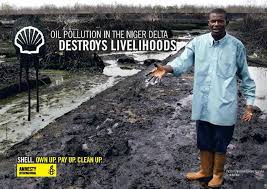
Corroded Pipeline with History of Leaks – Major Shell Oil Spill into Niger Delta

“We saw dead fish, dead crabs. … This spill occurred seven, eight nautical miles from the shore … [so] the volume runs into thousands of barrels,” said Alagoa Morris, head of the Niger Delta Resource Center for Environmental Rights Action.

Source: royaldutchshellplc.com

>” […] Some 3,800 barrels spilled recently, according to an investigation by Shell and government officials. It ranks as one of the worst in Nigeria for years, local environmental activists said.

A Shell spokesman said that some 1,200 barrels had been recovered as of Tuesday, and “recovery efforts are continuing” at the site on the Okolo Launch on Bonny Island.

Shell said the spill was caused by a failed crude theft. Nigeria, Africa’s top oil producer, loses tens of thousands of barrels per day to oil theft that often causes spills, although many are also caused by corroded pipelines.

Shell shut down its 28-inch pipeline carrying Bonny Light crude Nov. 22, but the origin of the spill was from the smaller 24-inch pipe, which was shut last year.

Crude washed up in pools in front of beach shacks in the affected site, coating the roots of palm trees and leaving a trail of dead sea life. In some areas, people scooped up the crude to fill drums and jerry cans.

“We saw dead fish, dead crabs. … This spill occurred seven, eight nautical miles from the shore … [so] the volume runs into thousands of barrels,” said Alagoa Morris, head of the Niger Delta Resource Center for Environmental Rights Action.

“We can’t go fishing anymore. It has destroyed our fishing equipment,” Bonny fisherman Boma Macaulay said, adding that it was the worst spill he had seen for at least five years.

Shell is under pressure to pay damages on other spills. Parliament said last month that it should pay nearly $4 billion for a spill at the offshore Bonga oilfield.

The Bodo community in Ogoniland is also suing for two massive spills in 2008 that devastated the area. […]”<

See on Scoop.itGreen & Sustainable News

Proposed ‘Energy East’ Pipeline Benefits Overblown Argues Report

The proposed Energy East pipeline won’t be the boon to Eastern Canadian refineries that supporters claim because the vast majority of the oil in it would be bound for export markets, environmental groups argue in a report being released Tuesday.

Source: www.cbc.ca

>” […]

Refinery capacity already in use

The report Tuesday said the three refineries along the Energy East route — Suncor Energy’s in Montreal, Valero’s near Quebec City and Irving’s in Saint John, N.B. — have a combined capacity of 672,000 barrels per day.

Of that, the groups figure 550,000 barrels per day can come from elsewhere — offshore crude in Atlantic Canada, booming U.S. shale resources and, eventually, via Enbridge Inc.’s recently approved reversed Line 9 pipeline between southwestern Ontario and Montreal. That leaves just 122,000 barrels per day of refining capacity that can be served by Energy East, the report said.

“It’s very frustrating to watch a company trying to convince Canadians that they should accept these massive risks based on some perceived benefit that they may receive. When you dig into it, you find that it’s an empty promise,” said Adam Scott, with Environmental Defence.

“It’s just not true that Eastern Canada’s going to benefit in the way that TransCanada’s saying they are. And when you look and see that this is a project about putting vast quantities of oil onto tankers and shipping them out of the country, people who are convinced that ‘this is going to mean more local jobs for me’ are going to be very disappointed.” […]”<

See on Scoop.itGreen & Sustainable News

Industrial Metals Contaminate Vancouver Community Garden – Brownfield Sites

An eight-month study of Vancouver garden and agricultural soils has found levels of lead and other metals above the most stringent Canadian standards for human health.Samples taken from the 16 Oaks community garden averaged 219 parts per million of lead, which exceeds the standard of 70 to 140 ppm for agricultural, residential and park land set by the Canadian Council of Environment Ministers.Levels of lead — a potent neurotoxin — are five times higher than those measured at UBC Farm

Source: www.vancouversun.com

>” […] “These numbers are higher than is commonly acceptable for growing vegetables and food crops.”

Oka’s findings may call into question the City of Vancouver’s enthusiasm for urban agriculture.

“You want to be conservative. According to the precautionary principle, if you aren’t sure what you are dealing with, you have a moral and ethical responsibility to go slowly,” said Lavkulich. “We aren’t saying don’t grow food, but you want to be sure what the impacts are on human health before you start advocating for urban agriculture.”

The city encourages would-be gardeners to have their soil tested and, barring that, to grow vegetables in lined boxes with clean soil rather than in the native soil, said Coun. Andrea Reimer.

“This city has a long industrial history and they didn’t always have the environmental standards that we have today,” she said. […]”<

See on Scoop.itGreen Building Design – Architecture & Engineering

Energy Efficiency Key to Reducing Energy Waste and Consumption

Advocates say doing more with less power may be an even more critical weapon in the fight against climate change than renewable technologies.

Source: www.nytimes.com

>” […]

“Some people call energy efficiency low-hanging fruit. I would even say energy efficiency is fruit lying on the ground. We only need to bend over and pick it up.”

Realizing those energy savings would be a huge boon to the climate, ease illness-causing air pollution, reduce many nations’ reliance on fuel imports and increase competitiveness by lowering costs, the advocates say. It creates jobs in fields like upgrading buildings, and is generally cheaper than the alternative of constructing new power plants and buying more energy, they argue. […]”<

See on Scoop.itGreen & Sustainable News

European Airlines Contracts Biofuel Supplier For Biofuel Powered Flights

SAS has, along with the Lufthansa Group and KLM, signed an agreement with Statoil Aviation for a regular supply of 2.5 million liters (660,430 gallons) of biofuel at Oslo Airport, allowing the airport to offer a regular supply of biobased fuel.

Source: biomassmagazine.com

>” […] Via an agreement signed with Avinor and the above named airlines, Statoil Aviation is to supply 2.5 million liters (660,430 gallons) of biofuel to the refueling facility at Oslo Airport. With a 50 percent biofuel mix, this will fuel around 3,000 flights between Oslo and Bergen and make OSL the first major airport in the world to offer a regular supply of biofuel as part of daily operations from March 2015. […]

SAS aims to use synthetic fuel on an increasingly regular basis in the next few years, and expects biofuel to become competitive with the fossil fuel alternative. For this to happen, a general environment and tax policy will be required from governments, based on aviation being a form of internationally competitive public transport with thin profit margins.”<


See on Scoop.itGreen & Sustainable News