Apple Creates Clean Energy Subsidiary

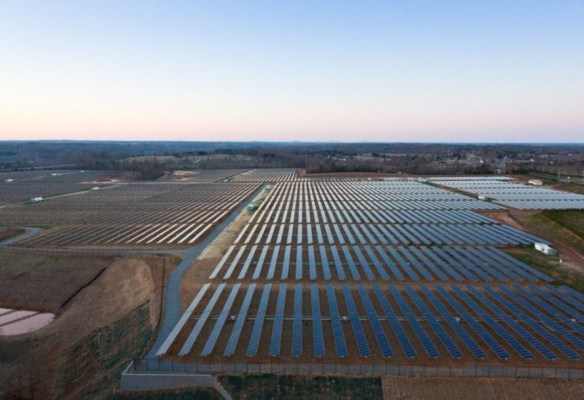
“Apple has created a subsidiary to sell the excess electricity generated by its hundreds of megawatts of solar projects. The company, called Apple Energy LLC, filed a request with the Federal Energy Regulatory Commission to sell power on wholesale markets across the US.

The company has announced plans for 521 megawatts of solar projects globally. It’s using that clean energy to power all of its data centers, as well as most of its Apple Stores and corporate offices. In addition, it has other investments in hydroelectric, biogas, and geothermal power, and looks to purchase green energy off the grid when it can’t generate its own power. In all, Apple says it generates enough electricity to cover 93 percent of its energy usage worldwide.

But it’s possible that Apple is building power generation capacity that exceeds its needs in anticipation of future growth. In the meantime, selling off the excess helps recoup costs by selling to power companies at wholesale rates, which then gets sold onward to end customers.

It’s unlikely that Apple, which generated more than $233 billion in revenue in fiscal 2015, will turn power generation into a meaningful revenue stream — but it might as well get something out of the investment. The company issued $1.5 billion in green bonds earlier this year to finance its clean energy projects.” (2)

Related Articles:

References:

  1. http://inhabitat.com/apple-is-launching-a-new-company-to-sell-surplus-solar-energy/apple-cupertino-hq-foster-partners-1/
  2. http://www.theverge.com/2016/6/9/11896502/apple-clean-solar-energy-subsidiary-wholesale

The Smart Grid – Modern Electrical Infrastructure

When we talk about the emerging Smart Grid there comes with the topic an array of exciting and new technologies; Micro-Grids, Distributed Generation, Smart Meters, Load Shifting, Demand Response, Electric Vehicles with Battery Storage for Demand Response, and more.  Recent development in Renewable Energy sources has been driven by concerns over Climate Change, allowing for unprecedented growth in residential and commercial PV Solar Panel installations.

redwoodhighschool.jpg

Figure 1:  Redwood High School in Larkspur, CA installed a 705kW SunPower system that’s projected to save $250,000 annually. The carports include EV charging stations for four cars. (1)

Climate Change and burning of fossil fuels are hot topics in the world. Most recently the city of San Francisco has mandated the installation of solar panels on all new buildings constructed under 10 storeys, which will come into effect in 2017 as a measure to reduce carbon emissions.  Currently all new buildings in California are required to set aside 15% of roof area for solar. (2)

“Under existing state law, California’s Title 24 Energy Standards require 15% of roof area on new small and mid-sized buildings to be “solar ready,” which means the roof is unshaded by the proposed building itself, and free of obtrusions. This state law applies to all new residential and commercial buildings of 10 floors or less.

Supervisor Wiener’s ordinance builds on this state law by requiring this 15% of “solar ready” roof area to have solar actually installed. This can take the form of either solar photovoltaic or solar water panels, both of which supply 100% renewable energy.” (3)

Weather and Aging Infrastructure:

Despite an increasing abundance of energy-efficient buildings and other measures, electricity demand has risen by around 10% over the last decade, partly driven by the massive growth of digital device usage and the expanding demand for air conditioning, as summers continue to get hotter in many states.

According to 2013 data from the Department of Energy (DOE), US power grid outages have risen by 285% since records on blackouts began in 1984, for the most part driven by the grid’s vulnerability to unusual and extreme weather events – such as the devastating Hurricane Sandy in 2012 that caused extensive power outages across the East Coast – which are becoming less unusual as the years roll on.

“We used to have two to five major weather events per year from the 50s to the 80s,” said University of Minnesota Professor of Electrical and Computer Engineering Massoud Amin in a 2014 interview with the International Business Times.

“Between 2008 and 2012, major outages caused by weather increased to 70 to 130 outages per year. Weather used to account for about 17% to 21% of all root causes. Now, in the last five years, it’s accounting for 68% to 73% of all major outages.” (4)

How is the Smart Grid so different from the traditional electrical grid?

The established model of providing power to consumers involves the supply of electricity generated from a distant source and transmitted at high voltage to sub-stations local to the consumer, refer to Figure 2.  The power plants that generate the electricity are mostly thermo-electric (coal, gas and nuclear power), with some hydro-electric sources (dams and reservoirs) and most recently wind farms and large solar installations.

“The national power grid that keeps America’s lights on is a massive and immensely valuable asset. Built in the decades after the Second World War and valued today at around $876bn, the country’s grid system as a whole connects electricity from thousands of power plants to 150 million customers through more than five million miles of power lines and around 3,300 utility companies.” (4)

power_fig1 Old Grid Model.gif

Figure 2:  Existing Transmission and Distribution Grid Structure within the Power Industry (5)

The (Transmission & Distribution) market supplies equipment, services and production systems for energy markets. The initial stage in the process is converting power from a generation source (coal, nuclear, wind, etc.) into a high voltage electrical format that can be transported using the power grid, either overhead or underground. This “transformation” occurs very close to the source of the power generation.

The second stage occurs when this high-voltage power is “stepped-down” by the use of switching gears and then controlled by using circuit breakers and arresters to protect against surges. This medium voltage electrical power can then be safely distributed to urban or populated areas.

The final stage involves stepping the power down to useable voltage for the commercial or residential customer.  In short, while power generation relates to the installed capacity to produce energy from an organic or natural resource, the T&D space involves the follow up “post-power generation production” as systems and grids are put in place to transport this power to end users. (5)

The Smart Grid is an evolution in multiple technologies which in cases is overlaying or emerging from the existing grid.  New generating facilities such as wind power or solar installations which may be small or local to a municipal or industrial user are being tied into the existing grid infra-structure.  In some cases residential PV Solar systems are being tied into the Grid with some form of agreement to purchase excess energy, in some cases at rates favorable to the installer, depending on the utility and region.

Another characteristic of the evolving Smart Grid is in communication technology and scalability.  Use of wifi protocols for communication between parts of the system allow for new processes and access to resources which were previously unavailable.  Ability to control systems to defer demand to non-peak hours within a building as one example.

Microgrids, smaller autonomous systems servicing a campus of buildings or larger industry,  may plug into a larger City-wide Smart Grid in a modular manner.  In the event of a catastrophic event such as a hurricane or earthquake the Smart Grid offers users resiliency through multiple sources of energy supply.

Distributed Generation includes a number of different and smaller scale energy sources into the mix.  The newer, small scale Renewable Energy projects which are being tied to the electrical grid as well as other technologies such as Co-Generation, Waste To Energy facilities, Landfill Gas Systems, Geothermal and the like.  As growth continues there needs to be ways to control and manage these multiple energy sources into the grid.  Also increased needs to maintain privacy, isolate and control systems, and prevent unauthorized access and control.  This is leading to growth in  Energy Management and Security Systems.

ARES-rail-train

Figure 3:  An artist’s rendering of the massive rail used in the ARES power storage project to store renewable energy as gravitational potential energy. Source: ARES North America (6)

Energy Storage is emerging as necessary in the Smart Grid due to fluctuations in source supply of energy, especially Solar and Wind Power, and the intermittent and cyclical nature of user demand.   The existing grid does not have the need for energy storage systems as energy sources were traditionally large power stations which generally responded to anticipated need during the course of the day.

As more Renewable Energy systems go online the need for storage will grow.  Energy Storage in its various forms will also enable Load Shifting or Peak Shaving strategies for economic gains in user operations.  These strategies are already becoming commercially available for buildings to save the facility operators rate charges by limiting demand during peak periods at higher utility rates.

RTEmagicC_CSE1412_MAG_PP_FENERGY_Figure_1.jpg

Figure 4:  Effect of Peak Shaving using Energy Storage  (6) 

Peak-load shifting is the process of mitigating the effects of large energy load blocks during a period of time by advancing or delaying their effects until the power supply system can readily accept additional load. The traditional intent behind this process is to minimize generation capacity requirements by regulating load flow. If the loads themselves cannot be regulated, this must be accomplished by implementing energy storage systems (ESSs) to shift the load profile as seen by the generators (see Figure 4).

Depending on the application, peak-load shifting can be referred to as “peak shaving” or “peak smoothing.” The ESS is charged while the electrical supply system is powering minimal load and the cost of electric usage is reduced, such as at night. It is then discharged to provide additional power during periods of increased loading, while costs for using electricity are increased. This technique can be employed to mitigate utility bills. It also effectively shifts the impact of the load on the system, minimizing the generation capacity required. (6)

Challenges with chemical storage systems such as batteries are scale and cost.  Currently pumped hydro is the predominant method of storing energy from intermittent sources providing 99% of global energy storage. (7)

inline_demandresponse

Figure 5:  Actual Savings accrued due to Demand Response Program  (8) 

Demand Response (DR) is another technology getting traction in the Smart Grid economy. As previously mentioned Energy Management and Security Systems are “…converging with Energy Storage technology to make DR a hot topic.  First, the tools necessary to determine where energy is being stored, where it is needed and when to deliver it is have developed over decades in the telecommunications sector.  Secondly, the more recent rush of advanced battery research is making it possible to store energy and provide the flexibility necessary for demand response to really work. Mix that with the growing ability to generate energy on premises through solar, wind and other methods (Distributed Generation) and a potent new distributed structure is created.” (9)

Demand response programs provide financial incentives to reduce energy consumption during peak periods of energy demand. As utilities and independent system operators (ISOs) are pressured to keep costs down and find ways to get as many miles as they can out of every kilowatt, demand response programs have gained popularity. (8)

VirtualPowerPlant#1

Figure 6:  The Demonstration Project 2’s Virtual Power Plant (10) 

Virtual Power Plant: When an increasing share of energy is produced by renewable sources such as solar and wind, electricity production can fluctuate significantly. In the future there will be a need for services which can help balance power systems in excess of what conventional assets will be able to provide. Virtual power plants (VPPs) are one of the most promising new technologies that can deliver the necessary stabilising services.  (11)

In the VPP model an energy aggregator gathers a portfolio of smaller generators and operates them as a unified and flexible resource on the energy market or sells their power as system reserve.

VPPs are designed to maximize asset owners’ profits while also balancing the grid. They can match load fluctuations through forecasting, advance metering and computerized control, and can perform real-time optimization of energy resources.

“Virtual power plants essentially represent an ‘Internet of Energy,’ tapping existing grid networks to tailor electricity supply and demand services for a customer,” said Navigant senior analyst Peter Asmus in a market report. The VPP market will grow from less than US $1 billion per year in 2013 to $3.6 billion per year by 2020, according to Navigant’s research — and one reason is that with more variable renewables on the grid flexibility and demand response are becoming more crucial.  (12)
How-Microgrids-Work.jpg

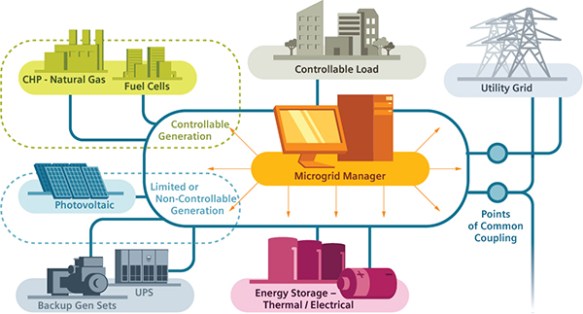
Figure 7:   Example of a Microgrid System With Loads, Generation, Storage and Coupling to a Utility Grid (13)

Microgrids:  Microgrids are localized grids that can disconnect from the traditional grid to operate autonomously and help mitigate grid disturbances to strengthen grid resilience (14).  The structure of a microgrid is a smaller version of the smart grid formed in a recursive  hierarchy where multiple local microgrids may interconnect to form the larger smart grid which services a region or community.

Summary:

The convergence of aging existing infrastructure, continued growth in populations and electrical demand and concerns over climate change have lead to the emerging smart grid and it’s array of new technologies.  This trend is expected to continue as new growth and replacement will be necessary for an aging electrical grid system, from the larger scope transmission systems and utilities, to smaller scale microgrids.  These systems will become integrated and modular, almost plug-and-play, with inter-connectivity and control through wireless internet protocols.

References:

  1. https://cleanpowermarketinggroup.com/category/blog/
  2. http://www.npr.org/sections/thetwo-way/2016/04/20/474969107/san-francisco-requires-new-buildings-to-install-solar-panels
  3. https://medium.com/@Scott_Wiener/press-release-board-of-supervisors-unanimously-passes-supervisor-wiener-s-legislation-to-require-693deb9c2369#.3913ug8ph
  4. http://www.power-technology.com/features/featureupgrading-the-us-power-grid-for-the-21st-century-4866973/
  5. http://www.incontext.indiana.edu/2010/july-aug/article3.asp
  6. http://www.csemag.com/single-article/implementing-energy-storage-for-peak-load-shifting/95b3d2a5db6725428142c5a605ac6d89.html
  7. http://www.forbes.com/sites/jamesconca/2016/05/26/batteries-or-train-pumped-energy-for-grid-scale-power-storage/#30b5b497de55
  8. http://www.summitenergygps.com/optimize-rebates-incentives-credits.html
  9. https://duanetilden.com/2015/12/26/demand-response-energy-distribution-a-technological-revolution/
  10. https://hub.globalccsinstitute.com/publications/twenties-project-final-report-short-version/demonstration-project-2-large-scale-virtual-power-plant-integration-derint
  11. http://energy.gov/oe/services/technology-development/smart-grid/role-microgrids-helping-advance-nation-s-energy-system
  12. http://www.renewableenergyworld.com/articles/print/volume-16/issue-5/solar-energy/virtual-power-plants-a-new-model-for-renewables-integration.html
  13. http://w3.usa.siemens.com/smartgrid/us/en/microgrid/pages/microgrids.aspx
  14. http://energy.gov/oe/services/technology-development/smart-grid/role-microgrids-helping-advance-nation-s-energy-system

Related Blog Posts:

Other Related Articles and Websites:
PV Panel Energy Conversion Efficiency Rankings

The purpose of this brief is to investigate into the types of solar panel systems with a look at their theoretical maximum Energy Conversion Efficiency both in research and the top 20 manufactured commercial PV panels. 

PVeff(rev160420)

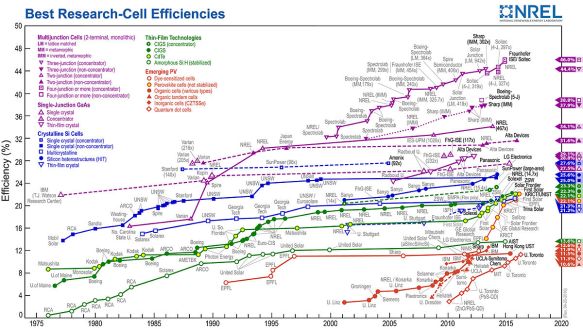
Figure 1:  Reported timeline of solar cell energy conversion efficiencies since 1976 (National Renewable Energy Laboratory) (1)

Solar panel efficiency refers to the capacity of the panel to convert sunlight into electricity.   “Energy conversion efficiency is measured by dividing the electrical output by the incident light power.” (1)  There is a theoretical limit to the efficiency of a solar cell of “86.8% of the amount of in-coming radiation. When the in-coming radiation comes only from an area of the sky the size of the sun, the efficiency limit drops to 68.7%.”

Figure 1 shows that there has been considerable laboratory research and data available on the various configurations of photo-voltaic solar cells and their energy conversion efficiency from 1976 to date.  One major advantage is that as PV module efficiency increases the amount of material  or area required (system size) to maintain a specific nominal output of electricity will generally decrease.

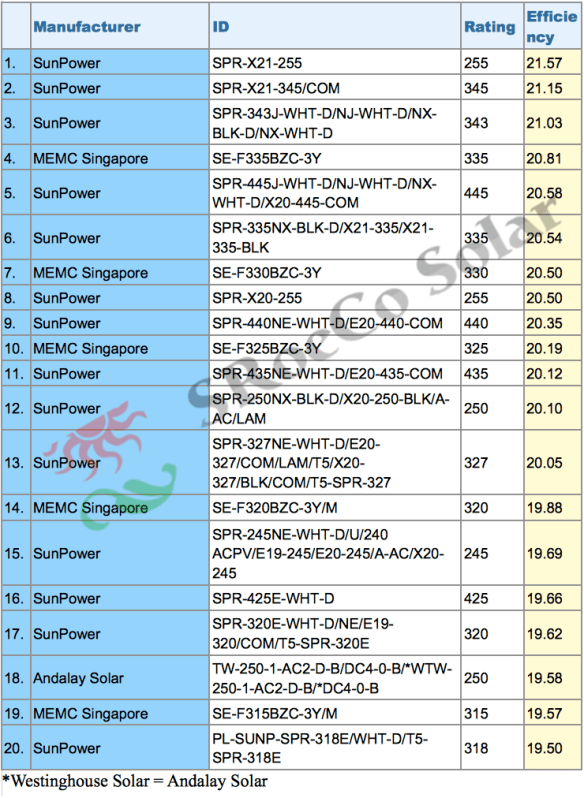
Of course, not all types of systems and technologies are economically feasible at this time for mainstream production.  The top 20 PV solar cells are listed in Figure 2 below with their accompanying measured energy efficiency.

top-20-most-efficient-solar-panels-chart

Figure 2:  Table of the top 20 most efficient solar panels on the North American Market (2)

Why Monocrystalline Si Panels are more Efficient:

Current technology has the most efficient solar PV modules composed of monocrystalline silicon.  Lower efficiency panels are composed of polycrystalline silicon and are generally about 13 to 16% efficient.  This lower efficiency is attributed to higher occurrences of defects in the crystal lattice which affects movement of electrons.  These defects can be imperfections and impurities, as well as a result of the number of grain boundaries present in the lattice.  A monocrystal by definition has only grain boundaries at the edge of the lattice.  However a polycrystalline PV module is full of grain boundaries which present additional discontinuities in the crystalline lattice; impeding electron flow thus reducing conversion efficiency. (3) (4)

Other Factors that can affect Solar Panel Conversion Efficiency in Installations (5):

Direction and angle of your roof 
Your roof will usually need to be South, East or West facing and angled between 10 and 60 degrees to work at its peak efficiency.

Shade
The less shade the better. Your solar panels will have a lower efficiency if they are in the shade for significant periods during the day.

Temperature
Solar panel systems need to be installed a few inches above the roof in order to allow enough airflow to cool them down.  Cooler northern climates also improve efficiency to partially compensate for lower intensity.

Time of year
Solar panels work well all year round but will produce more energy during summer months when the sun is out for longer.  In the far northern regions the sun can be out during the summer for most of the day, conversely during the winter the sun may only be out for a few hours each day.

Size of system
Typical residential solar panel systems range from 2kW to 4kW. The bigger the system the more power you will be able to produce.  For commercial and larger systems refer to a qualified consultant.


References:

  1. https://en.wikipedia.org/wiki/Solar_cell_efficiency
  2. http://sroeco.com/solar/top-20-efficient-solar-panels-on-the-market/
  3. http://energyinformative.org/best-solar-panel-monocrystalline-polycrystalline-thin-film/
  4. http://www.nrel.gov/docs/fy11osti/50650.pdf
  5. http://www.theecoexperts.co.uk/which-solar-panels-are-most-efficient

Solar Energy on Reservoirs, Brownfields and Landfills

One of the downsides to large-scale solar power is finding space suitable for the installation of a large area of PV panels or mirrors for CSP.  These are long-term installations, and will have impact on the land and it’s uses.  There are potential objections to committing areas of undeveloped or pristine land to solar power. 

Solar Energy on Reservoirs:

Floating arrays have been installed on surfaces such as water reservoirs as these “land areas” are already committed to a long-term purpose.  Solar power is considered a good synchronistic fit, and most recently work was completed in England seeing “23,000 solar panels on the Queen Elizabeth II reservoir at Walton-on-Thames”.   (1)

Water utilities are the first to see the benefit of solar panel installations as the power generated is generally consumed by the utilities operations for  water treatment and pumping.  This of course offsets demand requirements from the electrical utility and reduces operating costs with a ROI from the installation.  Possible government or other industry incentives and subsidies may enhance benefits.  Last year a 12,000 panel system was installed on a reservoir near Manchester (UK) and was the second of it’s kind in Britain, dwarfing the original installation of 800 panels.  (2)  (3)

Solar Array on Reservoir Japan MjcxMzAwOQ

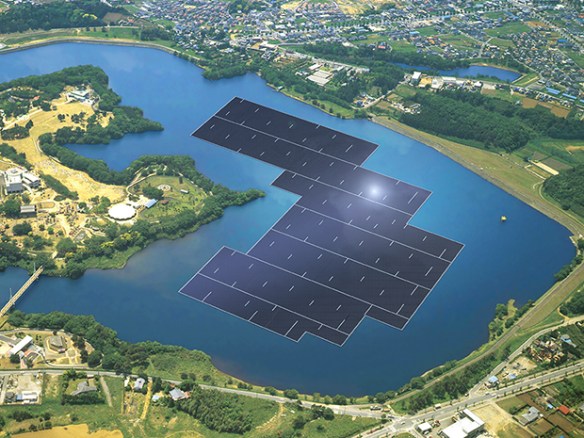
Image #1:  World’s largest floating array of PV Solar Panels in Japan (4)

Currently Japan has the most aggressive expansion plans for reservoir installations, with the most recent being the world’s largest of it’s kind.  Recent changes in energy policies and the ongoing problems associated with Nuclear Power has propelled Japan into aggressively seeking alternative forms of energy.

The 13.7-megawatt power station, being built for Chiba Prefecture’s Public Enterprise Agency, is located on the Yamakura Dam reservoir, 75 kilometers east of the capital. It will consist of some 51,000 Kyocera solar modules covering an area of 180,000 square meters, and will generate an estimated 16,170 megawatt-hours annually. That is “enough electricity to power approximately 4,970 typical households,” says Kyocera. That capacity is sufficient to offset 8,170 tons of carbon dioxide emissions a year, the amount put into the atmosphere by consuming 19,000 barrels of oil.” 

“[…]“Due to the rapid implementation of solar power in Japan, securing tracts of land suitable for utility-scale solar power plants is becoming difficult,” Toshihide Koyano, executive officer and general manager of Kyocera’s solar energy group told IEEE Spectrum. “On the other hand, because there are many reservoirs for agricultural use and flood-control, we believe there’s great potential for floating solar-power generation business.”

He added that Kyocera is currently working on developing at least 10 more projects and is also considering installing floating installations overseas.” (4)

Solar Energy on Brownfields:

A Brownfield is defined generally by the EPA  (5)

A brownfield is a property, the expansion, redevelopment, or reuse of which may be complicated by the presence or potential presence of a hazardous substance, pollutant, or contaminant. It is estimated that there are more than 450,000 brownfields in the U.S. Cleaning up and reinvesting in these properties increases local tax bases, facilitates job growth, utilizes existing infrastructure, takes development pressures off of undeveloped, open land, and both improves and protects the environment.

Solar Brownfield 1 D6A13-0092.jpg

Image #2:  6-MW solar PV array on the site of the former Palmer Metropolitan Airfield (6)

Traditionally most solar projects have been built on “Greenfields”, however, on further analysis it makes far more sense to install solar on “Brownfields”.

The U.S. is home to more than 450,000 brownfields – unused property that poses potential environmental hazards. Eyesores as well as potential health and safety threats, brownfield sites reduce urban property values. Rehabilitating them pays off, and in more ways than one, according to a July, 2014 National Bureau of Economic Research (NBER) working paper entitled, ¨The Value of Brownfield Remediation.¨ […]

NBER researchers determined that remediation increased the value of individual brownfield sites $3,917,192, with a median value of $2,117,982. That compares to an estimated per-site cost of $602,000. In percentage terms across the study’s nationally representative sample, EPA-supported clean-ups resulted in property price increases of between 4.9% and 32.2%. (6)

In another example where a Brownfield remediation effort has payed off utilizing a Solar Power upgrade is at the Philadelphia Navy Yard according to a June 2011 report by Dave Levitan (7) where it says:

“The Navy Yard solar array is just one of a growing number of projects across the U.S. that fall into the small category of energy ideas that appear to have little to no downside: turning brownfields — or sites contaminated

Every solar project that rises from an industrial wasteland is one that won’t be built on pristine land.

or disturbed by previous industrial activity — into green energy facilities. Among the successfully completed brown-to-green projects are a wind farm at the former Bethlehem Steel Mill in Lackawanna, New York; a concentrating solar photovoltaic array on the tailings pile of a former molybdenum mine in Questa, New Mexico; solar panels powering the cleanup systems at the Lawrence Livermore National Laboratory’s Superfund site in northern California; and the U.S. Army’s largest solar array atop a former landfill in Fort Carson, Colorado.”

Solar Energy on Landfills:

Building solar power projects on top of closed off landfills appears to be a good idea, however, there are additional considerations and requirements which must be met which would exceed those of a normal type of undisturbed geology.

Construction and ongoing operation of the plant must never break, erode or otherwise impair the functioning integrity of the landfill final closure system (including any methane gas management system) already in place.”  (8) […]

A-Simple-Guide-to-Building-Photovoltaic-Projects-on-Landfills-and-Other-...-copy-3-291x300

Image #3:  Prescriptive Landfill Capping System

In general, the features of a conventional “Subtitle D” final protection barrier cover system on USA waste sites are shown in the illustration above and include the following layers added on top of a waste pile:

  1. First, a foundation Layer – usually soil—covers the trash to fill and grade the area and protect the liner.
  2. Then typically a geomembrane liner or a compacted clay layer .is spread over the site to entomb the waste mass in a water impermeable enclosure.
  3. A drainage layer (i.e. highly transmissive sands or gravels or a manufactured “Geonet”) is next added– especially in areas with heavy rainfall and steeper slopes. This is to prevent the sodden top layers of dirt from slipping off the impermeable barrier (a.k.a. a landslide).
  4. Next, typically 18 inches of soil is added as a “protection layer.”
  5. Finally, an “erosion layer” of soil – typically 6 inches of dirt of sufficient quality to support plant growth (grasses, etc., etc.) which the waste industry calls a “vegetative layer.”

Solar-landfill-table-lo-res

Image #4:  Established Solar Energy Projects on Closed Landfills (9)

As of 2013 we can see that there already have been a number of solar installations and that this number is still growing through to the present as more municipalities seek ways to convert their closed landfills into a renewable resource and asset.

Summary of Solar Energy Project Types by Site

A greenfield site is defined as an area of agricultural or forest land, or some other undeveloped site earmarked for commercial development or industrial projects.  This is compared to a brownfield site which is generally unsuitable for commercial development or industrial projects due to the presence of some hazardous substance, pollutant or contaminant.

While a water reservoir is not a contaminated site, it is generally rendered useless for most purposes, however provides an ideal site for locating solar panels as they provide relatively large areas of unobstructed sun.  Also reservoirs provide water cooling which enhances energy efficiency and PV performance.  Uncovered reservoirs can be partially covered by floating arrays of PV panels, of modest to large sizes in the 16 MW range.  Installations can be found throughout the world, including England and most recently Japan where interest in alternative energy sources is growing rapidly.

A brownfield site is considered ideal for the location of a solar plant as a cost-effective method of an otherwise useless body of land, such as a decommissioned mine, quarry, or contaminated site.  A landfill is one form of brownfield site which could be suitable for the installation of solar power where provision has been made to protect the cap on the landfill.  Municipalities have been showing growing interest in landfill solar as a means to offset operational costs.

Abbreviations:

PV – Photo Voltaic

CSP – Concentrated Solar Power

ROI – Return On Investment

UK – United Kingdom

NBER – National Bureau of Economic Research

EPA – Environmental Protection Agency

References:

  1. http://www.theguardian.com/environment/2016/feb/29/worlds-biggest-floating-solar-farm-power-up-outside-london
  2. http://www.telegraph.co.uk/finance/newsbysector/energy/11954334/United-Utilities-floats-3.5m-of-solar-panels-on-reservoir.html
  3. http://www.telegraph.co.uk/news/earth/energy/solarpower/11110547/Britains-first-floating-solar-panel-project-installed.html
  4. http://spectrum.ieee.org/energywise/energy/renewables/japan-building-worlds-largest-floating-solar-power-plant
  5. https://www.epa.gov/brownfields/brownfield-overview-and-definition
  6. http://microgridmedia.com/massachusetts-pv-project-highlights-benefits-of-solar-brownfields/
  7. http://e360.yale.edu/feature/brown_to_green_a_new_use_for_blighted_industrial_sites/2419/
  8. http://solarflexrack.com/a-simple-guide-to-building-photovoltaic-projects-on-landfills-and-other-waste-heaps/
  9. http://www.crra.org/pages/Press_releases/2013/6-3-2013_CRRA_solar_cells_on_Hartford_landfill.htm

Energy Efficiency Sector Ranks #1 in Job Growth by DOE


UNEP-Green-Economy-employment-energy-550x242

Figure 1:  Projected Job Growth by Sectors – Green Economy Report, 2011 (1)

WASHINGTON – The U.S. Department of Energy today released the agency’s first annual analysis of how changes in America’s energy profile are affecting national employment in multiple energy sectors. By using a combination of existing energy employment data and a new survey of energy sector employers, the inaugural U.S. Energy and Employment Report (USEER) provides a broad view of the national current energy employment landscape.

USEER examines four sectors of the economy — electric power generation and fuels; transmission, wholesale distribution, and storage; energy efficiency; and motor vehicles — which cumulatively account for almost all of the United States’ energy production and distribution system and roughly 70 percent of U.S. energy consumption. By looking at such a wide portion of the energy economy, USEER can provide the public and policy makers with a clearer picture of how changes in energy technology, systems, and usage are affecting the economy and creating or displacing jobs.

Some key findings of the report include:

3.64 million Americans work in traditional energy industries, including production, transmission, distribution, and storage.
Of these, 600,000 employees contribute to the production of low-carbon electricity, including renewable energy, nuclear energy and low emission natural gas.
An additional 1.9 million Americans are employed, in whole or in part, in energy efficiency.
Roughly 30 percent of the 6.8 million employees in the U.S. construction industry work on energy or building energy efficiency projects.

A copy of the full report is available HERE.

The report also found several energy industries with projected increases in new jobs. Responding to the USEER survey of employers, the energy efficiency sector predicted hiring rates of 14 percent in 2016, or almost 260,000 new hires. Projected hiring rates were at 5 percent within the electric power generation and fuels sector, reflecting overall growth despite a loss of employment in 2015 in the oil and natural gas extraction sectors. Transmission, wholesale distribution, and storage firms anticipate 4 percent employment growth in 2016. Solar energy firms predicted 15 percent job growth over the next year.

Yet even as the report found the opportunity for job growth in many energy sectors, over 70 percent of all employers surveyed found it “difficult or very difficult” to hire new employees with needed skills.

“The transformation of our energy system and the growth of energy efficiency technologies are creating opportunities for thousands of new jobs, especially in energy efficiency and solar,” said David Foster, Senior Advisor on Energy and Industrial Policy at the Department of Energy.  “This report gives an important snapshot of energy employment in America, and subsequent reports will provide better information to guide policies and priorities that create new jobs, appropriately train workers, and promote a successful national energy policy.” …” (1)

“…As a rule of thumb, investment in renewable energy and energy efficiency generate about 3 times the amount of jobs that other energy related investments create (gas, oil, coal, nuclear). Average numbers of jobs created per million euro invested (3CSEP):

  • Building retrofits: 17
  • Renewable energy: 15
  • Coal: 7
  • Oil and gas: 5

[…] (2)

poschen_chart2.jpg

Figure 2:  Job Generators Comparison Chart (3)

“[…] While much of the debate on climate change and employment has focused on renewables, another and more significant source of jobs from decarbonization has received much less attention. Substantial efficiency gains are technically feasible and economically viable in industry, housing, transportation, and services. Businesses can make a profit and households can enjoy real savings. And spending the surplus on things other than fossil energy will boost an economy’s employment.

For example, the United States is a diversified economy that imports substantial amounts of equipment for renewables. A recent study carefully considered economy-wide effects of reducing emissions by 40 percent by 2030 through a mix of clean energy and energy efficiency (Pollin and others, 2014). It concluded that $200 billion a year in investment would generate a net gain of about 2.7 million jobs: 4.2 million in environmental goods and service sectors and their supply chains but 1.5 million lost in the shrinking fossil- and energy-intensive sectors. The net gain of 2.7 million jobs would reduce the unemployment rate in the 2030 U.S. labor market by about 1.5 percentage points—for example, from 6.5 percent to 5 percent. The authors consider this a conservative estimate; for example, it does not take into account the 1.2 to 1.8 million jobs likely gained from reinvested savings.

Other studies show similar results. A review of 30 studies covering 15 countries and the European Union as a whole found appreciable actual or potential net gains in employment (Poschen, 2015). Most studies considering emission targets in line with the ambitions announced for a Paris agreement in December find net gains on the order of 0.5 to 2.0 percent of total employment, or 15 million to 60 million additional jobs. In emerging market economies such as Brazil, China, Mauritius, and South Africa, green investment was found to accelerate economic growth and employment generation when compared with business as usual. Several studies suggest that more ambitious climate targets would generate greater gains in employment (for a discussion of particular countries, see Poschen, 2015). […]” (3)

References:

(1)  http://bit.ly/1RsVAdc

(2) http://1.usa.gov/1Tby7lt

(3) http://bit.ly/1RlUaV8


Leading Energy Storage Tech for Renewable Energy

ElectricityStorage

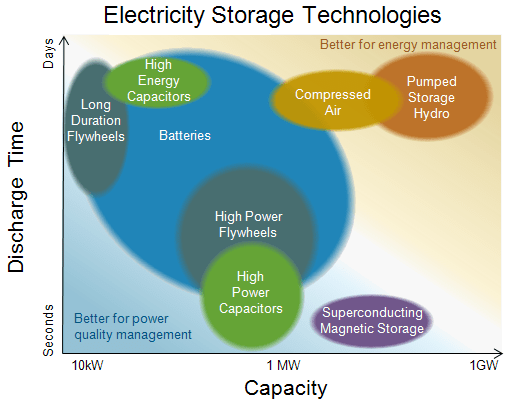
Image Source:  U.S. Energy Information Administration (1)

Summary

“It doesn’t always rain when you need water, so we have reservoirs – but we don’t have the same system for electricity,” says Jill Cainey, director of the UK’s Electricity Storage Network.

[…] Big batteries, whose costs are plunging, are leading the way. But a host of other technologies, from existing schemes like splitting water to create hydrogen,compressing air in underground caverns, flywheels and heated gravel pits, to longer term bets like supercapacitors and superconducting magnets, are also jostling for position.

In the UK, the first plant to store electricity by squashing air into a liquid is due to open in March, while the first steps have been taken towards a virtual power station comprised of a network of home batteries.

“We think this will be a breakthrough year,” says John Prendergast at RES, a UK company that has 80MW of lithium-ion battery storage operational across the world and six times more in development, including its first UK project at a solar park near Glastonbury. “All this only works if it reduces costs for consumers and we think it does,” he says.

Energy storage is important for renewable energy not because green power is unpredictable – the sun, wind and tides are far more predictable than the surge that follows the end of a Wimbledon tennis final or the emergency shutdown of a gas-fired power plant. Storage is important because renewable energy is intermittent: strong winds in the early hours do not coincide with the peak demand of evenings. Storage allows electricity to be time-shifted to when it is needed, maximising the benefits of windfarms and solar arrays. (2)


References

(1) http://1.usa.gov/1UOayAh

(2) http://bit.ly/1UOaJvs

Supercritical CO2 Used For Solar Battery Power System

“GE has announced it is working on a way to use CO2 pollution to make new types of solar batteries that could each power up to 100,000 homes. CO2 is the main contributor to climate change, and is released into the atmosphere when coal is processed at power plants. Currently environmental procedures mean that some CO2 from these plants is captured and stored, so it’s not released back into the atmosphere. But the question has always been: What do you do with the stored gas?” (1)


dodge-sco23 supercritical CO2 turbine

Figure #1:  Comparison of 10 MWe Turbines (2)

What are the Benefits of Supercritical CO2?  With the transition from steam generation to using Supercritical CO2 as a working fluid, we seen large gains in energy efficiency conversion, coupled with significant size (footprint) reduction of turbomachines.  Other benefits include sequestering CO2 from the environment and reducing GHG emissions.   Also, this system can be utilized to capture energy from other heat sources including waste heat streams and co-generation applications. 

Supercritical CO2 image comparison

Figure 2:  Relative size  comparison of steam, helium and supercritical CO2 turbomachinery for Generation IV Nuclear Reactors (3)

What is Supercritical CO2?  “[…] Supercritical CO2 is a fluid state of carbon dioxide where it is held above its critical pressure and critical temperature which causes the gas to go beyond liquid or gas into a phase where it acts as both simultaneously. Many fluids can achieve supercritical states and supercritical steam has been used in power generation for decades. Supercritical CO2 has many unique properties that allow it to dissolve materials like a liquid but also flow like a gas. sCO2 is non-toxic and non-flammable and is used as an environmentally-friendly solvent for decaffeinating coffee and dry-cleaning clothes.

dodge-sco211 supercritical CO2 2

Figure 3:  CO2 phase diagram illustrating supercritical region. (4)

The use of sCO2 in power turbines has been an active area of research for a number of years, and now multiple companies are bringing early stage commercial products to market. The attraction to using sCO2 in turbines is based on its favorable thermal stability compared to steam which allows for much higher power outputs in a much smaller package than comparable steam cycles. CO2 reaches its supercritical state at moderate conditions and has excellent fluid density and stability while being less corrosive than steam.  The challenges in using sCO2 are tied to identifying the best materials that can handle the elevated temperatures and pressures, manufacturing turbo machinery, valves, seals, and of course, costs. […] ”  (2)

How will this work?

“[…] The design has two main parts. The first one collects heat energy from the sun and stores it in a liquid of molten salt. “This is the hot side of the solution,” Sanborn says. The other component uses surplus electricity from the grid to cool a pool of liquid CO2 so that it becomes dry ice.

During power generation, the salt releases the heat to expand the cold CO2 into a supercritical fluid, a state of matter where it no longer has specific liquid and gas phases. It allows engineers to make the system more efficient.

The supercritical fluid will flow into an innovative CO2 turbine called the sunrotor, which is based on a GE steam turbine design. Although the turbine can fit on an office shelf (see image above) it can generate as much as 100 megawatts of “fast electricity” per installed unit—enough to power 100,000 U.S. homes.

Sanborn believes that a large-scale deployment of the design would be able to store “significant amounts” of power —— and deliver it back to the grid when needed. “We’re not talking about three car batteries here,” he says. “The result is a high-efficiency, high-performance renewable energy system that will reduce the use of fossil fuels for power generation.”

He says the system could be easily connected to a solar power system or a typical gas turbine. The tanks and generators could fit on trailers. His goal is to bring the cost to $100 per megawatt-hour, way down from the $250 it costs to produce the same amount in a gas-fired power plant. “It is so cheap because you are not making the energy, you are taking the energy from the sun or the turbine exhaust, storing it and transferring it,” says Sanborn.

The process is also highly efficient, Sanborn says, yielding as much as 68 percent of the stored energy back to the grid. The most efficient gas power plants yield 61 percent. The team is now building a conceptual design, which Sanborn believes could take five to 10 years to get from concept to market. […]” (5)

Read more at:

1.  https://duanetilden.com/2013/10/29/supercritical-co2-refines-cogeneration-for-industry/

2. https://duanetilden.com/2013/10/29/supercritical-co2-turbine-for-power-production-waste-heat-energy-recovery/

3. https://duanetilden.com/2013/10/29/waste-heat-recovery-using-supercritical-co2-turbines-to-create-electrical-power/

4. https://duanetilden.com/2015/04/23/doe-invests-in-super-critical-carbon-dioxide-turbine-research-to-replace-steam-for-electric-power-generators/


References:

  1. http://www.fastcompany.com/3057630/fast-feed/ge-is-working-on-a-way-to-turn-co2-pollution-into-solar-batteries
  2. http://breakingenergy.com/2014/11/24/supercritical-carbon-dioxide-power-cycles-starting-to-hit-the-market/
  3. http://large.stanford.edu/courses/2014/ph241/dunham1/
  4. https://commons.wikimedia.org/wiki/File:Carbon_dioxide_pressure-temperature_phase_diagram.svg
  5. http://www.vanguardngr.com/2016/03/ge-report-this-scientist-has-turned-the-tables-on-greenhouse-gas-using-co2-to-generate-clean-electricity/


DOE’s 3 Year $220M Grid Modernization Plan

With 88 projects from coast to coast, it might be the biggest grid edge R&D effort ever. Here’s how the money is going to be spent.

Sourced through Scoop.it from: www.greentechmedia.com

“[…] The Grid Modernization Multi-Year Program Plan will bring a consortium of 14 national laboratories together with more than 100 companies, utilities, research organizations, state regulators and regional grid operators. The scope of this work includes integrating renewable energy, energy storage and smart building technologies at the edges of the grid network, at a much greater scale than is done today.

That will require a complicated mix of customer-owned and utility-controlled technology, all of which must be secured against cyberattacks and extreme weather events. And at some point, all of this new technology will need to become part of how utilities, grid operators, regulators, ratepayers and new energy services providers manage the economics of the grid.

DOE has already started releasing funds to 10 “pioneer regional partnerships,” or “early-stage, public-private collaborative projects […]  The projects range from remote microgrids in Alaska and grid resiliency in New Orleans, to renewable energy integration in Vermont and Hawaii, and scaling up to statewide energy regulatory overhauls in California and New York. Others are providing software simulation capabilities to utilities and grid operators around the country, or looking at ways to tie the country’s massive eastern and western grids into a more secure and efficient whole.

Another six “core” projects are working on more central issues, like creating the “fundamental knowledge, metrics and tools we’re going to need to establish the foundation of this effort,” he said (David Danielson).  Those include technology architecture and interoperability, device testing and validation, setting values for different grid services that integrated distributed energy resources (DERs) can provide, and coming up with the right sensor and control strategy to balance costs and complexity.

Finally, the DOE has identified six “cross-cutting” technology areas that it wants to support, Patricia Hoffman, assistant secretary of DOE’s Office of Electricity Delivery and Energy Reliability, noted in last week’s conference call. Those include device and integrated system testing, sensing and measurement, system operations and controls, design and planning tools, security and resilience, and institutional support for the utilities, state regulators and regional grid operators that will be the entities that end up deploying this technology at scale.

Much of the work is being driven by the power grid modernization needs laid out in DOE’s Quadrennial Energy Review, which called for $3.5 billion in new spending to modernize and strengthen the country’s power grid, while the Quadrennial Technology Review brought cybersecurity and interoperability concerns to bear.[…]

DOE will hold six regional workshops over the coming months to provide more details, Danielson said. We’ve already seen one come out this week — the $18 million in SunShot grants for six projects testing out ways to bring storage-backed solar power to the grid at a cost of less than 14 cents per kilowatt-hour.

“We can’t look at one attribute of the grid at a time,” he said. “We’re not just looking for a secure grid — we’re looking for an affordable grid, a sustainable grid, a resilient grid.” And one that can foster renewable energy and greenhouse gas reduction at the state-by-state and national levels. […]

See on Scoop.itGreen Energy Technologies & Development

Is Utility-Scale Solar Power the Economic Choice to Residential Solar Power?

Originally published on Solar Love. A new study has concluded that utility-scale solar PV systems across the US are “significantly” more cost effective than rooftop solar PV systems. Sp…

Sourced through Scoop.it from: cleantechnica.com

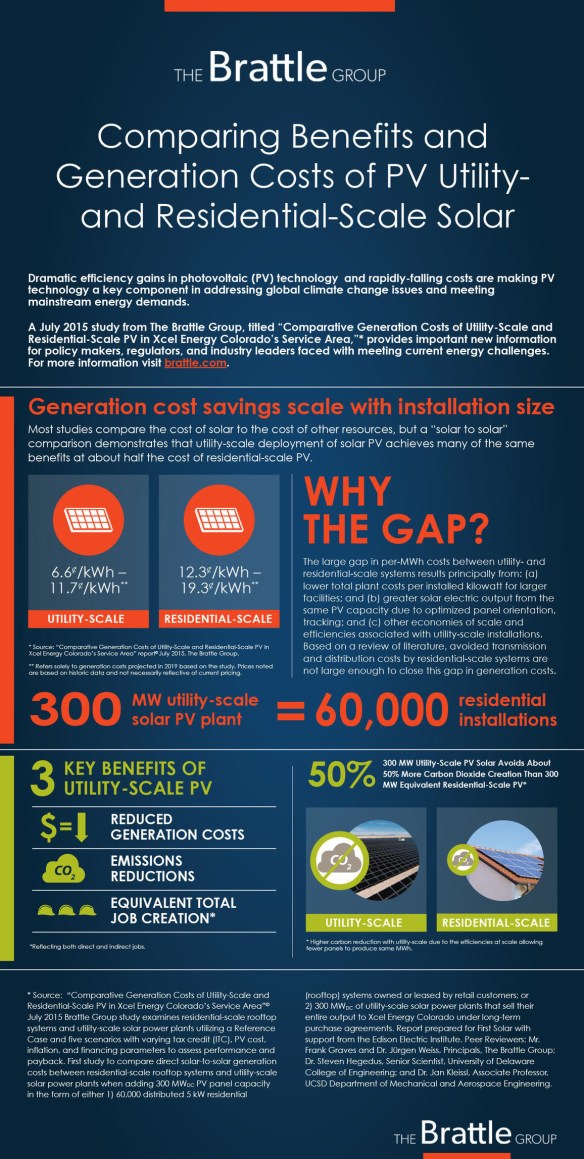
“[…] the study, conducted by economists at global consulting firm The Brattle Group, found that utility-scale solar PV systems were more cost effective at achieving the economic and policy benefits of PV solar than rooftop or residential-scale solar was.

The study, Comparative Generation Costs of Utility-Scale and Residential-Scale PV in Xcel Energy Colorado’s Service Area, published Monday, is the first of its kind to study a “solar on solar” comparison.

“Over the last decade, solar energy costs for both rooftop and bulk-power applications have come down dramatically,” said Dr. Peter Fox-Penner, Brattle principal and co-author of the study. “But utility-scale solar will remain substantially less expensive per kWh generated than rooftop PV. In addition, utility-scale PV allows everyone access to solar power. From the standpoint of cost, equity, and environmental benefits, large-scale solar is a crucial resource.”

The study yielded two key findings:

  1. The generation cost of energy from 300 MW of utility-scale PV solar is roughly 50% the cost per kWh of the output from an equivalent 300 MW of 5kW residential-scale systems when deployed on the Xcel Energy Colorado system, and utility-scale solar remains more cost effective in all scenarios considered in the study.
  2. In that same setting, 300 MW of PV solar deployed in a utility-scale configuration also avoids approximately 50% more carbon emissions than an equivalent amount of residential-scale PV solar. […]

The report itself was commissioned by American thin-film photovoltaic manufacturer and utility scale developer First Solar with support from Edison Electric Institute, while Xcel Energy Colorado provided data and technical support. Specifically, the report examined the comparative customer-paid costs of generating power from equal amounts of utility-scale and residential/rooftop-scale solar PV panels in the Xcel Energy Colorado system.

A reference case and five separate scenarios with varying degrees of investment tax credit, PV cost, inflation, and financing parameters were used to yield the report’s results.

The specifics of the study’s findings, which imagined a 2019 Xcel Energy Colorado system, are as follows:

  • utility-scale PV power costs ranged from $66/MWh to $117/MWh (6.6¢/kWh to 11.7¢/kWh) across the five scenarios
  • residential-scale PV power costs were well up, ranging from $123/MWh to $193/MWh (12.3¢/kWh to 19.3¢/kWh) for a typical residential-scale system owned by the customer
  • the costs for leased residential-scale systems were even larger and between $140/MWh and $237/MWh (14.0¢/kWh to 23.7¢/kWh)
  • the generation cost difference between the utility- and residential-scale systems owned by the customer ranged from 6.7¢/kWh to 9.2¢/kWh solar across the scenarios

The authors of the report put these figures into perspective, including the national average for retail all-in residential electric rates in 2014, which were 12.5¢/kWh.  […]”

See on Scoop.itGreen Energy Technologies & Development

Top Ten Most Viewed Articles of 2015

Water Vortex

Photo:  Top Viewed Article of the year on Water Vortex Hydro-Electric Power Plant Designs

This is going to be a fun post to write, as I get to review the statistics for 2015 and pick out the ten most viewed posts on my blog for the year.  I am looking forward to performing this review, as I get to find out what works and what does not.  The idea being to give me a chance to refine my techniques and improve my blog posts.

I am listing them in reverse order as we want to heighten the suspense, leading up to the most viewed article.  Each post will also have the posting date and number of views for comparison.  I know this technique is not perfect as some posts will have a longer opportunity to be seen than those written later in the year.  Such discrepancies will be left to discussed in a future article.

10.  Climate Change, Pole Shift & Solar Weather

Magnetic pole shift

This post discusses Earth’s wandering magnetic poles, the fluctuating field strengths and links to solar weather and climate change.  Some rather eccentric, yet plausible explanations based on historical data that pole shifts are possible and have happened, at unpredictable, largely spaced intervals of hundreds of thousands to millions of years, the average being 450,000 years.

Posted on March 3, 2015 and received 44 views.

9.  Leaked HSBC Files from Swiss Bank lead to Tax Evasion and Money Laundering charges

HSBC Scandal

Headline tells it all.  Large bank caught helping clients evade taxes and launder illegally obtained money through bank accounts.

Posted on February 9, 2015 and received 48 views.

8.  Michigan’s Consumers Energy to retire 9 coal plants by 2016

Michigan Coal Plant

Coal is unclean to burn and becoming costly to do operate due to emissions, resulting in coal fired plant closures, 9 by one Michigan utility.

Posted on February 10, 2015 and received 50 views.

7.  Life-Cycle Cost Analysis (LCCA) | Whole Building Design Guide

lcca_2

This article simply reprises, in part, the LCCA (Life-Cycle Cost Analyisis) procedure used for buildings as originally posted by WBDG.

Posted on February 15, 2015 and received 57 views.

6.  Energy Efficiency Development and Adoption in the United States for 2015

energy efficiency adoption

The article discusses the role of large scale energy efficiency programs as an investment and means to achieve certain goals when viewed as the “cheapest” fuel.  The graphic depicts a hierarchy of waste minimization correlating to cost and energy usage and effects with the environmental resources.

Posted on January 8, 2015 and received 59 views.

5.  Renewable Energy Provides Half of New US Generating Capacity in 2014

Renewable Energy

According to the latest “Energy Infrastructure Update” report from the Federal Energy Regulatory Commission’s (FERC) Office of Energy Projects, renewable energy sources (i.e., biomass, geothermal, hydroelectric, solar, wind) provided nearly half (49.81 percent – 7,663 MW) of new electrical generation brought into service during 2014 while natural gas accounted for 48.65 percent (7,485 MW).

Posted on February 4, 2015 and received 62 views.

4.  Cover-up: Fukushima Nuclear Meltdown a Time Bomb Which Cannot be Defused

260px-Fukushima_I_by_Digital_Globe

Tens of thousands of Fukushima residents remain in temporary housing more than four years after the horrific disaster of March 2011. Some areas on the outskirts of Fukushima have officially reopened to former residents, but many of those former residents are reluctant to return home because of widespread distrust of government claims that it is okay and safe.

Posted on July 22, 2015 and received 65 views.

3.  Apple to Invest $2 Billion in Solar Farm Powered Data Center Renovation in Arizona

Apple

The company plans to employ 150 full-time Apple staff at the Mesa, Arizona, facility… In addition to the investment for the data center,  Apple plans to build a solar farm capable of producing 70-megawatts of energy to power the facility.  […] Apple said it expects to start construction in 2016 after GT Advanced Technologies Inc., the company’s sapphire manufacturing partner, clears out of the 1.3 million square foot site.

Posted on February 11, 2015 and received 73 views.

2.  Determining the True Cost (LCOE) of Battery Energy Storage

Energy Storage

With regard to [battery] energy storage systems, many people erroneously think that the only cost they should consider is the initial – that is, the cost of generating electricity per kilowatt-hour. However, they are not aware of another very important factor.  This is the so-called LCOE,  levelized cost of energy (also known as cost of electricity by source), which helps calculate the price of the electricity generated by a specific source.

Posted on January 27, 2015 and received 109 views.

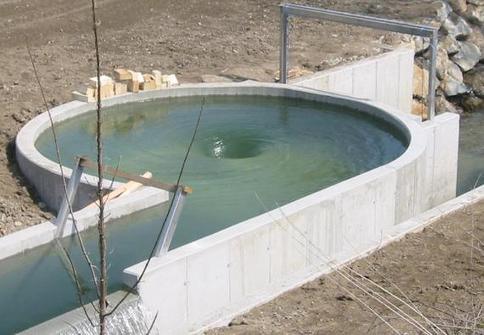
1. Water Vortex Hydro-Electric Power Plant Designs

Water Vortex

Austrian engineer Franz Zotlöterer has constructed a low-head power plant that makes use of the kinetic energy inherent in an artificially induced vortex. The water’s vortex energy is collected by a slow moving, large-surface water wheel, making the power station transparent to fish – there are no large pressure differences built up, as happens in normal turbines.

Posted on June 11, 2015 and received 109 views.