NSF awards grant to Mechanical Engineer prof for underwater kite marine power research

A three-year, US$300,000 grant from the National Science Foundation will allow Worcester Polytechnic Institute associate professor of mechanical engineering David Olinger to conduct research on developing a new form of ocean energy.

Duane Tilden‘s insight:

“The research builds on Olinger’s prior research, funded by the NSF and U.S. Environmental Protection Agency, in which he developed a low-cost kite system that used wind to generate power. Olinger and a team of graduate students developed computational models that predict trajectories and power output for kites of different sizes and tethers of different lengths, which can be used to design kites capable of flying in stable, high-speed figure-eight patterns under changing weather conditions.

The same algorithms can be applied to the design of underwater kites, Olinger said, but “instead of moving air, you have moving water and the kites have rigid wings.”

Olinger will now evaluate possible designs for undersea kites and explore methods for tethering them to floating platforms similar to those used for oil and gas rigs.

WPI said the team will also examine the advantages and disadvantages of mounting turbine generators directly to the kites or placing the generators on the platforms. […]

Olinger’s kite system is similar to one already being developed by Swedish company Minesto, though a WPI representative said the two projects are not related.”<

See on www.hydroworld.com

Sweden’s Minesto Ocean Energy Kite System Proven Operational

2013-11-12

Minesto’s step-change marine power plant now producing electricity in Northern Ireland proving viability for huge ocean current power market

The Deep Green ‘underwater kite’ marine power plant is now producing electricity in the waters off Northern Ireland. This is the first time ever a marine power plant designed for low velocity currents produces electricity at sea, anywhere in the world, and the ocean trials verify the ability to unlock ocean currents as a renewable energy source. “This is a break-through for the entire renewable energy industry,” said Minesto’s CEO Anders Jansson.

deep-green-underwater-kite

Image source: minesto.com

Company Press Release:  http://bit.ly/18mXIfT

Kyocera Opens Japan’s Largest Offshore Solar Power Plant

See on Scoop.itGreen & Sustainable News

The Kyocera Corporation just opened a 70 megawatt solar power plants off the southern coast of Japan.

Duane Tilden‘s insight:

>Kyocera partnered with six other companies to develop the solar plant, which is located in the Kagoshima Prefecture. The company hopes that this latest offshore venture will set a precedent for a cleaner Japan, especially in light of the 2011 Fukushima disaster. The solar plant is designed to inspire and encourage Japan to make the switch to more renewable energy sources.

The Kagoshima Nanatsujima Solar Power Plant was made possible in part because of Japan’s revised feed-in-tariff (FIT) program, which was restructured in July, 2012 to better accommodate solar energy. The adjusted FIT plan requires local utilities to purchase 100 percent of the power generated by solar plants that produce more than 10 kW.<

Read more: Kyocera Opens Japan’s Largest Offshore Solar Power Plant | Inhabitat – Sustainable Design Innovation, Eco Architecture, Green Building

See on inhabitat.com

Utilizing Renewable Energy Tax Incentives to Finance First Nations Energy Projects

See on Scoop.itGreen & Sustainable News

Duane Tilden‘s insight:

>We recommend that a tribe use a request for proposal (RFP) or other competitive process to identify an appropriate taxable development partner, so that they can obtain the best available proposal for the renewable energy project and the best value for the 30% investment tax credit and potentially depreciation. Under the RFP strategy, the tribe would make taxable developers aware of its renewable energy development plans, as well as potentially its willingness to pay for a portion of the renewable energy project.

The RFP would request the taxable developers to provide their best proposals regarding the development and financing of the renewable energy facilities, including proposals regarding:

The overall cost of the renewable energy facilities.The particular equipment to be installed and the warranties on that equipment.The developer’s willingness to limit the amount of the financial contribution by the tribe.The developer’s willingness to limit, in time and amount, any payments by the tribe for energy from or for leasing the renewable energy facilities.

The tribe could then select the taxable development partner that provides the best financial and other terms. A potential result of the RFP process could likely be that if the tribe is willing and able to pay for one half of the renewable energy facilities, a taxable developer might be willing to finance the rest of the facilities. Even if the developer does not share any of the value of the depreciation, it may be willing to at least provide the tribe full value for the investment tax credit. This would mean that there would be only 20% of the project cost to be paid over time. This could be accomplished by having the tribe pay a reduced rate for electricity for a period of at least five years (to avoid any recapture of the tax credits under IRS rules), and then for the developer, once it is made whole on its investment, to turn the facilities over to the tribe, potentially free of charge.

This transfer could be accomplished by allowing the tribe to use its 50% contribution to the LLC to purchase the taxable developer’s interest in the LLC, and for the tribe to have the right to purchase this interest based upon the renewable energy facilities’ value under a theoretical removal and sale of the facilities. Thus, under this scenario, the tribe’s initial capital outlay for the renewable energy facilities would be reduced by half, and the tribe would be able to receive reduced-priced energy for an interim period of time and then obtain full ownership of the renewable energy facilities.<

See on www.gklaw.com

What Actually Happens As We Move Away From Coal as an Energy Source?

U.S. Tidal Energy Project requires Proximity Standard

See on Scoop.itGreen Energy Technologies & Development

A planned tidal energy project off the coast of Washington state in the US has come under fire over the lack of a standard defining how close such projects can be to existing underwater cables.

Duane Tilden‘s insight:

>There is currently no U.S. standard for the distance tidal energy projects need to be from other subsea installations. The Federal Communications Commission has stated that neither it nor FERC has the expert guidance necessary to make an informed decision about what a safe separation distance would be. The FCC has charged an advisory committee, the Communications Security, Reliability and Interoperability Council (CSRIC), to work with the industry to develop guidance, delegating a special submarine cable working group to address the issue.

Distance guidelines do exist for offshore wind turbines in the U.S. The FCC and industry groups have suggested that these standards, which require 500 metres between offshore wind turbines and submarine cables, should be used in this case.

In its comment to the FERC, Pacific Crossing invoked a UK guideline, Subsea Cables UK Guideline number 6, which recommends proximity limits of 200-400 metres from an existing subsea structure for marine energy development. The North American Submarine Cable Association has urged U.S. regulatory agencies to apply the UK guidelines to all U.S. marine energy projects, including tidal energy projects.<

See on www.renewableenergyworld.com

Greening Coal Power with CO2-eating Microalgae as a Biofuel Feedstock

See on Scoop.itGreen Energy Technologies & Development

Successful microalgae-to-biodiesel conversion has been the goal of some renewable energy researchers for more than two decades.

Duane Tilden‘s insight:

>To that end, Algae.Tec has signed a deal with Macquarie Generation, Australia’s largest electricity generator, to put an “algae carbon capture and biofuels” production facility next to a coal-fired power station in Australia’s Hunter Valley. Macquarie Generation, which operates the Sydney-area 2640 MW Bayswater Power Station, will feed waste CO2 into an enclosed algae growth system. […]

Projections are for the first year of production to hit 100,000 tons of algae biomass; half of which would be converted to an estimated 60 million liters of biodiesel. One sea-land container would generate 250 tons of biomass per annum, said the company, which would be harvested on a continuous basis. […]

Stroud projects that some 75 percent of his company’s income will come from biodiesel. The remaining 25 percent of Algae.Tec’s income will hinge on the sale of the microalgae’s leftover biomass for animal feed.<

See on www.renewableenergyworld.com

Surplus fossil fuels expected to exceed carbon budget

See on Scoop.itGreen & Sustainable News

It won’t be difficult to blow by the 1-trillion ton threshold based on the amount of fossil fuels still in the ground. As Amy Myers Jaffe remarks, “scarcity will not be the force driving a shift to alternative energy. Climate and energy policy initiatives will have to take into consideration the possibility of oil and gas surpluses and lower fossil fuel prices.”

Duane Tilden‘s insight:

>The lesson here is that the economics are still in favor of producing fossil fuels. The cyclical nature of energy prices suggests that higher prices will spur development of technologies to reach more difficult energy deposits. This doesn’t mean that oil and natural gas prices will be low for the rest of time, but it does reflect how high energy prices in the 2000s led not only to funding and research in alternative fuels (particularly biofuels), but also in oil and gas technologies. This investment coupled with decades of U.S. government and academic research proved fruitful with the combination of horizontal drilling and hydraulic fracturing becoming a deployable technology.

We have now entered a period of energy surplus where we produce energy from “unconventional sources” using technological breakthroughs like horizontal drilling and hydraulic fracturing in places like North Dakota, south Texas, Lousiana, and Pennsylvannia. (and soon to be California?).<

See on blogs.scientificamerican.com

Bloomberg predicts: Solar to add more megawatts than wind in 2013

See on Scoop.itGreen Energy Technologies & Development

Bloomberg New Energy Finance predicts that for the first time more new solar power capacity — compared to wind — will be added to the world’s global energy infrastructure this year.

Duane Tilden‘s insight:

>In an BNEF’s analysts forecast 36.7GW of new photovoltaic capacity this year, compared to 33.8 GW of new onshore wind farms, and  1.7 GW of offshore wind.

In 2012, wind — onshore and offshore — added 46.6 GW, while PV added 30.5GW, record figures in both cases. But in 2013, a slowdown in the world’s two largest wind markets, China and the US, is opening the way for the rapidly growing PV market to overtake wind.

“The dramatic cost reductions in PV, combined with new incentive regimes in Japan and China, are making possible further, strong growth in volumes,” said Jenny Chase, head of solar analysis at Bloomberg New Energy Finance. “Europe is a declining market, because many countries there are rapidly moving away from incentives, but it will continue to see new PV capacity added.”<

See on www.renewableenergymagazine.com

Robotic Technologies Applied to Solar Energy Market – Installation and Maintenance

See on Scoop.itGreen Building Design – Architecture & Engineering

Mountain View CA (SPX) Sep 20, 2013 – … robotic technologies deliver revolutionary installation and cleaning services at highly competitive prices … for building and maintenance of utility-scale solar plants..

Duane Tilden‘s insight:

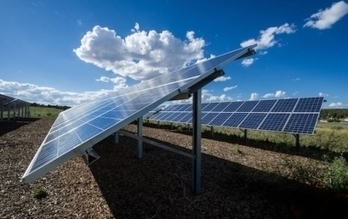
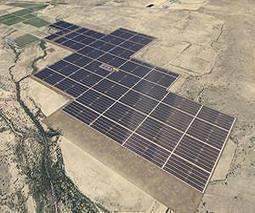
>The typical installation process for utility-scale projects is similar to that of a small-scale, 20-panel, residential installation. Despite incremental improvements to the process, a 200,000-panel installation has retained many of the characteristics of a 20-panel installation.

They are both labor-intensive, and require repetitive bolt-tightening and glass-hauling. While these are minor flaws in a 20-panel system, they create significant inefficiencies in 20,000- or 200,000-panel systems.

Alion Energy has plugged the shortcomings of the current installation methods by changing the materials and design used in the mounting structure as well as by automating the installation. By combining robotic installation technology with established construction practices, Alion Energy has built a system twice as fast and 75 percent more labor-efficient that lowers solar electricity’s levelized cost of energy (LCOE) to compete with traditional energy sources.<

See on www.solardaily.com