CEC Delays Energy Benchmarking and Disclosure Requirements 2 Years for Smaller Buildings


>”[…]Compliance with AB 1103 is not suspended, and will continue to be required, for the sale, lease, or financing of buildings over 10,000 square feet that are otherwise subject to the regulations based upon occupancy type.

Significant barriers to compliance with AB 1103

An Emergency Rulemaking Action requires a description of specific facts justifying the immediate action. In justifying the two-year delay, the CEC explained that several stakeholders had expressed concerns about significant barriers to compliance with AB 1103. The CEC noted the following factors in justifying the two-year delay:

  • Some utilities have required tenant consents before releasing utility usage data despite letters sent from the CEC to utilities in July 2013 prohibiting such requirement. This requirement to obtain tenant consents significantly increases compliance costs.
  • Smaller utilities have expressed concerns with their ability to comply given limited staff and resources.
  • The Portfolio Manager platform and software has experienced significant technical problems.
  • The expansion in scope to smaller buildings would increase the number of compliance requests received by utilities, impeding their ability to address barriers to compliance.
  • Smaller building owners may lack the expertise, resources, or capacity necessary to overcome current barriers to compliance without incurring undue expense.
  • Based on initial disclosure data following the January 1, 2014 implementation, it became apparent that “the required disclosures were not being made for the majority of transactions for which they were required.”
  • The development of best practices approaches is lowering compliance costs and paving the way to greater compliance. The additional two years will facilitate lower costs and higher compliance rates before further expanding the program to smaller buildings.”<

See on Scoop.itGreen Building Operations – Systems & Controls, Maintenance & Commissioning

School to Combine Solar PV Modules with Battery Storage in Belgian Pilot Project

“Such an energy storage and distribution system can offer a great value, certainly for schools”, says Bert Dekeyzer of npo iD, the organization behind the ‘School of the Future’.

Source: www.solarserver.com

>'”During weekends a school consumes almost no electricity. The energy produced by the solar panels is stored in the batteries. On Monday morning there is a peak consumption: then all the computers and machines are turned on, which requires quite a lot of electricity. If the solar panels supply too little at that time, the batteries can provide the remaining energy. Moreover, a study showed that the energy consumption of a school does not stop after four o’clock in the afternoon. Schools are increasingly used in the evening for sports activities and evening classes. Also in this situation, the batteries can play their part.”

PV, storage combination offers a solution for a possible power shortage

In addition to an optimal and economic usage of solar power, the system can provide a solution for a possible power shortage in Belgium. Because of problems with the Belgian nuclear power plants, various municipalities could get disconnected from the electricity grid. In case of a power disruption, a traditional solar installation does not work anymore. The inverter of a traditional system switches off automatically because of a power failure. The owners of solar modules also have no electricity at that time, and in addition they suffer losses of the power output and any feed-in tariffs from their solar panels during the outage.

The storage system provides a solution. Such an installation combines solar modules with battery storage and intelligent software: if the grid fails, the system provides uninterrupted power for the user from the solar modules and/or batteries. […]”<


See on Scoop.itGreen Building Design – Architecture & Engineering

5 Steps to Designing a Net Zero Energy Building

traciesimmons's avatardesignrealizedblog

Net zero energy buildings are really just becoming a reality. According to a 2012 Getting to Zero Report by the New Buildings Institute (NBI) and the Zero Energy Commercial Consortium (CBC), 99 commercial buildings have been identified from around the country that are net zero energy performing, zero-energy capable, or are in construction and on their way. And this is just what they know about.

As the industry continues to embark on net zero energy buildings, architecture firms are learning a lot about what it takes to make them reality. San Francisco-based EHDD is one such firm. For nearly a decade they have been designing with net zero in mind.

Sample breakdown of a building&#039;s energy use from EHDD. Sample breakdown of a building’s energy use from EHDD.

According to Brad Jacobson, a Senior Associate at EHDD and recognized leader in sustainable design, “Working on sustainability doesn’t have to be at all about sacrifice. It’s about finding solutions that…

View original post 396 more words

Maintaining High Performance HVAC Control Systems for Cost Savings in Building Operations

The performance level of a building is directly related to the performance level of its control systems. You cannot manage a high performance building without high performing control systems.


Source: www.automatedbuildings.com

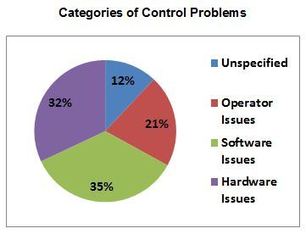
>”We rely on control systems to monitor and manage our building systems. For the most part it’s been assumed that once the control system is installed and configured it will work for years with little attention and minimal maintenance. Some systems may be trouble-free, but the majority of them will need regular attention and maintenance. Over time hardware will fail, software parameters and versions change and slowly the control system will “drift” from its original configuration and performance.

The role of control systems is somewhat undervalued. When you examine the most complex system in most buildings, the HVAC infrastructure, you find that it’s the HVAC control system, not the HVAC equipment, which produces the most operational issues and is the leading cause of inefficient energy use. Lawrence Berkley National Laboratories examined 60 buildings and found the highest frequency of common problems with HVAC was in the control system. Texas A&M research determined that of the operational and maintenance measures that could produce significant energy savings, 77% of the savings were from correcting control problems.

Maintaining a high performing control system involves regular maintenance, software and data management and organizational policies. The issues that can cause problems with a building control system are the same challenges all of us have had at one time or another with our computer or smartphone: problems related to software, hardware, communications networking and “user” mistakes. What follows is an overview of some of the typical control system issues and recommendations as to how to keep it performing at a high level.”<

See on Scoop.itGreen Building Operations – Systems & Controls, Maintenance & Commissioning

Net-Zero Energy for Buildings – ASHRAE Engineering Design and Construction

Integration: Net-zero energy design

ASHRAE has a goal: net-zero energy for all new buildings by 2030. What do engineers need to know to achieve this goal on their projects?

Source: www.csemag.com

>”As net-zero energy and low-energy design projects become more prevalent, engineers must be prepared to collaborate with all members of a project team including architects, energy specialists, lighting designers, builders, and owners in order to accomplish net-zero energy goals with little to no cost premium. Is this possible today or will it take another 10 or more years to get there?

There are many examples of completed projects demonstrating that not only is this possible, but it has been done in all regions of the country using readily available building products and common construction methods. So what’s the secret? It’s all about the design.

Net-zero energy defined

The term “net-zero energy” is abundantly used, but a single universally accepted definition does not exist. In general terms, a net-zero energy building (NZEB) has greatly reduced energy needs achieved through design and energy efficiency, with the balance of energy supplied by renewable energy. In an effort to clarify the issue, the National Renewable Energy Laboratory (NREL) published a paper in June 2006 titled “Zero Energy Buildings: A Critical Look at the Definition,” in which it defined the following four types of NZEBs:

Net Zero Site Energy: A site NZEB produces at least as much renewable energy as it uses in a year, when accounted for at the site.Net Zero Source Energy: A source NZEB produces (or purchases) at least as much renewable energy as it uses in a year, when accounted for at the source. Source energy refers to the primary energy used to extract, process, generate, and deliver the energy to the site. To calculate a building’s total source energy, imported and exported energy is multiplied by the appropriate site-to-source conversion multipliers based on the utility’s source energy type.Net Zero Energy Costs: In a cost NZEB, the amount of money the utility pays the building owner for the renewable energy the building exports to the grid is at least equal to the amount the owner pays the utility for the energy services and energy used over the year.Net Zero Energy Emissions: A net-zero emissions building produces (or purchases) enough emissions-free renewable energy to offset emissions from all energy used in the building annually. Carbon, nitrogen oxides, and sulfur oxides are common emissions that zero-energy buildings offset. To calculate a building’s total emissions, imported and exported energy is multiplied by the appropriate emission multipliers based on the utility’s emissions and on-site generation emissions (if there are any).

A subsequent paper was published by NREL in June 2010 titled “Net-Zero Energy Buildings: A Classification System Based on Renewable Energy Supply Options,” where four classifications of NZEBs were defined:

NZEB:A: Building generates and uses energy through a combination of energy efficiency and renewable energy (RE) collected within the building footprint.NZEB:B: Building generates and uses energy through a combination of energy efficiency, RE generated within the footprint, and RE generated within the site.NZEB:C: Building generates and uses energy through a combination of energy efficiency, RE generated within the footprint, RE generated within the site, and off-site renewable resources that are brought on site to produce energy.NZEB:D: Building uses the energy strategies described for NZEB:A, NZEB:B, and/or NZEB:C buildings, and also purchases certified off-site RE such as Renewable Energy Certificates (RECs) from certified sources. […]

Integrated building design

Integrated building design is a process that promotes holistic collaboration of a project team during all phases of the project delivery and discourages the traditional sequential philosophy. According to ASHRAE, the purpose of the integrated design process is to use a collaborative team effort to prepare design and construction documents that result in an optimized project system solution that is responsive to the objectives defined for the project. […]

Commissioning is an important part of every project, and for NZEB projects the commissioning authority should be a member of the design team and involved throughout the design process. […]”<

See on Scoop.itGreen Building Design – Architecture & Engineering

Canadian green building market shows strong growth into future reported by CaGBC

The Canadian green building market has grown in the last few years and is expected to continue its strong growth in years to come, according to a recent report released by the Canadian Green Building Council (CaGBC).

Source: dcnonl.com

>”The report projects the figure to grow in upcoming years and a shift to happen as firms ramp up their green projects to more than 60 per cent. The main factors triggering the green trend include companies wanting to do ‘the right thing’ when it comes to social and environmental responsibility.

“Doing the right thing was very important to a lot of the respondents, which surprised me…obviously the Canadian industry has a lot social consciousness” added Mueller.

Companies are also experiencing significant cost savings through various efficiencies.

Eighty two per cent of building owners and developers report decreases in energy consumption compared to similar buildings and 68 per cent of owners/developers report decreases in water consumption.

In Canada, businesses reduced their operating costs by 17 per cent through green buildings in 2014, ahead of the global average of 15 per cent in 2012.

[…]


The top sectors currently with green projects expected to be certified LEED (Leadership in Energy and Environmental Design) are, new institutional construction, new commercial construction, new low-rise residential, new mid and high-rise residential, and existing buildings/retrofit.

“In the public sector, the institutional sector, there’s a very strong commitment to build buildings to the LEED standard,” Mueller added. “Our focus is very much on building the LEED standard.”

Green Building is also beginning to build a strong business case for itself, according to the report.

Thirty seven per cent of owners project a spike in occupancy rates, 32 per cent expect improved tenant retention, 26 per cent expect improved lease rates and 13 per cent forecast a higher return on investment.

The median payback period for investment on a new green building is eight years, according to the report.

According to Mueller, owners and developers who are repeat green builders usually maintain a positive experience, but it’s the first timers that need to be shown the right steps in pursuing green building.

“If you’re an owner doing it for the first time, you have to be diligent, you have to be prudent to select the right consultants,” he said. “You have to do your due diligence and we certainly will be at the council to help first-time users to apply the LEED program and to make sure they have a positive experience.”<

Cost Effective ‘net zero’ energy in Jerseyville, Illinois subdivision

Lexington Farms, an affordable housing project of rental homes [built in Illinois].

Source: www.stltoday.com

>”Rooftop solar panels and wind turbines mounted over garages power all 32 homes at Lexington Farms, a new Jerseyville subdivision designed to provide residents no-cost electricity. […]

“Over the course of a year the solar array and wind turbines provide all the energy needed to power heating and air-conditioning systems, along with other household electricity needs,” said Jeff Lewis, president of MidAmerica Solar. “While similar technology has been used in homes, it hasn’t been done on this scale in an entire subdivision.” […]

Each home can produce up to 7.2 kilowatts of energy from roof-mounted solar panels.

Wind turbines mounted on masts over garages provide up to 1 kilowatt of additional energy. Lewis said tests were conducted to make sure the turbines’ vibrations were so slight as to be unnoticed by the homes’ occupants.

Ground-mounted solar panels at the subdivision’s entrance generate power for the community center.

Lexington Farms’ three-bedroom homes rent for $590 per month to families with incomes of $41,000 or less. The houses have central air conditioning, heat, hot water and other appliances that are powered by electricity generated by the solar panels and wind turbines.

The Illinois Housing Development Authority provided more than $2.5 million in assistance for the project, including federal low-income housing tax credits and federal stimulus money. Funding also came from a $260,000 grant from the Illinois Department of Economic Opportunity and financing from Sterling Bank.

Included in the project are 16 streetlights that operate entirely off the electrical grid.

The streetlights, made by MidAmerica Solar, have their own wind turbines and solar panels that provide electricity to energy-efficient LED lights and a backup battery. The lights used to come from China. Now they come from a small factory in Affton.”<

Buildings are biggest source of GHG’s in Vancouver & City recommends Energy Retrofits

Buildings spew more than half of all Vancouver’s total greenhouse gas (GHG) emissions every year and detached houses are the biggest culprit […] That fact is key to a staff recommendation that council adopt an energy retrofit strategy for existing buildings to drastically cut GHG emissions.

Source: www.vancouversun.com

>”About 40,000 of Vancouver’s 77,000 detached homes were built before 1960. The report said most older homes could improve their energy efficiency with weather sealing, wall and attic insulation, furnace/boiler/hot water heater replacements and replacing old windows with new energy-efficient glazing.

About 55 per cent of GHG emissions in Vancouver come from buildings and of those detached homes create 31 per cent of building emissions, the report said.

That compares with industry’s 20-per-cent share and 18 per cent from multi-unit residential buildings.

The city’s Greenest City Action Plan has targeted a 20-per-cent reduction in GHG emissions from Vancouver buildings by 2020, which would eliminate 160,000 tonnes of emissions annually — the equivalent of taking 40,000 cars off the road.

The report recommends the city partner with BC Hydro and/or FortisBC to study the effectiveness of using thermal imaging to identify poorly insulated homes.

[…]

… common energy-efficient building practices today include using vinyl or wood window frames instead of aluminum, along with the use of heat pumps, solar panels and drainwater recovery systems.

But Kerchum noted it can cost nothing to improve a home’s energy efficiency.

[…]

A recent Vancouver city initiative to improve energy efficiency in Vancouver homes — the Home Energy Loan Program — had a very low participation rate among homeowners.

The program called for homeowners to have an energy audit by a federally licensed auditor, who would recommend the best ways to reduce a home’s carbon footprint.”<

Deep Energy Retrofits–A Necessity for Old Buildings

“Studies show that focusing on energy efficiency and usage from buildings and homes is still a more effective and less expensive choice than investing in new energy sources. After all, on a global scale, residential and commercial buildings account for 40% of total final energy consumption, from HVAC, lighting, water heating, and further building functions, so a push on diminishing wastefulness in this area will have a much greater and more immediate effect than focusing on other, less sure practices (such as building wind turbines). At the moment, revamping a building to be more energy efficient will have instant effects on savings and efficiency, which is where retrofitting comes into play. Retrofitting involves giving older buildings, which often have out-of-date heating, cooling and lighting systems, an internal and external update. The entire process isn’t cheap, but it’s far less pricey than starting from the bottom up, and causes far less havoc for businesses who can’t afford to move offices while construction is taking place.”

via From Guest Blogger Blake Meredith: Deep Energy Retrofits–A Necessity for Old Buildings.

Affordable Housing Designed for Net Zero

See on Scoop.itGreen Building Design – Architecture & Engineering

Lexington Farms, a single family affordable housing development in Illinois, looks to be LEED Platinum and net zero via clean energy on each house.

Duane Tilden‘s insight:
“The model under which these modular homes are made available to residents is rather unique. They were built for those making less than $41,000 a year, and were reportedly provided to these people in a rent to own situation at a set monthly lease cost of $590. Each 1,425 square foot, three bedroom dwelling is green down to its core via an array of eco technologies. Owners apparently had to be provided with a special manual to educate them about the various green technologies they are living with. So what exactly is under the hood of each green home in Lexington Farms? According toUrban Green Energy, the impressive list includes one of the firm’s 1,000 watt eddyGT vertical axis wind turbines; 7,200 watt photovoltaic solar roof panels; Energy Starappliances; U35-rated, argon gas filled windows; R-21 wall and R-49 attic insulation; low-flow water fixtures and WaterSense toilets; sustainable landscaping with efficient irrigation systems; recycled construction materials; low VOC paints and energy efficient, fluorescent light fixtures. At the time of construction is was said the IHDA invested more than $2.5 million into the project, providing federal American Recovery and Reinvestment Act (ARRA) funds and federal Low-Income Housing Tax Credits to finance it. The federal tax credits, noted the IHDA, “were a result of a special allocation for counties hit by severe flooding [and] generated an additional $6.7 million in private equity for the development.” Overall, these green homes aimed for net zero energy usage via the renewable energy features. An additional $260,000 grant from the Illinois Department of Commerce and Economic Opportunity further supported the development.”

See on earthtechling.com