US Energy Storage Capacity to Triple in 2015

Over triple the amount of energy storage capacity — 220 megawatts worth — is expected to come on-line this year.

Source: www.triplepundit.com

>” […] 2015 looks set to be a milestone year for advanced energy storage solutions. Some 220 megawatts worth of energy storage capacity will be deployed across the nation in 2015 – more than three times the 2014 total, according to an inaugural market research report from GTM Research and the Energy Storage Association (ESA). The organizations see growth continuing “at a rapid clip thereafter.”

The number of grid-connected electrochemical and electromechanical storage installations that came on-line in 2014 totaled 61.9 megawatts of power capacity, the organizations found, up 40 percent from 44.2 MW in 2013. One leading distributed energy storage pioneer delivered over a third of the total.  […]

Utility deployments dominated the fast emerging U.S. market for advanced energy storage systems in 2014, accounting for 90 percent of newly-installed capacity. So-called “behind the meter” installations at utility customer sites – commercial and industrial companies, government facilities, schools, hospitals and municipalities – made up 10 percent of the 2014 total.

But installations of “behind the meter” energy storage systems picked up sharply in the fourth quarter of 2014, GTM and ESA note. Going forward, GTM expects behind-the-meter installations will account for 45 percent of the overall market by 2019.

Advanced energy storage system deployments are also concentrated in states that have and/or are in the process of instituting market regulatory reforms and supportive policies, including mandates and incentive programs. GTM and ESA singled out California and states where PJM is responsible for grid operations and management – all or part of 13 states across the eastern U.S. and the District of Columbia – as early leaders.

“The U.S. energy storage market is nascent, but we expect it to pick up more speed this year,” GTM Research SVP Shayle Kann was quoted in a Greentech Media news report. “Attractive economics already exist across a broad array of applications, and system costs are in rapid decline. We expect some fits and starts but significant overall growth for the market in 2015.”

[…]”<

See on Scoop.itGreen Energy Technologies & Development

Are Virtual Power Plants the Next Generation in Electrical Utilities?

Germany’s energy giants are lumbering behind the rapid advance of renewable energy. They might stay afloat for a while, but they don’t seem flexible enough to achieve a turnaround, says DW’s Henrik Böhme.

Source: www.dw.de

>” […]  Decentralization is the buzzword. And the power required elsewhere, say, for street lights, electric motors, or the bakery nearby will be largely generated through renewables. Even large industrial compounds will be in a position to generate enough electricity for their own needs.

Nuclear power stations will all have been switched off by then, with only a few coal-fired or gas-fired plants still in operation. One way or another, Germany’s power landscape is bound to undergo dramatic changes.

That’s been obvious for a couple of years now. But the German utilities’ age-old business models don’t seem to be working anymore. All they know is big and heavy – they’re used to nuclear and coal power stations guaranteeing billions in profit, year-in year-out, and they seemed to secure their earnings without any trouble. And then they grew fat and began making mistakes.  […]

Then came the Fukushima nuclear disaster four years ago, leading to the German government’s decision to phase out nuclear energy completely by 2022. That dealt a severe blow to Eon, RWE and co. which hadn’t really understood the thrust of the country’s energy transition anyway.

The utilities in question are now frantically trying to rescue what they still can. They’re cutting away some of the fat. Costs are being cut, employees are being laid off and selected divisions are being jettisoned. The companies have rediscovered private clients by offering them networking technology.

But people don’t trust those giant, de facto monopolist firms anymore. Younger companies can do the same just as well, and often far more efficiently. Take “Next Kraftwerke”, a Cologne-based start-up. They run a virtual power station where power is collected from many smaller facilities and redistributed in the process. This is pretty close to what a future energy supply system will look like.

According to Silicon Valley researcher Peter Diamandis, 40 percent of the world’s current biggest companies will have ceased to play an important role some 10 years from now. On current performance, among those to fall will most likely be Eon, RWE and others.”<


See on Scoop.itGreen Energy Technologies & Development

Heating and Cooling of Buildings EU Energy Debate

The significance of heating and cooling technologies for Europe was again underlined at a major conference on district energy in Brussels. Miquel Arias Caňete, European Commissioner for Climate Action and Energy, was among a number of speakers who addressed the Heating and Cooling in the European Energy Transition Conference last week. Nearly half of Europe’s energy consumption flows into the heating of buildings and industrial processes. Some 15% of this energy is coming from renewables, suc

Source: www.cospp.com

>”[…]

Nearly half of Europe’s energy consumption flows into the heating of buildings and industrial processes. Some 15% of this energy is coming from renewables, such as biomass and solar panels. Around 1 billion Euro per day is needed to pay for fuel imports.

In his opening address, Caňete stressed that heating and cooling is a sector that deserves maximum attention because of its high share in using fossil energy. He referred to the sector as “the missing piece in the energy and emissions debate”.

A large proportion of buildings have poor energy performance and without specific action, he said it will be a long time before the situation improves. In industry, he advocated more synergy is needed between industry and the heating of buildings with waste energy.

“Next to that, electricity and heat supply has to be integrated. In times of excess renewable electricity, it should be used for heating purposes. This is especially the case since heat use in the EU is energy wise about 2.5 times higher than electricity use.  Under European Structural and Investment Funds (ESIF), some €38 billion has now been allocated by Member States for energy efficiency, local renewable energy and local transport.”

Pieter Liese, MEP, said that a EUR1bn payment for energy per day is sent from the EU to countries with a doubtful regime such as Russia, Qatar, Saudi Arabia. He pleaded for a common European policy and approach. He stated that although politicians like to talk about electricity, it is clear that improving heating and cooling processes is a more sensible subject.

According to Ulrich Schmidt, chairman of the European Heating Industry, 75% of Europe’s housing stock are energy inefficient and 65% of gas boilers are old and inefficient while 40 % of homes date back to before 1960.

“Owners of existing equipment are reluctant to replace their appliances since the pay-back time from the benefit of less fuel consumption is too long. Moreover, old-fashioned boilers are considered by consumers to be more reliable than modern ones.”

Ligia Noronha, Director of Technology, Industry and Economics, United Nations Environment Programme (UNEP), stated that energy efficiency is a key component of the EU energy transition. She highlighted the Global District Energy in Cities Initiative. It is an analysis of 45 leading cities. District heating is seen as a major instrument in improving energy utilisation. By 2050, Europe could meet 50% of its heat demand via district heating.

John Dulac from the IEA said that as much heat is thrown away by inefficient processes as what is needed in the EU.

“‘SILO’ thinking is the big problem. The share of cogeneration in electricity production has to increase drastically. Moreover, electricity production and heat/chill production have to be integrated. “

Paul Voss, Managing Director of Euroheat & Power, warned that if the EU failed to integrate its heating and cooling potential and the current trend in emissions reduction continues, only 60% of the overall reduction target will be reached by 2050.

Three workshops were also part of the itinerary of the day, with Professor Hans-Martin Henning, Deputy Director for solar energy systems at the Fraunhofer Institute outlining a vision for the sector for 2050.

He said heat demand in buildings can be reduced from 30% to 50% by 2050 and added that solar thermal heating, biomass and CHP can play a major role in reducing CO2 emissions of buildings.

Henning also showed the audience how storing energy as heat is much cheaper than other ways of storing energy.

“Germany needs 700 GWh of heat storage, 60 GWh of pumped hydro and 24 GWh of batteries. CHP has excellent possibilities of storing heat and is very suitable for balancing renewable electricity,” he said.

“<


See on Scoop.itGreen & Sustainable News

Bio-Gas Waste Treatment System Installs Remote Fuel Station for Fleet

MADISON, WI–(Marketwired – Mar 3, 2015) – BioCNG, LLC announced that the St. Landry Parish Solid Waste Disposal District’s BioCNG Vehicle Fuel Project, which was fully commissioned in 2012, will be expanded to include an additional BioCNG system and a remote CNG fueling station. BioCNG, which partnered with the District…

Source: www.marketwired.com

>”[…]

The expansion is part of a contract between St. Landry Solid Waste and Progressive Waste Systems. In exchange for continuation of its existing waste hauling contract with the District, Progressive Waste has agreed to purchase new CNG-powered trucks, and will have access to the increased BioCNG generated from the expanded system. The expanded project will also provide BioCNG fuel to additional St. Landry Parish clients.

St. Landry Parish Solid Waste Disposal District executive director Katry Martin, said, “The fact that the hauler that delivers waste to the Parish landfill will fuel its trucks with the biogas generated from the landfill is a true example of the power of renewable energy sources and a preview of the future of biogas.”

The St. Landry Parish BioCNG Vehicle Fuel Project received the U.S. Environmental Protection Agency’s Landfill Methane Outreach Program (LMOP) 2012 Project of the Year award. The system was originally designed to serve public works trucks and the sheriffs’ vehicle fleet. Now, with a new fuel purchaser, the District will increase on-site BioCNG production and provide an off-site CNG fueling station. The District can transport the BioCNG to the off-site location in a compressed gas tube trailer. […]”<


See on Scoop.itGreen Energy Technologies & Development

Geothermal Energy Could Cleanly Power the Planet

The Earth’s heat offers a clean and steady source of electricity, though it doesn’t come cheap.

Source: news.nationalgeographic.com

>” […]

An alternative to fossil fuels, geothermal has potential far beyond Indonesia. It could help tame global warming by producing copious amounts of renewable energy. The United Nations estimates global reserves at about 200 gigawatts—double the total capacity of all U.S. nuclear power plants. Yet despite decades of effort, only 6.5 percent of that potential has been tapped.

Indonesia’s story explains why.

Volcanoes Offer Peril and Promise

A chain of more than 17,000 islands, Indonesia has dozens of active volcanoes—more than any other country. Those volcanoes offer the nation a potent energy source via deep underground reservoirs of hot water that seeps out of molten rock. Power plants can extract steam from those reservoirs and use it to turn turbines that generate electricity. […]

Indonesia currently produces the third largest amount of geothermal power, after the U.S. and the Philippines. Still, it’s tapping less than 5 percent of its potential 29-gigawatt capacity. It has 62 projects under way, and if all get built, Indonesia could overtake the Philippines by the end of this year and the U.S. in another decade or two, according to a 2015 industry analysis by the Washington-based Geothermal Energy Association. (See related blog post: “Nicaragua Looks to Geothermal for Energy Independence.”)

“Its resources are so startlingly good,” says Paul Brophy, president of EGS Inc., a California-based firm that recently did consulting work for Indonesia’s government on the geothermal industry.

The country, aiming to triple geothermal output from 1.4 to 4.9 gigawatts by 2019and to hit 10 gigawatts by 2025, is trying to fast-track projects.

Last year it amended a law to stop defining geothermal development as “mining” and thus allow work in protected forests, where many resources are located. The revision also shifts project approval from local to federal officials.

“That’s critical,” Brophy says, noting that the central government has more geothermal expertise.

Implementing the new provisions will take time, says Josh Nordquist of U.S.-based Ormat Technologies, which has invested in geothermal projects in Indonesia. Doing so could be a “real burden” for the government, he says, but adds, “I believe in the end it will work.” […]”<

See on Scoop.itGreen & Sustainable News

Vancouver Gas Prices are Highest in North America

Vancouver gas prices topped $1.30 per litre Tuesday, more than $0.15 higher than next most expensive city.

Source: bc.ctvnews.ca

>” […]

After dipping below a dollar per litre earlier this year, gas prices in Vancouver are now the highest in North America.

Fuel costs tipped the scales at more than $1.30 per litre Tuesday morning, nearly 16 cents per litre higher than Quebec City, the second-most expensive Canadian city for gas, according to GasBuddy.com.

Since then, a shortage of gasoline coupled with higher demand has contributed to the spike.

Last month, an Exxon Mobile oil refinery in California exploded, while Shell’s Puget Sound refinery in Washington State went down for maintenance.

Experts say brutal winter weather has also increased demand for gasoline in eastern Canada and the U.S.

CTV News spoke with some Vancouver drivers who say they’re exhausted from the up-and-down costs.

“We pay the most for gas, we pay the most for houses, we pay the most taxes. What’s up?” asked Jeremy Wilson. “I pity the people in the Mercedes and the Beamers, how can they afford it?”

Josh Sharber, who uses his truck for work, said it now costs him around $130 to fill up his tank.

“I basically work two days a week just to keep my truck running,” he said. “It’s pretty much all you can do. No gas, can’t get to work.”

Elsewhere in the Lower Mainland Tuesday, gas prices in Abbotsford topped $1.19 per litre, while Chilliwack, where prices are traditionally low, hovered around $1.21 per litre.

That’s still higher than other major North American cities, including Toronto ($1.07 per litre), Los Angeles ($0.93 USD per litre) and Edmonton ($0.91 per litre).”<

See on Scoop.itGreen & Sustainable News

Focus on financing energy efficiency

“EEFIG’s report states that energy efficiency investment is the most cost effective manner to reduce the EU’s reliance, and expenditure, on energy imports costing over €400 billion a year. Today, this makes energy efficiency investments strategically important due to high levels of energy imports, energy price instability and the need for Europe to transition to a competitive low carbon and resilient economy. EEFIG’s members see energy efficiency investing as having a fundamental and beneficial role to play in the transition towards a more competitive, secure and sustainable energy system with an internal energy market at its core.

EEFIG participants believe that the European Fund for Strategic Investments (EFSI) should put energy efficiency first and that it is essential in the context of the Energy Union to reframe the role that energy efficiency plays in how Europe plans for, finances, and constructs its energy system.”

Duke’s maligned handling of toxic coal ash is claimed typical for industry

Over 200 contaminations and spills document water contamination and deformed fish near coal ash sites.

Source: www.utilitydive.com

>” Duke Energy faces criminal charges and a $100 million fine for a 2014 spill of 39,000 tons of coal ash into North Carolina’s Dan River but environmental activists say its mishandling of coal ash waste is not atypical of the coal industry.  […] EPA released a final ruling on handling coal ash last December but both utility industry and environmental groups were dissatisfied. It creates requirements and standards for the management of coal combustion residuals (CCRs or coal ash) under Subtitle D of the federal Resource Conservation and Recovery Act (RCRA). That subtitle governs solid waste. There is not yet adequate data, the EPA said, to justify managing coal ash under Subtitle C of RCRA, which pertains to hazardous waste.

“Coal ash is a toxic soup of heavy metals,” said NC WARN Energy Expert Nancy LaPlaca. “Pretending it is not hazardous waste is outrageous.”

Utilities are “pleased” that the EPA found it did not have adequate information to regulate coal as hazardous waste, explained Schiff, Hardin Partner/Utilities Counsel Josh More. But “EPA is pretty explicit this is not their final determination.” It failed, he added, because “it is a self-implementing program.”  […]”<


See on Scoop.itGreen & Sustainable News

Wide Bandgap Semiconductors – LED’s and the Future of Power Electronics

Hidden inside nearly every modern electronic is a technology — called power electronics — that is quietly making our wor…

Source: www.youtube.com

See on Scoop.itGreen Energy Technologies & Development


“Hidden inside nearly every modern electronic is a technology — called power electronics — that is quietly making our world run. Yet, as things like our phones, appliances and cars advance, current power electronics will no longer be able to meet our needs, making it essential that we invest in the future of this technology.

Today [January 15, 2014], President Obama will announce that North Carolina State University will lead the Energy Department’s new manufacturing innovation institute for the next generation of power electronics. The institute will work to drive down the costs of and build America’s manufacturing leadership in wide bandgap (WBG) semiconductor-based power electronics — leading to more affordable products for businesses and consumers, billions of dollars in energy savings and high-quality U.S. manufacturing jobs.

Integral to consumer electronics and many clean energy technologies, power electronics can be found in everything from electric vehicles and industrial motors, to laptop power adaptors and inverters that connect solar panels and wind turbines to the electric grid. For nearly 50 years, silicon chips have been the basis of power electronics. However, as clean energy technologies and the electronics industry has advanced, silicon chips are reaching their limits in power conversion — resulting in wasted heat and higher energy consumption.

Power electronics that use WBG semiconductors have the potential to change all this. WBG semiconductors operate at high temperatures, frequencies and voltages — all helping to eliminate up to 90 percent of the power losses in electricity conversion compared to current technology. This in turn means that power electronics can be smaller because they need fewer semiconductor chips, and the technologies that rely on power electronics — like electric vehicle chargers, consumer appliances and LEDs — will perform better, be more efficient and cost less.

One of three new institutes in the President’s National Network of Manufacturing Innovation, the Energy Department’s institute will develop the infrastructure needed to make WBG semiconductor-based power electronics cost competitive with silicon chips in the next five years. Working with more than 25 partners across industry, academia, and state and federal organizations, the institute will provide shared research and development, manufacturing equipment, and product testing to create new semiconductor technology that is up to 10 times more powerful that current chips on the market. Through higher education programs and internships, the institute will ensure that the U.S. has the workforce necessary to be the leader in the next generation of power electronics manufacturing.

Watch our latest video on how wide bandgap semiconductors could impact clean energy technology and our daily lives.”

source:  http://energy.gov/articles/wide-bandgap-semiconductors-essential-our-technology-future


Vanadium Flow Battery Competes With Lithium and Lead-Acid at Grid Scale

The company claims LCOE [Levelized Cost of Energy] is less than half the cost of any other battery technology available.

Source: www.greentechmedia.com

>”[…]

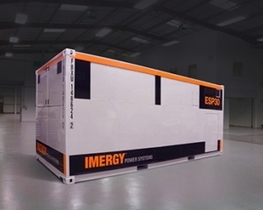
Imergy Power Systems just introduced its third-generation vanadium flow battery, claiming it offers a low-cost, high-performance energy storage solution for large-scale applications, including peak demand management, frequency regulation and the integration of intermittent renewable energy sources.

The ESP250 has an output power capability of 250 kilowatts and 1 megawatt of energy storage capacity. It’s suited for both short- and long-duration storage, with available energy ranging from two to 12 hours of output duration. The 40-foot batteries (each about the size of two shipping containers) are designed to be deployed individually or linked together for larger-scale projects. […]

Where Imergy has been able to edge out its competitors is on material cost. Vanadium is abundant but expensive to extract from the ground. Imergy has developed a unique chemistry that allows it to use cheaper, recycled resources of vanadium from mining slag, fly ash and other environmental waste.

With this chemistry, the levelized cost of energy for Imergy’s batteries is less than half of any other battery on the market right now, according to Hennessy. Vanadium flow batteries are orders of magnitude cheaper than lithium-ion batteries on a lifetime basis because they can be 100 percent cycled an unlimited number of times, whereas lithium-ion batteries wear down with use, according to the firm. Despite the compelling cost claims from Imergy, lithium-ion has been the predominant energy storage technology being deployed at this early point of the market. And very few flow batteries are currently providing grid services.

Imergy’s capital costs are lower than every other battery technology except lead-acid, Hennessy added. But he believes the company can hit that mark (roughly $200 per kilowatt-hour) by the end of the year by outsourcing contracts to manufacturing powerhouse Foxconn Technology Group in China. Delivery of the ESP250 is targeted for summer of 2015.

At this price, Imergy says the ESP250 offers an affordable alternative to peaker plants and can help utilities avoid investing more capital in the grid. Some might disagree with the claim that grid-scale storage can compete with fast-start turbines and natural gas prices below $3 per million Btu. But according to Hennessy, it all comes down to the application. Batteries can’t compete with gas at the 50-megawatt scale, but they can compete with gas at the distribution level.

“Batteries that are distributed have a huge advantage over gas, because when you buy gas down at the low end, you’re paying a lot more than $3 to $4 per MMBtu, because you’ve got to pay for all the transmission down to the small end,” he said.

Demand for cost-effective energy storage is growing as intermittent renewables become cheaper and come on-line in higher volumes. GTM Research anticipates the solar-plus-storage market to grow from $42 million in 2014 to more than $1 billion by 2018.

Imergy sees a ripe market in the Caribbean, parts of Africa and India, Hawaii and other places where the LCOE for solar-plus-storage is already competitive. As costs continue to fall, New York, California and Texas will also become attractive markets.”<


See on Scoop.itGreen Energy Technologies & Development