Developing an Energy Management Program for Your Business

See on Scoop.itGreen Building Operations – Systems & Controls, Maintenance & Commissioning
Today more than ever, businesses are concerned with maximizing operational efficiency, minimizing costs, and seeking out untapped revenue streams. At the same

Duane Tilden‘s insight:

>Large energy users like many commercial, institutional, and industrial organizations have a unique opportunity to act as a “virtual power plant” while reducing their real-time demand for electricity—and opening up a new revenue stream. This strategy, known as demand response, is not only a cost-free way to reduce energy usage, but also it generates payments for participating businesses simply for being on call.

Demand response providers work with commercial, institutional, and industrial businesses to identify ways for facilities to reduce energy consumption without affecting business operations, comfort, or product quality. In turn, those facilities agree to reduce their demand during strategic times so that utilities and grid operators can improve reliability during times of peak demand. Demand response also helps increase economic efficiency in regional energy markets and integrate renewable generation capacity into generation systems.

Demand response can be considered a form of strategic energy efficiency, but what about long-term, persistent energy efficiency, a second key to a comprehensive energy management program? In even the most high-tech, LEED Platinum certified buildings, it can be very difficult to ensure efficient operation over time. […]<

See on www.dailyenergyreport.com

Inside look at General Motors’ new hyper-green data center

See on Scoop.itGreen Building Design – Architecture & Engineering

WARREN, Michigan—General Motors has gone through a major transformation … a three-year effort to reclaims its own IT after 20 years of outsourcing.

Duane Tilden‘s insight:

>The first physical manifestation of that transformation is here at Warren, where GM has built the first of two enterprise data centers. The $150 million Warren Enterprise Data Center will cut the company’s energy consumption for its enterprise IT infrastructure by 70 percent, according to GM’s CIO Randy Mott. If those numbers hold up, the center will pay for itself with that and other savings from construction within three years. […]

The data center is part of a much larger “digital transformation” at the company, Mott said. GM is consolidating its IT operations from 23 data centers scattered around the globe (most of them leased) and hiring its own system engineers and developers for the first time since 1996. Within the next three to five years, GM expects to hire 8,500 new IT employees with 1,600 of them in Warren. “We’re already at about the 7,000 mark for internal IT from our start point of about 1,700,” Mott said. […]

So far, three of the company’s 23 legacy data centers have been rolled into the new Warren data center. That’s eliminated a significant chunk of the company’s wide-area network costs. “We have 8,000 engineers at (Vehicle Engineering Center) here,” Liedel said. And those engineers are pushing around big chunks of data—the “math” for computer-aided design, computer aided manufacturing, and a wide range of high-performance computing simulations.

“Now with the data center on the same campus, we’re not paying for the WAN bandwidth we had before,” Liedel explained. “We’ve got dark fiber here on the campus, and the other major concentration of engineers is at Milford at the Proving Ground.” Milford and Warren are connected over fiber via dens wave division multiplexing, providing 10 channels of 10-gigabit-per-second bandwidth.<

See on arstechnica.com

Virtual Energy Audits: The Next Big Thing in Buildings?

See on Scoop.itGreen Building Operations – Systems & Controls, Maintenance & Commissioning

Virtual energy audits use software to collect meter data, weather information, etc. and algorithms to develop energy efficiency recommendations.

Duane Tilden‘s insight:

>The goal of any energy audit is to identify savings by analyzing data, determining how and where a building is using energy, and then providing operational and capital energy efficiency measures that improve overall performance.

A traditional ASHRAE Level II Audit includes a manual inspection of data related to a facility’s Building Envelope, Lighting, Heating, Ventilation, and Air Conditioning (HVAC), Domestic Hot Water (DHW), Plug Loads, and Compressed Air and Process Uses (for manufacturing, service, or processing facilities). Analysis is conducted to quantify baseloads and account for seasonal variation. A Level II Audit will also include an evaluation of lighting, air quality, temperature, ventilation, humidity, and other conditions that may affect energy performance and occupant comfort. The process also includes detailed discussions with the building owners, managers, and tenants – there is a lot you can learn just by talking to people about what they think is working and not, what the financial objectives of the organization are, and how that should feed into the recommendations.  […]

Ok, I get it: So what’s a virtual energy audit?

Essentially a virtual energy audit is much like a traditional audit: the goal is to synthesize a whole bunch of data and come up with a list of recommendations that are going to deliver you the biggest bang for your buck. Unlike a detailed ASHRAE Level II audit, it’s better to think of virtual audits as delivering against the 80/20 rule. For a lot less physical effort, it’s going to get you about 80% of the detailed insights that a traditional ASHRAE Level II energy audit would deliver. And for many organizations, that’s OK – because their biggest, most obvious energy hogs are the ones driving the biggest bills at the end of the month.<

See on energysmart.enernoc.com

Are current batteries cost effective for wind and solar power storage on the grid?

See on Scoop.itGreen Energy Technologies & Development

Renewable energy holds the promise of reducing carbon dioxide emissions. But there are times when solar and wind farms generate more electricity than is needed by consumers.

Duane Tilden‘s insight:

>”We calculated how much energy is used over the full lifecycle of the battery – from the mining of raw materials to the installation of the finished device,” Barnhart said. “Batteries with high energetic cost consume more fossil fuels and therefore release more carbon dioxide over their lifetime. If a battery’s energetic cost is too high, its overall contribution to global warming could negate the environmental benefits of the wind or solar farm it was supposed to support.” […]

In addition to batteries, the researchers considered other technologies for storing renewable energy, such as pumped hydroelectric storage, which uses surplus electricity to pump water to a reservoir behind a dam. Later, when demand for energy is high, the stored water is released through turbines in the dam to generate electricity. […]

Storage is not the only way to improve grid reliability. “Energy that would otherwise be lost during times of excess could be used to pump water for irrigation or to charge a fleet of electric vehicles, for example,” Dale said.

See on phys.org

Industrial networking expands PLC functionality – Energy Efficiency

See on Scoop.itGreen Building Operations – Systems & Controls, Maintenance & Commissioning

Combining real-time Ethernet with visualization, control, and communication capabilities allows PLCs to open the door to a new level of visibility and control for manufacturers.

Duane Tilden‘s insight:

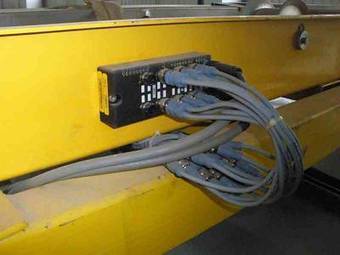
>The days when workers served as the brain and brawn in manufacturing are long gone, while human-machine interaction has become commonplace on the factory floor. A prime example of this is the PLC, which has been the workhorse in automation and manufacturing industries across the board for many years. By interfacing with everything from sensors and machine guards to motion control and advanced identification devices, PLCs ensure operations run smoothly (see Figure 1). Through the flexibility offered with PLCs, manufacturers can manage multiple machines at once—achieving a higher level of integration and process automation machines and improving production quality and cost of operation.

The benefits of the PLC are well known. Their contributions toward efficiency enhancement and the behind-the-scenes support of industrial Ethernet make this heightened control possible. Together, these technologies make communication between humans and machine a seamless, profitable combination. Consisting of various protocols, industrial Ethernet was developed with deterministic capabilities to provide a cost-effective alternative to legacy automation systems.

With advanced capabilities, sophisticated functionality, and simplified installation, the PLC is a cornerstone of modern manufacturing. However, to effectively use these devices, users must understand the crucial role networking plays and the individual requirements that must be considered for an effective solution.  […]<

See on www.plantengineering.com

Clay key to high-temperature supercapacitors

See on Scoop.itGreen Energy Technologies & Development

Clay, an abundant and cheap natural material, is a key ingredient in a supercapacitor that can operate at very high temperatures, according to researchers who have developed such a device.

Duane Tilden‘s insight:

>”Our intention is to completely move away from conventional liquid or gel-type electrolytes, which have been limited to low-temperature operation of electrochemical devices,” said Arava Leela Mohana Reddy, lead author and a former research scientist at Rice.

“We found that a clay-based membrane electrolyte is a game-changing breakthrough that overcomes one of the key limitations of high-temperature operation of electrochemical energy devices,” Reddy said. “By allowing safe operation over a wide range of temperatures without compromising on high energy, power and cycle life, we believe we can dramatically enhance or even eliminate the need for expensive thermal management systems.”

A supercapacitor combines the best qualities of capacitors that charge in seconds and discharge energy in a burst and rechargeable batteries that charge slowly but release energy on demand over time. The ideal supercapacitor would charge quickly, store energy and release it as needed.<

See on www.sciencedaily.com

Regenerative Suspension: How Bumps In The Road Can Generate Electrical Power

See on Scoop.itGreen Energy Technologies & Development

ZF Friedrichshafen AG and Levant Power Corp. have joined together to produce the first fully-active advanced suspension system that recovers energy and directs it to charge the battery while the car is moving.

Duane Tilden‘s insight:

>Gas2 says it’ll be “a while” before the system will go mainstream — likely several years — but it seems a no-brainer for every hybrid and electric vehicle to install this system or one like it to eke out battery charge through energy that is normally wasted. Gas-powered cars also have batteries that get a charge while the engine is running, but they use a belt attached to the engine itself to charge the battery. This causes gas-powered engines to be less efficient, and with most conventional cars using only around 15 percent of the potential energy of gasoline, efficiency comes at a premium.

Most hybrid car drivers will be familiar with the concept of recovering energy from normal car functions because of the increasingly frequent use of brake systems that, when used, transfer heat and friction of normal braking to the battery. As fuel economy standards improve over the next decade, car manufacturers are looking for anything they can do to make cars more efficient.<

See on thinkprogress.org

Call for Energy Efficient Air-Conditioning with Technological Development

See on Scoop.itGreen Building Design – Architecture & Engineering

Innovations could cut the growing amount of energy used for air-conditioning and refrigeration

Duane Tilden‘s insight:

>Conventional air conditioners employ refrigerants such as chlorofluorocarbons to absorb heat from the room to be cooled. That heat is then expelled outside, requiring electrically powered pumps and compressors.

One idea to conserve energy is to replace coolant fluids and gases—which are often super-powered greenhouse gases capable of trapping more than 1,000 times more heat than CO2—with solid materials, such as bismuth telluride.

A new device from Sheetak, developed in part with ARPA-E funding, uses electricity to change a thermoelectric solid to absorb heat, and could lead to cheaper air conditioners or refrigerators.

Such refrigerators, which lack moving parts and are therefore less likely to break down, can be lifesavers in remote, rural areas for keeping medicines cool or food fresh.<

See on www.scientificamerican.com

Monitoring Motivates Less Electricity Use

See on Scoop.itGreen & Sustainable News

Researchers found that families that were simply told they were in a study to track electricity use reduced electricity use more than 2.5 percent.

Duane Tilden‘s insight:

>The general phenomenon is called the Hawthorne effect: study subjects change their behavior because they’re being observed. So researchers collaborated with a utility to test for the Hawthorne effect in electricity use.

They monitored almost 5,600 randomly selected households. Half received a postcard saying that their energy use would be monitored for a month for research purposes. They also got four follow-up reminder postcards over the month. They received no other information, instructions or incentives.

The control group monitored for the study got no notifications. That group continued using the same amount of electricity. But the families being tracked reduced energy use 2.7 percent. And when the study period ended, their energy use shot back up. The report is in the Proceedings of the National Academy of Sciences. [Daniel Schwartz et al., The Hawthorne effect and energy awareness]<

See on www.scientificamerican.com

Are developing Microgrids the Answer to supply next generation Electricity Markets?

See on Scoop.itGreen & Sustainable News

Managing the effect of intermittent renewables on the grid is one of the critical challenges we address in making the transition to renewables. One of the primary goals of grid modernization (aka “Smart Grid”) is to adapt grid management to account for the effects of intermittency in real time.

Duane Tilden‘s insight:

>Microgrids are one possible solution to these challenges. Microgrids, part of the Smart Grid toolbox, are autonomously managed and powered sections of the distribution grid that can be as small as a single building, or as large as a downtown area or neighborhood. Automation and digital communications are used to manage rooftop solar, small scale combined heat and power systems and storage systems, along with matching supply to demand.  Heating or cooling may also be a part of a microgrid. Microgrids can efficiently manage smaller sections of the grid, according to the local demand patterns and availability of renewable resources. They can also disconnect, or “island” from the larger grid to provide higher reliability.

Can microgrids reduce complexity and increase options for electricity market participants? What are the major barriers to microgrid implementation, and how might they be overcome? Are there other approaches, besides the microgrid, that might be employed as well?<

See on www.ourenergypolicy.org