Unknown's avatar

About duanetilden

Engineer, Entrepreneur, Blogger, Farmer, Traveler and Nature Lover. I love music, quotes and blog about Green Building & Energy.

Massive Methane Gas Leak at California Storage Facility

The natural gas leak from a storage facility in the hills above Los Angeles is shaping up as a major ecological disaster as it vents large amounts of methane, a potent greenhouse gas.

Sourced through Scoop.it from: www.washingtonpost.com

” […]  A runaway natural gas leak from a storage facility in the hills above Los Angeles is shaping up as a significant ecological disaster, state officials and experts say, with more than 150 million pounds of methane pouring into the atmosphere so far and no immediate end in sight.

The rupture within a massive underground containment system — first detected more than two months ago — is venting gas at a rate of up to 110,000 pounds per hour, California officials confirm. The leak already has forced evacuations of nearby neighborhoods, and officials say pollutants released in the accident could have long-term consequences far beyond the region.

Newly obtained infrared video captures a plume of gas — invisible to the naked eye — spouting from a hilltop in the Aliso Canyon area above Burbank, like smoke billowing from a volcano. Besides being an explosive hazard, the methane being released is a powerful greenhouse gas, more potent than carbon dioxide in trapping heat in the lower atmosphere.

Scientists and environmental experts say the Aliso Canyon leak instantly became the biggest single source of methane emissions in all of California when it began two months ago. The impact of greenhouse gases released since then, measured over a 20-year time frame, is the equivalent of emissions from six coal-fired power plants or 7 million automobiles, environmentalists say. […]

See on Scoop.itGreen & Sustainable News

Demand Response Energy Distribution a Technological Revolution

Demand response (DR) energy distribution appears to be gaining momentum in the United States and elsewhere. In the U.S., however, the DR sector is awaiting a Supreme Court decision that will have great impact on the evolution of the technology, administrative and business models.

Sourced through Scoop.it from: www.energymanagertoday.com

“[…] A lot is going on besides the Supreme Court case, however. Technology evolutions in two discreet areas are converging to make DR a hot topic. The tools necessary to determine where energy is being stored, where it is needed and when to deliver it is have developed over decades in the telecommunications sector. Secondly, the more recent rush of advanced battery research is making it possible to store energy and provide the flexibility necessary for demand response to really work. Mix that with the growing ability to generate energy on premises through solar, wind and other methods and a potent new distributed structure is created.

In October, Advanced Energy Economy (AEE) released a report entitled “Peak Demand Reduction Strategy,” which was prepared for it by Navigant Research. The research found that the upside is high. For instance, for every $1 spent on reducing peak demand, savings of $2.62 and $3.26 or more can be expected in Illinois and Massachusetts, respectively. The most progress has been made in the United States, the report found. Last year, the U.S. accounted for $1.25 billion of the total worldwide $2 billion demand response market, according to JR Tolbert, the AEE’s Senior Director of State Policy. The U.S. market, he wrote in response to questions emailed by Energy Manager Today, grew 14 percent last year compared to 2013.

The report painted a bright picture for the future of demand response. “The key takeaway from this report is that by passing peak demand reduction mandates into law, or creating peak demand reduction programs, policy makers and utilities could significantly reduce costs for ratepayers, strengthen reliability of the electricity system, and facilitate compliance with the Clean Power Plan,” Tolbert wrote. “As states plan for their energy future, demand response should be a go-to option for legislators and regulators.” […]”

See on Scoop.itGreen & Sustainable News

Electric Vehicles Future Threatens OPEC

The oil cartel is living in a time-warp, seemingly unaware that global energy politics have changed forever

Sourced through Scoop.it from: www.telegraph.co.uk

“…OPEC says battery costs may fall by 30-50pc over the next quarter century but doubts that this will be enough to make much difference, due to “consumer resistance”.

This is a brave call given that Apple and Google have thrown their vast resources into the race for plug-in vehicles, and Tesla’s Model 3s will be on the market by 2017 for around $35,000.

Ford has just announced that it will invest $4.5bn in electric and hybrid cars, with 13 models for sale by 2020. Volkswagen is to unveil its “completely new concept car” next month, promising a new era of “affordable long-distance electromobility.”

The OPEC report is equally dismissive of Toyota’s decision to bet its future on hydrogen fuel cars, starting with the Mirai as a loss-leader. One should have thought that a decision by the world’s biggest car company to end all production of petrol and diesel cars by 2050 might be a wake-up call.

Goldman Sachs expects ‘grid-connected vehicles’ to capture 22pc of the global market within a decade, with sales of 25m a year, and by then – it says – the auto giants will think twice before investing any more money in the internal combustion engine. Once critical mass is reached, it is not hard to imagine a wholesale shift to electrification in the 2030s.  […]

A team of Cambridge chemists says it has cracked the technology of a lithium-air battery with 90pc efficiency, able to power a car from London to Edinburgh on a single charge. It promises to cut costs by four-fifths, and could be on the road within a decade.

There is now a global race to win the battery prize. The US Department of Energy is funding a project by the universities of Michigan, Stanford, and Chicago, in concert with the Argonne and Lawrence Berkeley national laboratories. The Japan Science and Technology Agency has its own project in Osaka. South Korea and China are mobilising their research centres.

A regulatory squeeze is quickly changing the rules of global energy.The Grantham Institute at the London School of Economics counts 800 policies and laws aimed at curbing emissions worldwide.

Goldman Sachs says the model to watch is Norway, where electric vehicles already command 16.3pc of the market. The switch has been driven by tax exemptions, priority use of traffic lanes, and a forest of charging stations.

California is following suit. It has a mandatory 22pc target for ‘grid-connected’ vehicles within ten years. New cars in China will have to meet emission standards of 5 litres per 100km by 2020, even stricter than in Europe. […]

In the meantime, OPEC revenues have crashed from $1.2 trillion in 2012 to nearer $400bn at today’s Brent price of $36.75, with fiscal and regime pain to match.

This policy has eroded global spare capacity to a wafer-thin 1.5m b/d, leaving the world vulnerable to a future shock. It implies a far more volatile market in which prices gyrate wildly, eroding confidence in oil as a reliable source of energy.

The more that this Saudi policy succeeds, the quicker the world will adopt policies to break reliance on its only product. As internal critics in Riyadh keep grumbling, the strategy is suicide.

Saudi Arabia and the Gulf states are lucky. They have been warned in advance that OPEC faces slow-run off. The cartel has 25 years to prepare for a new order that will require far less oil.

If they have any planning sense, they will manage the market to ensure crude prices of $70 to $80. They will eke out their revenues long enough to control spending and train their people for a post-petrol economy, rather than clinging to 20th Century illusions.

Sheikh Ahmed Zaki Yamani, the former Saudi oil minister, warned in aninterview with the Telegraph fifteen years ago that this moment of reckoning was coming and he specifically cited fuel-cell technologies.

“Thirty years from now there will be a huge amount of oil – and no buyers. Oil will be left in the ground. The Stone Age came to an end, not because we had a lack of stones.”

They did not listen to him then, and they are not listening now.”

See on Scoop.itGreen Energy Technologies & Development

California Water Conservation Causing A Sewer & Plumbing Pipe Crisis

“Shorter showers, more efficient toilets and other reductions in indoor water usage have meant less wastewater flowing through sewer pipes, [California] sanitation officials say. With less flow to flush the solids down the system, those solids are collecting and can eventually damage pipes.”

Sourced through Scoop.it from: www.expresssewer.com

” […]

Less Water Flow Means Greater Pipe Degradation

As home and business owners throughout California use various methods to cut water consumption both in and out of their properties, less water is then available to cycle through sewer systems. Lower sewer flow then makes it difficult for waste materials, oils water and other contaminants to cycle through. Best case scenario, this can result in minor sewer buildup or blockage; worst case, it can cause severe clogging, corrosion and pipe breakage at weak joints.

With corrosion comes increased pipe repair and replacement costs. Otherwise healthy sewer pipes will fail prematurely as clogs and chemicals remain stagnant within pipes.

Decreased water flow due to conservation is a particularly troubling problem in Sacramento, where the municipal sewer system is relatively flat compared to other cities in the state. With a flat sewer system, it is already difficult for water and materials to flow at a normal rate; when this rate is lowered, and gravity cannot help waste and waste water along, there is little to push solid materials along.

The people of Sacramento, in this case, are stuck between a rock and a hard place: water has to be conserved in light of the unrelenting draught, and doing so creates hazards for the entire city sewer system.

Dealing With the Issues

One way Sacramento residents can help reduce the likelihood of sewer clogging during low water flow periods is by changing the way they use their plumbing systems – overall reducing the amount of non-fluid materials that enter sewer systems.

This includes knowing what kinds of things you should not flush or dispose of through the sink, such as:

Baby wipes or other kinds of “flushable” wipes – they’re not really flushable, and actually cause millions of dollars in sewer damage annuallyStarchy food products or peelsAny plastic materials, including wrapping or casesPaper towels

Beyond better flushing practices, also steer clear from using chemicals or commercial drain cleaning products, as these products can eat away at sewer pipes from within, causing extra difficulties for pipes with low-flow or stagnant water. […]”<

See on Scoop.itGreen Building Operations – Systems & Controls, Maintenance & Commissioning

Solar Energy and Battery Storage Coupled Provide Demand Response & Utility Peak Shaving

Borrego Solar, a developer, and Stem, an energy storage firm, discuss when PV, storage or both will benefit commercial customers the most.

Sourced through Scoop.it from: www.greentechmedia.com

>” […] Thanks to advancements in technology, there are more energy solutions available to consumers. As a result, the confusion about which option to choose — solar, storage or solar-plus-storage — is growing.

Utility energy costs

To understand the benefits of energy storage and solar at a customer facility, it’s essential to first understand the elements of most organizations’ utility energy costs: energy charges and demand charges. This is the bread and butter for energy managers, but many leaders in finance and/or operations aren’t as aware of the energy cost mix — despite it being one of their largest budgetary line items. It should be noted that this billing structure isn’t in place in every market.

Energy charges, the price paid for the amount of energy used over the course of the billing cycle, are how most people think of paying for electricity. A price is paid for every kilowatt-hour used. Demand charges are additional charges incurred by most commercial customers and are determined by the highest amount of energy, in kilowatts, used at any instant or over some designated timeframe — typically a 15-minute interval — in that billing cycle.

Demand charges are a bit more complex. They come from a need for the grid infrastructure to be large enough to accommodate the highest amount of energy, or demand, needed at any moment in order to avoid a blackout. Every region is different, but demand charges typically make up somewhere between 20 percent and 40 percent of an electricity bill for commercial customers.

Why storage?

Intelligent storage can help organizations specifically tackle their demand charges. By combining predictive software and battery-based storage, these systems know when to deploy energy during usage peaks and offset those costly demand charges. Most storage systems run completely independently from solar, so they can be added to a building whether or not solar is present.

Storage can reduce demand charges by dispensing power during brief periods of high demand, which in essence shaves down the peaks, or spikes, in energy usage. Deploying storage is economical under current market conditions for load profiles that have brief spikes in demand, because a relatively small battery can eliminate the short-lived peaks.

For peak demand periods of longer duration, a larger, and considerably more expensive, battery would be needed, and with the higher material costs, the economics may not be cost-effective. As system costs continue to decline, however, a broader range of load profiles will be able to save with energy storage.

Why solar?

For the commercial, industrial or institutional energy user, solar’s value proposition is pretty simple. For most facilities in states with high energy costs and a net metering regime in place, onsite solar can reduce energy charges and provide a hedge against rising electricity costs. The savings come primarily from producing/buying energy from the solar system, which reduces the amount of energy purchased from the utility, and — when the installation produces more than is used — the credit from selling the excess energy to the grid at retail rates.

The demand savings are a relatively small part of the benefit of solar because the timing of solar production and peak demand need to line up in order to cut down demand charges. Solar production is greatest from 9 a.m. to 3 p.m., but the peak period (when demand for energy across the grid is highest) is typically from 12 p.m. to 6 p.m. If demand-charge rates are determined by the highest peak incurred, customers with solar will still fall into higher demand classes from their energy usage later in the day, when solar has less of an impact.

That being said, solar can reduce a significant portion of demand charges if the customer is located within a utility area where solar grants access to new, solar-friendly rate schedules. These rate schedules typically reduce demand charges and increase energy charges, so the portion of the utility bill that solar can impact is larger.  […]”<

See on Scoop.itGreen Energy Technologies & Development

Japan Installs World’s Largest Offshore Wind Turbine at Fukushima

offshore wind turbine was anchored by the Fukushima Offshore Wind Consortium and is located approximately 12 miles off the cost of Fukushima, a region of Ja

Sourced through Scoop.it from: www.hydrogenfuelnews.com

>” The turbine has been built to withstand 65-foot waves.

The 344-foot 7 MW (megawatt) Offshore Hydraulic Drive Turbine features a rotor diameter of 538 feet and three giant blades, each stretching 262 feet in length. The structure is fastened to the seabed by four 20-ton anchors, and loose chains connect the turbine to the seabed, fortifying it against large waves.

One of the chief engineers of the turbine, Katsunobu Shimizu, told NBC News that “These turbines and anchors are designed to withstand 65-foot waves.” He also explained that “here we can get 32-foot-tall tsunamis. That’s why the chains are deliberately slackened.”

The consortium purposely designed the structures to be able to withstand the fierce and unforgiving weather native to Japan’s waters. In fact, this problematic weather even caused issues during the construction of the turbine. Installations had to be reportedly put on hold on four separate occasions because of typhoons.

The offshore wind turbine is one of three planed for the area.

The Fukushima Offshore Wind Consortium is led by Marubeni Corporation and also involves nine other firms, such as Mitsubishi Heavy Industries, which was the company that supplied the turbine. The $401 million project is funded by Japan’s Ministry of Economy, and was created for the purpose of developing and testing the wind technology for additional commercialization, and to bring new industry to the Fukushima region of Japan that was devastated by the earthquake in 2011.

The 7 MW offshore wind turbine is one of three turbines planned for the facility. When the final turbine is installed later this year, the three turbines are expected to generate a combined total of 14 MW. […]”<

See on Scoop.itGreen Energy Technologies & Development

EPA Proposes to Cut Methane Emissions from New and Existing Landfills

Methane is a potent greenhouse gas with a global warming potential more than 25 times that of carbon dioxide. Climate change threatens the health and welfare of current and future generations. Children, older adults, people with heart or lung disease and people living in poverty may be most at risk from the health impacts of climate change. In addition to methane, landfills also emit other pollutants, including the air toxics benzene, toluene, ethylbenzene and vinyl chloride.

Image Source:  http://www.environmentalleader.com/

Sourced through Scoop.it from: yosemite.epa.gov

>”Release Date: 08/14/2015
Contact Information: Enesta Jones jones.enesta@epa.gov 202-564-7873 202-564-4355

WASHINGTON – As part of the President’s Climate Action Plan – Strategy to Reduce Methane Emissions, the U.S. Environmental Protection Agency (EPA) issued two proposals to further reduce emissions of methane-rich gas from municipal solid waste (MSW) landfills. Under today’s proposals, new, modified and existing landfills would begin collecting and controlling landfill gas at emission levels nearly a third lower than current requirements.  […]

Municipal solid waste landfills receive non-hazardous wastes from homes, businesses and institutions. As landfill waste decomposes, it produces a number of air toxics, carbon dioxide, and methane. MSW landfills are the third-largest source of human-related methane emissions in the U.S., accounting for 18 percent of methane emissions in 2013 – the equivalent of approximately 100 million metric tons of carbon dioxide pollution.

Combined, the proposed rules are expected to reduce methane emissions by an estimated 487,000 tons a year beginning in 2025 – equivalent to reducing 12.2 million metric tons of carbon dioxide, or the carbon pollution emissions from more than 1.1 million homes. EPA estimates the climate benefits of the combined proposals at nearly $750 million in 2025 or nearly $14 for every dollar spent to comply. Combined costs of the proposed rules are estimated at $55 million in 2025.

Today’s proposals would strengthen a previously proposed rule for new landfills that was issued in 2014, and would update the agency’s 1996 emission guidelines for existing landfills. The proposals are based on additional data and analysis, and public comments received on a proposal and Advance Notice of Proposed Rulemaking EPA issued in 2014.

EPA will take comment on the proposed rules for 60 days after they are published in the Federal Register. The agency will hold a public hearing if one is requested within five days of publication.  “<

See on Scoop.itGreen & Sustainable News

New EPA Emissions Rules To Cut GHG Methane Emissions By 40 Percent in Oil and Gas Sector

WASHINGTON (Reuters) – The U.S. Environmental Protection Agency will propose regulations on Tuesday aimed at cutting methane emissions from the oil and gas sector by 40 to 45 percent over the next decade

Sourced through Scoop.it from: www.huffingtonpost.com

>”WASHINGTON (Reuters) – The U.S. Environmental Protection Agency will propose regulations on Tuesday aimed at cutting methane emissions from the oil and gas sector by 40 to 45 percent over the next decade from 2012 levels, a source familiar with the issue said on Monday.

The regulations on methane are one part of the Obama administration’s strategy to curb greenhouse gases and combat climate change.

The targets in Tuesday’s proposal are in line with a January announcement by the Obama administration that it wanted to reduce oil and gas industry methane emissions by up to 45 percent from 2012 levels by 2025, the source said.

Earlier this month, President Barack Obama unveiled the final version of his plan to tackle greenhouse gases from coal-fired power plants, requiring carbon emissions from the sector be cut 32 percent from 2005 levels by 2030.

(Reporting By Valerie Volcovici; Writing by Mohammad Zargham; Editing by Peter Cooney)”<

See on Scoop.itGreen & Sustainable News

Increasing Heat Island Effect’s Influence on Urban Temperature Records Introduces Bias in Climate Studies

When it comes to human-caused climate change, urban warming is a big player.

Sourced through Scoop.it from: www.cato.org

>”Perhaps no other climatic variable receives more attention in the debate over CO2-induced global warming than temperature. Its forecast change over time in response to rising atmospheric CO2 concentrations is the typical measure by which climate models are compared. It is also the standard by which the climate model projections tend to be judged; right or wrong, the correctness of global warming theory is most often adjudicated by comparing model projections of temperature against real-world measurements. And in such comparisons, it is critical to have a proper baseline of good data; but that is easier acknowledged than accomplished, as multiple problems and potential inaccuracies have been identified in even the best of temperature data sets.

One particular issue in this regard is the urban heat island effect, a phenomenon by which urban structures artificially warm background air temperatures above what they normally would be in a non-urbanized environment. The urban influence on a given station’s temperature record can be quite profound. In large cities, for example, urban-induced heating can be as great as Tokyo’s 10°C, making it all the more difficult to detect and discern a CO2-induced global warming signal in the temperature record, especially since the putative warming of non-urbanized areas of the planet over the past century is believed to be less than 1°C.  Yet, because nearly all long-term temperature records have been obtained from sensors initially located in towns and cities that have experienced significant growth over the past century, it is extremely important that urbanization-induced warming – which can be a full order of magnitude greater than the background trend being sought – be removed from the original temperature records when attempting to accurately assess the true warming (or cooling!) of the natural non-urban environment. A new study by Founda et al. (2015) suggests this may not be so simple or straightforward a task.

Working with temperature records in and around the metropolitan area of Athens, Greece, Founda et al. set out to examine the interdecadal variability of the urban heat island (UHI) effect, since “few studies focus on the temporal variability of UHI intensity over long periods.” Yet, as they note, “knowledge of the temporal variability and trends of UHI intensity is very important in climate change studies, since [the] urban effect has an additive effect on long term air temperature trends.”

[…]

Such findings as these are of significant relevance in climate change studies, for they clearly indicate the UHI influence on a temperature record is not static. It changes over time and is likely inducing an ever-increasing warming bias on the temperature record, a bias that will only increase as the world’s population continues to urbanize in the years and decades ahead. Consequently, unless researchers routinely identify and remove this growing UHI influence from the various temperature data bases used in global change studies, there will likely be a progressive overestimation of the influence of the radiative effects of rising CO2 on the temperature record. “<

See on Scoop.itGreen & Sustainable News

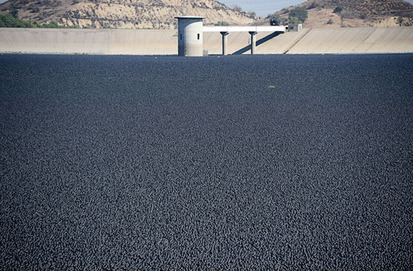
96 Million ‘Shade Balls’ Installed to Cover L.A.’s Reservoirs

A California woman, for one, who wants to ease the drought, put disabled vets to work, and make some money

Sourced through Scoop.it from: www.bloomberg.com

>” […] The shade balls of Los Angeles are 4 inches in diameter, hollow, polyethylene orbs […] The Los Angeles Department of Water and Power has now dumped 96 million balls into local reservoirs to reduce evaporation and block sunlight from encouraging algae growth and toxic chemical reactions. The balls are coated with a chemical that blocks ultraviolet light and helps the spheres last as long as 25 years. Las Virgenes, north of L.A., now uses shade balls, too. […]

The U.S. Environmental Protection Agency has encouraged the nation’s water managers in recent years to find ways to cover or contain their resources, to prevent sunlight from reacting with chlorine and possibly creating carcinogens, says Ed Osann, a senior policy analyst at the Natural Resources Defense Council. The shade balls shouldn’t pose a pollution problem in themselves, he says, since “everything that comes in contact with drinking water has to be a certified material.” Chase says the balls are designed not to degrade.

The shade balls are a novel way to protect drinking water, and Californians’ latest attempt to adjust to their four-year drought. […]”<

See on Scoop.itGreen & Sustainable News