84% Efficient Combined Heat & Power (CHP) Plant to be built by Siemens in Poland

See on Scoop.itGreen & Sustainable News

Through immediate publication of press releases, we keep the business, financial and public press informed on all important Siemens topics.

Duane Tilden‘s insight:

>The plant will be built in western Poland in the city of Gorzów Wielkopolski. Within the scope of turnkey construction, Siemens will deliver two SGT-800 gas turbines, one SST-400 steam turbine, three 11 kilovolt (kV) generators and two heat recovery steam generators. In addition, Siemens was awarded a long-term 12 years maintenance agreement for the gas turbines. The Gorzów plant will be fired with nitrogen-rich natural gas from gas reserves located in western Poland. This type of gas has a lower calorific value than conventional natural gas. […]

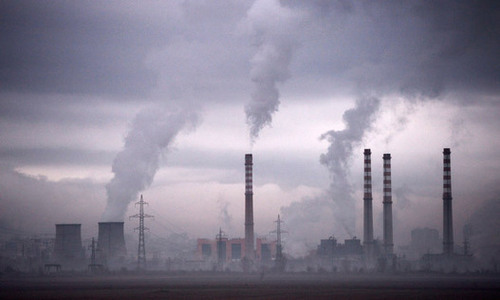
The Gorzów power plant will replace a currently used coal-fired block at the same location. The combined cycle power plant with district heat extraction will be able to generate electricity in a much more efficient and environmentally friendly manner. Compared to the old coal-fired power plant, the new plant will produce 95 percent less sulfur dioxide emissions, more than 30 percent less nitrogen dioxide emissions and more than 95 percent less particulate emissions.<

See on www.siemens.com
Connecticut Storm Proofing with Micro-Grid Developments

See on Scoop.itGreen Energy Technologies & Development

Press Release Gov. Dannel P. Malloy announced Oct. 30 that nine towns that are part of a pilot microgrid program, including Windham and Storrs, are eligible for additional funding.

Duane Tilden‘s insight:

>A pilot microgrid program, administered by the state Department of Energy and Environmental Protection, was created under Public Act 12-148 to increase the safety and quality of life for Connecticut residents during electric grid outage situations.

Microgrids provide electricity to critical facilities and town centers on a 24/7, daily basis. They will also include a system of “trips” and “transfers” to isolate the microgrid and provide power within its network even when there is a large-scale outage.

The first round of the program awarded $18 million in grants to microgrid projects in Bridgeport, Fairfield, Groton, Hartford, Middletown, Storrs/Mansfield, Windham and Woodbridge as part of the Governor’s Storm Legislation.

Those projects are expected to become operational over the course of the next 18 months, with the first projects slated to come online in early 2014. […]

“Our first-in-the-nation microgrid program is an essential tool to help minimize hardships to our residents and businesses when severe storms occur. We all know that it is not a question of if, but when the next super storm will strike, and it is essential we do everything we can to be prepared,” Gov. Malloy said.

Commenting on the additional funding, DEEP Commissioner Daniel C. Esty said, “It is essential to public safety that power be maintained to critical facilities and town centers even when the electric grid is down… Connecticut and the northeast continue to experience more severe and more frequent storms, so it is vital that the state aggressively pursues the development of microgrids statewide so that we are in a better position to provide critical services to the state’s residents and businesses.”<

See on mansfield.htnp.com

The China Water Crisis: A Global Catastrophe or Wasteful Use?

See on Scoop.itGreen & Sustainable News

Learn how the China water crisis will have significant impact on the balance of the world if not reversed, and how you can help, in this WaterFilters.NET post.

Duane Tilden‘s insight:

>The New York Times reports:

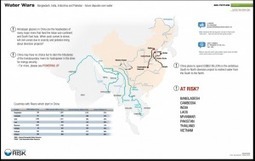
Beijing has placed its faith in monumental feats of engineering to slake the north’s growing thirst. The South-North Water Transfer eventually aims to pipe 45 cubic kilometers of water annually northward along three routes in eastern, central and western China. All three pose enormous technical challenges: The eastern and central routes will be channeled under the Yellow River, while the western route entails pumping water over part of the Himalayan mountain range.

The estimated cost of $65 billion is almost certainly too low, and doesn’t include social and ecological impacts. Construction has already displaced hundreds of thousands, and issues the like possible increases in transmission of water-borne diseases have not been properly studied. But Beijing’s calculus is political: It is easier to increase the quantity of water resources, at whatever cost, rather than allocate a limited supply between competing interests.  […]

A recent article by The Economist states:

“The Chinese government would do better to focus on demand, reducing consumption of water in order to make better use of limited supplies. Water is too cheap in most cities, usually costing a tenth of prices in Europe. Such mispricing results in extravagance. Industry recycles too little water; agriculture wastes too much. Higher water prices would raise costs for farms and factories, but that would be better than spending billions on shipping water round the country.”

Economically supporting Chinese regions and corporations that commit to better water usage and sustainability practices may help to change the mindset of many within this nation’s government or industries.  In turn, this could lead them towards exploring more realistic initiatives experiencing success in other parts of the world.<

See on blog.waterfilters.net

U.S. Tidal Energy Project requires Proximity Standard

See on Scoop.itGreen Energy Technologies & Development

A planned tidal energy project off the coast of Washington state in the US has come under fire over the lack of a standard defining how close such projects can be to existing underwater cables.

Duane Tilden‘s insight:

>There is currently no U.S. standard for the distance tidal energy projects need to be from other subsea installations. The Federal Communications Commission has stated that neither it nor FERC has the expert guidance necessary to make an informed decision about what a safe separation distance would be. The FCC has charged an advisory committee, the Communications Security, Reliability and Interoperability Council (CSRIC), to work with the industry to develop guidance, delegating a special submarine cable working group to address the issue.

Distance guidelines do exist for offshore wind turbines in the U.S. The FCC and industry groups have suggested that these standards, which require 500 metres between offshore wind turbines and submarine cables, should be used in this case.

In its comment to the FERC, Pacific Crossing invoked a UK guideline, Subsea Cables UK Guideline number 6, which recommends proximity limits of 200-400 metres from an existing subsea structure for marine energy development. The North American Submarine Cable Association has urged U.S. regulatory agencies to apply the UK guidelines to all U.S. marine energy projects, including tidal energy projects.<

See on www.renewableenergyworld.com

Greening Coal Power with CO2-eating Microalgae as a Biofuel Feedstock

See on Scoop.itGreen Energy Technologies & Development

Successful microalgae-to-biodiesel conversion has been the goal of some renewable energy researchers for more than two decades.

Duane Tilden‘s insight:

>To that end, Algae.Tec has signed a deal with Macquarie Generation, Australia’s largest electricity generator, to put an “algae carbon capture and biofuels” production facility next to a coal-fired power station in Australia’s Hunter Valley. Macquarie Generation, which operates the Sydney-area 2640 MW Bayswater Power Station, will feed waste CO2 into an enclosed algae growth system. […]

Projections are for the first year of production to hit 100,000 tons of algae biomass; half of which would be converted to an estimated 60 million liters of biodiesel. One sea-land container would generate 250 tons of biomass per annum, said the company, which would be harvested on a continuous basis. […]

Stroud projects that some 75 percent of his company’s income will come from biodiesel. The remaining 25 percent of Algae.Tec’s income will hinge on the sale of the microalgae’s leftover biomass for animal feed.<

See on www.renewableenergyworld.com

Surplus fossil fuels expected to exceed carbon budget

See on Scoop.itGreen & Sustainable News

It won’t be difficult to blow by the 1-trillion ton threshold based on the amount of fossil fuels still in the ground. As Amy Myers Jaffe remarks, “scarcity will not be the force driving a shift to alternative energy. Climate and energy policy initiatives will have to take into consideration the possibility of oil and gas surpluses and lower fossil fuel prices.”

Duane Tilden‘s insight:

>The lesson here is that the economics are still in favor of producing fossil fuels. The cyclical nature of energy prices suggests that higher prices will spur development of technologies to reach more difficult energy deposits. This doesn’t mean that oil and natural gas prices will be low for the rest of time, but it does reflect how high energy prices in the 2000s led not only to funding and research in alternative fuels (particularly biofuels), but also in oil and gas technologies. This investment coupled with decades of U.S. government and academic research proved fruitful with the combination of horizontal drilling and hydraulic fracturing becoming a deployable technology.

We have now entered a period of energy surplus where we produce energy from “unconventional sources” using technological breakthroughs like horizontal drilling and hydraulic fracturing in places like North Dakota, south Texas, Lousiana, and Pennsylvannia. (and soon to be California?).<

See on blogs.scientificamerican.com

Bloomberg predicts: Solar to add more megawatts than wind in 2013

See on Scoop.itGreen Energy Technologies & Development

Bloomberg New Energy Finance predicts that for the first time more new solar power capacity — compared to wind — will be added to the world’s global energy infrastructure this year.

Duane Tilden‘s insight:

>In an BNEF’s analysts forecast 36.7GW of new photovoltaic capacity this year, compared to 33.8 GW of new onshore wind farms, and  1.7 GW of offshore wind.

In 2012, wind — onshore and offshore — added 46.6 GW, while PV added 30.5GW, record figures in both cases. But in 2013, a slowdown in the world’s two largest wind markets, China and the US, is opening the way for the rapidly growing PV market to overtake wind.

“The dramatic cost reductions in PV, combined with new incentive regimes in Japan and China, are making possible further, strong growth in volumes,” said Jenny Chase, head of solar analysis at Bloomberg New Energy Finance. “Europe is a declining market, because many countries there are rapidly moving away from incentives, but it will continue to see new PV capacity added.”<

See on www.renewableenergymagazine.com

EPA sets terms for New Power Plant carbon emissions

See on Scoop.itGreen & Sustainable News

Frances Beinecke: We’re already paying the costs of climate change. The new power plant emissions standards could not be more timely

Duane Tilden‘s insight:

>The carbon standards announced Friday by Gina McCarthy, administrator of the US Environmental Protection Agency, will set reasonable limits on carbon pollution from the power plants of tomorrow, those that are yet to be built.<

See on www.theguardian.com

Climate change & Global warming: IPCC issues warning to Governments

See on Scoop.itGreen & Sustainable News

Call to ‘stop dithering about fossil fuel cuts’ as expert panel warns entire globe is affected

Duane Tilden‘s insight:

>The scientists’ warning – the most comprehensive and convincing yet produced by climate scientists – comes at a time when growing numbers of people are doubting the reality of global warming. Last week, the UK Energy Research Centre (UKERC) published a survey showing that the proportion of British people who do not think the world’s climate is changing has almost quadrupled since 2005.

Asked if they thought Earth’s climate was changing, 5% of respondents said “no” in 2005, a figure that rose to 11% last year and reached 19% this year.

But as the IPCC report underlines, scientists are becoming more and more certain that climate change poses a real danger to the planet.

Many believe the disconnection between popular belief and scientific analysis has been engineered by “deniers” explicitly opposed to the lifestyle changes – including restrictions on fossil fuel burning – that might be introduced in the near future.

“There are attempts by some politicians and lobbyists to confuse and mislead the public about the scientific evidence that human activities are driving climate change and creating huge risks,” said Stern.

“But the public should be wary of those who claim they know for certain that unmanaged climate change would not be dangerous. For they are not only denying 200 years of strong scientific evidence – the overwhelming view of the world’s scientific academies and over 95% of scientific papers on the subject – but they are often harbouring vested interests or rigid ideologies as well.”

The report will be discussed this week by political leaders meeting in Stockholm. The study – the work of more than 200 scientists – outlines the physical changes that are likely to affect Earth’s climate this century.<

See on www.theguardian.com

DOE awards $30M to develop utility cybersecurity tools

See on Scoop.itGreen & Sustainable News

The Department of Energy today awarded $30 million to a 11 security vendors to develop technology the agency says will better protect nation’s electric grid, oil and gas infrastructure from cyber-attack.

Duane Tilden‘s insight:

>The projects, which will combine power system engineering and cybersecurity, will include testing of the new products to demonstrate their effectiveness and interoperability, the DOE said. […]

While the DOE’s investment is welcomed, a survey of U.S. utilities in May shows what many utilities are up against. That survey called “Electric Grid Vulnerability,” said more than a dozen utilities said cyberattacks were daily or constant. The survey was commissioned by U.S. Democratic Representatives Edward J. Markey and Henry A. Waxman who are members of the U.S. House Energy and Commerce Subcommittee.<

See on www.computerworld.com