Virtual Power Plants (VPP): A New Tech Based Utility Model for Renewable Power Integration

Today’s global energy market is in the midst of a paradigm shift, from a model dominated by large centralized power plants owned by big utilities to a mixed bag of so-called distributed energy generation facilities — smaller residential, commercial and industrial power generation systems &mdas

Source: www.renewableenergyworld.com

>”Virtual Power Plants

One distributed generation technology with significant growth potential is the virtual power plant (VPP). In the VPP model an energy aggregator gathers a portfolio of smaller generators and operates them as a unified and flexible resource on the energy market or sells their power as system reserve.

VPPs are designed to maximize asset owners’ profits while also balancing the grid. They can match load fluctuations through forecasting, advance metering and computerized control, and can perform real-time optimization of energy resources.

“Virtual power plants essentially represent an ‘Internet of Energy,’ tapping existing grid networks to tailor electricity supply and demand services for a customer,” said Navigant senior analyst Peter Asmus in a market report. The VPP market will grow from less than US $1 billion per year in 2013 to $3.6 billion per year by 2020, according to Navigant’s research — and one reason is that with more variable renewables on the grid flexibility and demand response are becoming more crucial.

Asmus called VPPs “an ideal optimization platform for the coming transformation of the power grid,” adding that both supply and demand flexibility will be increasingly necessary to accommodate fast ramping periods and address corresponding supply forecast errors.

German utility RWE began a VPP in 2012 that now has around 80 MW of capacity. According to Jon-Erik Mantz, commercial director of RWE Energy Services in Germany, in the near future flexibility will become a commodity. Virtual power plants generate additional value from the flexibility they can offer the grid, he said-so, for RWE, “this is why we concentrate on building VPPs.” As large utilities’ market share falls in response to growing self-consumption, he said, utilities can still “be part of a VPP and profit.”

Dr. Thomas Werner, senior key expert in product lifecycle management at Siemens, said that in order to integrate diverse smaller energy sources, “You need an energy management system with good data models which represents energy resources on the one hand and, on the other, the energy market environment.” Werner believes VPPs fulfill these conditions and are the best way to integrate a growing number of power sources into the grid and the market.

“VPPs can be handled like other conventional generation,” he said. “They can target different energy markets and regulatory environments. They can play as important a role as conventional concentrated generation.”

“No Real Competition”

“From my point of view, there is no real competition for the VPP concept,” Werner said, pointing to VPPs’ use of cheap and ubiquitous information and communication technologies, while other technology trends like building energy storage systems incur comparatively heavy costs. VPPs can also avoid expensive installation costs in, for example, a home system, he notes. Self-consumption for home or industrial use is hampered by having to produce “the right amount of power at the right time.”

VPPs can deliver needed energy at peak usage times, and can store any surplus power, giving the energy aggregator more options than would exist in a single power plant. Other advantages include improved power network efficiency and security, cost and risk savings in transmission systems, increased value from existing infrastructure assets and reduced emissions from peaking power plants. And, importantly, VPPs can also enable more efficient integration of renewable energy sources into the grid by balancing their variability.

For example, explains Werner, if one wind power source generates a bit more energy than predicted and another generates a bit less, they will compensate for each other, resulting in a more accurate forecast and making it easier to sell the capacity in the market or to use it in power systems operation.

A VPP can also combine variable renewable power sources with stable, controllable sources such as biomass plants, using the flexibility of the biomass source to smooth out any discrepancy between planned and actual production.”<


Deep Energy Retrofits–A Necessity for Old Buildings

“Studies show that focusing on energy efficiency and usage from buildings and homes is still a more effective and less expensive choice than investing in new energy sources. After all, on a global scale, residential and commercial buildings account for 40% of total final energy consumption, from HVAC, lighting, water heating, and further building functions, so a push on diminishing wastefulness in this area will have a much greater and more immediate effect than focusing on other, less sure practices (such as building wind turbines). At the moment, revamping a building to be more energy efficient will have instant effects on savings and efficiency, which is where retrofitting comes into play. Retrofitting involves giving older buildings, which often have out-of-date heating, cooling and lighting systems, an internal and external update. The entire process isn’t cheap, but it’s far less pricey than starting from the bottom up, and causes far less havoc for businesses who can’t afford to move offices while construction is taking place.”

via From Guest Blogger Blake Meredith: Deep Energy Retrofits–A Necessity for Old Buildings.

Geothermal Energy: Superior to Natural Gas for Powering the Electrical Grid

See on Scoop.itGreen & Sustainable News

Geothermal resources provide about 3,440 MW of power to the United States electrical grid as of early 2014.

Duane Tilden‘s insight:

>”In a recent report, the Geothermal Energy Association explored geothermal power’s unique values that make it essential to the U.S. energy mix.  These plants have the same important baseload qualities coal now provides for over two thirds of the electric power generation in the nation.  Geothermal can be a high-value substitute for baseload fossil fuel or nuclear power plants, providing firm, clean power 24 hours a day regardless of extraneous conditions.

“As state and national policies move to significantly reduce climate changing power emissions, geothermal is a baseload clean energy that can replace baseload fossil fuels at a minimum cost to the power system,” says Karl Gawell, GEA’s executive director.

Gawell explains that as the grid uses more variable energy resources, which it most certainly will, the flexibility of geothermal energy is an attribute that regulators are still learning about.  “Flexible geothermal can help firm the system, allowing for imbalance, and is able to provide supplemental reserve,” he adds.

The U.S. continues to make strides toward a cleaner energy mix largely through wind and solar contracts to meet goals of state Renewable Portfolio Standards. This creates a greater need for firming power, and although geothermal can provide this as well, it could get lost in the mix if natural gas becomes a fallback to offset intermittency.

In his 2014 State of the Union address, President Obama called natural gas “the bridge fuel that can power our economy with less of the carbon pollution that causes climate change.” Geothermal energy, too, provides the same stabilizing function as natural gas and comes with unique environmental and economic ancillary benefits. Ancillary services support the transmission of electricity from a supplier to a purchaser and include scheduling and dispatch, reactive power and voltage control, loss compensation, load following, system protection, and energy imbalance.

A geothermal plant can be engineered to optimize these services. In most geothermal plants built today, operators can increase or decrease the amount of power being generated in order to match load requirements — such as making up for gaps caused by intermittency.   Geothermal energy and natural gas play a similar role to the power grid with the capability to dispatch, or to change a facility’s power output by ramping up or down depending on system needs.”<

See on www.renewableenergyworld.com

Affordable Housing Designed for Net Zero

See on Scoop.itGreen Building Design – Architecture & Engineering

Lexington Farms, a single family affordable housing development in Illinois, looks to be LEED Platinum and net zero via clean energy on each house.

Duane Tilden‘s insight:
“The model under which these modular homes are made available to residents is rather unique. They were built for those making less than $41,000 a year, and were reportedly provided to these people in a rent to own situation at a set monthly lease cost of $590. Each 1,425 square foot, three bedroom dwelling is green down to its core via an array of eco technologies. Owners apparently had to be provided with a special manual to educate them about the various green technologies they are living with. So what exactly is under the hood of each green home in Lexington Farms? According toUrban Green Energy, the impressive list includes one of the firm’s 1,000 watt eddyGT vertical axis wind turbines; 7,200 watt photovoltaic solar roof panels; Energy Starappliances; U35-rated, argon gas filled windows; R-21 wall and R-49 attic insulation; low-flow water fixtures and WaterSense toilets; sustainable landscaping with efficient irrigation systems; recycled construction materials; low VOC paints and energy efficient, fluorescent light fixtures. At the time of construction is was said the IHDA invested more than $2.5 million into the project, providing federal American Recovery and Reinvestment Act (ARRA) funds and federal Low-Income Housing Tax Credits to finance it. The federal tax credits, noted the IHDA, “were a result of a special allocation for counties hit by severe flooding [and] generated an additional $6.7 million in private equity for the development.” Overall, these green homes aimed for net zero energy usage via the renewable energy features. An additional $260,000 grant from the Illinois Department of Commerce and Economic Opportunity further supported the development.”

See on earthtechling.com

UK Bioenergy: Dedicated Biomass Plants no Competition for CHP Plants

See on Scoop.itGreen Energy Technologies & Development

As Ed Davey, U.K. Secretary of State for Energy & Climate Change, spoke to the Environment Council in Brussels, saying: “We call for urgent action on reaching an ambitious 2030 energy and climate change agreement, to spur on investment in green, reliable energy,” at home in Britain t

Duane Tilden‘s insight:

>”Biomass with CHP

In contrast with dedicated power only biomass plants, biomass-fired combined heat and power installations are continuing to attract investment in the UK, given that they still qualify for significant government support.

A number of these projects have made advances over the previous few months. For instance, RWE Innogy UK (formerly RWE npower renewables), is in the final stages of commissioning its Markinch Biomass CHP plant in Fife, Scotland. This 65 MW plant will supply up to 120 tonnes of industrial steam per hour to paper manufacturer Tullis Russell. RWE Innogy is investing some £200 million (US$300 million) in the development, which was built by Metso and Jacobs.

In October 2013 Estover Energy revealed that planning consent has been granted by Dover District Council for its proposal to develop a £65 million (US$100 million) biomass-fired CHP in the South East of England at Sandwich, in Kent. Generating 11-15 MWe and 8-12 MWth, the plant will use locally sourced low-grade wood as fuel.

Construction is forecast to begin in spring 2014 at the Discovery Park science and technology park.

And in the July, the Helius Energy-developed CoRDe biomass energy plant in Rothes, Speyside, Scotland began operations, using by-products from nearby malt whisky distilleries to produce renewable energy and an animal feed protein supplement, Pot Ale Syrup. Construction began in 2011 on the 8.32 MWe and 66.5 t/h pot ale evaporator plan. The total development and construction costs of the project were £60.5 million. …”<

See on www.renewableenergyworld.com

Shaw partners with City of Calgary to offer free public WiFi

See on Scoop.itTwitter & Social Media

The City of Calgary has reached an agreement with Shaw Communications to provide free Wi-Fi at city-owned locations.

Duane Tilden‘s insight:

>After reviewing applications, the city decided Shaw had the best proposal and technical expertise, and awarded Shaw the contract.

Shaw will partner with the city to install free WiFi zones in a variety of public locations including recreation facilties, parks and LRT stations.

“The City manages a variety of public spaces and we were looking to partner with an organization that would be able to provide reliable WiFi services, at no cost to citizens, as well as meet industry regulations and provide technical support,” says Heather Reed-Fenske, the city’s manager of  Information Technology.

During the initial launch of the program, public WiFi will be available in a select number of public spaces. […]

Mayor Naheed Nenshi says free public WiFi will give Calgarians better access to city services.

Once the initial zones are up and running, the city will collect feedback from Calgarians to evaluate the success of the program.

An announcement is expected soon on when the service will be available.<

See on globalnews.ca

Kinder Morgan files for Trans Mountain pipeline expansion to triple capacity

See on Scoop.itGreen & Sustainable News

A second pipeline proposal to transport oil to Asia was officially launched on Monday when Kinder Morgan filed a project application for its $5.4-billion Trans Mountain expansion.

Duane Tilden‘s insight:

>The project would nearly triple oil capacity to 890,000 barrels annually and bring about 400 more tankers a year into Burrard Inlet (up from about 80) if it is approved by the National Energy Board and subsequently by the federal government.

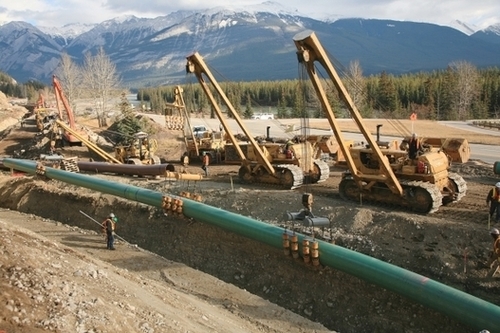
The 1,150-kilometre pipeline will carry diluted bitumen from the Alberta oilsands, starting in Edmonton, through Jasper and across B.C. to the company’s Westbridge Terminal in Burnaby.

Kinder Morgan says nearly three-quarters of the proposed expanded pipeline’s length across most of the province will follow the existing right-of-way where the pipeline was first built in the 1950s. About 17 per cent of the route, and virtually all the way through the Lower Mainland west of Fort Langley, will deviate from the current line, but would follow other existing utility corridors or infrastructure.

Kinder Morgan is promising enhanced tanker safety in its more-than-15,000-page submission, and says it is continuing discussions with First Nations, whose support is critical to large infrastructure development projects in B.C.

The twinning of Kinder Morgan’s existing pipeline has already seen years of pushback from First Nations, environmentalists and community groups concerned about the potential for spills along the pipeline and from tankers. Both Vancouver and Burnaby’s city councils have voiced opposition to the project.

The project would create about 90 permanent jobs, and employ 4,500 people at the peak of construction.<

See on www.vancouversun.com

Critical lack of long-term radioactive waste storage as Japan finalizes energy policy

See on Scoop.itGreen & Sustainable News

The United States’ top nuclear regulator said Friday that atomic energy users, including Japan, must figure out how to ultimately store radioactive waste.

Duane Tilden‘s insight:

>Japan has no final waste repository, not even a potential site. The U.S. government’s plan for building a repository at Yucca Mountain in Nevada has been halted by strong local opposition due to safety concerns.

“In the nuclear community, we of course have to face the reality of the end product — spent fuel,” Macfarlane told reporters.

She urged countries that are contemplating or embarking on a nuclear power program to formulate back-end plans at an early stage.

The new policy under Prime Minister Shinzo Abe’s pro-nuclear government is pushing to restart as many reactors as possible if deemed safe under the new, stricter safety standards that took effect this past summer. The new policy, whose draft was discussed Friday by a government panel, is also expected to stick to Japan’s shaky fuel cycle program despite international concerns about the country’s massive plutonium stockpile.

Japan is stuck with 44 tons of plutonium at home and overseas after unsuccessfully pushing to establish a fuel cycle, with its fast breeder reactor and a reprocessing plant never fully operated. Experts say Japan’s plutonium stockpile poses a nuclear security threat and raises questions over whether Japan plans to develop a nuclear weapon, which Tokyo denies.

Japan also has more than 14,000 tons of spent fuel in cooling pools at its 50 reactors, all of which are offline. Some pools are expected to be full in several years, and are expected to be moved to a dry cask facility just completed in northern Japan.<

See on www.ctvnews.ca

Fortum inaugurates new waste-to-energy CHP plant in Sweden

See on Scoop.itGreen Energy Technologies & Development

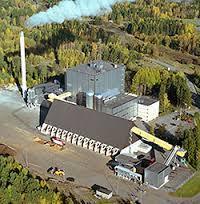
The new power plant unit, Brista 2, produces district heat for local residents and electricity for the Nordic power market from sorted municipal and industrial waste.

Duane Tilden‘s insight:

>”Brista 2 is already the fourth CHP plant we have commissioned this year in the Nordic and Baltic countries. Combined heat and power production is at the core of our strategy, and whenever possible we utilise renewable and local fuels,” says Per Langer, Executive Vice President of Fortum’s Heat Division.

Production capacity of the new Brista plant unit is 60 megawatts (MW) heat and 20 MW electricity. The annual heat production, about 500 gigawatt-hours (GWh), corresponds to the annual heating needs of about 50,000 mid-sized homes. The estimated annual electricity production of Brista 2 is 140 GWh. Fortum co-owns the plant (85%) together with the municipal energy company Sollentuna Energi (15%). <

See on online.wsj.com

Fracking chairman: shale gas not going to cut prices

Rennie Campbell's avatarenergy & water insights

Lord Browne, former head of BP and current chairman of the UK’s largest shale gas company Cuadrilla, said this week that fracking is unlikely to reduce gas prices. In a speech at the London School of Economics he also said that…

  • the recent strike price agreed between the government and EDF for nuclear power was “very, very expensive”
  • oil and gas currently receive more subsidies than renewable energy, which he described as “like running the heating and air conditioning at the same time”

The economic, geological, regulatory and social differences between the UK and US mean it is highly unlikely that the shale gas revolution being experienced in North America can be translated across the Atlantic, with even modest production unlikely before the mid-2020s according to most in the industry.

Despite repeated assurances from David Cameron and George Osborne that shale gas will reduce prices, Browne has recognised…

View original post 210 more words