The Ripple Effect of Energy Efficiency Investment

“The term “multiple benefits” has emerged to describe the additional value that emerges with any energy performance improvement. The benefits that occur onsite can be especially meaningful to manufacturing, commercial, and institutional facilities. Energy efficiency’s positive ripple effects include increased productivity and product quality, system reliability, and more. ”


Source: aceee.org

>” […]  Over the past few decades, researchers have documented numerous cases of energy efficiency improvements—almost always focusing exclusively on energy savings. Non-energy benefits are often recognized, but only in concept. ACEEE’s new report, Multiple Benefits of Business-Sector Energy Efficiency, summarizes what we know about the multiple benefits for the business sector. True quantification of these benefits remains elusive due to a lack of standard definitions, measurements, and documentation, but also in part because variations in business facility design and function ensures that a comprehensive list of potential energy efficiency measures is long, varied, and often unique to the facility.

To give some concrete examples of non-energy benefits at work: Optimizing the use of steam in a plywood manufacturing plant not only reduces the boiler’s natural gas consumption, it also improves the rate of throughput, thus increasing the plant’s daily product yield. A lighting retrofit reduces electricity consumption while also introducing lamps with a longer operating life, thus reducing the labor costs associated with replacing lighting. In many instances, monitoring energy use also provides insights into water or raw material usage, thereby revealing opportunities to optimize manufacturing inputs and eliminate production waste. By implementing energy efficiency, businesses can also boost their productivity. This additional value may make the difference in a business leader’s decision to pursue certain capital investment for their facility.

Meanwhile, energy resource planners at utilities and public utility commissions recognize the impact of large-facility energy demands on the cost and reliability of generation and transmission assets. By maximizing consumer efficiency, costs are reduced or offset throughout a utility system. So the ability to quantify the multiple benefits of investing in energy efficiency, if only in general terms, is an appealing prospect for resource planners eager to encourage greater participation in efficiency programs.

Unfortunately, our research shows that this quantification rarely happens, even though the multiple benefits are frequently evident. A number of studies offer measurement methodologies, anticipating the availability of proper data. When these methodologies are employed with limited samples, we see how proper accounting of non-energy benefits dramatically improves the investment performance of energy efficiency improvements—for example, improving payback times by 50% or better. Samples may provide impressive results, but the data remains too shallow to confidently infer the value to come for any single project type implemented in a specific industrial configuration. Developing such metrics will require more data.  […]”<


See on Scoop.itGreen & Sustainable News

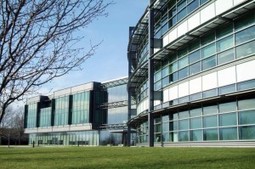
Building Recommissioning: Recertifying To LEED Platinum EB+OM

The facilities management director for Armstrong World Industries shares insights into the company’s LEED Platinum recertification pursuit.

Source: facilityexecutive.com

>” […] Q: When the LEED recertification process began for the Armstrong Headquarters facility (Building 701), how did you and the rest of the team begin evaluating the status of the building, in terms of its readiness to be re-certified?

A: Since our initial certification in 2007, we had established specific policies/procedures to follow for the building.  We had these in place so it was more a matter of reviewing what information was needed and fine tuning some of our data processes.  We continue to utilize our building automation system (Johnson Controls Metasys) for controlling all of our building systems and collect much of our operational data through that system. During our performance period, we read our data points on a more frequent basis to understand if systems were operating as designed. If readings were off, metrics signaled a physical change to be made to improve operations and data.

One surprise to our team was our Energy Star score.  We realized we had some searching to do when we saw that our building score had dropped below the 90’s where it had been in 2012. However, to recertify and meet the prerequisite for the E&A category, our Energy Score needed to be 70, and we met that.

In short, our recommissioning process helped us pinpoint many opportunities for improving building operations.

Q: For the recertification, which systems or strategies were newly introduced to the facility?

A: As a building owner, you are always thinking about improving building operations along with budgeting dollars to make the changes. Items that were budgeted for 2014 that were included in our building recertification included: a new roof with an SRI (Solar Reflectance Index) of 78; LED lamp replacements in the lobby; and electrical sub-meters for building lighting.

One other item that was completed in 2010 after electrical deregulation was daylight housekeeping. We traditionally did our housekeeping from 5 pm to midnight. However, as we reviewed our electrical costs and determined a savings opportunity, we moved to daytime hours for cleaning. This saved Building 701 approximately $750 weekly in energy costs. We implemented daylight housekeeping across the entire corporate campus, saving the company $150,000 annually in energy costs.

Q: What is the most challenging aspect of running a LEED Platinum facility? And what is most rewarding?

A: The most challenging aspect of operating and maintaining a LEED- EBOM facility is making sure you have qualified and trained technicians to understand and manage the building operations.

The most rewarding aspect is meeting with customers and guests to discuss the sustainable characteristics of the building and thinking about what to budget for in the upcoming year to improve overall building operations and maintenance to reduce costs. […] “<

See on Scoop.itGreen Building Operations – Systems & Controls, Maintenance & Commissioning

New Boston Start-up Tracks Multifamily Residential Energy Efficiency “Score”

wego_screen_shotWegoWise Inc., which provides energy analytics to private property owners and public housing entities, last week launched WegoScore, a rating system that assesses buildings in three areas, energy, water and carbon and then spits out a score between one and 100.

Source: www.bizjournals.com

>” […] “We are focusing on a universal approach with meaningful reductions,” WegoWise founder and CTO Barun Singh said of the platform.

With the water crisis in California and with 39 percent of carbon dioxide coming from buildings, property owners and public housing agencies are making energy-saving retrofits and want to market what they’ve done.

Those buildings that reach a high rating are issued certificates and decals to let the world know they are more efficient. Maloney Properties Inc., a Wellesley-based real estate management, sales and construction firm with 350 buildings, is featuring its decal proudly. Other area companies include Peabody Properties in Braintree and Homeowners Rehab, based in Cambridge.

The score not only brings awareness to a building’s efficiency, it also provides a way for property owners to market the value of the work completed in their buildings to perspective tenants who are concerned about the environment, Singh said. And the stickers are a fun way to market their accomplishments.

After using WegoWise, Maloney Properties was able to find $2.5 million in 2014 retrofits and expects to save 10 to 20 percent on utility costs related to the retrofits annually. John Magee, an assistant facilities director at Maloney, said the real estate company has been looking for a way to market the value of its properties. And now, the WegoScore will enable it to do that.

With the $4.9 million in funding it has raised from Boston Community Capital, WegoWise was able to build a portfolio of 23,000 multifamily buildings covering more than 600 million square feet. With all of the data that WegoWise has collected since its launch in 2010, coming up with a rating system would be a simple solution, right? Not exactly, according Singh.

Launching WegoScore was an expensive and lengthy process for the 25-person company, he said. Before launching the rating system, Singh said he wanted to be sure that had enough data to come up with a score that was meaningful.

“The end result is a straight-forward algorithm,” he said.

The WegoScore is currently only available for multifamily buildings, according to the company. Scores will be refreshed on a weekly basis and stickers are awarded twice a year.

In addition to gaining interest from its existing customers, venture-backed WegoWise is also garnering the attention of other potential partners including banks, who could use the score as a way to get a sense of the building and decide whether or not to lend to them, and insurance providers that would make decisions based on the building’s efficiency score and other factors. […]”<

See on Scoop.itGreen Building Operations – Systems & Controls, Maintenance & Commissioning

University to Install Combined Heat and Power Plant for Energy Savings and Climate Goals

“Construction is will soon begin on a $96 million combined heat and power (CHP) plant in another aging facility near the river’s edge that will dramatically cut the campus’ carbon footprint while driving down the cost of energy”

Source: www.midwestenergynews.com

>” […] The project, in the 1912-vintage Old Main Utility Building, will produce enough steam to heat the entire campus and meet about half of its electricity demand.

CHP and carbon reductions

CHP will be a major tactic in the goal of reducing the University’s carbon emissions by 50 percent by 2020, said Shane Stennes, who serves as the University Services’ sustainability coordinator. The Southeast Steam Plant, itself a CHP facility, mainly used natural gas but still had a small measure of coal in its fuel mix, along with oat hulls.

“The carbon reduction is partly due to a change in fuel but mostly a result of increased efficiency,” Stennes said. The ability to use the waste heat from the electricity generation process is the real reason the University will see carbon emissions plummet, he added.

“From the sustainability point of view this plant is the right thing to do,” he said, noting that in 2008 the University’s campus system agreed to a net zero scenario in the American College and University Presidents’ Climate Commitment.

CHP is on a bit of a roll. President Barack Obama signed an executive order in 2012 promoting wider adoption of CHP and the state Department of Commerce recently held stakeholders’ meetings on the issue to determine how the state might help in moving forward projects.

The potential was described in a Commerce policy brief associated with the stakeholder meetings: “Power generation waste heat in Minnesota is nearly equal to the total requirement for heat energy in buildings and industry.” […]

Minnesota has at latest count 55 CHP systems in the state, according to the ICF International.

Reasons for CHP at the U

A campus CHP comes with another advantage by creating an “island” of energy independence should a regional blackout hit. Many major Midwest and coastal universities have CHP in part to rely less on power grids that are vulnerable to major storms or other weather maladies, he said.

“We see CHP as a way to be competitive with other schools and to protect research if we had a catastrophe,” he said.

The need for more boilers, said Malmquist, stems from growing demand for power. Although the nearly dozen new buildings constructed in the last few years meet rigorous energy efficiency standards they tend to demand more power due to their function as research centers.

The Biomedical Discovery District, a new physics laboratory, technology classroom and other science-related buildings, as well as a new residence hall, have added square footage for steam and electricity, he said.

“The buildings we’re putting up today are more energy intensive than the ones we’ve been taking down,” said Malmquist. […]”<

See on Scoop.itGreen Building Operations – Systems & Controls, Maintenance & Commissioning

$200m Demand Management Program Approved in NYC to Defer $1 billion SubStation to 2026

The NYPSC approved Con Ed of New York’s proposed $200 million Brooklyn/Queens Demand Management Program that would relieve overloads in the city.

Source: www.rtoinsider.com

>” […] Con Ed’s proposed Brooklyn/Queens Demand Management Program is consistent with the state’s “Reforming the Energy Vision” program to restructure the electricity market with greater reliance on technology and distributed resources, the commission said. “The commission is making a significant step forward toward a regulatory paradigm where utilities incorporate alternatives to traditional infrastructure investment when considering how to meet their planning and reliability needs,” the order states.

Commission Chair Audrey Zibelman added that because of the recent D.C. Circuit Court of Appeals decision striking down federal jurisdiction over demand response in wholesale markets, it’s important for state regulators to set market rules for that resource.

Con Ed said the feeders serving the Brownsville No. 1 and 2 substations began to experience overloads in 2013 and would be overloaded by 69 MW for 40 to 48 hours during the summer by 2018. A new substation, transmission subfeeders and a switching station would cost $1 billion, according to the company. The PSC accepted the company’s estimate of the DM Program’s costs and ordered a cap of $200 million.

The program would include 52 MW of non-traditional utility-side and customer-side relief, including about 41 MW of energy efficiency, demand management and distributed generation, and 11 MW of utility-side battery energy storage. This will include incentives to upgrade building “envelopes,” improve air conditioning efficiency of equipment, encourage greater use of energy controls, and establish energy storage, distributed generation or microgrids.

This will be supplemented by approximately 17 MW of traditional utility infrastructure investment, consisting of 6 MW of capacitors and 11 MW of load transfers from the affected area to other networks.  […]”<


See on Scoop.itGreen Energy Technologies & Development

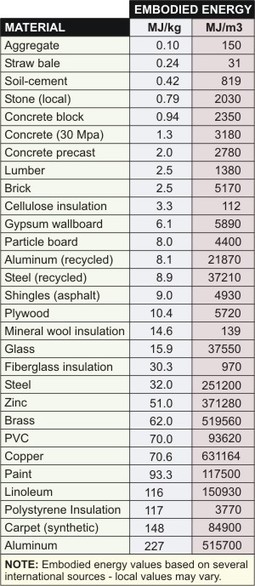
Embodied Energy – A Measure of Sustainability in Buildings & Construction

Embodied energy in building materials has been studied for the past several decades by researchers interested in the relationship between building materials, construction processes, and their environmental impacts.

Source: www.canadianarchitect.com

>” […]

What is embodied energy?
There are two forms of embodied energy in buildings:

· Initial embodied energy; and
· Recurring embodied energy

1.  The initial embodied energy in buildings represents the non-renewable energy consumed in the acquisition of raw materials, their processing, manufacturing, transportation to site, and construction. This initial embodied energy has two components:

  • Direct energy the energy used to transport building products to the site, and then to construct the building; and
  • Indirect energy the energy used to acquire, process, and manufacture the building materials, including any transportation related to these activities.

2.  The recurring embodied energy in buildings represents the non-renewable energy consumed to maintain, repair, restore, refurbish or replace materials, components or systems during the life of the building.

As buildings become more energy-efficient, the ratio of embodied energy to lifetime consumption increases. Clearly, for buildings claiming to be “zero-energy” or “autonomous”, the energy used in construction and final disposal takes on a new significance. […]”<

See on Scoop.itGreen & Sustainable News

Berkeley City Property Owners to Pay For Energy Audits

Later this month, the Berkeley City Council is slated to approve a new law — designed to increase building sustainability and reduce greenhouse gas emissions — that will mandate new fees and recurring energy assessments for local property owners.

Source: www.berkeleyside.com

>” […] The law would require payment of a $79-$240 filing fee, depending on building size, by property owners every 5-10 years. On top of that, property owners will be required to undergo building energy assessments on the same cycle, conducted by registered contractors, to the tune of an estimated $200 for a single-family home and up to $10,000 for large commercial buildings.

The goal of the new law, according to the city, is to make “building energy use information more transparent to owners and prospective renters or buyers,” and ultimately inspire more investment in energy upgrades. The law would replace existing minimum energy and water efficiency measures in Berkeley. The proposed ordinance would not require that upgrades are actually done, but will compile energy scores and summaries for city properties, and make them readily available online.

Explained city sustainability coordinator Billi Romain, “Rather than require a list of specific measures, it requires an evaluation of a building’s efficiency opportunities and identifies all available incentives and financing programs.”

Romain said the hope is that, by giving people a “road map” for potential improvements, they will be more likely to schedule them to fit in with other home projects, such as seismic work. In addition to cutting down on local greenhouse gas emissions, the new ordinance has several other goals, from reducing utility costs that cause local dollars to “leak out” of Berkeley, to creating a more comfortable, durable building stock, as well as fortifying the local “green” workforce. […]

According to a city Energy Commission report on the ordinance, the assessments would take place on a five-year cycle for large buildings and every 8-10 years, or upon sale, for medium-sized and small buildings. Some of the costs may be offset by rebates and other incentives, and the program is set to include temporary “hardship deferrals” for those with financial constraints, and exemptions for high-efficiency buildings (see page 14). […]”<


See on Scoop.itGreen Building Operations – Systems & Controls, Maintenance & Commissioning

Retro-fit NYC Office Building Achieve’s LEED-EB Gold Rating

A $9 million retrofit that included $1.5 million in improvements that can be directly or indirectly linked to energy and water savings has elevated the building to a select group that includes 1440 Broadway, 498 Seventh Avenue and 345 Hudson Street.

Source: www.rew-online.com

>” […] Built in 1919, the 22-story tower with a block-through arcade of service shops for tenants, has undergone a plethora of changes to improve sustainability to achieve Gold Certification that include reducing water use by over 25 percent annually, saving over 536,800 gallons a year; recycling over 79 percent of ongoing consumable waste; recycling 100 percent of electronics waste; achieving Energy Star Label and Energy Star Scores of 86 and 83 in 2013 and 2014, respectively; and purchasing green power and carbon offsets from US-generated wind energy and landfill gas capture projects representing over 50% of the property’s two-year energy use

“The LEED-EB Gold Certification at 28 West 44th Street demonstrates APF Properties’ ongoing commitment to providing its tenants with a sustainable, modern and healthy environment in which to work,” said John Fitzsimmons, vice president/director of Real Estate Operations at APF Properties.

“Our overall goal is to achieve Energy Star and LEED Certification throughout our commercial office building portfolio in New York, Philadelphia and Houston.

[…]

LEED was developed to define and clarify the term “green building” by establishing a common standard of measurement — a benchmark for the design, construction, and operation of high-performance buildings.

To earn LEED certification, a building must meet certain prerequisites and performance criteria within five key areas of environmental health: 1) sustainable site development, 2) water savings, 3) energy efficiency, 4) materials selection, and 5) indoor environmental quality. Projects are awarded Certified, Silver, Gold, or Platinum certification, depending on the number of credits achieved.”<

See on Scoop.itGreen & Sustainable News

Energy Efficiency, Smart Buildings & Wireless Control Systems

Energy efficient technology and services for the building sector will double by 2022, according to a new report …

Source: www.climatecontrolnews.com.au

>”[…] Since buildings account for a large portion of national energy consumption, most of the governments in the Asia Pacific region have taken steps to promote energy management and energy efficiency in both new construction and existing buildings. […]

“With about 40 per cent of the world’s building stock, Asia Pacific represents a major portion of global real estate,” he said.

“Growing concerns about air pollution in Chinese cities, in particular, is expected to further drive investment in energy efficiency technologies to reduce China’s demand for coal-based electricity.

“The market for energy efficient buildings is expected to double in the next eight years, reaching nearly $92 billion in annual revenue by 2022.”

The largest segment of the energy efficient buildings market in Asia Pacific today is advanced lighting […]

“The commercial buildings sector in the region will experience a significant increase in the adoption of these products in the coming years,” Bloom said. Entitled“Energy Efficient Buildings: Asia Pacific”, the report examines the trends for energy efficient building technology and services in the Asia Pacific region.

It covers three main areas of technology – HVAC, energy efficient lighting, and commercial building automation – as well as the energy service company (ESCO) sector.

The convergence of building automation, information technology, and wireless communications is another area of growth identified by Navigant Research.

A separate report examines the state of the global wireless building controls industry, including global market forecasts for wireless node unit shipments and revenue through 2023.

Wireless controls can be used to link devices found in a variety of building systems, including heating, ventilating, and air conditioning (HVAC), lighting, fire and life safety, and security and access.

In addition, they often provide networked control in buildings or areas where wired controls are simply too challenging or expensive to install.

Worldwide revenue from wireless control systems for smart buildings is expected to grow from $97 million annually in 2014 to $434 million in 2023.  […]

While the adoption and deployment of wireless systems based on standard technologies and protocols, such as Wi-Fi, Zigbee, and EnOcean, are increasing, most wireless devices and control networks used today utilize proprietary, vendor-specific wireless communications technology.

That is likely to change as the demand for interoperability grows, according to the “Wireless Control Systems for Smart Buildings” report. “<

See on Scoop.itGreen Building Operations – Systems & Controls, Maintenance & Commissioning

Built in 1928 Chicago Apartment Building Energy Retrofit Achieves EPA Energy Star Certification

To say the 55-unit building in Chicago’s South Shore neighborhood was in disarray when it was changing hands in 2009 would be an understatement.

Source: www.chicagotribune.com

>” […] the building is among the first in the Midwest — and only three in Chicago — to achieve the Environmental Protection Agency’s new Energy Star certification for multifamily buildings. Also receiving the designation were two condominium buildings in Chicago, 680 N. Lake Shore Drive and River City, at 800 S. Wells.

[…] Jeffery Parkway also stands as an example of how an older, smaller, affordable apartment building can be made more comfortable for its tenants while saving its owner cash in the long run.

Seeking a neutral third party to help them figure out the entire scope of a rehab project, the Soods obtained a free energy audit of the building and its systems from Elevate Energy, a Chicago-based nonprofit that works with consumers and businesses to improve energy efficiency.

Elevate looks at historical analyses of a building’s energy use and compares it with similar buildings in terms of age and size. Then it performs an on-site performance assessment of the existing heating, cooling and lighting systems and makes recommendations for potential improvements. […]

“The average cost of a retrofit is about $2,500 to $3,000 a unit,” Ludwig said. “We’re not talking about huge-ticket items. A lot of times we are trying to identify the most cost-effective retrofit measures, how can we tighten the building envelope. It doesn’t have to mean a new boiler is going in the basement.”

However, in the case of Jeffery Parkway, it did mean a new steam boiler and new water heaters, among other upgrades.

The project was financially feasible because of a loan from nonprofit Community Investment Corp.’s Energy Savers loan program, which offers a seven-year loan with a 3 percent fixed interest rate for qualified upgrades made to buildings in the seven-county Chicago area and Rockford. […]

“We will cover any of the recommendations that show up in the energy assessment, and we’ll also do other energy-related improvements,” said Jim Wheaton, manager of the Energy Savers program. “This is not a program designed for the North Lake Shore Drive high-rise. It’s designed for buildings affordable for working folks.”

Multifamily buildings receive an Energy Star score of 1 to 100, and those that score above 75 can apply for the certification. Nautilus’ building received a score of 99.

“The savings are tremendous,” Sandeep Sood said. “We were facing, just on the gas bill, a $60,000 bill a year. As of last year, our bill was $18,000. It was an unbelievable savings.” […]”<

See on Scoop.itGreen Building Operations – Systems & Controls, Maintenance & Commissioning