Report: US Smart Grid Cybersecurity Spending to Reach $7.25B by 2020 : Greentech Media

See on Scoop.itGreen Energy Technologies & Development

Securing the new IT infrastructure of the power grid against cyber-attack is going to be big business, but that’s not because it makes money for the utilities that are buying it. Instead, today’s smart grid cybersecurity investments are mostly about meeting regulations, satisfying shareholders, and trying to justify the costs …

Duane Tilden‘s insight:

…one of the key tenets of cybersecurity is that you don’t talk about cybersecurity — at least, not the specifics of how you’re discovering, isolating, eliminating and building new protections against new intrusions and attacks that change from day to day.

Those threats can range in intent from simple intrusion and data theft, to full-scale attempts to take over control systems, and can vary in sophistication from cheesy password-stealing scams to sophisticated “advanced persistent threats” coming from shadowy government-backed, quasi-criminal “hacktivist” and mercenary groups.

In North America, much of that spending is being driven by the North American Electric Reliability Corporation (NERC)’s Critical Infrastructure Protection (CIP) requirements. Covering the U.S. and Canada, these rules come with stiff fines of up to $1 million per day for utilities that can’t prove they’re meeting security guidelines, and newer versions add a lot more serial-connected smart grid assets to their purview. The Department of Energy’s $4.5 billion in stimulus grants also came with cybersecurity strings attached, as outlined by the ongoing government-industry work being coordinated by the U.S. National Institute of Standards and Technology, or NIST.

See on www.greentechmedia.com

Capital Power gives community funding to ACW Ontario Townships

See on Scoop.itGreen & Sustainable News

The K2 Wind Power project and the Township of Ashfield-Colborne-Wawanosh (ACW) executed a Community Benefits Fund Agreement (CBFA) and a Road Use Agreement on March 19, with respect to the proposed K2 Wind Power Project.

Duane Tilden‘s insight:

As outlined in the CBFA, K2 Wind will provide an annual payment of approximately $700,000 to ACW. This payment is in addition to the yearly municipal property taxes the Project will pay. Funds from the CBFA can be directed towards community based initiatives such as community and protective services; education and job training programs; public recreation facilities; land steward initiatives; energy sustainability projects; and property tax relief for residents. ACW Township will have broad discretion in the use of these funds.

See on www.lucknowsentinel.com

GE links up with Coca Cola in Brazil – Cogeneration & On-Site Power Production (Combined Heat & Power)

See on Scoop.itGreen Energy Technologies & Development

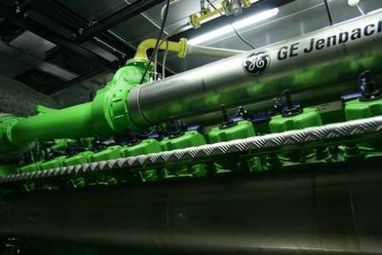
The 12 MW facility will provide all of the plant’s on-site heat and power needs. Brazilian energy company Light Esco will install three ecomagination-qualified Jenbacher J624 engines at the Andina Brasil-Coca-Cola bottling facility.

Duane Tilden‘s insight:

The power plant is expected to begin operating in November 2013 and will also produce cold water, carbon dioxide (CO2) and nitrogen to support the bottling operations.

By installing quadgeneration technology to recover food-grade CO₂, factories can reduce emissions by up to an additional 40 percent when compared to using separate power and heat generating equipment.

See on www.cospp.com

USGBC Adds Green Building Finance Expert | U.S. Green Building Council

See on Scoop.itGreen Building Design – Architecture & Engineering

Washington, D.C. — (April 8, 2013) — The U.S. Green Building Council (USGBC) announced today that Dan Winters recently joined the organization as Senior Research Fellow for Business Strategy and Finance.

Duane Tilden‘s insight:

Winters, a 20-year veteran of real estate finance and one of the first LEED Accredited Professionals in the financial industry, is the previous recipient of the 2012 USGBC Mark Ginsberg Sustainability Fellowship. Now with USGBC as a full-time staff member, Winters will utilize his background in institutional real estate finance, alongside his capital market perspectives, to foster and strengthen the growing relationships between the green building and investment communities.

“Dan is one of the foremost minds among those who develop high-performance buildings, the commercial brokerage community and the institutional financiers who seek to incorporate sustainable properties into real estate investment portfolios,” said Chris Pyke, vice president of research, USGBC.

See on www.usgbc.org

Report Claims Renewable Energy Policy Bad For Washington State

See on Scoop.itGreen & Sustainable News

Olympia, Wash. — A conservative Washington state political think tank’s study says our state’s renewable energy policy is bad for the economy and environment.

Duane Tilden‘s insight:

Currently, Washington is required to draw 15-percent of its energy from renewable sources by 2020.

Washington Policy Center Director Todd Myers says the study concludes Washington could lose up to 12,000 jobs in the next seven years, and energy costs for households and businesses could skyrocket.

Myers says the study estimates a reduction in real disposable income by about $1-billion.

He says the state currently draws nearly 80-percent of its energy from hydro-energy sources, which current legislation does not define as renewable.

See on kgmi.com

Report: Global waste industry could double to $2tn by 2020

See on Scoop.itGreen Energy Technologies & Development

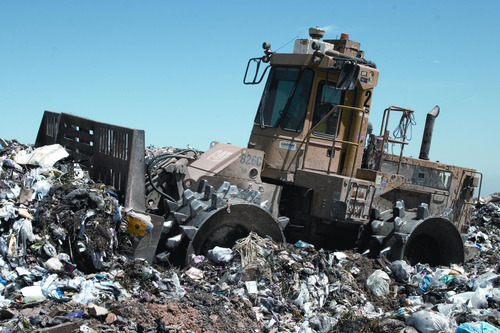
Bank of America Merrill Lynch analysis predicts boom in global waste industry as resource crunch bites

Duane Tilden‘s insight:

“We are seeing a shift away from waste as a mandatory public service to waste management as a sustainable business opportunity,” the report states. “We see the fastest growth in the next decade coming from diversion, recycling, recovery of valuable secondary raw materials, waste-to-energy, e-waste and sustainable packaging – as well as from emerging markets. We see considerable low hanging fruit potential given that 70 per cent plus of global waste is currently landfilled. ‘Greening’ waste management will require increasing MSW recycling by a factor of 3.5 times and doubling industrial waste recycling.”

See on www.businessgreen.com

Financial Advisors Are Adopting Social Media, Fitfully – Forbes

See on Scoop.itTwitter & Social Media

Active social media strategies are proving profitable for financial advisors.

Duane Tilden‘s insight:

Alex Pigliucci, global managing director of Accenture wealth management services, said  social media creates a huge opportunity for firms that get it right and a real risk for firms that regard it mostly as a threat. Firms will have to recruit and train advisors on the basis of their ability with social media if they are going to survive the generational change when millennials will become increasingly important as both advisors and investors.

See on www.forbes.com

Energy Storage Series: Why We Need It, And Why We Don’t

See on Scoop.itGreen Energy Technologies & Development

It’s almost a cliché that there’s a “friendly debate” pitting utilities against renewable energy. But concerns on the utility side of the table are real: intermittency, potential destabilization at the feeder level, non-baseload, and peaks in generation that don’t necessarily match demand peaks. Today’s power infrastructure involves unpredictability in both supply and demand that is extremely difficult to manage.

Duane Tilden‘s insight:

The big question in energy storage, Wheaton says, boils down simply: what does it cost to build more generation (to oversupply), vs. how to store and manage energy? Today it’s more “economically rational” to build more generation, whether it’s solar or wind or even coal, he noted. As energy storage technology costs come down — and as there is better understanding and calculation of externalized costs, such as societal impacts — “we will see those lines cross, and more utilities will go to energy storage as a more economical means to serve the grid.”

Fundamentally, economics determines the decision of over-generation vs. energy storage; right now “either energy storage is not cheaper, or the payback is not enough to shift over,” noted Luebbe. As the cost (dollars per kilowatt-hour) come down and energy storage costs intersect with those in over-generation, “then everyone will do it because it’s economically the logical thing to do.”

See on www.renewableenergyworld.com

SEC Allows Companies To Announce News To Investors Through Facebook – AllFacebook

See on Scoop.itTwitter & Social Media

Soon, investors will be able to learn more about companies in the same space where they play Candy Crush Saga. The Securities and Exchange Commission declared Tuesday that companies can notify their investors of news through Facebook and Twitter.

Duane Tilden‘s insight:

George Canellos, acting director of the SEC’s division of enforcement, commented on this new development in a press release:

One set of shareholders should not be able to get a jump on other shareholders just because the company is selectively disclosing important information. Most social media are perfectly suitable methods for communicating with investors, but not if the access is restricted or if investors don’t know that’s where they need to turn to get the latest news.

What brought about this decision was a post on the …

See on allfacebook.com

Small Hydro Power for micro hydro power generation in streams & rivers. HydroWorld

See on Scoop.itGreen & Sustainable News

Read the hot small hydro power project news & technology.

Duane Tilden‘s insight:

Hydroelectric plants with a capacity of 20 MW or less are a valuable niche of the hydro industry, providing local power in underdeveloped countries and sources of new capacity in established markets.

See on www.hydroworld.com