1973-74 Oil Crisis – Timeline – Slaying the Dragon of Debt – UC Berkeley

See on Scoop.itGreen & Sustainable News

Between October 1973 and January 1974 world oil prices quadrupled. By putting an end to decades of cheap energy, the 1973-74 oil crisis, which was led by Arab members of the Organization of Petroleum Exporting Countries (OPEC), exacerbated the economic difficulties facing many industrialized nations, forced developing countries to finance their energy imports through foreign borrowing, and generated large surpluses for oil-exporters.

Duane Tilden‘s insight:

>The 1973-74 oil crisis followed years of often acrimonious negotiations between members of the Organization of Petroleum Exporting Countries (OPEC) and Western oil companies over petroleum production and pricing levels. Richard Nixon’s decision to take the U.S. off the gold standard in 1971 was of particular importance in contributing to the oil crisis.

Because oil prices were denominated in dollars, the devaluation that accompanied the end of the Bretton Woods monetary regime negatively impacted oil exporting countries and led OPEC officials to consider remedial steps, such as pricing oil in gold instead of dollars. Little came of these efforts until October 1973, when Arab members of OPEC, in response to the outbreak of the Yom Kippur War, raised the posted price of crude by 70% and placed an embargo on exports to the U.S. and other nations allied with Israel.

Although the fighting ended in late October, OPEC continued to use the “oil weapon” over the coming months. In November oil exporters cut production 25% below September levels, and the following month they doubled the price of crude. By January 1974 world oil prices were four times higher than they had been at the start of the crisis.<

See on bancroft.berkeley.edu

A Republican Case for Climate Action

See on Scoop.itGreen & Sustainable News

By WILLIAM D. RUCKELSHAUS, LEE M. THOMAS, WILLIAM K. REILLY and CHRISTINE TODD WHITMAN Published: August 1, 2013The United States must move now on substantive steps to curb climate change, at home and internationally.

Duane Tilden‘s insight:

>Mr. Obama’s plan is just a start. More will be required. But we must continue efforts to reduce the climate-altering pollutants that threaten our planet. The only uncertainty about our warming world is how bad the changes will get, and how soon. What is most clear is that there is no time to waste.<

See on www.nytimes.com

Smart Grid: Utility sued due to Smart Meter opt-out program

See on Scoop.itGreen Energy Technologies & Development

Smart Grid – BC Hydro offered customers who didn’t want to participate in its smart meter program the choice of opting out in mid-July. But that didn’t protect the utility from a lawsuit

Duane Tilden‘s insight:

>Just days after BC Hydro finally agreed to an opt-out program for smart meters, a customer is suing the utility for installing a smart meter last year even though she didn’t want one on her property. […]

The suit claims the installations caused the plaintiff “emotional distress,” because it “interfered with the quiet enjoyment of her property,” which she used to host yoga and meditation retreats. Opponents of smart meters believe the devices’ radio waves have health risks. The lawsuit further alleges that BC Hydro unlawfully leveraged its monopoly powers by imposing a smart meter on the plaintiff.

[…] The utility says that smart meters only broadcast several times a day, and that living next to a smart meter for 20 years would expose a resident to the same level of radiation as a 30-minute cell phone call.<

See on www.smartgridnews.com

Bakken Oil: North Dakota flaring burns 4 times Total National Consumption (2011 figure)

See on Scoop.itGreen & Sustainable News

NEW YORK (Reuters) – Oil drillers in North Dakota’s Bakken shale fields are allowing nearly a third of the natural gas they drill to burn off into the air, with a value of more than $100 million per month,…

Duane Tilden‘s insight:

An alarming state of affairs.  As per the article the flared Natural gas in North Dakota is reported to be 266,000,000,000 cfd (cubic feet per day) flared methane or 2750 x 10(9) cu m/year.

According to Wiki the 2011 US annual consumption for natural gas was 689.9 x 10(9) cu m, so apparently Bakken is actually burning 4 times the total 2011 national requirements.

>Roughly 29 percent of natural gas extracted in North Dakota was flared in May, down from an all-time high of 36 percent in September 2011. But the volume of natural gas produced has nearly tripled in that timeframe to about 900,000 million cubic feet per day, boosting flaring in the state to roughly 266,000 million cubic feet per day, according to North Dakota state and Ceres data.<

See on www.reuters.com

Water-Smart Power: Strengthening the U.S. Electricity System in a Warming World (2013) | UCSUSA

See on Scoop.itGreen & Sustainable News

This report shows how the U.S. can build an electricity system that protects our water resources and dramatically reduces global warming emissions.

Duane Tilden‘s insight:

>The country stands at a critical crossroads. Many aging, water-intensive power plants are nearing the end of their lives. The choices we make to replace them will determine the water and climate implications of our electricity system for decades to come.

Today’s electricity system cannot meet our needs in a future of growing demand for power, worsening strains on water resources, and an urgent need to mitigate climate change.

[…]

Energy-water collisions are happening now, and are poised to worsen in a warming world

  • The heat waves and drought that hit the U.S. in 2011 and 2012 shined a harsh light on the vulnerability of the U.S. power sector to extreme weather, and revealed water-related electricity risks across the country.
  • When plants cannot get enough cooling water, they must cut back or completely shut down their generators, as happened in 2011 and 2012 at plants around the country.
  • Nationally, the 2012 drought was the worst in half a century. Amid soaring temperatures in the Midwest, several power plant operators got permission to discharge exceptionally hot water rather than reduce power output.
  • Electricity-water collisions are poised to worsen in a warming world as the power sector helps drive climate change. Extreme weather conditions that have historically been outliers are expected to become standard fare.<

See on www.ucsusa.org

Net Metering And Rooftop Solar For The Utility Of The Future

See on Scoop.itGreen Energy Technologies & Development

Net metering makes small-scale renewable energy, such as rooftop solar panels, more affordable by crediting the “distributed generation” owners for the excess energy they produce.

Duane Tilden‘s insight:

>Why the new focus on net metering?  The cost for rooftop solar panels has fallen 80% since 2008, including 20% in 2012 alone.  Installed rooftop solar energy has increased by 900% between 2000 and 2011.  As consumers install more rooftop solar panels and net meter them, utility revenues will decrease.

Net metering policies vary from state-to-state, including the amount of the payback for excess energy.  The most favorable policy for distributed generation owners is an excess energy credit equal to the full retail energy rate consumers pay for energy, i.e. the amount consumers are charged for using energy.  Most states use this measure.  However, utilities claim this prevents them from recovering their full costs and overpays distributed generation owners, unfairly shifting costs to other consumers.  Utilities say the credit should be equal to the utilities’ wholesale energy cost at the time of day when excess energy flows back to the grid.

Despite attempts by utilities to change net metering policies, state regulators are keeping these policies intact.  Earlier this month, the Idaho Public Utilities Commission rejected Idaho Power’s request to pay less than the full retail rate and to impose higher charges on net metering consumers.  Last month, the Louisiana Public Service Commission rejected similar requests by Louisiana utilities.  More recently, Arizona Public Service Company raised the issue in a ne[…]<

See on blogs.edf.org

Energy Efficiency – Modems, routers & black boxes

See on Scoop.itGreen Energy Technologies & Development

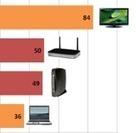
Your high-speed modem and router—those little blinking boxes that you use to stream video and get email—could be eating up as much energy as your TV, and twice as much as your laptop. What a waste.

Duane Tilden‘s insight:

How much energy does your cable modem consume?  Have you ever over-heated a router?

>At NRDC, we’ve worked with industry and government to help make home electronics more energy efficient, saving money for consumers and reducing carbon pollution from power plants. While we’ve made progress on cutting energy waste from televisions, computers, gaming systems and power supplies, until now, no one had looked at the energy use of devices like modems and routers.

It’s a good thing we did. There are 145 million of these small network devices in U.S. households. These seemingly insignificant little boxes are always on—and they consume more than $1 billion and 3 dirty coal power plants’ worth of electricity each year, according to a new analysis released by NRDC. […]<

See on theenergycollective.com

China shortfall in processed Uranium puts pressure on Global Nuclear Fuel supplies

See on Scoop.itGreen & Sustainable News

BEIJING (Reuters) – The abrupt cancellation of a $6.5 billion uranium processing project in southern China has left Beijing with a headache as it tries to secure the fuel required to sustain an ambitious…

Duane Tilden‘s insight:

>China currently has 15 reactors with an aggregate installed capacity of 12.57 gigawatts (GW), but another 30 plants are under construction and due to go into operation between now and 2016, adding another 29 GW to the total.

Gaining more control over the global fuel supply chain is crucial to China’s plans to increase total nuclear capacity to 58 GW by 2020, and will require not only overseas acquisitions but also more enrichment capacity.

[…]

PROCESSING IMPORTS

While Beijing’s 2020 target for the amount of power to be generated from nuclear sources was scaled back after the Fukushima disaster in Japan, its 2030 target of around 200 GW remained intact. Analysts expect annual primary uranium demand to rise tenfold over the period to around 40,000 tonnes.

To meet that demand, CNNC and CGNPC have been exploring domestic uranium deposits, but a surge in imports is inevitable, and is expected to put pressure on global supplies.<

See on www.reuters.com

Community Energy Storage Project Stalls

See on Scoop.itGreen & Sustainable News

Two years ago, AEP Ohio kicked off one of the largest community energy storage projects in the nation, funded in part by the U.S. Department of Energy. The pilot, however, did not go very far.

Duane Tilden‘s insight:

>AEP and S&C, which was the vendor for the pilot, declined to speak specifically about the project and the shortcomings of the batteries, although the two will continue to work together on a much smaller scale.

Small scale is exactly where community energy storage is at. It’s not only the scale of the batteries that are small (compared to megawatt, grid-level storage), but also the scale of utility uptake. “We haven’t seen any mass deployment,” said Mike Edmonds, vice president of strategic solutions for S&C. “It’s a very young market.” Instead, utilities are dipping their toes in the water by testing just a few units.<

See on theenergycollective.com

It’s Time Our Policies Reflect The Fact That Energy And Water Are Fundamentally Intertwined

See on Scoop.itGreen & Sustainable News

For a long time, we’ve overlooked the inextricable relationship between water and energy use.  Coal, nuclear and natural gas plants use enormous amounts of steam to create electricity.  Producing all of that steam requires 190,000 million gallons of water per day, or 39% of all freshwater withdrawals in the nation.

Duane Tilden‘s insight:

>The longstanding division between energy and water considerations is particularly evident in the case of energy and water management.  These resources are fundamentally intertwined: Energy is used to secure, deliver, treat and distribute water, while water is used (and often degraded) to develop, process and deliver energy.

Despite the inherent connection between the two sectors, energy and water planners routinely make decisions that impact one another without adequately understanding the scientific or policy complexities of the other sector.  This miscommunication often hides joint opportunities for conservation to the detriment of budgets, efficiency, the environment and public health, and inhibits both sectors from fully accounting for the financial, environmental or social effects they have on each other.

This lack of collaboration between energy and water planners is especially dire considering Texas is in midst of an energy shortage that is exacerbated by the multi-year drought.  Without adequate planning, we could someday have to choose between keeping our lights on and turning on the faucet.<

See on blogs.edf.org