Energy Efficiency and Renewables Drives Smart Grid Technologies Market – Research & Developments

The market for smart grid technologies is evolving rapidly as the need for a more responsive, automated power grid rises worldwide.  …

Source: www.navigantresearch.com

>”The fundamental technology for injecting intelligence into the grid has been in existence for years – more than a decade in some cases. However, the past 18 to 24 months have seen accelerating technological advancements and shifting priorities among utility industry stakeholders.

Transmission system upgrades are driven by the need to interconnect offshore or remote wind and solar farms, as well as ongoing electrification across Asia Pacific and developing regions. Falling costs for devices and communications networking, combined with the increasing emphasis on reliability and energy efficiency, will lead to robust growth in the substation and distribution automation (SA and DA) markets. Meanwhile, government mandates, especially in Europe, will drive strong smart meter penetration gains over the next decade. At the same time, utilities are facing more competition than ever and squeezed margins. These issues, along with the proliferation of smart devices in the grid, will drive impressive growth in demand for more powerful utility IT solutions and analytics. Navigant Research forecasts that global smart grid technology revenue will grow from $44.1 billion in 2014 to $70.2 billion in 2023.

This Navigant Research report analyzes the global market for smart grid technologies, with a focus on transmission upgrades, SA, DA, information and operations technology (IT/OT) software and services, and advanced metering infrastructure (AMI). The study provides a detailed analysis of the market drivers, challenges, and trends, as well as regional and country factors, for each smart grid technology segment. Global market forecasts for revenue, broken out by technology, application, component, and region, extend through 2023. The report also provides profiles of key grid infrastructure vendors and includes information on 150-plus other types of companies, major global utilities, and smart grid-related industry associations.

Key Questions Addressed:

Which smart grid technology segments are the largest and how quickly are they expected to grow?

What are the key market drivers and challenges for each smart grid technology segment?

What are the most important new trends affecting the pace of investment in smart grid technologies?

What regional factors are affecting the pace of investment in smart grid technology?

Who are the key vendors in each category of smart grid technology?   […] “<

See on Scoop.itGreen Energy Technologies & Development

Buildings are biggest source of GHG’s in Vancouver & City recommends Energy Retrofits

Buildings spew more than half of all Vancouver’s total greenhouse gas (GHG) emissions every year and detached houses are the biggest culprit […] That fact is key to a staff recommendation that council adopt an energy retrofit strategy for existing buildings to drastically cut GHG emissions.

Source: www.vancouversun.com

>”About 40,000 of Vancouver’s 77,000 detached homes were built before 1960. The report said most older homes could improve their energy efficiency with weather sealing, wall and attic insulation, furnace/boiler/hot water heater replacements and replacing old windows with new energy-efficient glazing.

About 55 per cent of GHG emissions in Vancouver come from buildings and of those detached homes create 31 per cent of building emissions, the report said.

That compares with industry’s 20-per-cent share and 18 per cent from multi-unit residential buildings.

The city’s Greenest City Action Plan has targeted a 20-per-cent reduction in GHG emissions from Vancouver buildings by 2020, which would eliminate 160,000 tonnes of emissions annually — the equivalent of taking 40,000 cars off the road.

The report recommends the city partner with BC Hydro and/or FortisBC to study the effectiveness of using thermal imaging to identify poorly insulated homes.

[…]

… common energy-efficient building practices today include using vinyl or wood window frames instead of aluminum, along with the use of heat pumps, solar panels and drainwater recovery systems.

But Kerchum noted it can cost nothing to improve a home’s energy efficiency.

[…]

A recent Vancouver city initiative to improve energy efficiency in Vancouver homes — the Home Energy Loan Program — had a very low participation rate among homeowners.

The program called for homeowners to have an energy audit by a federally licensed auditor, who would recommend the best ways to reduce a home’s carbon footprint.”<

VPP – New Models for the Distributed Grid Network

National Instruments, LocalGrid, and Toronto Hydro pilot the software-defined, peer-to-peer distributed grid architecture.

Source: www.greentechmedia.com

>” […] Because each CompactRIO endpoint is inherently flexible, LocalGrid can provide “protocol conversion which we can update dynamically over the air, analytics that we can update to the system, and run multiple applications on the same device,” he said. This is similar in intent to the kind of field-distributed computing capability that Silver Spring Network’s new SilverLink Sensor Network platform and Cisco’s new IOx platform are opening up to partners, but it’s pretty far ahead of the capabilities of the vast majority of today’s grid edge devices.

In fact, in terms of technology that allows interoperability without a lot of expensive and complex pre-integration work, “The existing players do not have solutions that will do this job,” Leigh said. “They’re not fast enough, they’re not open enough, or they don’t have solutions that are cost-effective enough in the distribution space.”

So far, LocalGrid has connected four sites with a combination of solar PV and wind turbine inverters and metering hardware, and is now in the midst of its second phase of developing custom algorithms for tasks such as detecting faults and forecasting solar and wind generation and loads on distribution circuits, Leigh said. These aren’t necessarily huge challenges for Toronto Hydro’s existing IT infrastructure at pilot scale, “But if we were to multiply that across the network, it’s just not feasible to get all that data to be analyzed into a back-end system,” he said.

As for how to expand LocalGrid’s software capabilities to a broader set of grid endpoints, Leigh cited Cisco’s IOx-enabled grid routers as potential future partners. Other big grid vendors like General Electric, ABB and Siemens “are at different stages starting to open up their systems,” he said. “The question that still has to be worked out is how much third-party development can take place on their new systems.”

That’s the same question that Duke has been asking the grid vendor community, via its plans to open its source code and hardware adapter reference designs to the public. The past half-decade has seen open-source grid systems emerge from simulation software and data management tools to a few real-world grid applications, albeit still in the experimental stage. Perhaps the next half-decade will see the open grid edge platform attain real-world status.”<

Geothermal Energy: Superior to Natural Gas for Powering the Electrical Grid

See on Scoop.itGreen & Sustainable News

Geothermal resources provide about 3,440 MW of power to the United States electrical grid as of early 2014.

Duane Tilden‘s insight:

>”In a recent report, the Geothermal Energy Association explored geothermal power’s unique values that make it essential to the U.S. energy mix.  These plants have the same important baseload qualities coal now provides for over two thirds of the electric power generation in the nation.  Geothermal can be a high-value substitute for baseload fossil fuel or nuclear power plants, providing firm, clean power 24 hours a day regardless of extraneous conditions.

“As state and national policies move to significantly reduce climate changing power emissions, geothermal is a baseload clean energy that can replace baseload fossil fuels at a minimum cost to the power system,” says Karl Gawell, GEA’s executive director.

Gawell explains that as the grid uses more variable energy resources, which it most certainly will, the flexibility of geothermal energy is an attribute that regulators are still learning about.  “Flexible geothermal can help firm the system, allowing for imbalance, and is able to provide supplemental reserve,” he adds.

The U.S. continues to make strides toward a cleaner energy mix largely through wind and solar contracts to meet goals of state Renewable Portfolio Standards. This creates a greater need for firming power, and although geothermal can provide this as well, it could get lost in the mix if natural gas becomes a fallback to offset intermittency.

In his 2014 State of the Union address, President Obama called natural gas “the bridge fuel that can power our economy with less of the carbon pollution that causes climate change.” Geothermal energy, too, provides the same stabilizing function as natural gas and comes with unique environmental and economic ancillary benefits. Ancillary services support the transmission of electricity from a supplier to a purchaser and include scheduling and dispatch, reactive power and voltage control, loss compensation, load following, system protection, and energy imbalance.

A geothermal plant can be engineered to optimize these services. In most geothermal plants built today, operators can increase or decrease the amount of power being generated in order to match load requirements — such as making up for gaps caused by intermittency.   Geothermal energy and natural gas play a similar role to the power grid with the capability to dispatch, or to change a facility’s power output by ramping up or down depending on system needs.”<

See on www.renewableenergyworld.com

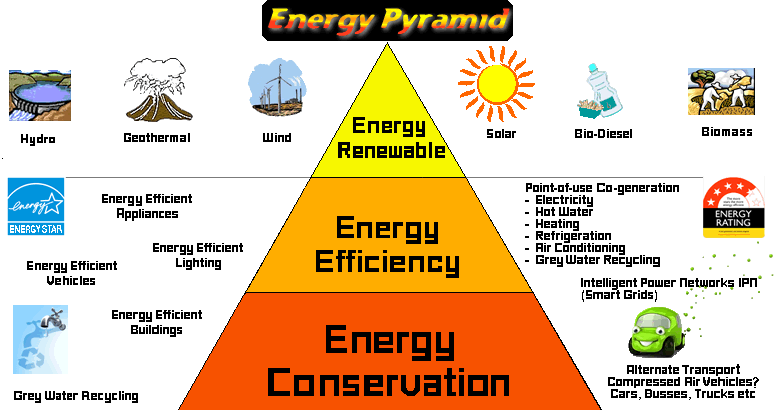
Utilities and Energy Efficiency – How to Bridge the Gap

energy-efficiency-pyramid

Image found at: http://bit.ly/1bAHOiM

See on Scoop.itGreen Building Operations – Systems & Controls, Maintenance & Commissioning

As much as such improvements can provide positive financial returns to utility customers, the utilities themselves face some very real financial barriers to offering customer energy efficiency programs.

Duane Tilden‘s insight:

>The inherent conflict between a utility’s business objectives and the objectives of customer energy efficiency programs has long been recognized. Alternative regulatory mechanisms can be implemented that not only make utilities indifferent to the amount of energy they sell, but that also can provide positive earnings from their customer energy efficiency programs. Alternative regulatory mechanisms such as “decoupling,” (separating an utility’s revenues from the amount of energy it sells to customers) are in place in a growing number of states.

Since the premise of these alternative regulatory mechanisms is that they can protect utilities from suffering financial harm from energy efficiency programs, ACEEE examined the experiences of a selected group of utilities to find out how well such regulations have worked. The utilities we selected all have relatively large-scale energy efficiency programs that serve all types of customers. We interviewed utility program managers and executives as well as clean-energy advocates and regulators. We also examined the financial performance of these utilities as represented by their stock performance.

What we found is that these utilities all have performed well financially. We found no evidence to suggest that energy efficiency programs have had negative effects on shareholder returns. While addressing utility business concerns with energy efficiency programs is clearly important, doing so is really just one part of comprehensive policies and regulations that support customer energy efficiency programs. Other keys to successful energy efficiency programs include:

Strong commitments to energy efficiency by regulators and utilities,Ongoing collaboration among utilities and stakeholders,Shared sense of purpose and common goals, and Willingness to experiment and learn from experiences.

See on aceee.org

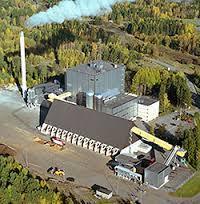
Fortum inaugurates new waste-to-energy CHP plant in Sweden

See on Scoop.itGreen Energy Technologies & Development

The new power plant unit, Brista 2, produces district heat for local residents and electricity for the Nordic power market from sorted municipal and industrial waste.

Duane Tilden‘s insight:

>”Brista 2 is already the fourth CHP plant we have commissioned this year in the Nordic and Baltic countries. Combined heat and power production is at the core of our strategy, and whenever possible we utilise renewable and local fuels,” says Per Langer, Executive Vice President of Fortum’s Heat Division.

Production capacity of the new Brista plant unit is 60 megawatts (MW) heat and 20 MW electricity. The annual heat production, about 500 gigawatt-hours (GWh), corresponds to the annual heating needs of about 50,000 mid-sized homes. The estimated annual electricity production of Brista 2 is 140 GWh. Fortum co-owns the plant (85%) together with the municipal energy company Sollentuna Energi (15%). <

See on online.wsj.com

How Real Estate Energy Managers Can Use Big Data to Schedule Building Energy Retrofits

See on Scoop.itGreen Building Operations – Systems & Controls, Maintenance & Commissioning

Big Data remains a fairly nebulous concept for many real estate professionals, including those who stand to gain tremendously from it right now: real estate energy managers.

Duane Tilden‘s insight:

>To effectively time energy retrofit measures, energy managers can first develop those measures. New energy analytical tools such as FirstFuel identify and develop measures, and even estimate a range for capital cost. It does this analysis remotely over the course of a day just by analyzing hourly electricity data (which is sometimes also stored by the utility); no time-intensive on-site energy audit is required. Another new tool is Retroficiency, which provides a high-level look at energy performance improvement potential using the same interval data and, with minimal additional data from the IWMS, can further develop retrofit measures to investment-grade level.

After identifying energy-retrofit measures for the portfolio using remote energy analysis tools or more standard on-site energy analysis, energy managers can create a new retrofit measures database in the IWMS. Having this new database on hand enables managers to integrate energy retrofit opportunities with space management, maintenance and capital upgrade needs, and potentially other real estate issues. Such integration drives down the incremental cost of an energy retrofit, which is the gross cost minus the avoided cost of otherwise required capital or space upgrades.<

See on blog.rmi.org

Supercritical CO2 refines cogeneration for Industry

See on Scoop.itGreen Energy Technologies & Development

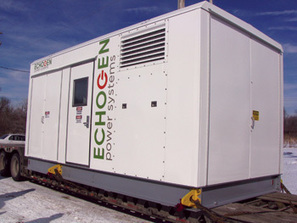
The first production unit of the EPS100 7.5 MWe heat engine is completing factory checkout tests at Dresser-Randbtd…

Duane Tilden‘s insight:

>Energy-intensive manufacturing

In an increasingly competitive environment, manufacturers are seeking to cut their costs. Fluctuating energy prices often channel this investment into cost-effective energy-saving technologies and practices that will reduce operating costs while maintaining or increasing product quality and yield.

Energy-efficient technologies often bring other benefits, such as higher productivity or environmental gains, reducing the regulatory ‘burden’. Waste heat can be captured from many industrial processes through waste heat recovery technology. […]

Waste heat recovery represents the greatest opportunity for reducing energy loss in these industries while simultaneously reducing their carbon footprint and associated greenhouse emissions with improved overall energy production efficiency.[…]

The outlook for scCO2

Supercritical CO2 heat engines are scalable across a broad system size range, from 250 kWe to 45 MWe and above, with net electrical output to support the widest possible variety of industrial and utility-scale applications.

The sCO2 Cycle is thermal source neutral − suitable with a wide range of heat sources from 200°C to 500°C with efficiencies up to 30%. New energy production can be offset with recovered energy without increasing greenhouse emissions while improving overall energy production efficiency. The scCO2 heat engine can add up to 35% more power to simple-cycle gas turbines, 10–15% more power to reciprocating engines, and can significantly improve the energy efficiency and bottom line performance at steel mills, cement kilns, glass furnaces and other fuel-fired industrial processes by converting previously wasted exhaust and flue gas energy into usable electricity.

Alex Kacludis is an Application Engineer at EPS LLC; www.echogen.com

See on www.cospp.com

Supercritical CO2 turbine for Power Production & Waste Heat Energy Recovery

See on Scoop.itGreen Building Design – Architecture & Engineering

A former scientist at Sandia National Lab is bringing the technology to market

Duane Tilden‘s insight:

>Because of its physical properties as a liquid, it has become a target fluid of opportunity to run turbines and thus make electricity. Steven Wright, Ph.D., who recently retired from Sandia National Laboratory (SNL), has set up a consulting company called Critical Energy LLC to bring this technology to a commercial level.

The objective of using supercritical CO2 (S-CO2) in a Brayton-Cycle turbine is to make it much more efficient in the transfer of heat. Wright points out that a steam turbine is about 33% efficient, but that an S-CO2 turbine could be as high as 48% efficient, a significant increase.

A closed loop supercritical CO2 system has the density of a liquid, but many of the properties of a gas. A turbine running on it, “is basically a jet engine running on a hot liquid,” says Wright.

“There is a tremendous amount of scientific and industrial interest in S-CO2 for power generation. All heat sources are involved…<

See on theenergycollective.com

Waste Heat Recovery using Supercritical CO2 turbines to create Electrical Power

See on Scoop.itGreen Building Design – Architecture & Engineering

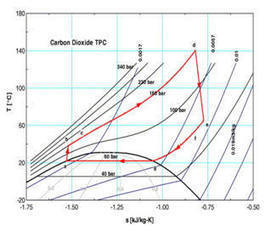
Working fluids with relatively low critical temperature and pressure can be compressed directly to their supercritical pressures and heated to their supercritical state before expansion so as to obtain a better thermal match with the heat source.

Duane Tilden‘s insight:

>Chen et al. [1-3] did a comparative study of the carbon dioxide supercritical power cycle and compared it with an organic Rankine cycle using R123 as the working fluid in a waste heat recovery application. It shows that a CO2 supercritical power cycle has higher system efficiency than an ORC when taking into account the behavior of the heat transfer between the heat source and the working fluid. The CO2 cycle shows no pinch limitation in the heat exchanger. Zhang et al.  [4-11] has also conducted research on the supercritical CO2 power cycle. Experiments revealed that the CO2 can be heated up to 187℃ and the power generation efficiency was 8.78% to 9.45% [7] and the COP for the overall outputs from the cycle was 0.548 and 0.406, respectively, on a typical summer and winter day in Japan [5].

Organic fluids like isobutene, propane, propylene, difluoromethane and R-245fa [12] have also been suggested for supercritical Rankine cycle. It was found that supercritical fluids can maximize the efficiency of the system. However, detailed studies on the use of organic working fluids in supercritical Rankine cycles have not been widely published.

There is no supercritical Rankine cycle in operation up to now. However, it is becoming a new direction due to its advantages in thermal efficiency and simplicity in configuration.<

See on www.eng.usf.edu