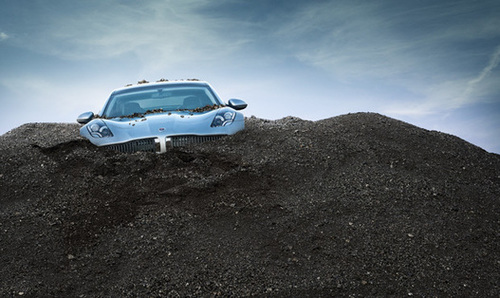
Cambridge Plans Massive Energy Efficiency Retrofit

See on Scoop.itGreen Building Design – Architecture & Engineering

This medieval English city is investing $1.5 billion for energy upgrades for the entire city.

Duane Tilden‘s insight:

>It’s one thing to build super-energy-efficient new homes and offices – it’s another matter entirely to bring ancient buildings up to par. But the medieval university city of Cambridge, England, plans to do just that with a $1.5 billion retrofit program.

The newly launched Cambridge Retrofit Project aims to reduce carbon emissions from buildings 30% before 2050 through a massive, city-wide retrofit scheme.  […]

While the primary goal is reduced energy consumption and carbon emissions, the program also aims to build up local businesses, create warmer homes and increase the value of properties.

Energy savings alone are expected to be worth $2.3 billion and the city’s carbon footprint, currently 830,000 tons a year, is expected to fall 1% a year, eventually reaching 500,000 tons a year as a result of the retrofit program.<

See on www.sustainablebusiness.com

Demand for DC Brushless Motors to increase over 50% in Transportation Sector by 2017

See on Scoop.itGreen & Sustainable News

Automotive systems are becoming increasingly electrically-driven and electric motor manufacturers are benefiting.

Duane Tilden‘s insight:

>“[…] Increasing sales of plug-in electric vehicles, which have powertrain and chassis systems that are electromechanically-driven, are expected to provide greater growth potential for brushless DC motor shipments than for brushed DC motors.

[…]

Although DC brushed motors usage is expanding with the increasing number of electromechanically-driven powertrain and chassis systems, DC brushless motor shipments for powertrain and chassis applications are expected to outpace those of DC brushed motors twofold from 2012 to 2017. The respective average annual growth of DC brushed and DC brushless motor shipments from 2012 to 2017 is expected to be 3.5 percent and 7 percent according to IMS Research. <

See on www.imsresearch.com

World Solar PV Market To Hit 45 GW In 2014, Deutsche Bank Forecasts

See on Scoop.itGreen & Sustainable News

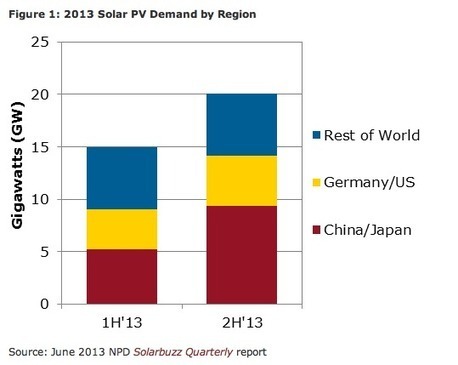
Deutsche Bank is the latest to upgrade its forecasts – for the second time in as many months – predicting that the 2014 global solar market could jump to 45 GW, after rising to 38-40 GW in 2013.

>Deutsche’s analysis is more bullish than an NPD Solarbuzz report last week that forecast solar PV demand for calendar 2013 to reach a record high of 35.1 GW, after a strong second half that would result in 20 GW being installed. In March, the research group predicted full year demand of just 31 GW.

NPD Solarbuzz analyst Michael Barker said the market was still in transition (from older markets such as Europe to newer ones in Asia), and would continue to rely on four key countries for the bulk of demand – Germany, China, Japan, and the US – which accounted for more than 60% of demand in the first half.

It said China and Japan alone would account for 45% of global demand in the second half, up from just 10% three years ago.<


Sustainable Heating and Cooling of Buildings | Leonardo ENERGY

See on Scoop.itGreen Energy Technologies & Development

In many non-residential buildings across Europe, the energy consumed for heating and cooling is more than half the total energy consumption of the building. This is not inevitable. The introduction of simple design concepts and currently available technologies can lead to significant reductions in the energy consumption, operating costs, and carbon emissions of both new and existing buildings.

See on www.leonardo-energy.org

Plan B Updates – 115: Peak Water: What Happens When the Wells Go Dry? | EPI

See on Scoop.itGreen Energy Technologies & Development

Peak oil has generated headlines in recent years, but the real threat to our future is peak water. There are substitutes for oil, but not for water. We can produce food without oil, but not without water.

See on www.earth-policy.org

Unclean at Any Speed – IEEE Spectrum

See on Scoop.itGreen Energy Technologies & Development

Electric cars don’t solve the automobile’s environmental problems

Duane Tilden‘s insight:

>Two dozen governments around the world subsidize the purchase of electric vehicles. In Canada, for example, the governments of Ontario and Quebec pay drivers up to C $8500 to drive an electric car. The United Kingdom offers a £5000 Plug-in Car Grant. And the U.S. federal government provides up to $7500 in tax credits for people who buy plug-in electric vehicles, even though many of them are affluent enough not to need such help. (The average Chevy Volt owner, for example, has an income of $170 000 per year.)

Some states offer additional tax incentives. California brings the total credit up to $10 000, and Colorado to $13 500—more than the base price of a brand new Ford Fiesta. […]

There are other perks. Ten U.S. states open the high-occupancy lanes of their highways to electric cars, even if the car carries a lone driver. Numerous stores offer VIP parking for electric vehicles—and sometimes a free fill-up of electrons. Mayor Johnson even moved to relieve electric-car owners of the burden of London’s famed congestion fee.

Alas, these carrots can’t overcome the reality that the prices of electric cars are still very high—a reflection of the substantial material and fossil-fuel costs that accrue to the companies constructing them. And some taxpayers understandably feel cheated that these subsidies tend to go to the very rich. Amid all the hype and hyperbole, it’s time to look behind the curtain. Are electric cars really so green?

It’s worth noting that this investigation was commissioned by the U.S. Congress and therefore funded entirely with public, not corporate, money.  […]

Part of the impact arises from manufacturing. Because battery packs are heavy (the battery accounts for more than a third of the weight of the Tesla Roadster, for example), […] Electric motors and batteries add to the energy of electric-car manufacture.

In addition, the magnets in the motors of some electric vehicles contain rare earth metals. […]

The materials used in batteries are no less burdensome to the environment, the MIT study noted. Compounds such as lithium, copper, and nickel must be coaxed from the earth and processed in ways that demand energy and can release toxic wastes. […]
See on spectrum.ieee.org

IBM Uses Hot Water To Cool Supercomputer, Saves Energy by 40%

See on Scoop.itGreen Building Design – Architecture & Engineering

IBM, in collaboration with the Leibniz Supercomputer Center in Munich, is using hot water to its SuperMUC supercomputer. This is not new for IBM. It

Duane Tilden‘s insight:

>The system, called LRZ “SuperMUC”, is based on an IBM System x iDataPlex Direct Water Cooled dx360 M4 server. It is said to feature 150,000 cores and provides peak performance of up to three petaflops. In layman’s language it could be described as something equivalent of the processing power of 110,000 personal computers.

IBM claims that the technique needs 40% less energy to cool this machinery as compared to the other air-cooling systems. The heat is then used for the heating systems of the Leibniz Supercomputing Center campus. This accounts for an annual savings of $1.25 million on their heating bills.<

See on www.greenpacks.org

The 21st century data center: You’re doing it wrong | ZDNet

See on Scoop.itGreen Building Design – Architecture & Engineering

Outdated designs are keeping data centers from reaching their full potential.

Duane Tilden‘s insight:

>One example of this are data centers that use raised floors for cooling. Many IT pundits have discredited this method of cooling as wasteful, including Schneider Electric’s territory manager for the Federal government and the ACT, Olaf Moon.

[…]

Cappuccio notes that engineering firms that are consulted to build data centers know about the newer and more efficient ways to do things. But rather than try something new, they prefer the stock standard cookie-cutter approach to creating data centers because it’s fast and easy, he said.

[…]

“I’ve seen a lot of data centers being built that are too big,” says Cappuccio. “We’re finding people with data centers that are three to four years old when they realise they have far too much space, and are still providing air conditioning to those areas. So they begin to shrink them, putting up walls, bringing down the ceiling so they don’t air condition the extra space.”

See on www.zdnet.com

The Obama Administration Proposes $8 Billion in Loans for ‘Clean’ Fossil Fuel Technologies

See on Scoop.itGreen & Sustainable News

As part of President Obama’s new energy initiative, the U.S. Department of Energy has proposed $8 billion in loan guarantees for fossil fuel technology projects that are able to reduce the country’s greenhouse gas emissions.

Duane Tilden‘s insight:

> […]the U.S. Department of Energy has proposed $8 billion in loan guarantees for fossil fuel technologies to reduce the country’s greenhouse gas emissions. The proposal would fund schemes such as waste heat recovery and carbon dioxide capture, however it has unsurprisingly received criticism as it would draw focus away from green technology projects such as renewable energy and electric vehicles.

Speaking about the new proposal, Energy Secretary Ernest Moniz stated:  “Coal and fossil fuels still provide 80% of our energy and 70% of electricity, and they will remain an important part of our future, as the president noted.”<

See on inhabitat.com

The Amazing Energy Race

See on Scoop.itGreen & Sustainable News

The United States is falling behind. To catch up, we need to reorder our priorities, find cleaner and smarter fuels and develop new technologies.

Duane Tilden‘s insight:

>“In reducing coal’s historic dominance, the president is formalizing a market trend that was already taking shape,” remarked Andy Karsner, who was an assistant secretary of energy in the last Bush administration. His bigger message, though, was “no matter where you find yourself on the political spectrum, it’s useful for the nation to discuss, debate and consider a strategy for climate change. The consequences of inaction are potentially greater than all the other noise out there.”<

See on www.nytimes.com