Applied Thermodynamics: Organic Rankine cycle – Wikipedia

See on Scoop.itGreen Energy Technologies & Development

Duane Tilden‘s insight:

We have all seen the Rankine Cycle engine, most typically as the inefficient steam locomotive.  The modern efficient designs use turbines to convert heat energy from two reservoirs of different temperatures to mechanical energy.

The Organic Rankine Cycle engine uses a fluid – vapor phase change other than water/steam and a wide range of compounds are available including proprietory mixtures.  These mixtures allow for the conversion to mechanical energy in a wide range of applications and temperatures.  Two such applications would be waste heat to energy and geothermal energy systems.

See on en.wikipedia.org

Creating Value: Energy Retrofits for Buildings

See on Scoop.itGreen & Sustainable News

Buildings in the U.S. consume[…] 42 percent of the nation’s primary energy and 72 percent of its electricity. Much of that energy is needlessly wasted through inefficient design and operation.

Duane Tilden‘s insight:

>Rather than examine energy costs in isolation, our approach assesses how energy and sustainability improvements add value to all parts of a property or company. This approach is not revolutionary, but rather more comprehensive, applying industry-accepted valuation methods to the full set of retrofit value contributions, including saved energy costs, health and productivity benefits, reputation and leadership, and risk reduction.

Energy investment (and resultant property outcomes) should be treated as one of many factors that influence value, including location, tenant mix, quality of design, and more. Evaluating retrofits within the broader context of property/company value enables a logical, defensible calculation and assessment of a deep retrofit’s relative contribution to value. Previous attempts to value energy retrofits have ignored retrofits’ value contributions and overlooked standard approaches to valuing properties and companies.<

See on www.rmi.org

Jobs for the Future: Energy Efficiency creates Employment — ECEEE

See on Scoop.itGreen & Sustainable News

Energy efficiency initiatives create jobs, and normally very good jobs.  Recent analysis shows that between 17 and 19 net jobs can be created for every million euros spent.

Duane Tilden‘s insight:

>Jobs to improve energy efficiency in all end-use sectors are of high value.  Many require technical qualifications, such as engineering or architectural degrees.  Many require re-training from existing jobs. There will be a demand for financial specialists, construction engineers, behaviour specialists, project managers, auditors, data base managers, policy analysts and the like.  And these jobs are available to all, regardless of age or gender.

The hard work of creating these jobs begins once the Directive is finally approved.  The long-term policy framework needs to be in place and the funding and implementation strategy need to be well developed. But in the longer term, opportunity is knocking at the door, and it deserves a welcome mat.<

See on www.eceee.org

Renewable Energy or Efficiency for the Data Center: Which first? #GreenComputing

See on Scoop.itGreen & Sustainable News

New advancements in green technology and design are making the idea of a green data center into a reality.

Duane Tilden‘s insight:

>Without doubt, the facility is a triumph of advanced environmental design and will serve as a template for future construction. Indeed, activity surrounding renewable-based data infrastructure is picking up, with much of it being led by the burgeoning renewable energy industry itself. VIESTE Energy, LCC, for example, has hired design firm Environmental Systems Design (ESD) to plan out a series of data centers across the U.S. that run on 100 percent renewable energy. A key component of the plan is a new biogas-fed generator capable of 8 to 15MW performance. The intent is to prove that renewables are fully capable of delivering reliable, cost-effective service to always-on data infrastructure.

The question of reliability has always weighed heavily on the renewables market, but initiatives like the VIESTE program could help counter those impressions in a very important way, by establishing a grid of distributed, green-energy data supply. In fact, this is the stated goal of the New York State Energy Research and Development Authority (NYSERDA), which has gathered together a number of industry leaders, including AMD, HP and GE, to establish a network of distributed, green data centers that can be used to shift loads, scale infrastructure up and down and in general make it easier for data users to maintain their reliance on renewable energy even if supply at one location is diminished. In other words, distributed architectures improve green reliability through redundancy just as they do for data infrastructure in general.

But not everyone on the environmental side is convinced that renewables are the best means of fostering data center efficiency. In a recent article in the journal Nature Climate Change, Stanford researcher Dr. Jonathan Koomey argues that without populating existing infrastructure with low-power hardware and data-power management technology first, data operators are simply wasting precious renewable resources that could be put to better use elsewhere. For projects like the NWSC and VIESTE, then, renewables may make sense because they power state-of-the-art green technology. But not as an industry-wide solution–renewables won’t make sense until hardware life cycles run their course.<

See on www.itbusinessedge.com

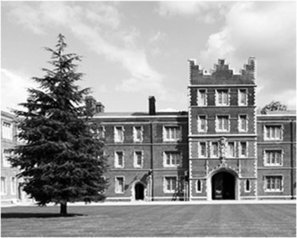
Cambridge Plans Massive Energy Efficiency Retrofit

See on Scoop.itGreen Building Design – Architecture & Engineering

This medieval English city is investing $1.5 billion for energy upgrades for the entire city.

Duane Tilden‘s insight:

>It’s one thing to build super-energy-efficient new homes and offices – it’s another matter entirely to bring ancient buildings up to par. But the medieval university city of Cambridge, England, plans to do just that with a $1.5 billion retrofit program.

The newly launched Cambridge Retrofit Project aims to reduce carbon emissions from buildings 30% before 2050 through a massive, city-wide retrofit scheme.  […]

While the primary goal is reduced energy consumption and carbon emissions, the program also aims to build up local businesses, create warmer homes and increase the value of properties.

Energy savings alone are expected to be worth $2.3 billion and the city’s carbon footprint, currently 830,000 tons a year, is expected to fall 1% a year, eventually reaching 500,000 tons a year as a result of the retrofit program.<

See on www.sustainablebusiness.com

Sustainable Heating and Cooling of Buildings | Leonardo ENERGY

See on Scoop.itGreen Energy Technologies & Development

In many non-residential buildings across Europe, the energy consumed for heating and cooling is more than half the total energy consumption of the building. This is not inevitable. The introduction of simple design concepts and currently available technologies can lead to significant reductions in the energy consumption, operating costs, and carbon emissions of both new and existing buildings.

See on www.leonardo-energy.org

Changes in the Electrical and Micro Grid

See on Scoop.itGreen & Sustainable News

Microgrids are becoming a worldwide phenomenon. Currently an estimated $4.5 billion market in the US alone with 1,459 MW online and 1,122 MW in planning or development, the microgrid market is expected to continue to grow as the world demands ever more electricity usage and the grid struggles to keep up. The truth is that the traditional grid was not built to cope with the extraordinary level and fluctuations of present-day demand, and microgrids present the perfect solution. The question (to the utilities) is whether we are ready to embrace the change and adapt.

See on theenergycollective.com

Research and Energy Efficiency | The Energy Collective

See on Scoop.itGreen Energy Technologies & Development

Every time energy policy is being discussed, you’ll usually find a call for more R&D spending at the top of the list of ways to solve problems. While I agree that research is great, it’s obviously not enough and, if anything, only the first step.

Duane Tilden‘s insight:

>The result of this comparison doesn’t come as a surprise to anyone who is remotely interested in energy issues. There is a massive energy efficiency gap between the US and other world economies. While this is no surprise to many, it should be a lesson for all those who tell the public that meaningful action requires yet more R&D spending. The 200 million citizens of Japan and Germany are proof that even the technology and the concepts of the past can make a huge difference.<

See on theenergycollective.com

Utility project moves forward with CHP

See on Scoop.itGreen Energy Technologies & Development

DOVER – The Delaware Economic Development Office on Thursday gave provisional approval to a $15.5 million grant request by a Pennsylvania-based consortium of investors and stakeholders who want to build a $1.1 billion gas-fired CHP (combined heat…

Duane Tilden‘s insight:

The gas-fired power plant will produce twice as much energy as the fiber-optic data center needs, leaving half the power available to flow into the grid to be sold to the Delaware Municipal Electric Corporation, a wholesale utility that powers Newark, New Castle, Middletown, Clayton, Smyrna, Dover, Milford, Lewes and Seaford.

“Newark is very pleased [about the probable partnership],” said City Manager Carol Houck. “We believe it was bring with it many benefits.”

Gene Kern, CEO of The Data Centers, said there are advantages to a data center having its own power supply.  First, electricity is the biggest expense for the fiber-optic data center. Second, local power outages will have no impact on fiber-optic service.

See on www.newarkpostonline.com

Aemetis Announces Restart of 60 Million Gallon Per Year Keyes Biofuels Plant – WSJ.com

See on Scoop.itGreen Energy Technologies & Development

Aemetis, Inc. (OTCQB: AMTX), an advanced fuels and renewable chemicals company, announced today that the Aemetis 60 million gallon per year capacity ethanol facility in Keyes, California has completed planned maintenance and preparations for the production of Advanced Biofuel under recent EPA rulings, and is now restarting production.

Duane Tilden‘s insight:

The plant will start up using corn as the principal feedstock, with grain sorghum or a feedstock blend used after startup to maximize operating income. In December 2012, the Environmental Protection Agency (EPA) approved the use of grain sorghum feedstock along with biogas in a combined heat and power system to produce an Advanced Biofuel containing approximately 50% lower carbon content than gasoline. Advanced Biofuel generates D5 Renewable Identification Numbers (RINs) that have traded at a premium to traditional ethanol D6 RINs.

[…]  “About $5 million of capital investment and new working capital has been invested since mid-January for maintenance and to enable the plant to produce Advanced Biofuel in a flexible configuration that enables the use of multiple feedstocks and energy sources.”

McAfee added, “The Keyes plant has sustainable cost advantages in Advanced Biofuels production. The plant’s location enables both rail and ocean shipping access to advanced biofuel feedstock from lower-cost supply sources. The Keyes plant is also equipped with an energy-efficient Combined Heat and Power (CHP) system to reduce energy costs and decrease the carbon content of fuel. By using grain sorghum feedstock and sourcing biogas for the CHP system instead of natural gas, the Keyes facility is now able to produce Advanced Biofuel to support EPA requirements for advanced fuels.”

See on online.wsj.com