Fortum inaugurates new waste-to-energy CHP plant in Sweden

See on Scoop.itGreen Energy Technologies & Development

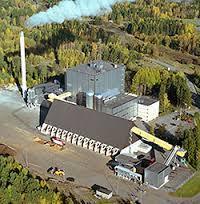
The new power plant unit, Brista 2, produces district heat for local residents and electricity for the Nordic power market from sorted municipal and industrial waste.
Duane Tilden‘s insight:

>”Brista 2 is already the fourth CHP plant we have commissioned this year in the Nordic and Baltic countries. Combined heat and power production is at the core of our strategy, and whenever possible we utilise renewable and local fuels,” says Per Langer, Executive Vice President of Fortum’s Heat Division.

Production capacity of the new Brista plant unit is 60 megawatts (MW) heat and 20 MW electricity. The annual heat production, about 500 gigawatt-hours (GWh), corresponds to the annual heating needs of about 50,000 mid-sized homes. The estimated annual electricity production of Brista 2 is 140 GWh. Fortum co-owns the plant (85%) together with the municipal energy company Sollentuna Energi (15%). <

See on online.wsj.com

UN and World Bank promote sustainable energy financing

See on Scoop.itGreen & Sustainable News

The United Nations and the World Bank announced what they call “a concerted effort” by governments, international agencies, civil society and the private sector to scale up financing for sustainable energy.


Duane Tilden‘s insight:

>Kim stressed that financing is key, with $600 billion to $800 billion a year needed from now until 2030 to reach the goals for access to energy, energy efficiency, and renewable energy.

“We are now starting in countries in which demand for action is most urgent,” he said. “In some of these countries, only one in 10 people has access to electricity. It is time for that to change.”

Ban praised achievements already attained such as Brazil’s ‘Light for All’ programme that has reached 15 million people, Norway’s commitment of 2 billion kroner ($330 million) in 2014 for global renewable energy and efficiency, and Bank of America’s Green Bond that has raised $500 million for three years as part of its 10-year $50 billion environmental business commitment.<

See on www.renewableenergymagazine.com

UK Proposed ban on Food Waste Landfill Disposal & Re-Purpose to Green Energy Feedstock

See on Scoop.itGreen & Sustainable News

Government, council and retailer-backed report says ban on landfill could save UK £17bn and heat 600,000 homes

Duane Tilden‘s insight:

>The ambition is to save the UK economy over £17bn a year through the reduction of food wasted by households, businesses and the public sector, preventing 27m tonnes of greenhouse gases a year from entering into the atmosphere.

The new study, Vision 2020: UK Roadmap to Zero Food Waste to Landfill is the culmination of more than two years’ work and has the backing and input of local authority and industry experts. It sets the framework for a food waste-free UK by 2020.

Last week official figures revealed the average UK family was wasting nearly £60 a month by throwing away almost an entire meal a day. A report from the government’s waste advisory group Wrap showed Britons were chucking out the equivalent of 24 meals a month, adding up to 4.2m tonnes of food and drink every year that could have been consumed. Almost half of this is going straight from fridges or cupboards into the bin, Wrap found. One-fifth of what households buy ends up as waste, and around 60% of that could have been eaten.

At the same time the UK’s largest retailer, Tesco, recently agreed to reduce its multi-buy items and other promotions after revealing that 35% of its bagged salad was being thrown out. It also found that 40% of apples were wasted, and just under half of bakery items.<

See on www.theguardian.com

The 10 Most Energy-Efficient U.S. States: The Forgotten ‘Fifth Fuel’

See on Scoop.itGreen & Sustainable News

Access to energy in the U.S. — and the effects of generating it — are a national concern.

Duane Tilden‘s insight:

>The Forgotten ‘Fifth Fuel’

Access to energy in the U.S. — and the effects of generating it — are a national concern. Debates persist over the most cost-effective and environmentally friendly mix of nuclear energy, coal, gas and liquid hydrocarbons and renewable sources.

Too often left out of these discussions is the so-called fifth fuel: energy efficiency. States have driven benefits for consumers and the environment with policies that both reduce energy use and encourage economic growth.

The American Council for an Energy-Efficient Economy (ACEEE) yesterday issued its annual scorecard for each state based on multiple factors, including reductions in greenhouse gas, energy codes for buildings and switching to cleaner fuels.<

See on www.bloomberg.com

Clean Energy rebranded by DOE to Combined Heat and Power (CHP)

See on Scoop.itGreen Energy Technologies & Development

In a move that had been in the works for a while, the U.S. Department of Energy recently announced that its Clean Energy Application Centers have been rebranded as CHP Technical Assistance Partnerships, or CHP TAPs.

Duane Tilden‘s insight:

>The CHP TAPs maintain the same regional offices that existed under the former Clean Energy Application Centers:

  1. Pacific (California, Nevada);
  2. Southwest (Arizona, Colorado, New Mexico, Oklahoma, Texas, Utah, Wyoming);
  3. Northwest (Idaho, Montana, Oregon, Washington);
  4. Midwest (Illinois, Indiana, Iowa, Kansas, Michigan, Minnesota, Missouri, Nebraska, North Dakota, Ohio, South Dakota);
  5. Southeast (Alabama, Arkansas, Florida, Georgia, Kentucky, Louisiana, Mississippi, North Carolina, South Carolina, Tennessee);
  6. Mid-Atlantic (Delaware, Maryland, New Jersey, Pennsylvania, Virginia, West Virginia); and
  7. Northeast (Connecticut, Maine, Massachusetts, New Hampshire, New York, Rhode Island, Vermont).

With the new energy in these programs, now is the time to take advantage of the expertise offered by the Department of Energy and its CHP TAPs. Industrial users, municipalities, hospitals, college campuses and other large users of energy need to review and understand the significant benefits of CHP, district energy and waste heat capture technologies.<

See on www.natlawreview.com

Connecticut Storm Proofing with Micro-Grid Developments

See on Scoop.itGreen Energy Technologies & Development

Press Release Gov. Dannel P. Malloy announced Oct. 30 that nine towns that are part of a pilot microgrid program, including Windham and Storrs, are eligible for additional funding.

Duane Tilden‘s insight:

>A pilot microgrid program, administered by the state Department of Energy and Environmental Protection, was created under Public Act 12-148 to increase the safety and quality of life for Connecticut residents during electric grid outage situations.

Microgrids provide electricity to critical facilities and town centers on a 24/7, daily basis. They will also include a system of “trips” and “transfers” to isolate the microgrid and provide power within its network even when there is a large-scale outage.

The first round of the program awarded $18 million in grants to microgrid projects in Bridgeport, Fairfield, Groton, Hartford, Middletown, Storrs/Mansfield, Windham and Woodbridge as part of the Governor’s Storm Legislation.

Those projects are expected to become operational over the course of the next 18 months, with the first projects slated to come online in early 2014. […]

“Our first-in-the-nation microgrid program is an essential tool to help minimize hardships to our residents and businesses when severe storms occur. We all know that it is not a question of if, but when the next super storm will strike, and it is essential we do everything we can to be prepared,” Gov. Malloy said.

Commenting on the additional funding, DEEP Commissioner Daniel C. Esty said, “It is essential to public safety that power be maintained to critical facilities and town centers even when the electric grid is down… Connecticut and the northeast continue to experience more severe and more frequent storms, so it is vital that the state aggressively pursues the development of microgrids statewide so that we are in a better position to provide critical services to the state’s residents and businesses.”<

See on mansfield.htnp.com

Supercritical CO2 refines cogeneration for Industry

See on Scoop.itGreen Energy Technologies & Development

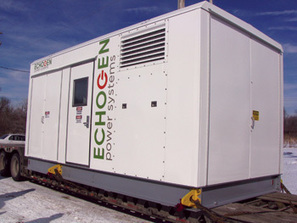
The first production unit of the EPS100 7.5 MWe heat engine is completing factory checkout tests at Dresser-Randbtd…

Duane Tilden‘s insight:

>Energy-intensive manufacturing

In an increasingly competitive environment, manufacturers are seeking to cut their costs. Fluctuating energy prices often channel this investment into cost-effective energy-saving technologies and practices that will reduce operating costs while maintaining or increasing product quality and yield.

Energy-efficient technologies often bring other benefits, such as higher productivity or environmental gains, reducing the regulatory ‘burden’. Waste heat can be captured from many industrial processes through waste heat recovery technology. […]

Waste heat recovery represents the greatest opportunity for reducing energy loss in these industries while simultaneously reducing their carbon footprint and associated greenhouse emissions with improved overall energy production efficiency.[…]

The outlook for scCO2

Supercritical CO2 heat engines are scalable across a broad system size range, from 250 kWe to 45 MWe and above, with net electrical output to support the widest possible variety of industrial and utility-scale applications.

The sCO2 Cycle is thermal source neutral − suitable with a wide range of heat sources from 200°C to 500°C with efficiencies up to 30%. New energy production can be offset with recovered energy without increasing greenhouse emissions while improving overall energy production efficiency. The scCO2 heat engine can add up to 35% more power to simple-cycle gas turbines, 10–15% more power to reciprocating engines, and can significantly improve the energy efficiency and bottom line performance at steel mills, cement kilns, glass furnaces and other fuel-fired industrial processes by converting previously wasted exhaust and flue gas energy into usable electricity.

Alex Kacludis is an Application Engineer at EPS LLC; www.echogen.com

See on www.cospp.com

Supercritical CO2 turbine for Power Production & Waste Heat Energy Recovery

See on Scoop.itGreen Building Design – Architecture & Engineering

A former scientist at Sandia National Lab is bringing the technology to market

Duane Tilden‘s insight:

>Because of its physical properties as a liquid, it has become a target fluid of opportunity to run turbines and thus make electricity. Steven Wright, Ph.D., who recently retired from Sandia National Laboratory (SNL), has set up a consulting company called Critical Energy LLC to bring this technology to a commercial level.

The objective of using supercritical CO2 (S-CO2) in a Brayton-Cycle turbine is to make it much more efficient in the transfer of heat. Wright points out that a steam turbine is about 33% efficient, but that an S-CO2 turbine could be as high as 48% efficient, a significant increase.

A closed loop supercritical CO2 system has the density of a liquid, but many of the properties of a gas. A turbine running on it, “is basically a jet engine running on a hot liquid,” says Wright.

“There is a tremendous amount of scientific and industrial interest in S-CO2 for power generation. All heat sources are involved…<

See on theenergycollective.com

Waste Heat Recovery using Supercritical CO2 turbines to create Electrical Power

See on Scoop.itGreen Building Design – Architecture & Engineering

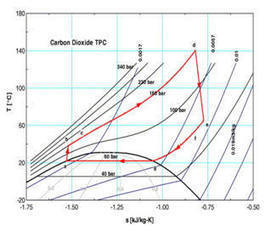
Working fluids with relatively low critical temperature and pressure can be compressed directly to their supercritical pressures and heated to their supercritical state before expansion so as to obtain a better thermal match with the heat source.

Duane Tilden‘s insight:

>Chen et al. [1-3] did a comparative study of the carbon dioxide supercritical power cycle and compared it with an organic Rankine cycle using R123 as the working fluid in a waste heat recovery application. It shows that a CO2 supercritical power cycle has higher system efficiency than an ORC when taking into account the behavior of the heat transfer between the heat source and the working fluid. The CO2 cycle shows no pinch limitation in the heat exchanger. Zhang et al.  [4-11] has also conducted research on the supercritical CO2 power cycle. Experiments revealed that the CO2 can be heated up to 187℃ and the power generation efficiency was 8.78% to 9.45% [7] and the COP for the overall outputs from the cycle was 0.548 and 0.406, respectively, on a typical summer and winter day in Japan [5].

Organic fluids like isobutene, propane, propylene, difluoromethane and R-245fa [12] have also been suggested for supercritical Rankine cycle. It was found that supercritical fluids can maximize the efficiency of the system. However, detailed studies on the use of organic working fluids in supercritical Rankine cycles have not been widely published.

There is no supercritical Rankine cycle in operation up to now. However, it is becoming a new direction due to its advantages in thermal efficiency and simplicity in configuration.<

See on www.eng.usf.edu

Waste Heat Energy Recovery – ThermoAcoustic Refrigeration for Transportation Industry

Revisiting the Automotive ThermoAcoustic Refrigerator – ATAR

Diagram of Simplified ThermoAcoustic Engine

I wish to further investigate the idea of thermoacoustics for waste heat recovery processes.  Also, will in future look into latest developments in thermoacoustics, including any applications, studies, reviews or products and manufacturers.

In today’s new economy of energy efficiency, there are technologies available that are worth further investigation that can be utilized for improved performance.  Automotive air conditioning is one industry which could bear further scrutiny, where running compressors consume valuable fuel, decreasing the energy efficiency and increasing operating cost of a vehicle.

For professional drivers where fuel consumption increases will come out of pocket, the utilization of air conditioning is an important consideration.  The idea of using the waste heat in the exhaust system to provide the cooling energy necessary to provide air conditioning is a novel approach to improving vehicle efficiency and comfort.  The concept of thermoacoustic refrigeration is not new, and was previously reviewed by concerns of the ozone layer depletion and refrigerants, which ultimately lead to changes in the refrigeration and HVAC industries.

See original reference paper presented at 2005 Proceedings of Acoustics:  http://bit.ly/17qwTYK