Developing an Energy Management Program for Your Business

See on Scoop.itGreen Building Operations – Systems & Controls, Maintenance & Commissioning
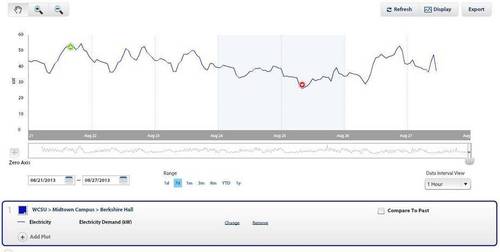
Today more than ever, businesses are concerned with maximizing operational efficiency, minimizing costs, and seeking out untapped revenue streams. At the same

Duane Tilden‘s insight:

>Large energy users like many commercial, institutional, and industrial organizations have a unique opportunity to act as a “virtual power plant” while reducing their real-time demand for electricity—and opening up a new revenue stream. This strategy, known as demand response, is not only a cost-free way to reduce energy usage, but also it generates payments for participating businesses simply for being on call.

Demand response providers work with commercial, institutional, and industrial businesses to identify ways for facilities to reduce energy consumption without affecting business operations, comfort, or product quality. In turn, those facilities agree to reduce their demand during strategic times so that utilities and grid operators can improve reliability during times of peak demand. Demand response also helps increase economic efficiency in regional energy markets and integrate renewable generation capacity into generation systems.

Demand response can be considered a form of strategic energy efficiency, but what about long-term, persistent energy efficiency, a second key to a comprehensive energy management program? In even the most high-tech, LEED Platinum certified buildings, it can be very difficult to ensure efficient operation over time. […]<

See on www.dailyenergyreport.com

Remote Wireless Power Systems for Buildings

See on Scoop.itGreen Building Operations – Systems & Controls, Maintenance & Commissioning

Mobile Technology News and Information

Duane Tilden‘s insight:

>Ossia’s patented smart antenna technology uses phased arrays to transfer power without the use of inductive coils, ultrasonic waves, magnetic resonance, charging pads or mats. The Cota technology consists of two parts: a charger and a receiver. The Cota-powered charger automatically locates Cota receivers built into devices or batteries, and delivers signals that are sent omnidirectionally. Once they hit the charger, these signals follow the same path back to the receiver, focusing energy at the exact location of the device. Cota continuously streams power to multiple devices, even as they move around a room. The laws of physics make the Cota technology inherently safe, naturally avoiding anything that absorbs energy, such as people, pets and even plants.<

See on www.mobiletechnews.com

Virtual Energy Audits: The Next Big Thing in Buildings?

See on Scoop.itGreen Building Operations – Systems & Controls, Maintenance & Commissioning

Virtual energy audits use software to collect meter data, weather information, etc. and algorithms to develop energy efficiency recommendations.

Duane Tilden‘s insight:

>The goal of any energy audit is to identify savings by analyzing data, determining how and where a building is using energy, and then providing operational and capital energy efficiency measures that improve overall performance.

A traditional ASHRAE Level II Audit includes a manual inspection of data related to a facility’s Building Envelope, Lighting, Heating, Ventilation, and Air Conditioning (HVAC), Domestic Hot Water (DHW), Plug Loads, and Compressed Air and Process Uses (for manufacturing, service, or processing facilities). Analysis is conducted to quantify baseloads and account for seasonal variation. A Level II Audit will also include an evaluation of lighting, air quality, temperature, ventilation, humidity, and other conditions that may affect energy performance and occupant comfort. The process also includes detailed discussions with the building owners, managers, and tenants – there is a lot you can learn just by talking to people about what they think is working and not, what the financial objectives of the organization are, and how that should feed into the recommendations.  […]

Ok, I get it: So what’s a virtual energy audit?

Essentially a virtual energy audit is much like a traditional audit: the goal is to synthesize a whole bunch of data and come up with a list of recommendations that are going to deliver you the biggest bang for your buck. Unlike a detailed ASHRAE Level II audit, it’s better to think of virtual audits as delivering against the 80/20 rule. For a lot less physical effort, it’s going to get you about 80% of the detailed insights that a traditional ASHRAE Level II energy audit would deliver. And for many organizations, that’s OK – because their biggest, most obvious energy hogs are the ones driving the biggest bills at the end of the month.<

See on energysmart.enernoc.com

Net Energy Metering Policies Helping To Spur Solar Growth

See on Scoop.itGreen Building Design – Architecture & Engineering

All across the United States, rooftop solar panels are popping up on homes, businesses and schools like mushrooms in a forest, and utility-scale solar projects are bringing huge amounts of clean energy into our communities.  Why?

Duane Tilden‘s insight:

>Today, smart policies — likeRenewable Portfolio Standards (RPS) and Net Energy Metering (NEM) — are helping to fuel solar’s explosive growth. Our industry now employs 120,000 Americans at 5,600 U.S. companies. What’s more, we’re now generating enough electricity to power more than 1.5 million homes…

Part of this amazing success story can also be attributed to the fact that the average cost of a solar system has dropped by nearly 40 percent over the past two years and by a whopping 50 percent since 2010.  As a result, American consumers, businesses and schools are flocking to rooftop solar.  According to the most recent statistics, the residential market alone grew by 48 percent in the second quarter of 2013 compared to the same time period a year ago. […]

NEM has significantly contributed to this growth.  Simply put, NEM is a credit on your bill that represents the full value of electricity delivered.  Think of it this way: surplus energy generated by a home or business system is exported to the electricity grid, allowing a consumer’s meter to spin backwards.  This allows the homeowner or business owner to have greater control over their energy use and prices.  […]”<

See on www.renewableenergyworld.com

Call for Energy Efficient Air-Conditioning with Technological Development

See on Scoop.itGreen Building Design – Architecture & Engineering

Innovations could cut the growing amount of energy used for air-conditioning and refrigeration

Duane Tilden‘s insight:

>Conventional air conditioners employ refrigerants such as chlorofluorocarbons to absorb heat from the room to be cooled. That heat is then expelled outside, requiring electrically powered pumps and compressors.

One idea to conserve energy is to replace coolant fluids and gases—which are often super-powered greenhouse gases capable of trapping more than 1,000 times more heat than CO2—with solid materials, such as bismuth telluride.

A new device from Sheetak, developed in part with ARPA-E funding, uses electricity to change a thermoelectric solid to absorb heat, and could lead to cheaper air conditioners or refrigerators.

Such refrigerators, which lack moving parts and are therefore less likely to break down, can be lifesavers in remote, rural areas for keeping medicines cool or food fresh.<

See on www.scientificamerican.com

Are developing Microgrids the Answer to supply next generation Electricity Markets?

See on Scoop.itGreen & Sustainable News

Managing the effect of intermittent renewables on the grid is one of the critical challenges we address in making the transition to renewables. One of the primary goals of grid modernization (aka “Smart Grid”) is to adapt grid management to account for the effects of intermittency in real time.

Duane Tilden‘s insight:

>Microgrids are one possible solution to these challenges. Microgrids, part of the Smart Grid toolbox, are autonomously managed and powered sections of the distribution grid that can be as small as a single building, or as large as a downtown area or neighborhood. Automation and digital communications are used to manage rooftop solar, small scale combined heat and power systems and storage systems, along with matching supply to demand.  Heating or cooling may also be a part of a microgrid. Microgrids can efficiently manage smaller sections of the grid, according to the local demand patterns and availability of renewable resources. They can also disconnect, or “island” from the larger grid to provide higher reliability.

Can microgrids reduce complexity and increase options for electricity market participants? What are the major barriers to microgrid implementation, and how might they be overcome? Are there other approaches, besides the microgrid, that might be employed as well?<

See on www.ourenergypolicy.org

Proliferation of wireless devices and networks detrimental to environment

See on Scoop.itGreen & Sustainable News

Cloud computing should be driving sustainable development, but its turning us into energy consuming monsters, write Stuart Newstead and Howard Williams

Duane Tilden‘s insight:

>There is a familiarity and comfort in our almost-everywhere connection to always-on communications networks and to the ever-increasing array of services they deliver us. We don’t just consume these network services directly, they give us what economists call “options” – options to connect, options to seek out new services, options to find new information. Clearly we don’t use this network services 24/7, but we value highly the options for instantaneous and simultaneous access at any time.

Cloud-based applications – those stored and managed by massive data centres run by the likes of Amazon, Google, Facebook or Apple – are providing step changes in the financial and environmental efficiency of delivering these services. But the centralising power of the cloud has its corollary in the dispersing effect of wireless networks and devices.

In wireless networks and devices we see fragmentation, duplication and a fundamental shift from mains power and green sources of energy to battery powered always-on devices. In environmental terms here lies the rub. Rather than the “aggregation of marginal gains” (the Sir Dave Brailsford strategy that has propelled success in British cycling), in which lots of tiny improvements add up to a large visible improvement, we are witnessing the aggregation of environmental disadvantages from billions of low-powered but fundamentally energy-inefficient antennas and devices providing the ‘last metre’ connectivity to global networks.

Wireless networks and devices, technologies that should drive sustainable development, are turning into energy-consuming monsters.<

See on www.theguardian.com

Waste Heat Energy Recovery – ThermoAcoustic Refrigeration for Transportation Industry

Revisiting the Automotive ThermoAcoustic Refrigerator – ATAR

Diagram of Simplified ThermoAcoustic Engine

I wish to further investigate the idea of thermoacoustics for waste heat recovery processes.  Also, will in future look into latest developments in thermoacoustics, including any applications, studies, reviews or products and manufacturers.

In today’s new economy of energy efficiency, there are technologies available that are worth further investigation that can be utilized for improved performance.  Automotive air conditioning is one industry which could bear further scrutiny, where running compressors consume valuable fuel, decreasing the energy efficiency and increasing operating cost of a vehicle.

For professional drivers where fuel consumption increases will come out of pocket, the utilization of air conditioning is an important consideration.  The idea of using the waste heat in the exhaust system to provide the cooling energy necessary to provide air conditioning is a novel approach to improving vehicle efficiency and comfort.  The concept of thermoacoustic refrigeration is not new, and was previously reviewed by concerns of the ozone layer depletion and refrigerants, which ultimately lead to changes in the refrigeration and HVAC industries.

See original reference paper presented at 2005 Proceedings of Acoustics:  http://bit.ly/17qwTYK

Energy Management – Determining Load Factor to Maximize Control

See on Scoop.itGreen Building Operations – Systems & Controls, Maintenance & Commissioning

Understanding load factor is an important component to energy management and learning how to take control of your electricity use.

Duane Tilden‘s insight:

>Load factor is a ratio or percentage of the consistency of your electricity consumption – in other words, load factor is a way to answer the “how ‘spikey’ is your load?” question. The easiest way to understand your own load factor is by looking at your real-time energy data. Not only will your energy data indicate your load factor, but it will also highlight other important aspects of your electricity use over time that will enable you to make smarter energy management decisions.

While looking at your real-time energy data is the best way to accurately get your load factor, you can approximate it from your utility bill information. To manually find out your load factor, divide your total consumption (in kWh) by the number of hours in your billing period. Then, divide the result by your peak demand during the billing period, and the number you compute is your load factor. A load factor closer to 1, or 100%, indicates that you are using energy more evenly or consistently over time. It might also mean you are reducing your peak demand or otherwise avoiding spikes.<

See on energysmart.enernoc.com

Detroit Completes One of Nation’s Largest LED Parking Garage Retrofits – WSJ.com

See on Scoop.itGreen Building Design – Architecture & Engineering
Sixty-one Acres of LED Lighting will reduce garage energy-use by 80 percent; Entire property by 7 percent

Duane Tilden‘s insight:

>LED technology is one of the highest performing, currently available methods of lighting. Energy savings of 50 to 80 percent are common when compared to the lamps that are typically used in garages. LED lamps also have much longer operating lives, resulting in fewer materials and transportation resources needed over time. The MGM Grand Detroit LED retrofit, will save enough electricity to power more than 350 average homes per year. […]

Earlier this year, the company initiated a program to install 1,600 induction technology lighting fixtures covering 160 acres of open lot parking area at its resorts in Las Vegas. These lamps are ideal for the hot Las Vegas climate and will have an operating life of up to 20 years. An estimated 2.7 million kWh will be saved annually following the project’s completion.

Additionally, MGM Resorts recently announced the planned installation of one of the largest rooftop solar photovoltaic arrays in the world at the Mandalay Bay Resort Convention Center. The 6.2-megawatt installation will be MGM Resorts’ first commercial solar project in the United States and will generate enough electricity to power the equivalent of 1,000 homes.<

See on online.wsj.com