Smart Building Investment to Reach $17.4B by 2019

According to a new IDC Energy Insights report, “Business Strategy: Global Smart Building Technology Spending 2015–2019 Forecast,”* smart building technology spending will grow from $6.3 billion in 2014 to $17.4 billion in 2019, registering a compound annual growth rate of 22.6 percent. The most aggressive adoption will be in Asia/Pacific, North America, and Western Europe.   …Continue Reading

Source: www.energymanagertoday.com

>”[…]

After several years of slower-than-expected growth, the smart building technology market is expected to grow rapidly as there is increasingly broad market awareness of the business value. Smart buildings enable facility optimization through the convergence of information technology and building automation.

In developing this forecast, several trends were identified. One trend is that vertical industries have a large impact on the rate of adoption of smart building technologies. Buildings managed in the government or healthcare verticals, for example, tend to be more mature in their appreciation of the benefits of smart buildings and more advanced in their deployment. Secondly, investments over the past several years have focused on HVAC systems. Customers are now beginning to expand their evaluation to lighting, plug load, equipment maintenance and other issues.

From a geographic perspective, North America will continue to implement smart building technology driven largely by corporate objectives of controlling and reducing energy costs. Many European nations will continue to expand their investments in smart building technology, driven by continued EU and local governmental regulations. And within Asia/Pacific, China’s rapid building boom continues apace, resulting in new construction with many smart building capabilities designed in from the beginning.”<

See on Scoop.itGreen Building Operations – Systems & Controls, Maintenance & Commissioning

Industrial Plant to be Re-Developed into Mega-Indoor Vertical Farm Factory

AeroFarms, a leading commercial grower for vertical farming and controlled agriculture, together with property management firm RBH Group, a slew of investment partners along with the City of Newark and the New Jersey Economic Development Authority (NJEDA) announced the intent to redevelop a former industrial site in Newark’s Ironbound district into a state-of-the art 69,000 square foot indoor vertical farm.

Source: archinect.com

>” […] Currently under construction, the first phases will open in the second half of 2015, creating approximately 78 jobs in a local community with an unemployment rate that is twice the national average. Additionally, AeroFarms has partnered with the Ironbound Community Corporation to create a recruiting and job training program targeting local residents.

The building is located on a 3-acre industrial site in the center of the Ironbound community in Newark, NJ. It is adjacent to elevated truck Route 1 and 9, a freight rail right of way, and to other industrial businesses along Rome and Christie Streets.

When completed, AeroFarms will have the capacity to grow up to 2 million pounds per year of baby leafy greens and herbs in an environmentally controlled, safe, and sanitary facility. It will provide healthy foods to the local community as well as to other markets. AeroFarms is a model for successful, sustainable farming offering 75 times more productivity per square foot annually than a traditional field farm while using no pesticides and consuming over 95% less water. […]”<

See on Scoop.itGreen & Sustainable News

New California Housing Community Goes Zero Net Energy

California has set a goal for all new residential construction in the state to be ZNE by 2020 and all new commercial construction to be zero net energy by 2030. Spring Lake uses no natural gas and receives most of its power from photovoltaics.

Source: www.calenergycommission.blogspot.ca

>”The $13 million Spring Lake project in Woodland has 62 affordable apartments and townhomes for agricultural workers and their families.  […]

“The community will generate at least as much energy as it consumes,” says Vanessa Guerra, a project manager with Mutual Housing California, a Sacramento-based non-profit that develops sustainable affordable housing communities.

The California Energy Commission adopted zero net energy goals in its 2007 Integrated Energy Policy Report (IEPR). It further defined what ZNE buildings are and laid out the necessary steps and renewables options for achieving the ZNE 2020 goals in the 2013 IEPR.

The project was financed by the U.S. Department of Agriculture, Citibank, Wells Fargo Bank, the California Department of Housing and Community Development and the City of Woodland.”<

See on Scoop.itGreen Energy Technologies & Development

Commission Targets Energy Efficiency Standards for Computers and Monitors

California regulators are intensifying efforts to wring every possible electron out of common household devices.

Source: www.latimes.com

>” […] The California Energy Commission just released the latest in a long line of energy-efficiency standards […]. Past targets have included refrigerators, air conditioners, flat-screen televisions, battery chargers and dozens of other appliances and electronic devices.

The commission is writing proposed minimum power consumption standards that it estimates would save 2,702 gigawatt hours a year of electricity. That’s roughly the combined usage of the cities of Long Beach, Anaheim, Huntington Beach and Riverside. Utility customers could shave a total of $430 million off their annual electric bills, or about $20 a year for a household that owns one desktop computer, one laptop and one monitor.

Computers and monitors are among the leading users of energy in California and “spend roughly half their time … on but not being used.” Commissioner Andrew McAllister said.

Boosting efficiency is a good deal, he said. For example, a $2 investment in manufacturing a more power-stingy desktop computer would save $69 over five years, he said.

Electronics manufacturers question the commission’s arithmetic. They prefer voluntary efficiency programs, such as a 2012 manufacturers’ agreement that reduced the energy consumption of cable and satellite television set-top boxes. Consumers saved $168 million in 2013, according to an industry report.

California should let electronics makers develop their own products, said Douglas Johnson, vice president for technology policy for the Consumer Electronics Assn. “We don’t wait for regulations to make products more efficient.”

Aggressive energy-efficiency standards, the commission argues, has helped California keep its per-capital electric power consumption flat for the last 30 years, while the rest of the country’s has seen power use jump 40%. […]”<


See on Scoop.itGreen Energy Technologies & Development

Heating and Cooling of Buildings EU Energy Debate

The significance of heating and cooling technologies for Europe was again underlined at a major conference on district energy in Brussels. Miquel Arias Caňete, European Commissioner for Climate Action and Energy, was among a number of speakers who addressed the Heating and Cooling in the European Energy Transition Conference last week. Nearly half of Europe’s energy consumption flows into the heating of buildings and industrial processes. Some 15% of this energy is coming from renewables, suc

Source: www.cospp.com

>”[…]

Nearly half of Europe’s energy consumption flows into the heating of buildings and industrial processes. Some 15% of this energy is coming from renewables, such as biomass and solar panels. Around 1 billion Euro per day is needed to pay for fuel imports.

In his opening address, Caňete stressed that heating and cooling is a sector that deserves maximum attention because of its high share in using fossil energy. He referred to the sector as “the missing piece in the energy and emissions debate”.

A large proportion of buildings have poor energy performance and without specific action, he said it will be a long time before the situation improves. In industry, he advocated more synergy is needed between industry and the heating of buildings with waste energy.

“Next to that, electricity and heat supply has to be integrated. In times of excess renewable electricity, it should be used for heating purposes. This is especially the case since heat use in the EU is energy wise about 2.5 times higher than electricity use.  Under European Structural and Investment Funds (ESIF), some €38 billion has now been allocated by Member States for energy efficiency, local renewable energy and local transport.”

Pieter Liese, MEP, said that a EUR1bn payment for energy per day is sent from the EU to countries with a doubtful regime such as Russia, Qatar, Saudi Arabia. He pleaded for a common European policy and approach. He stated that although politicians like to talk about electricity, it is clear that improving heating and cooling processes is a more sensible subject.

According to Ulrich Schmidt, chairman of the European Heating Industry, 75% of Europe’s housing stock are energy inefficient and 65% of gas boilers are old and inefficient while 40 % of homes date back to before 1960.

“Owners of existing equipment are reluctant to replace their appliances since the pay-back time from the benefit of less fuel consumption is too long. Moreover, old-fashioned boilers are considered by consumers to be more reliable than modern ones.”

Ligia Noronha, Director of Technology, Industry and Economics, United Nations Environment Programme (UNEP), stated that energy efficiency is a key component of the EU energy transition. She highlighted the Global District Energy in Cities Initiative. It is an analysis of 45 leading cities. District heating is seen as a major instrument in improving energy utilisation. By 2050, Europe could meet 50% of its heat demand via district heating.

John Dulac from the IEA said that as much heat is thrown away by inefficient processes as what is needed in the EU.

“‘SILO’ thinking is the big problem. The share of cogeneration in electricity production has to increase drastically. Moreover, electricity production and heat/chill production have to be integrated. “

Paul Voss, Managing Director of Euroheat & Power, warned that if the EU failed to integrate its heating and cooling potential and the current trend in emissions reduction continues, only 60% of the overall reduction target will be reached by 2050.

Three workshops were also part of the itinerary of the day, with Professor Hans-Martin Henning, Deputy Director for solar energy systems at the Fraunhofer Institute outlining a vision for the sector for 2050.

He said heat demand in buildings can be reduced from 30% to 50% by 2050 and added that solar thermal heating, biomass and CHP can play a major role in reducing CO2 emissions of buildings.

Henning also showed the audience how storing energy as heat is much cheaper than other ways of storing energy.

“Germany needs 700 GWh of heat storage, 60 GWh of pumped hydro and 24 GWh of batteries. CHP has excellent possibilities of storing heat and is very suitable for balancing renewable electricity,” he said.

“<


See on Scoop.itGreen & Sustainable News

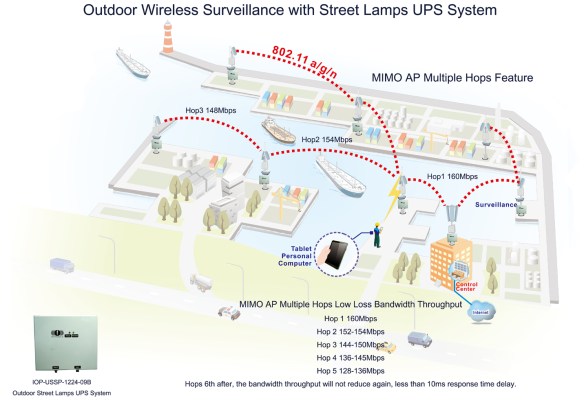
Three Common Mistakes in Wireless Systems Design for Buildings

Although cellular and WiFi networks are not required by code, they are crucial for communication. More than 400,000 wireless E-911 calls are made every day…


Image Source:  http://bit.ly/1EqvCDv

Source: www.facilitiesnet.com

>” MISTAKE 1: Thinking it’s someone else’s problem.

Don’t let your architect avoid the issue. Design a building with adequate wireless coverage for public safety, cellular, and WiFi. […] WiFi networks are also widely used for Internet traffic and to support building management systems (BMS), Smart Grid, point of sales, audio visual, security, and more. The impact of wireless devices is only expected to increase. Mobile devices are expected to account for 61 percent of worldwide Internet traffic by 2018, compared to 39 percent from wired devices, according toCisco.

MISTAKE 2: Confusion.

Confusing the types of wireless technologies available and/or facility requirements is another pitfall. You don’t want to plan for one type and learn later that technology for common functions is missing. Technologies have different requirements for power, spacing between devices, type of cables, head-end requirements, etc. Therefore, a key factor is to understand each technology thoroughly so it can be planned and implemented properly.

To put it briefly, there are two major wireless technologies — WSP, which are your wireless carriers networks (AT&T, T-mobile ,Verizon, etc.), and WiFi technology, which is a wireless local area network (WLAN) based on Institute of Electrical and Electronics Engineers (IEEE) 802.11 standards.

Both of these transmit via radio frequencies. WiFi (WLAN), however, uses an unlicensed spectrum that transmits at frequencies 2.4GHz and 5 GHz, which are considerably higher frequencies than used for cellular service, which is on a licensed spectrum transmitting within 698MHz-2.7GHz.

MISTAKE 3: Bad budgeting.

Often, contractors develop their budget based on square footage, but wireless isn’t so simple. The price can vary significantly based on the complexity of the needs, the supporting frequencies, coverage area, number of users, and more. By developing preliminary wireless design, IT consultants can provide the owner/operators with a more accurate cost.

Regardless of the facility, it’s no longer a matter of if wireless will be required, just a question of whether you want to plan early before you build, or pay a premium later. IT consultants can help facility managers plan, select the best wireless options to meet end-user needs, and stay to up-to-date with local codes (where required). Furthermore, an IT consultant can better develop a realistic wireless budget for the owner and provide the architect-engineer-construction team with infrastructure requirements, such as pathways, telecom room sizes and locations, power, and cooling, without sacrificing the architect’s vision. Generically speaking, the fee for an IT consultant is insignificant to the overall project cost, and may ultimately save the owner money and headache. Be prepared for what’s to come. Overlooking this need early can often cause a major regret later.

Gislene D. Weig, electrical engineer, RCDD, is a senior consultant at PlanNet Consulting, where her core business involves U.S. and Latin American markets focused on large-scale projects that include voice/data, wired and wireless communication systems, and data network design. She can be reached at gweig@plannet.net.”<

See on Scoop.itGreen Building Operations – Systems & Controls, Maintenance & Commissioning

Microsoft Uses Big Data To Manage Buildings and Facilities

MicrosoftCampus

“My initial expectation was that we would see the return on investment in terms of driving down our energy costs, and we have seen that,” says Pittenger, to whom Smith reports. “What wasn’t part of my expectations was the gains we would have in operational efficiencies and our abilities to do repairs and maintenance much, much better and much, much smarter.”

Source: www.facilitiesnet.com

Image:  http://news.microsoft.com/2009/11/23/california-coding-microsoft-campus-in-silicon-valley-turns-10/

>” […] Over those 125 buildings on the main Microsoft campus, there are more than 30,000 building systems components — assets, in Smith’s terms — and more than 2 million points where building systems ranging from HVAC to lighting to power monitoring are connected to sensors. In a 24-hour period, those systems produce half a billion data transactions. Each one is small, but when you’re talking about half a billion of something, all those 1s and 0s add up pretty quickly.

But what’s important is being able to do something with those 1s and 0s, which Microsoft could not do until recently because of the mess of systems involved, says Jim Sinopoli, managing principal, Smart Buildings, who helped set up the software pilot program.

“You have an opportunity, if you’re building a new campus or a new building, to really start with a clean slate,” he says. “But you go in these existing buildings and you generally will come upon some unforeseen obstacles.”

The project turned out to be a relatively easy sell. First, Pittenger’s background is financial, so being able to show a strong ROI was a definite plus for Smith, because his boss understands exactly what that means when it comes time to ask for funding. Second, facilities management at Microsoft benefits from a company culture that considers every department to be a key player.

“(CEO) Steve Ballmer likes to say, ‘There are no support organizations at Microsoft,'” Pittenger says. “Everybody is fundamental to the core mission of the company. And we feel that way.”

After gaining approval, the first step was deciding how those obstacles would be overcome. Smith and his team began by writing out 195 requirements for the new way of operating and what their ultimate tool would be able to do. Then they proceeded to look around for an off-the-shelf solution that would be able to do all those things — and failed to find one. So, they built it.

More specifically, they worked with three vendors in a pilot program, encompassing 2.6 million square feet, to build an “analytics blanket” of fault detection algorithms that is layered on top of the different building management systems and reports back to the operations center. If Building 17 and Building 33 have different building management systems, those systems may not be able to talk to each other or provide data to a single reporting system in the operations center. But they can talk to the analytics blanket, which can take the information from every building and combine it into a single output in the operations center. It’s not a replacement for the BMS; instead, it’s adding on functionality that enhances the benefits of the existing BMS.”<

See on Scoop.itGreen Building Operations – Systems & Controls, Maintenance & Commissioning

Aluminum Superatoms – High Temperature Superconducting Materials

Superconductors can carry electricity with no resistance and are used for specialized applications like MRIs, maglev trains and particle accelerators. Superconductor-based electronics would be extremely efficient because they would generate no waste heat, but he fact that they would only work at temperatures close to absolute zero makes them impractical.

Source: www.gizmag.com

>” […]

Scientists at the University of Southern California (USC) have made steps toward discovering a new family of superconductor materials that work at relatively high temperatures, with possible applications in physics research, medical imaging and high-performance electronics.

As electrons travel through an integrated circuit, they regularly bump into microscopic imperfections within the conductive wire and veer off course, creating electrical resistance and releasing waste energy as heat. Waste heat is a big inconvenience to both designers and end-users of electronics, but it simply can’t be avoided using the materials currently at our disposal.

[…] Thirty years ago, a new class of so-called “high-temperature superconductors” was discovered, although the name can be deceiving because these still require temperatures below 135 K (-135 °C or -210 °F) to operate, which still makes them impractical for use in electronics.

Now the USC team led by professor Vitaly Kresin has discovered hints of yet another family of superconductors which work at relatively high temperatures. Specifically, they found out that while single atoms of aluminum only turn superconductive at very low temperatures (around 1 K), so-called “superatoms” (clusters of evenly spaced atoms that behave as a single atom) of aluminum turn superconductive at much higher temperatures, around 100 K.

Superconductivity takes place when so-called Cooper pairs form within a material. These are pairs of electrons that are very faintly attracted to each other and activate a mechanism whereby the electrons don’t veer off course, and therefore lose heat, whenever they bump into an imperfection within the material. Because the attractive force between the electrons, which happens only under certain conditions, is so weak (two electrons would normally repel each other), even a small amount of external energy (which could be given off in the form of heat) can upset this equilibrium. This is why superconductors only work at very low temperatures.

Kresin and team built a series of aluminum superatoms between 32 and 95 atoms large. For superatoms containing 37, 44, 66 and 68 aluminum atoms, the scientists found evidence that Cooper pairings were taking place, turning the material into a superconductor.

The researchers suggest that creating superatoms of different metals could lead to the discovery of similar superconductors that work at relatively high temperatures. While the threshold temperature was 100 K (-280 °F, -173 °C) for an aluminum superatom, different materials are likely to turn superconductive at different (hopefully much higher) temperatures.

“One-hundred Kelvin might not be the upper-temperature barrier,” says Kresin. “It might just be the beginning.”

Should one of these materials operate as a superconductor at room temperature, it would likely have huge impact on the worlds of electronics, medical imaging, microscopy and electric motors, just to name a few. ”

A paper describing the advance appears on the journal Nano Letters.

Source: University of Southern California

See on Scoop.itGreen Energy Technologies & Development

Net Zero Case Study: Bullitt Center – Green Materials

The Bullitt Center in Seattle, Washington, is one of the most self-sufficient buildings on the planet.  It is net zero energy and, after the water reuse system is approved by city authorities, net zero water.  Net zero means that the building uses the same amount as it creates or generates – it is self-sufficient.

Source: greenbuildingelements.com

>”[…]

Healthy Green Materials

The Living Building Challenge requires projects to avoid as many of the chemicals and substances that are found on the Red List as possible.  These substances have been recognized by government agencies, such as the US Environmental Protection Agency, the European Union Commission, and the State of California, as potentially harmful to human or animal life on Earth.  Not all of the substances can be avoided, though, due to the lack of availability of materials that do not contain them.

The Bullitt Center team avoided over 360 known chemicals on this list.  Some were easy to avoid, as alternatives were readily available.  The team also worked with suppliers to create products that met their requirements, changing the way the products were made and making them available to others.

Most plumbing valves, even those made of brass and bronze, contain up to 7% lead.  Lead free valves, with an allowable lead content of only 0.25%, were used in both the potable and non-potable water systems, including fire sprinklers.Phthalates are commonly used in PVC and other plastic products.  A high-performance water barrier company performed 6 months of research to develop a product that did not contain phthalates, just for the Bullitt Center project.  The new product has now replaced the original version going forward.  Dioxins are a by-product of the manufacture, combustion, and disposal of products containing chlorine, most notably PVC products.  Couplings for no-hub ductile iron pipe are commonly made with neoprene, which contains chlorine.  The team worked with the manufacturer to special order couplings made of EPDM (ethylene propylene diene monomer) rubber.  The electrician was able to find electrical wire not coated in PVC that met code standards.  The fiberglass insulation in the project is held together by a plant-based polymer, not the usual one that contains formaldehyde.

Certified Wood

The Bullitt Center is a wood-framed structure.  Because of its location and the importance of the timber industry in the Pacific Northwest, the project team decided this was the best choice for the project.  100% of the lumber in the building has been harvested from anForest Stewardship Council (FSC) certified source.  The project was also recognized as the only commercial project to receive the Forest Stewardship Council Project Certification, in recognition of responsible forest products use throughout the building.

Local Sourcing

Perhaps the greatest story about green materials and the Bullitt Center involves the curtain wall (window) system.  Due to the high performance needs of the project, only one product could be used, and it was only manufactured in Europe.  A Washington company partnered with the European manufacturer to gain the knowledge to manufacture and install the system in the US.   The Washington company flew their employees over to find out how to make and install the system, and a licensing agreement was reached.  Now this high performance system is available in the US for future projects to use.

[…]”<

See on Scoop.itGreen Building Design – Architecture & Engineering

Net Zero Building Nears Completion in Edmonton

the mosaic centre for conscious community and commerce is nearly ready for occupancy, which could make it the most northerly net-zero structure on the planet.

Source: www.journalofcommerce.com

>” […] The Edmonton centre’s designers and builders are hoping that others can learn from the project that sustainable design doesn’t have to be costly or time consuming – so much so that they have made the contract, calculations and drawings available to anyone.

The City of Edmonton said the Mosaic Centre will be the world’s most northerly commercial building to achieve net zero status, the city’s first designated LEED platinum building, the first in Alberta to be petal certified by the Living Building Challenge and Canada’s first triple bottom line commercial building.

Once completed, the new 30,000 square foot building will include  photovoltaic panels that will cover much of the roof.

It will also have LED lighting designed with a time-clock/daylight controller to meet minimum light levels and a geo-exchange system which will draw heat in winter and coolant in summer.

The 32 bore hole geothermal system reduced the size of the system by 40 kW, saving about $150,000.

It was built 25 per cent ahead of schedule and five per cent under budget.

HKA architect Vedran Skopac, who worked on the project, said it was done to prove to the industry that complex, sustainable buildings can be delivered on time, on budget and without animosity between the parties.

He said the key to this all started with using Integrated Project Delivery (IPD).

The model emphasizes collaboration at an early stage and encourages all the participants to use their talents and insights throughout the different stages for best results.

“It goes all the way down to the end of the line of the tradesmen,” Skopac said.

“We invested so much in designing the process, and training and making everyone a leader.”

Skopac said a major influence on designing the actual structure was creating collision spaces, or places where building residents would be forced to meet and interact.

Skopac also wanted to influence sustainable behavior, like making windows easy to operate and open rather than using air conditioning, and making natural light penetrate deep into the building rather than encourage residents to turn on lights. […]”<

See on Scoop.itGreen Building Design – Architecture & Engineering