USGBC Adds Green Building Finance Expert | U.S. Green Building Council

See on Scoop.itGreen Building Design – Architecture & Engineering

Washington, D.C. — (April 8, 2013) — The U.S. Green Building Council (USGBC) announced today that Dan Winters recently joined the organization as Senior Research Fellow for Business Strategy and Finance.

Duane Tilden‘s insight:

Winters, a 20-year veteran of real estate finance and one of the first LEED Accredited Professionals in the financial industry, is the previous recipient of the 2012 USGBC Mark Ginsberg Sustainability Fellowship. Now with USGBC as a full-time staff member, Winters will utilize his background in institutional real estate finance, alongside his capital market perspectives, to foster and strengthen the growing relationships between the green building and investment communities.

“Dan is one of the foremost minds among those who develop high-performance buildings, the commercial brokerage community and the institutional financiers who seek to incorporate sustainable properties into real estate investment portfolios,” said Chris Pyke, vice president of research, USGBC.

See on www.usgbc.org

green building news – London’s green building sector opens its doors for Green Sky Thinking

See on Scoop.itGreen Building Design – Architecture & Engineering

latest green building news – London’s green building sector opens its doors for Green Sky Thinking

Duane Tilden‘s insight:

A free week-long programme of events focused around sustainable building will take place next week throughout London. 

Green Sky Thinking will cover topics on implementing green building projects, promoting green building policy, and creating green infrastructure. […] Hosted by Open City, a London based architecture education organisation, in all 50 events will take place throughout the week, and will include workshops, debates, tours and even a pub quiz. 

See on www.greenwisebusiness.co.uk

Report Claims Renewable Energy Policy Bad For Washington State

See on Scoop.itGreen & Sustainable News

Olympia, Wash. — A conservative Washington state political think tank’s study says our state’s renewable energy policy is bad for the economy and environment.

Duane Tilden‘s insight:

Currently, Washington is required to draw 15-percent of its energy from renewable sources by 2020.

Washington Policy Center Director Todd Myers says the study concludes Washington could lose up to 12,000 jobs in the next seven years, and energy costs for households and businesses could skyrocket.

Myers says the study estimates a reduction in real disposable income by about $1-billion.

He says the state currently draws nearly 80-percent of its energy from hydro-energy sources, which current legislation does not define as renewable.

See on kgmi.com

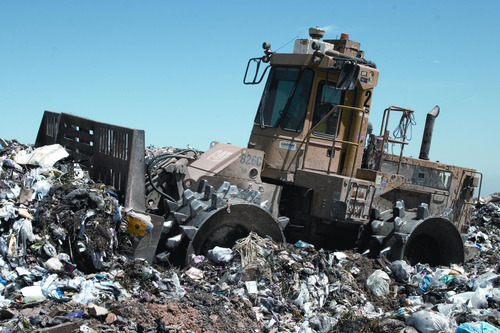
There’s cash in that trash

See on Scoop.itGreen & Sustainable News

There could be big bucks in waste disposal and management, Bank of America/Merrill Lynch figures.

Duane Tilden‘s insight:

Lets look at some of the opportunities BofA/ML has identified:

– Disposal and recycling of municipal solid waste (rubbish, in common parlance) is currently worth $400 billion but over the next decade,  $87 billion in investments are expected in this sector.

– Waste-to-energy (energy recovery from waste): One ton of rubbish can create 500-750 kilowatts of power. This market is worth $7.4 billion in 2013 and  could grow to $81 billion by 2022.

– Sustainable packaging: Accounts for a third of solid waste in developed countries. Worth almost $109 billion in 2011, the market is expected to grow to $178-212 billion by 2015-18.

– e-waste (discarded electrical or electronic devices):  Recycling/reuse of e-waste components was worth $13.9 billion in 2012 but could grow to between $25 and 44.3 billion by 2017-20. One example of how lucrative this can be – -recycling one million mobile phones can recover 24 kg of gold, 250 kg of silver and more than 9,000 kg of copper.

Wastewater and sewage treatment:  The biggest investments are needed in the developing world but in the United States alone, infrastructure of $1 trillion could be needed over the next 25 years, BofA says, citing research from the American Waterworks Association.

See on blogs.reuters.com

Waste fat will power UK’s biggest sewage works | Energy Live News

See on Scoop.itGreen & Sustainable News

Waste fat and oil from restaurants and clogged up drains underground (pictured) will soon power the UK’s largest sewage works. A new power station at Beckton in East London opening …

Duane Tilden‘s insight:

Thames Water says it has agreed to buy 75 GWh of this output to run its Beckton sewage works, which serves roughly 3.5 million people, as well as a nearby desalination plant […]

The water firm has committed to provide the power station with 30 tonnes a day of fat, oil and grease (FOG) enough to fill a six metre-long shipping container. That’s at least half of the fuel the generator needs to run.

Developed and run by ‘green’ utility 2OC, it’s set to produce 130 Gigawatt hours (GWh) a year of renewable electricity – enough to run 39,000 average-sized homes.

See on www.energylivenews.com

Report: Global waste industry could double to $2tn by 2020

See on Scoop.itGreen Energy Technologies & Development

Bank of America Merrill Lynch analysis predicts boom in global waste industry as resource crunch bites

Duane Tilden‘s insight:

“We are seeing a shift away from waste as a mandatory public service to waste management as a sustainable business opportunity,” the report states. “We see the fastest growth in the next decade coming from diversion, recycling, recovery of valuable secondary raw materials, waste-to-energy, e-waste and sustainable packaging – as well as from emerging markets. We see considerable low hanging fruit potential given that 70 per cent plus of global waste is currently landfilled. ‘Greening’ waste management will require increasing MSW recycling by a factor of 3.5 times and doubling industrial waste recycling.”

See on www.businessgreen.com

Sol Voltaics uses nanotechnology to make solar energy 25 percent more efficient

See on Scoop.itGreen Energy Technologies & Development

Swedish company with Silicon Valley talent has raised $11 million to make solar power more efficient.

Duane Tilden‘s insight:

Two advances make it possible. The team, led by founder Lars Samuelson (a Lund University professor), created a technology known as Aerotaxy, which makes it cheaper to make nanomaterials. With that, they are creating gallium arsenide nanowires that can serve as solar collectors and that they can integrate directly into solar wafers, known as solar cells. The smarts happens at the atomic level.

[…] manufacturers don’t have many options for bringing down the costs of solar. […] The cells themselves must become more efficient to lower costs.

See on venturebeat.com

Financial Advisors Are Adopting Social Media, Fitfully – Forbes

See on Scoop.itTwitter & Social Media

Active social media strategies are proving profitable for financial advisors.

Duane Tilden‘s insight:

Alex Pigliucci, global managing director of Accenture wealth management services, said  social media creates a huge opportunity for firms that get it right and a real risk for firms that regard it mostly as a threat. Firms will have to recruit and train advisors on the basis of their ability with social media if they are going to survive the generational change when millennials will become increasingly important as both advisors and investors.

See on www.forbes.com

TD Bank Announces Energy-Saving Monitoring Data For Net-Zero Store

See on Scoop.itGreen Building Design – Architecture & Engineering
TD reports that the first net-zero bank built in the United States is exceeding expectations according to first-year monitoring data.

Duane Tilden‘s insight:

TD Bank’s net-zero energy store opened on May 13, 2011. The U.S. Department of Energy (DOE) National Renewable Energy Laboratory defines a net-zero energy building (NZEB) as a residential or commercial building that produces and exports in a year at least as much renewable power as the total energy it uses.

[…] A NZEB has two key energy features: The building is constructed with energy-efficient technologies that significantly reduce its energy demand, and renewable energy sources supply at least as much energy as the building uses over the course of a year.

See on www.stockhouse.com

Energy Storage Series: Why We Need It, And Why We Don’t

See on Scoop.itGreen Energy Technologies & Development

It’s almost a cliché that there’s a “friendly debate” pitting utilities against renewable energy. But concerns on the utility side of the table are real: intermittency, potential destabilization at the feeder level, non-baseload, and peaks in generation that don’t necessarily match demand peaks. Today’s power infrastructure involves unpredictability in both supply and demand that is extremely difficult to manage.

Duane Tilden‘s insight:

The big question in energy storage, Wheaton says, boils down simply: what does it cost to build more generation (to oversupply), vs. how to store and manage energy? Today it’s more “economically rational” to build more generation, whether it’s solar or wind or even coal, he noted. As energy storage technology costs come down — and as there is better understanding and calculation of externalized costs, such as societal impacts — “we will see those lines cross, and more utilities will go to energy storage as a more economical means to serve the grid.”

Fundamentally, economics determines the decision of over-generation vs. energy storage; right now “either energy storage is not cheaper, or the payback is not enough to shift over,” noted Luebbe. As the cost (dollars per kilowatt-hour) come down and energy storage costs intersect with those in over-generation, “then everyone will do it because it’s economically the logical thing to do.”

See on www.renewableenergyworld.com