Hot Rocks: Canada Sits Atop Massive Geothermal Resource – Renewable Energy

See on Scoop.itGreen & Sustainable News

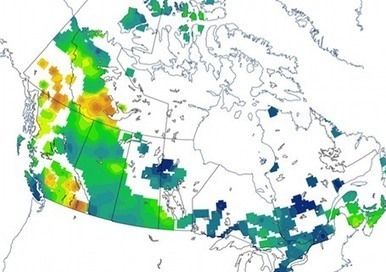
September 2011 Report by the Geological Survey of Canada suggests 100 projects could provide much of the country’s power needs…

Duane Tilden‘s insight:

“Canada’s in-place geothermal power exceeds one million times Canada’s current electrical consumption,” the report notes, though also stating most of that available power could not actually be produced. “Environmental impacts of geothermal development are relatively minor compared to other energy developments, however there are still key issues to be addressed….Geothermal installations have the potential to displace other more costly and environmentally damaging technologies.”

There is at least 5000 megawatts of available geothermal power in various parts of British Columbia, Alberta, and the Yukon. What’s more, the report’s authors write, the cost of delivering geothermal power is expected to rival the costs of coal within 15 years or so. The limitations of developing the huge geothermal resource have a lot to do with location: Some of the most promising areas are far away from load centers, and the costs of developing huge transmission corridors to bring the power to where it is needed would make such projects unfeasible. Still, there is enough located in accessible areas to make a big difference.

See on spectrum.ieee.org

Lockheed Martin Pioneers Ocean Thermal Energy in China – Engineers

See on Scoop.itGreen Energy Technologies & Development

A 10-megawatt ocean thermal energy conversion plant is under way

Duane Tilden‘s insight:

>[…] the company has been working on OTEC since the 1970s, and the technology hasn’t changed drastically since then. OTEC systems make use of the temperature differential in tropical areas between warm surface water and cold deep water. In most systems, ammonia, which has a very low boiling point, passes through a heat exchanger containing the warm water. The ammonia is vaporized and used to turn a turbine, and then it’s cycled past the cold water to recondense. This is a renewable energy technology with the rare capacity to supply base-load power, as water temperatures are fairly stable.

The ammonia passes through a closed loop, while the water comes and goes through massive pipes. The project in China may pump cold water up from a depth of about 1000 meters, using a pipe that’s 4 meters across. Varley says that some of the infrastructure can be borrowed from the offshore drilling industry: “We showed them our requirements for the platform, and they yawned and said, ‘Is that all you got?’ ” he says. “But then we showed them the pipe.” Attaching the massive pipe to a relatively small floating platform creates unusual stresses, Varley says. Lockheed also had to find materials for the pipes and the heat exchangers that could withstand the harsh marine environment.<

See on spectrum.ieee.org

Jobs for the Future: Energy Efficiency creates Employment — ECEEE

See on Scoop.itGreen & Sustainable News

Energy efficiency initiatives create jobs, and normally very good jobs.  Recent analysis shows that between 17 and 19 net jobs can be created for every million euros spent.

Duane Tilden‘s insight:

>Jobs to improve energy efficiency in all end-use sectors are of high value.  Many require technical qualifications, such as engineering or architectural degrees.  Many require re-training from existing jobs. There will be a demand for financial specialists, construction engineers, behaviour specialists, project managers, auditors, data base managers, policy analysts and the like.  And these jobs are available to all, regardless of age or gender.

The hard work of creating these jobs begins once the Directive is finally approved.  The long-term policy framework needs to be in place and the funding and implementation strategy need to be well developed. But in the longer term, opportunity is knocking at the door, and it deserves a welcome mat.<

See on www.eceee.org

Smart Grid: Utility sued due to Smart Meter opt-out program

See on Scoop.itGreen Energy Technologies & Development

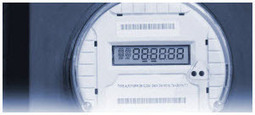
Smart Grid – BC Hydro offered customers who didn’t want to participate in its smart meter program the choice of opting out in mid-July. But that didn’t protect the utility from a lawsuit

Duane Tilden‘s insight:

>Just days after BC Hydro finally agreed to an opt-out program for smart meters, a customer is suing the utility for installing a smart meter last year even though she didn’t want one on her property. […]

The suit claims the installations caused the plaintiff “emotional distress,” because it “interfered with the quiet enjoyment of her property,” which she used to host yoga and meditation retreats. Opponents of smart meters believe the devices’ radio waves have health risks. The lawsuit further alleges that BC Hydro unlawfully leveraged its monopoly powers by imposing a smart meter on the plaintiff.

[…] The utility says that smart meters only broadcast several times a day, and that living next to a smart meter for 20 years would expose a resident to the same level of radiation as a 30-minute cell phone call.<

See on www.smartgridnews.com

US Senators back new bill pushing Energy Efficiency Legislation

See on Scoop.itGreen & Sustainable News

By SEN. JEANNE SHAHEEN and SEN. ROB PORTMAN | 7/29/13 9:25 PM EDT

For the past three years, we have worked together to develop the Energy Savings and Industrial Competitiveness Act, legislation that will go a long way toward making the United States more energy efficient and more economically competitive.

Duane Tilden‘s insight:

According to the Sen. Shaheen & Portman:

>Our bill curbs inefficient energy practices that cost the U.S. economy billions of dollars and millions of jobs every year. According to a recent study by the Emily Hall Tremaine Foundation, we waste an astonishing 86 percent of the energy we consume. Upgrading the energy efficiency of U.S. buildings alone could save $1 trillion over the next decade. Cutting down on energy waste represents an untapped resource that we have long ignored. Our legislation helps to change that.

Our bill promotes energy savings that Americans across the political spectrum can get behind. Energy efficiency has broad, bipartisan support from business, energy and environmental advocates alike, and the legislation we have developed helps to promote energy efficiency through a smart, pragmatic plan that can be implemented immediately.

There is one mandatory component to the bill: We are going to make Washington practice what it preaches. We’re going to make the federal government — the largest energy user in the country — adopt energy-saving techniques and best practices that make its operations more efficient. […]

These provisions will save money, make America more energy-independent and lower harmful emissions. For the private sector, the tools our bill deploys are entirely voluntary. This legislation will also not add to the deficit and its costs are fully offset.<

See on www.politico.com

Department of Energy – Energy Efficiency Standards Cost Less than Estimated

See on Scoop.itGreen & Sustainable News

Washington, D.C.—A new report released today by the American Council for an Energy-Efficient Economy (ACEEE) and the Appliance Standards Awareness Project (ASAP) finds that the U.S. Department of Energy (DOE) has been overestimating the impact that energy efficiency standards for appliances and other products have on their price tags.

Duane Tilden‘s insight:

>Today’s study, entitled Appliance Standards: Comparing Predicted and Observed Prices, looks at nine appliance standards that took effect over the 1998-2010 period and found that DOE overestimated price impacts in every case, usually by a wide margin. ACEEE and ASAP found that across the nine rulemakings, DOE estimated an average increase in manufacturer’s selling price of $148. On average the actual change in price was a decrease in manufacturer’s selling price of $12.

Estimates of the overall benefits of energy efficiency standards for consumers will likely have to be revised as well. In 2012, ACEEE and ASAP released a study estimating that standards for appliances and other equipment would save consumers more than $1 trillion cumulatively by 2035, even after subtracting estimated increases in product prices.

“Energy efficiency standards are proving to be an economic powerhouse, driving even more consumer savings than we realized,” said report co-author and ASAP Executive Director Andrew deLaski.<

See on www.aceee.org

Water-Smart Power: Strengthening the U.S. Electricity System in a Warming World (2013) | UCSUSA

See on Scoop.itGreen & Sustainable News

This report shows how the U.S. can build an electricity system that protects our water resources and dramatically reduces global warming emissions.

Duane Tilden‘s insight:

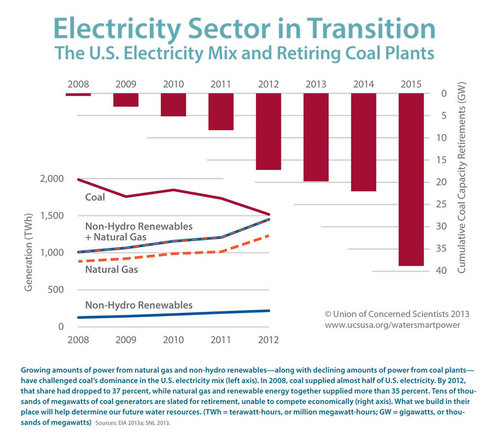
>The country stands at a critical crossroads. Many aging, water-intensive power plants are nearing the end of their lives. The choices we make to replace them will determine the water and climate implications of our electricity system for decades to come.

Today’s electricity system cannot meet our needs in a future of growing demand for power, worsening strains on water resources, and an urgent need to mitigate climate change.

[…]

Energy-water collisions are happening now, and are poised to worsen in a warming world

  • The heat waves and drought that hit the U.S. in 2011 and 2012 shined a harsh light on the vulnerability of the U.S. power sector to extreme weather, and revealed water-related electricity risks across the country.
  • When plants cannot get enough cooling water, they must cut back or completely shut down their generators, as happened in 2011 and 2012 at plants around the country.
  • Nationally, the 2012 drought was the worst in half a century. Amid soaring temperatures in the Midwest, several power plant operators got permission to discharge exceptionally hot water rather than reduce power output.
  • Electricity-water collisions are poised to worsen in a warming world as the power sector helps drive climate change. Extreme weather conditions that have historically been outliers are expected to become standard fare.<

See on www.ucsusa.org

Net Metering And Rooftop Solar For The Utility Of The Future

See on Scoop.itGreen Energy Technologies & Development

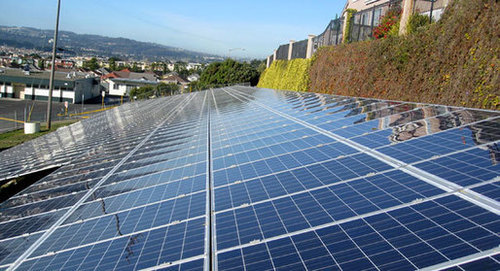
Net metering makes small-scale renewable energy, such as rooftop solar panels, more affordable by crediting the “distributed generation” owners for the excess energy they produce.

Duane Tilden‘s insight:

>Why the new focus on net metering?  The cost for rooftop solar panels has fallen 80% since 2008, including 20% in 2012 alone.  Installed rooftop solar energy has increased by 900% between 2000 and 2011.  As consumers install more rooftop solar panels and net meter them, utility revenues will decrease.

Net metering policies vary from state-to-state, including the amount of the payback for excess energy.  The most favorable policy for distributed generation owners is an excess energy credit equal to the full retail energy rate consumers pay for energy, i.e. the amount consumers are charged for using energy.  Most states use this measure.  However, utilities claim this prevents them from recovering their full costs and overpays distributed generation owners, unfairly shifting costs to other consumers.  Utilities say the credit should be equal to the utilities’ wholesale energy cost at the time of day when excess energy flows back to the grid.

Despite attempts by utilities to change net metering policies, state regulators are keeping these policies intact.  Earlier this month, the Idaho Public Utilities Commission rejected Idaho Power’s request to pay less than the full retail rate and to impose higher charges on net metering consumers.  Last month, the Louisiana Public Service Commission rejected similar requests by Louisiana utilities.  More recently, Arizona Public Service Company raised the issue in a ne[…]<

See on blogs.edf.org

Companies Fined for Greenhouse Gas (GHG) Emissions Reporting Errors | The National Law Review

See on Scoop.itGreen & Sustainable News

Nine companies were issued fines by the California Air Resources Board (ARB) for violating the State of California’s Mandatory Greenhouse Gas Reporting rule. The ARB adopted the reporting rule in 2007.

Duane Tilden‘s insight:

>The companies cited for violations were not concentrated in one industry sector.  Sources receiving fines included a refinery, a biomass generating plant, an oil and gas production company, a utility company, a lime manufacturing company, and a cement company, among others. <

See on www.natlawreview.com

Water in Crisis: A New Paradigm in Power Generation

See on Scoop.itGreen & Sustainable News

The US can affordably and sustainably meet its energy and water needs by pursuing a “renewables-and-efficiency” path, according to a new EW3 report.

Duane Tilden‘s insight:

>The current system of power generation in the U.S., according to EW3, “clearly cannot meet our needs in a future of growing demand for electricity, worsening strains on water resources, and an urgent need to mitigate climate change.”

What’s urgently needed, they assert, is a system of power generation that is much more resilient – one that is not only much less dependent on water, but one that can operate sustainably in a warming climate and, at the same time, help mitigate climate change. With the release of its second report, EW3 advocates making decisions today that puts U.S. society firmly on such a path. […]

EW3′s research team constructed two long-term scenarios in order to better understand and analyze the implications of decisions made today regarding electricity production in the U.S. in terms of water usage and greenhouse gas emissions.

Pursuing a business-as-usual path that would see natural gas combustion growing to account for 60 percent of U.S. power generation in coming decades “would fail to reduce carbon emissions, and would not tap opportunities to safeguard water,” EW3′s research team found. In sharp contrast, both water usage and carbon emissions in the power sector would drop much further, and faster, under a “renewables-and-efficiency” scenario.

Under the renewables-and-efficiency scenario, both water withdrawals and consumption by the power sector would be less than half of today’s levels by 2030. By 2050, water withdrawals would be 97 percent below today’s levels while water consumption would drop 85 percent – nearly 80 percent below the business-as-usual scenario.<

See on www.triplepundit.com