US EPA Awards Energy Star to 3 CHP (Cogen) Projects

The US Environmental Protection Agency (EPA) has recognised three combined heat and power projects with ENERGY STAR CHP awards.

Source: www.cospp.com

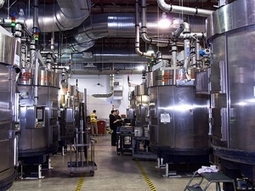
>”[…] Eastman Chemical Company’s Kingsport, Tennessee, Campus plant (pictured) was recognised for its 200 MW CHP system, which includes 17 GE steam turbine generators. The Kingsport industrial campus, one of the largest chemical manufacturing sites in North America, employs nearly 7000 people […]

Seventeen boilers produce steam to support manufacturing processes, help meet the space heating/cooling needs of 550 buildings, and drive 17 GE and two ABB steam turbine generators with a combined design output of 200 MW. With an operating efficiency of more than 78%, the predominantly coal-fired system requires approximately 14% less fuel than grid-supplied electricity and conventional steam production, saving Eastman Chemical approximately US$45 million per year.

Janssen Research & Development, LLC, one of the Janssen Pharmaceutical Companies of Johnson & Johnson, was granted an award for its 3.8 MW CHP system, powered by a Caterpillar lean-burn low-emissions reciprocating natural gas generator set. The system supplies 60% of the annual power needs for the site and approximately 40% of the thermal energy used to support R&D operations and heat, cool, and dehumidify the facility’s buildings.

With an operating efficiency of more than 62%, the system requires approximately 29% less fuel than grid-supplied electricity and conventional steam production, saving approximately $1.1 million per year.

Merck’s CoGen3 CHP system at its West Point facility was also recognised by the EPA. A pharmaceutical and vaccine manufacturing, R&D and warehouse and distribution centre, the project is powered by a 38 MW GE 6B heavy-duty gas turbine and recovers heat to produce steam to heat, cool and dehumidify approximately 7 million square feet of manufacturing, laboratory and office space.

The system, designed by Burns & Roe, is the third CHP system that Merck has installed at the 400-acre West Point, Pennsylvania campus. With an operating efficiency of more than 75%, the natural gas-fired system requires approximately 30% less fuel than grid-supplied electricity and conventional steam production.”<



See on Scoop.itGreen Energy Technologies & Development

Combined Heat & Power Drives Biomass Demand

New analysis from the International Renewable Energy Agency (IRENA) forecasts CHP and industrial heat demand are set to drive global bioenergy consumption over the coming decade and more.

Source: www.cospp.com

>”The trend towards modern and industrial uses of biomass is growing rapidly, the report notes, adding that biomass-based steam generation is particularly interesting for the chemical and petrochemical sectors, food and textile sectors, where most production processes operate with steam. Low and medium temperature process steam used in the production processes of these sectors can be provided by boilers or CHP plants. Combusting biogas in CHP plants is another option already pursued in northern European countries, especially in the food sector, where food waste and process residues can be digested anaerobically to produce biogas, IRENA adds. A recent IRENA analysis (2014b) estimated that three quarters of the renewable energy potential in the industry sector is related to biomass-based process heat from CHP plants and boilers. Hence, biomass is the most important technology to increase industrial renewable energy use, they conclude.

In industry, demand is estimated to reach 21 EJ in the REmap 2030, up to three-quarters of which (15 EJ) will be in industrial CHP plants to generate low- and medium-temperature process heat (about two-thirds of the total CHP output). In addition to typical CHP users such as pulp and paper other sectors with potential include the palm-oil or natural rubber production sectors in rapidly developing countries like Malaysia or Indonesia where by-products are combusted in ratherinefficient boilers or only in power producing plants.

As a result, installed thermal CHP capacity would reach about 920 GWth with an additional 105 GWth of stand-alone biomass boilers and gasifiers for process heat generation could be installed worldwide by 2030. This is a growth of more than 70% in industrial biomass-based process heat generation capacity compared to the Reference Case.

Biomass demand for district heating will reach approximately 5 EJ by 2030 while the power sector, including fuel demand for on-site electricity generation in buildings and on-site CHP plants at industry sites, will require approximately another 31 EJ for power generation (resulting in the production of nearly 3,000 TWh per year in 2030, according to IRENA.

The total installed biomass power generation capacity in Remap 2030 reaches 390 GWe. Of this total, around 178 GWe is the power generation capacity component of CHPs installed in the industry and district heating sectors.”<


See on Scoop.itGreen Energy Technologies & Development

10 Most Efficient Renewable Energy Devices

6 Schemes to Implement for Plant ISO 50001 Certification

During a webcast  […] representatives from the US Department of Energy and Underwriters Laboratories walked through the details of the just-released energy management standard, and how companies can get on board, quickly.

Source: www.greenbiz.com

>”When the standard achieves widespread adoption, it’s estimated that ISO 50001 could influence up to 60 percent of the world’s energy use.  […]

ISO 50001 requires continuous improvement, but not specific requirements, which is where the ITP program comes in, to have specific requirements of improvement. The value of the certification, Scheihing said, is that for the first time it provides a framework for continual improvement for facilities on energy performance, and across the entire organization.

To be certified, you have to conform to the ISO 50001 management standard, and you have to improve your energy performance, and get both aspects certified under a third party. There are 24 companies working in the pilot mode of ISO 50001, across all types of manufacturing sectors and at all sizes.

Between 2008 and 2010, five initial facilities in Texas were piloted, and have been certified to date. Scheihing said the energy improvements achieved at the facilities ranged from 6.5 percent to 17.1 percent over a three-year period.

Among the initial feedback from the pilot project include the benefits of having a cross-functional plant energy management team that goes beyond just operations or engineering means that energy management becomes a shared responsibility, and that makes it much easier to incorporate significant changes in energy use.

One of the biggest shifts that the pilot projects found was that as a result of going through ISO 50001 certification, energy management became a way of doing business, instead of a project-by-project undertaking.  […]


Scheihing laid out six steps that any organization can take to get started on ISO 50001 today:

Secure support from top management;Collect, track, and analyze energy data;Identify key energy uses;Establish a baseline;Identify energy-saving opportunities;Prioritize opportunities

The Department of Energy has created a new website for energy management, which lays out an overview of ISO 50001 and offers case studies and tools to help companies undertake those first steps.

Jerry Skaggs from UL DQS followed on Scheihing’s presentation to walk through each of the six steps, as well as a checklist for organizations to follow once they’ve gone through the process to ensure proper implementation and follow-through.

In the end, there are a number of benefits to effectively implement an energy management system, including:

• Reduced operational and overhead costs lead to increased profitability
• Reduced air emissions, such as GHGs
• Increased efficiency of energy sources
• Increased assurance of legal, internal compliance
• Variables affecting energy use and consumption are identified
• Increased understanding of energy use and consumption via defined methods, processes of data collection

UL DQS, which brings the Management Systems Solutions division of Underwriters Laboratories together with DQS, a German management certification company, offers a number of specialized services for helping companies assess and implement opportunities for energy management, including ISO 50001 certification.  […] “<

See on Scoop.itGreen Building Operations – Systems & Controls, Maintenance & Commissioning

Energy Management Standard ISO 50001: Case Studies Document Energy And Cost Savings For N/A Industrial Plants

Three North American industrial plants that recently deployed energy management systems (EnMS) are highlighted in new case studies from the Global…

Source: www.plantautomation.com

>”Washington /PRNewswire / – Three North American industrial plants that recently deployed energy management systems (EnMS) are highlighted in new case studies from the Global Superior Energy Performance (GSEP) Energy Management Working Group (EMWG). These latest entries in the growing GSEP series explain how two Canadian plants, IBM and Lincoln Electric, and one U.S. plant, HARBEC, Inc., deployed ISO-compliant systems to manage their energy more efficiently while boosting competitiveness. GSEP, an initiative of the Clean Energy Ministerial, publishes the series in an effort to improve energy efficiency and mitigate carbon emissions around the globe.

U.S. Case Study HARBEC, Inc. improved the energy performance of its specialty plastics manufacturing plant in upstate New York by 16.5%, primarily by managing its combined heat and power unit more efficiently. The plant’s verified conformance with the international energy management standard ISO 50001 and its sustained improvements in energy performance earned HARBEC Platinum certification from the U.S. Superior Energy Performance (SEP) program, administered through the U.S. Department of Energy. […]

The USD$127,000 invested to implement SEP was paid back by the resulting operational energy cost savings within 2.4 years. The EnMS now saves the plant 6 billion Btu (6,300 gigajoules) annually and lowers energy costs by USD$52,000 each year at prevailing energy prices. HARBEC’s real-time automated system continuously monitors plant equipment to sustain and continuously improve energy performance. […]

Canadian Case Studies: (1)  IBM implemented an EnMS at its manufacturing facility in Bromont, Quebec, which helped it to reduce energy consumption by 9.2% and save CAD$550,000 in 2013. The savings came from 36 energy efficiency projects implemented as part of the EnMS. Tool modifications generated approximately 27% of the savings, while heating, ventilation, and air conditioning and exhaust reduction projects generated the other 73%. Equipment throughout the plant is now monitored using dashboards that show real-time energy use. View IBM case study.

With the support of Natural Resources Canada (NRCan), IBM Bromont was certified for conformance with CAN/CSA ISO 50001 in 2013. NRCan’s Canadian Industry Program for Energy Conservation provided plant staff with various energy conservation tools and services that assisted with EnMS development and certification.

(2)  Lincoln Electric became CAN/CSA ISO 50001 certified after implementing an EnMS at its facility in Toronto, Ontario, which manufactures steel welding wire and industrial diesel-driven DC generator welding machines. With the help of NRCan, Lincoln Electric developed an EnMS that reduced the facility’s energy consumption by 22% in 2013. […]

Plant management was initially interested in an EnMS as a means to maintain competitiveness and reduce risks associated with volatile energy prices. The company learned that its successful EnMS implementation owes much to its corporate culture that actively encourages the identification of energy improvements and conservation measures. The plant expects its EnMS to lead to continuous improvement in overall plant energy consumption. […]”<

See on Scoop.itGreen Building Operations – Systems & Controls, Maintenance & Commissioning

Google invests $145 million in new 82MW Southern California solar power plant

Energy Storage Solutions for the Smart Grid

In order to ramp up clean energy production, we have to figure out how to store and transmit it effectively. Companies are experimenting with new tech to figure out the best way to progress.

Source: www.techrepublic.com

>”The smart grid energy storage sector is expected to grow to $50 billion by 2020, with an annual compound growth rate of 8%, according to a recent report from Lux Research. In 2013, renewable energy accounted for only 10% of total US energy usage and 13% of electricity generation, according to the US Energy and Information Administration.

But as renewable energy generation rises, transmission and storage advancements will be necessary. Curtailment, the act of spilling renewable energy because there’s more than enough, is one issue to tackle. By changing grid transmission lines in 2010, Texas saw the curtailment in their grid drop from 9% to 4% in 2012, according to a report by the National Renewable Energy Laboratory.

The tipping point with energy storage depends on the grid and the technology used, said Sam Jaffe, an analyst at Navigant Research. Some places in the world that have extremely high penetration rates of renewable energy don’t have major problems with wasted renewables. Denmark sends its extra wind power to Sweden and Norway, while importing hydro power from those two countries when the wind isn’t blowing. Denmark’s wind penetration is now at almost 40%.

“That’s because they are interconnected to other grids that have a lot of flexibility to offtake renewable energy,” he said.”<


See on Scoop.itGreen Energy Technologies & Development

Advanced Controls Devices for HVAC in Buildings shows growth

Worldwide revenue from advanced HVAC controls is expected to grow from $7 billion annually in 2014 to $11.7 billion in 2023, according to a new report

Source: www.businesswire.com

BOULDER, Colo.–(BUSINESS WIRE)–Heating, ventilation, and air conditioning (HVAC) in commercial buildings typically accounts for roughly 40% of total building energy consumption. While advancements have been made in the efficiency of HVAC equipment, the actual energy consumption of HVAC equipment depends largely on their operation – which can be made much more efficient and less energy-intensive through the application of advanced HVAC controls. […]

“The drive to reduce energy use in commercial buildings has put a spotlight on improving the efficiency of HVAC systems, and HVAC controls retrofits offer a compelling value proposition through reduced energy consumption in existing buildings.”

[…]

New building certification and benchmarking regulations are driving faster retrofits of controls in existing buildings, according to the report, and changing how automation is designed into new buildings. The wider adoption of open standards for controls functions (such as BACnet), and of communications based on the Internet Protocol (IP) suite and Ethernet connectivity, is expected to help bring advanced HVAC technology to a wider market.

[…]

See on Scoop.itGreen Building Operations – Systems & Controls, Maintenance & Commissioning

Residential Battery Storage Nears Grid Parity in Germany

It’s very close, according to the German government and some industry observers.

Source: www.greentechmedia.com

>”It is now generally recognized that rooftop solar has reached “socket parity” — meaning that it is comparable to or cheaper than grid prices — in many countries over the last few years. The big question for consumers and utilities is when socket parity will arrive for solar and battery storage.

[…] Electricity prices are rising and solar PV prices are falling, which means that if battery storage falls to around €0.20 per kilowatt-hour (U.S. $0.27), parity will be achieved.

Australian investment firm Morgans, in an assessment of Brisbane-based battery storage developer Redflow, suggests that that company’s zinc-bromine flow battery may already be commercially economic in Germany, the country that leads the world in terms of household adoption and government support for renewables.

Morgans notes that in Germany, the cost of household grid power is around €0.30 per kilowatt-hour (U.S. $0.40) and that the government is now subsidizing residential energy storage systems that are connected to solar systems.

“Given Germany’s substantial adoption of solar PV…costs for solar power range from €0.10 to €0.15 per kilowatt-hour (half the grid price), so when energy storage costs reach €0.15 to €0.20, this will mean renewable energy costs will be at parity with grid prices,” Morgans concludes.  […]”<


See on Scoop.itGreen Energy Technologies & Development

5 Steps to Designing a Net Zero Energy Building

traciesimmons's avatardesignrealizedblog

Net zero energy buildings are really just becoming a reality. According to a 2012 Getting to Zero Report by the New Buildings Institute (NBI) and the Zero Energy Commercial Consortium (CBC), 99 commercial buildings have been identified from around the country that are net zero energy performing, zero-energy capable, or are in construction and on their way. And this is just what they know about.

As the industry continues to embark on net zero energy buildings, architecture firms are learning a lot about what it takes to make them reality. San Francisco-based EHDD is one such firm. For nearly a decade they have been designing with net zero in mind.

Sample breakdown of a building&#039;s energy use from EHDD. Sample breakdown of a building’s energy use from EHDD.

According to Brad Jacobson, a Senior Associate at EHDD and recognized leader in sustainable design, “Working on sustainability doesn’t have to be at all about sacrifice. It’s about finding solutions that…

View original post 396 more words