Power plant closures quench demand for Pennsylvania’s coal

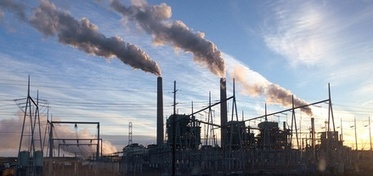
More than 100 coal-fired power plants nationwide either plan to shut down or already closed their doors in 2014, as the market responds to stricter environmental regulations, cheap natural gas and lackluster electricity demand growth, according to a survey done by the Energy Information Administration. Behind all those closures sit coal mines — many of them in Appalachia — coping with the loss of customers for the fuel that reigned supreme for many decades. Click the image above for a more detai

Source: powersource.post-gazette.com

>” […] More than 17 million tons of coal from Appalachia went to plants slated to shut down in 2013 alone, the latest full year for which such data are available. And the impact is likely to be even bigger, since the EIA’s list of recent or coming closures doesn’t include generators planning a transition from burning coal to burning natural gas.

Companies have been bracing for this change for years, but many have indicated that it’s coming faster and blunter than expected, driven in part by a slew of environmental regulations.

“That’s an unprecedented change to America’s power system in what constitutes the blink of an eye in energy markets — creating enormous potential for market disruptions, supply shortages and rate spikes,” Deck Slone, senior vice president of strategy and public policy at St. Louis-based Arch Coal, wrote in December.

Like its peers, Arch’s stock price reflects the gloom. At $1.30 per share, Tuesday’s closing price represented a one-year low. Virginia-based coal producer Alpha Natural Resources’ also saw its 52-week bottom at $1.13.  […]

Central Appalachian coal mines stand to be big losers in the transition away from coal, Mr. Cosgrove wrote in November. That includes the historically prolific supplies in Virginia, southern West Virginia and eastern Kentucky.

“Falling demand may hasten mine closings in the region, where coal production has dropped 32 percent since 2009,” he wrote.

Some companies have been bracing for the fall for years.  […]

Between 2012 and 2014, Alpha idled 64 mines, reduced its shipments in the eastern part of the country by 28 percent and got rid of more than 4,000 employees.  […]

The situation looks worse for suppliers such as Virginia-based James River Coal Co., which is in the middle of a restructuring, and Virginia-based James C. Justice Co., which has shed a significant portion of its mine portfolio in recent years. The producers stand to lose 28 percent and 48 percent of shipments, respectively, from mines serving affected plants.

For decades, contracts between coal companies and utilities have included force majeure clauses, according to Mr. Cardwell, who has reviewed hundreds of contracts and negotiated dozens during his 18-year tenure as a coal buyer for a Kentucky utility.

Such clauses typically protect power plants from having to take delivery of coal they no longer need if the power plant is prevented from running by some new environmental regulation or another unforeseen circumstance.

Yet lawsuits seem inevitable following current and projected mine closures. “I have a feeling that there’s going to be pretty significant litigation in the future,” Mr. Cardwell said.

One issue that may arise as power plants claim that environmental regulations pushed them out of business is how much of a role competition from cheap natural gas played in their decision either to shut down or use a different fuel.

Gas is all the rage at the moment. The commodity is trading at around $3 per million British thermal units, or Btus, down from more than $13 in the summer of 2008, towards the beginning of the shale revolution in Appalachia.

That’s why some operators, like Consol Energy, now boast flexibility in their contracts with utilities. Consol has refocused its company on a growing shale gas business, retaining only a handful of coal mines.

According to James McCaffrey, senior vice president of marketing at Consol, who spoke at Platts’ Coal Marketing Days in Downtown in September, “Customers want to flip between coal and gas.”

He said the company was actively negotiating a deal where a utility could choose its fuel depending on its preference.

“That’s a good marketing approach: ‘I’ll give you Btus, you tell me how you want them,’ ” Mr. Cardwell said. […]”<

See on Scoop.itGreen & Sustainable News

Michigan’s Consumers Energy to retire 9 coal plants by 2016

New EPA regulations are an opportunity to modernize the generating fleet, according to a Consumers Energy official.

Source: www.utilitydive.com

>”[…] Consumers Energy will shutter nine coal plants in Michigan as EPA air pollution regulations make them unprofitable to operate, MLive reports. And the Michigan utility won’t be the only one. A wave of coal retirements will roll across the Midwest by early 2016, shuttering more than 60 generating plants, a Consumers official told the “Greening of the Great Lakes” weekly radio program.In addition to the regulations under the Clean Power Plan and other EPA programs, Consumers says many of the nine coal plants were built in the 1950s and are simply at the end of their productive lives.  […]

Last year Consumers Energy announced it had selected AMEC to run the utility’s decommissioning program for the planned retirement of seven operating units at the utility’s three oldest coal-fired generating plants. Though there is still uncertainty over just what impact a slate of EPA regulations will have, Consumers last year said the power plants being decommissioned have an average operating life-span of more than 60 years and collectively represented approximately 950 MW of electric capacity.

The Supreme Court has agreed to hear a challenge to the EPA’s Mercury and Air Toxics Standard, but as it stands the regulations could apply to 1,400 generators at more than 600 of the nation’s largest power plants.

Federal regulators believe the tighter controls could prevent up to 11,000 premature deaths each year by limiting mercury, particulate matter, and other harmful pollutants it says are hazardous to public health.”<

See on Scoop.itGreen & Sustainable News

Crude Oil Spills From Pipeline Into Yellowstone River, Montana

Residents have reportedly smelled and tasted oil in their drinking water downstream from the spill, and the city’s water plant has stopped drawing from the river.

Source: thinkprogress.org

>” […] On Saturday morning, a pipeline in Montana spilled up to 50,000 gallons of crude oil into the Yellowstone River, the pipeline’s operator confirmed Sunday night. […]

The 12-inch diameter steel pipe breached and spilled anywhere from 12,600 to 50,000 gallons of oil nine miles upriver from the town of Glendive, with an unknown amount of it spilling into the partially frozen river, according to a statement from Bridger Pipeline LLC. The company said the spill occurred at 10 a.m. and they “shut in” the flow of oil just before 11 a.m. — meaning that though the pipeline section could still empty itself of its contents, no new addition oil would flow into the spilled area.

“Oil has made it into the river,” Bridger spokesperson Bill Salvin confirmed to the AP on Monday. “We do not know how much at this point.” Observers spotted oil, some of which was trapped under the ice, up to 60 miles downstream from Glendive. Paul Peronard, the EPA’s on-scene coordinator, said crews were attempting to use booms to prevent the spill from spreading further but the ice on top of the river was forcing them to “hunt and peck” through it.  […]

“We think it was caught pretty quick, and it was shut down,” said Montana Governor Steve Bullock spokesperson Dave Parker, noting that the river was frozen over near the spill, which could help isolate the spill.

Parker told MTN News that “the Governor is committed to ensuring that the river is completely cleaned up and the folks responsible are held accountable.”

In 2011, an Exxon Mobil pipeline spilled 63,000 gallons of crude oil into the Yellowstone near Laurel, Montana. Days after the spill, goat rancher Alexis Bonogofsky was hospitalized for acute hydrocarbon exposure after noticing oil slicks along the riverbank abutting her ranch. She lived far enough downstream that any evacuation order missed her, she said. There was concern then that the cause of the spill was related to climate-change-influenced raging floodwaters that exposed the normally deeply-buried pipe to damaging debris.

Even two years later, the state was still fighting with Exxon over damages to the area from the spill and the clean-up process, leaving fish, birds, and wildlife dead or injured and interrupting environmental studies, recreation, and fishing.

Bridger’s pipeline runs from the Canadian border down through Montana across the Missouri and Yellowstone rivers and east into North Dakota, dubbed the Poplar System. It is on the opposite side of Wyoming from, and downstream of, Yellowstone National Park, but the river empties into the Missouri River.

The proposed — and controversial — northern leg of the Keystone XL pipeline would bethree times the diameter of the breached Bridger pipeline, and pump more than 34 million gallons of oil per day through the Dakotas down into Nebraska and into the southern leg in Oklahoma and Texas. Many landowners and local residents are concerned about what a potential spill would mean for critical watersheds and aquifers — not to mention what subsequent increased tar sands oil production means for Canadian watersheds.”<


See on Scoop.itGreen & Sustainable News

Swedish Stirling Engine Generator Converts Low Quality Landfill Gas to Energy in Poland

Swedish Stirling Engine generator specialist, Cleanergy supplies its GasBox generators to two landfill sites in Poland for the production of energy from low quality methane gas emitted from two major, following a successful pilot project earlier in the year.

Source: www.waste-management-world.com

>” […] GasBox – the centrepiece of its Combined Heat & Power (CHP) system – has been specifically developed to generate electricity and heat from low-quality methane gas produced by the decomposition of organic matter at the 2000+ landfill sites across Europe, most of which are more than 10 years old.

According to Cleanergy, many such landfill sites choose to flare the methane they produce.

The European Union Landfill Directive of 1999 states that flaring is only an option if it is impossible to extract energy from the methane gas. But up until today, older landfill sites have often broken these directives because the gas combustion engines traditionally used at newer landfills where methane levels are above 40% simply cannot produce electricity from lower grade, ‘dirty’ methane.

However, at the two Polish landfill sites the methane was released straight into the atmosphere rather than being flared.  To address this, Cleanergy’s GasBox was deployed at the Regional Centre of Waste Management in Domaszkowice in Poland in August.

This 25 hectare landfill site closed in the  2000. Since the installation of the GasBox, the electricity generated has been used to power equipment and to heat and electrify buildings at the site.

Following this success, Cleanergy’s CHP system has also been deployed at the Waste Neutralisation Enterprise in Sulnówko, a 7.5 hectare landfill site.

Anders Koritz, CEO at Cleanergy commented: “We developed our GasBox to meet a specific need – a complete CHP system that can run on low-grade methane gas. Sure enough the industry response since our launch in June has been amazing.”

According to Cleanergy its GasBox addresses this specific problem and is able to produce both electricity and heat from a methane gas concentration down to 18%.

Installed inside a modular container, Cleanergy’s GasBox is an autonomous and flexible stirling engine unit. Also inside the container is a real-time power management system with remote access; a fuel pipe; plus a heat and electricity connection to a house/factory/warehouse with optional grid functionality.

With a claimed ROI of three to five years, the company said that its GasBox is now commercially deployed at several locations in Norway, Slovenia, Sweden (in collaboration with the Swedish Energy Agency) and the UK. […]”<


See on Scoop.itGreen Energy Technologies & Development

Indiana Landfill Gas Energy Project Starts Operations

Republic Services recently announced the start of operations at its latest landfill gas-to-energy project. The new 6 MW project at County Line Landfill involves four engines operating at one energy generation facility.

Source: biomassmagazine.com

>” […] Landfill gas is a natural byproduct of decomposing waste. This project involves extracting gas from within the landfill, processing the extracted gas, and then distributing the processed gas to a generation facility where it is converted into energy that supplies the local electric grid.

According to the U.S. EPA, landfill gas-to-energy projects also reduce reliance on non-renewable energy resources, such as coal or petroleum. The EPA estimates that three megawatts of energy produced from landfill gas is equivalent to preventing carbon emissions generated by the consumption of 16.6 million gallons of gasoline. Based on EPA calculations, the new County Line Landfill gas-to-energy project prevents carbon emissions equivalent to the consumption of more than 32 million gallons of gasoline.

Republic Services partnered with Aria Energy on the design, development and management of the new project. Republic Services and Aria Energy have partnered on four projects to date with a combined generation capacity of more than 39.6 megawatts of electrical power. Republic and Aria are currently working on two additional projects, which combined are expected to create another 15 megawatts of electrical power.

Republic Services has implemented 73 landfill gas-to-energy projects nationwide. Together, these projects harness enough electricity to power or heat approximately 400,000 households. According to the EPA, the combined environmental benefits from these projects are equal to removing more than 4 million cars from our roads or planting more than 4.5 million acres of trees each year. […]”<

See on Scoop.itGreen & Sustainable News

Climate Change, Carbon Reduction and Mitigating Natural Gas Use in the Electricity Sector

The Environmental Protection Agency’s Clean Power Plan offers states the opportunity to curb rising natural gas use in the United States and achieve steeper carbon-pollution reductions by investing more aggressively in renewable energy and energy efficiency.

Source: www.americanprogress.org

>” […] In the United States, electric utilities are the largest source of carbon pollution. Therefore, the reduction of power-sector emissions needs to be a central component of any meaningful climate mitigation strategy. In June, the Environmental Protection Agency, or EPA, released a landmark proposal to establish the first-ever carbon-pollution standards for the nation’s power plants.

This proposal, the Clean Power Plan, establishes a “best system of emissions reduction” based on four building blocks that combine to make the nation’s electricity system more efficient and less reliant on carbon-heavy coal-burning power plants. […]

One of the Clean Power Plan’s central elements is increasing the use of lower-carbon natural gas combined cycle, or NGCC, units to generate some of the electricity now produced by higher-carbon coal-fired power plants. States can use this approach to achieve relatively quick carbon-pollution reductions starting in 2020 while ramping up the deployment of programs that promote renewable energy and energy efficiency.

The EPA modeled two compliance scenarios to understand the costs, benefits, and potential energy-related impacts of the Clean Power Plan. This modeling suggests that the electricity sector’s natural gas consumption will increase sharply at the beginning of the Clean Power Plan’s implementation period as states shift power generation from dirtier coal-fired plants to cleaner-burning NGCC plants. The EPA also predicts that states will build new NGCC plants to replace retiring coal plants and to help meet their carbon-reduction targets.

By 2030, however, the EPA’s models forecast that more renewable energy and energy-efficiency programs will come online as states continue to implement the Clean Power Plan. Electricity generation from renewable sources will displace some generation from NGCC and coal-fired power plants. Energy-efficiency programs, meanwhile, will reduce electricity demand, slowing generation and curbing carbon pollution from the power sector as a whole. […]

While natural gas burns cleaner than coal, it is still a fossil fuel that releases carbon pollution. In addition, methane, a potent greenhouse gas, can escape throughout the natural gas production and supply cycle. For these reasons, several recent studies by prominent researchers have questioned whether natural gas can form the core of an effective climate mitigation strategy. […]

By acting decisively to implement ambitious renewable energy and energy-efficiency programs, states can help ensure that the United States does not overcommit to natural gas and that it continues on a path toward decarbonization of the economy. […]”<

See on Scoop.itGreen & Sustainable News

US EPA Awards Energy Star to 3 CHP (Cogen) Projects

The US Environmental Protection Agency (EPA) has recognised three combined heat and power projects with ENERGY STAR CHP awards.

Source: www.cospp.com

>”[…] Eastman Chemical Company’s Kingsport, Tennessee, Campus plant (pictured) was recognised for its 200 MW CHP system, which includes 17 GE steam turbine generators. The Kingsport industrial campus, one of the largest chemical manufacturing sites in North America, employs nearly 7000 people […]

Seventeen boilers produce steam to support manufacturing processes, help meet the space heating/cooling needs of 550 buildings, and drive 17 GE and two ABB steam turbine generators with a combined design output of 200 MW. With an operating efficiency of more than 78%, the predominantly coal-fired system requires approximately 14% less fuel than grid-supplied electricity and conventional steam production, saving Eastman Chemical approximately US$45 million per year.

Janssen Research & Development, LLC, one of the Janssen Pharmaceutical Companies of Johnson & Johnson, was granted an award for its 3.8 MW CHP system, powered by a Caterpillar lean-burn low-emissions reciprocating natural gas generator set. The system supplies 60% of the annual power needs for the site and approximately 40% of the thermal energy used to support R&D operations and heat, cool, and dehumidify the facility’s buildings.

With an operating efficiency of more than 62%, the system requires approximately 29% less fuel than grid-supplied electricity and conventional steam production, saving approximately $1.1 million per year.

Merck’s CoGen3 CHP system at its West Point facility was also recognised by the EPA. A pharmaceutical and vaccine manufacturing, R&D and warehouse and distribution centre, the project is powered by a 38 MW GE 6B heavy-duty gas turbine and recovers heat to produce steam to heat, cool and dehumidify approximately 7 million square feet of manufacturing, laboratory and office space.

The system, designed by Burns & Roe, is the third CHP system that Merck has installed at the 400-acre West Point, Pennsylvania campus. With an operating efficiency of more than 75%, the natural gas-fired system requires approximately 30% less fuel than grid-supplied electricity and conventional steam production.”<


See on Scoop.itGreen Energy Technologies & Development

EPA sets terms for New Power Plant carbon emissions

See on Scoop.itGreen & Sustainable News

Frances Beinecke: We’re already paying the costs of climate change. The new power plant emissions standards could not be more timely

Duane Tilden‘s insight:

>The carbon standards announced Friday by Gina McCarthy, administrator of the US Environmental Protection Agency, will set reasonable limits on carbon pollution from the power plants of tomorrow, those that are yet to be built.<

See on www.theguardian.com

Colorado’s oil and gas boom is polluting the state’s air

See on Scoop.itGreen & Sustainable News

Drillers pump 600 tons of air pollution over Colorado every day, and three-quarters of the state’s air pollution enforcement cases are linked to drilling.

Duane Tilden‘s insight:

>The 50,000 oil and gas wells in the state are collectively pumping hundreds of tons of pollution into the air every day, making the drilling industry the state’s largest source of airborne volatile organic compounds and third-largest source of nitrogen oxides. That’s according to a report in The Denver Post: […]<

See on grist.org

Ethanol critics rev up efforts to repeal biofuel rules on gas

See on Scoop.itGreen & Sustainable News

The ethanol industry is again under fire from critics who want to eliminate the federal mandate that oil companies blend biofuels into the gasoline supply.

Duane Tilden‘s insight:

>“There will be a push in our committee by some, Republicans and Democrats, to do away with the RFS, saying that it’s just completely unnecessary today, that we have enough gas and oil, that we just don’t need another fuel source, let alone subsidizing it,” Terry said.

An Environmental Protection Agency analysis found that the renewable fuel requirements will displace billions of gallons of petroleum-based fuel consumption, reduce domestic motor fuel prices and increase U.S. farm income. But it also found the potential for higher food prices.

In 2000, ethanol accounted for about 6 percent of the nation’s corn crop. Last year, it accounted for 40 percent of the corn crop.

That’s why the standard’s critics include the grocery industry and some livestock producers that want cheaper grain to feed their animals.<

See on www.omaha.com