Nuclear Plant Closures Forecast for New York and Chicago regions

See on Scoop.itGreen & Sustainable News

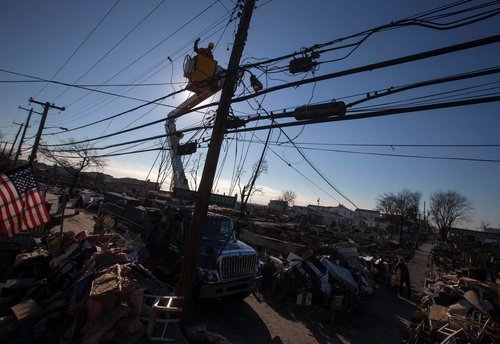
Nuclear reactors that light New York City and Chicago with carbon-free electricity face possible extinction before they can reap the benefits of President Barack Obama’s proposed climate rules.

Duane Tilden‘s insight:

>A slump in power prices, increasing maintenance expense as plants age and stricter safety regulations following Japan’s 2011 Fukushima nuclear disaster may prompt the industry to retire as many as five plants before the end of the decade, according to research firm UBS Securities LLC. That would eliminate enough generating capacity to power 2.4 million U.S. homes. […]

Reactors such as Indian Point are combating critics that want to shut them down over safety concerns. New York, for example, has solicited bids to replace the plant with natural gas-fired generators and authorized a transmission line to deliver hydropower from Quebec.

Retired nuclear units would likely be replaced by gas plants built by operators such as NRG Energy Inc. (NRG), which would have the result of increasing overall greenhouse gas emissions. That may complicate Obama’s longstanding goal of slashing U.S. emissions 17 percent from 2005 levels by 2020, and echo challenges faced by countries such as Japan and Germany as they phase out nuclear power, said Chris Gadomski, an analyst for Bloomberg New Energy Finance.<

See on www.bloomberg.com

Council plans ambitious geothermal energy facility in Crewe

See on Scoop.itGreen Energy Technologies & Development

PLANS to extract geothermal energy from beneath Crewe are being explored by Cheshire East Council (CEC). The town has been identified as one of only six sites in the UK with the potential to deliver the renewable energy source.

Duane Tilden‘s insight:

>The council point to independent studies that show parts of the borough are sitting on enough natural energy supplies to heat every home in Cheshire East for centuries.

Boreholes 4km deep will be drilled to access 100c hot water beneath the Cheshire Basin. The water could then be extracted and the steam used to drive turbines for electricity generation.

An independent study will now be commissioned to report on both the suitability of the site and how the extraction could take place.<

See on www.creweguardian.co.uk

Renewables & Energy Efficiency Can Cut Power Plants’ Water Use 97% by 2050

wupt-plantscherer-Coal-Fired-plantSee on Scoop.itGreen & Sustainable News

Investing in renewables and energy efficiency could reduce power plants’ water withdrawals by 97 percent from current levels by 2050 and cut carbon emissions 90 percent from current levels, according to a study by the Union of Concerned Scientists…

Duane Tilden‘s insight:

>The report warns that a “business-as-usual” approach would keep emissions within 5 percent of current levels and water withdrawals would not drop significantly until after 2030. And while utilities’ ongoing shift to natural gas would decrease water use in the coming decades, the study says its ongoing requirements could still harm water-strained areas. This shift to natural gas also would do little to lower the power sector’s carbon emissions.

More than 40 percent of US freshwater withdrawals are used for power plant cooling, the report says. These plants also lose several billion gallons of freshwater every day through evaporation.

Further, increasing demand and drought are putting a greater strain on water resources. Low water levels and high water temperatures can cause power plants to cut their electricity output in order to avoid overheating or harming local water bodies. Such energy and water collisions can leave customers with little or no electricity or with added costs because their electric supplier has to purchase power from elsewhere, as occurred during the past two summers.<

See on www.environmentalleader.com

Climate Change Will Cause More Energy Breakdowns, U.S. Warns

See on Scoop.itGreen & Sustainable News

The national power supply is increasingly vulnerable to severe weather, according to a new Department of Energy study.

Duane Tilden‘s insight:

>The effects are already being felt, the report says. Power plants are shutting down or reducing output because of a shortage of cooling water. Barges carrying coal and oil are being delayed by low water levels in major waterways. Floods and storm surges are inundating ports, refineries, pipelines and rail yards. Powerful windstorms and raging wildfires are felling transformers and transmission lines.

“We don’t have a robust energy system, and the costs are significant,” said Jonathan Pershing, the deputy assistant secretary of energy for climate change policy and technology, who oversaw production of the report. “The cost today is measured in the billions. Over the coming decades, it will be in the trillions. You can’t just put your head in the sand anymore.”<

See on www.nytimes.com

UK Energy Efficiency Requirements and Business

See on Scoop.itGreen & Sustainable News

Proposals for an Energy Savings Opportunity Schemes have been published by the UK Government that will make it compulsory for large companies to undertake energy audits.

Duane Tilden‘s insight:

>An ESOS assessment would undertake a review of the total energy use and energy efficiency of the organisation, including the measurement of an energy intensity ratio (e.g. energy use per employee or per unit of output) and, as appropriate, considering the variation in energy use over time within key buildings, key industrial operations, and key transport activities (exempting de minimis energy use).

The review would need to be proportionate and sufficiently representative “to permit the drawing of a reliable picture of overall energy performance” of the organisation and present clear information on potential savings, which identify and quantify cost-effective energy savings opportunities.

These should be, wherever practical, based on life cycle assessments (LCA) instead of simple payback periods (SPP), as the former are more realistic.

All procedures for doing this are outlined under the international standard for energy management, ISO 50001, with which all energy and facility managers are encouraged to become competent.

The Government has come under sustained criticism recently for failing to do enough to promote energy efficiency.<

See on theenergycollective.com

Three Types of Climate Action for Europe and Central Asia Region

See on Scoop.itGreen Energy Technologies & Development

Under current trajectories, the world is headed toward a world that will be 4 degrees warmer by the end of this century.

Duane Tilden‘s insight:

>[…] However, as we try to show in our recent publication, Growing Green: the Economic Benefits of Climate Action, strategic investment in climate action can benefit these countries in the medium- and long-terms – thus offsetting the negative consequences of these investments.

Above all, countries need to focus on three types of climate action: climate action as aco-benefit, climate action as an investment, and climate action as insurance.

This first area of climate action is simply a co-benefit of policies that make sense even if we were not concerned about climate change. These are things like supporting energy efficiency investments or restoring degraded soils to make agriculture more productive (while also increasing carbon storage in soils).

The second area is what we call climate action as an investment. This gets at the issue of how countries can benefit from greening their economies – doing well by doing good. What we have seen in the last few years is that new firms emerge in countries that have implemented ambitious green policies early and take advantage of the economic opportunities that have sprung from these policies. […]<

See on blogs.worldbank.org

Ethanol critics rev up efforts to repeal biofuel rules on gas

See on Scoop.itGreen & Sustainable News

The ethanol industry is again under fire from critics who want to eliminate the federal mandate that oil companies blend biofuels into the gasoline supply.

Duane Tilden‘s insight:

>“There will be a push in our committee by some, Republicans and Democrats, to do away with the RFS, saying that it’s just completely unnecessary today, that we have enough gas and oil, that we just don’t need another fuel source, let alone subsidizing it,” Terry said.

An Environmental Protection Agency analysis found that the renewable fuel requirements will displace billions of gallons of petroleum-based fuel consumption, reduce domestic motor fuel prices and increase U.S. farm income. But it also found the potential for higher food prices.

In 2000, ethanol accounted for about 6 percent of the nation’s corn crop. Last year, it accounted for 40 percent of the corn crop.

That’s why the standard’s critics include the grocery industry and some livestock producers that want cheaper grain to feed their animals.<

See on www.omaha.com

Concern about emissions trading scheme affecting the impact of renewables

See on Scoop.itGreen & Sustainable News

Deep problems in Europe’s carbon trading scheme – its flagship climate change policy – are set to cancel out over 700m tonnes of emissions saved through renewable energy and energy efficiency efforts, according to a new report.

The study, by carbon trading thinktank Sandbag, found that a huge oversupply of carbon pollution permits means many are being banked to enable emissions after 2020, when efforts to tackle global warming should be intensifying. These emissions, nearly equivalent to Germany’s annual carbon pollution, will cancel out efforts made in other areas to cut carbon.

The report also warns that Europe’s emissions trading scheme (ETS) is a “global dumping ground” for “dubious” carbon permits created by projects around the world.

See on energyindemand.com

Heat Wave May Threaten World’s Hottest Temp. Record | Climate Central

See on Scoop.itGreen & Sustainable News

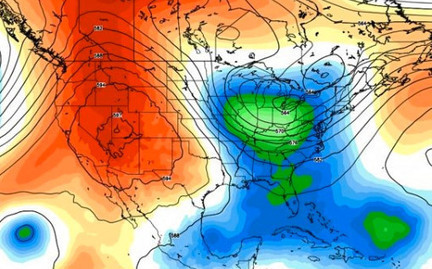
By the end of an upcoming heat wave, we may see a new record for the hottest temperature ever recorded on Earth.

Duane Tilden‘s insight:

>All-time records are likely to be threatened in normally hot places — including Death Valley, Calif., which holds the record for the highest reliably recorded air temperature on Earth at 134°F. That mark was set on July 10, 1913, and with forecast highs between 125°F to 130°F this weekend, that record could be threatened. The last time Death Valley recorded a temperature at or above 130°F was in 1913.

Las Vegas and Phoenix, two cities well-known for their hot and dry summers, are also predicted to approach all-time record territory. Last Vegas’ all-time high temperature record is 117°F and Phoenix’s high is 122°F. Excessive heat warnings are in effect in both cities from Friday through Monday.

Las Vegas could come close to tying its record for the longest stretch of days at or above 110°F, which is 10 straight, set in 1961. Phoenix may approach its record for the number of consecutive days at or above 116°F, which is four, set in 1990. Reliable weather records began there in 1896. Forecast highs in Phoenix range between 115°F to 120°F for Friday through Sunday.<

See on www.climatecentral.org

Sustainable Energy and Federal Agencies | The Energy Collective

See on Scoop.itGreen Energy Technologies & Development

In his speech on Tuesday laying out a national climate action plan, President Obama called on federal agencies to lead by example in taking actions to reduce their emissions of greenhouse gases.

Duane Tilden‘s insight:

>Faced with declining budgets, federal agencies are looking for innovative ways to cut costs while meeting a growing list of sustainability mandates.  Expanding the use of information and communication technologies (ICT) – metering and energy management systems for buildings, GPS-based tools for fleets, teleconferencing, e-training, teleworking, and cloud-based data storage – offer agencies new ways to reduce their energy use, cut greenhouse gas emissions and enhance productivity.

We estimate widespread deployment of  ICT could help reduce greenhouse gas emissions by 12 percent, roughly half the amount called for under a 2009 executive order, and could save an estimated $5 billion in energy costs through 2020. […]

Using 2008 as a baseline, agencies have a goal of reducing direct emissions (Scope1 and 2) 28 percent and indirect emissions (Scope 3) 13 percent by 2020. With reductions of 7 percent through 2011, federal agencies are making good progress.  By expanding use of ICT, the federal government could go much further. […]<

See on theenergycollective.com