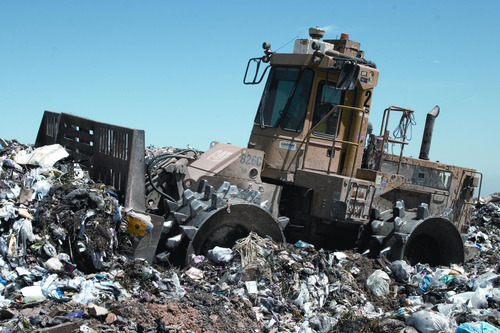
Is Gasification Better Than Incineration? Read: Global Markets for Gasifiers – WSJ.com

See on Scoop.itGreen Energy Technologies & Development

NEW YORK, April 15, 2013 /PRNewswire/ — Reportlinker.com announces that a new market research report is available in its catalogue:

Global Markets for Gasifiers

Duane Tilden‘s insight:

INTRODUCTION

Gasification is a centuries–old thermochemical energy conversion technology that has slowly achieved modernity over the decades. The technology is undergoing its third evolutionary surge. Fuel shortages in WWII spurred widespread adoption for vehicle fuels. The oil crisis 1973 spurred a re–evaluation and renewed development. Rising oil prices, globally increasing fuel demand, and overwhelming scientific evidence of climate change have spurred this last leg to full industrialization.

The central concept of gasification is that by raising carbon–rich materials to high temperatures in an oxygen–deficient containment, the material will break down thermochemically instead of burning. If the same material is combusted (burned), it emits carbon monoxide and a host of pollutants, besides being incompletely consumed. If gasified, the products are hydrogen (H2), carbon monoxide (CO) and carbon dioxide (CO2). This is synthetic gas, simply called “syngas.” It can be burned, captured, stored, or its molecules rearranged to form fuels and chemical feedstocks.

The process is moderately more efficient than incineration, has significantly fewer emissions and waste, and the syngas can be shaped into a myriad of products for power production, chemical industries, liquid fuels, and heat.

Feedstock for gasification can be coal, the organic components of municipal waste, industrial waste streams, chemical feedstocks, forestry residues, forest products and crop residues, medical waste, unrecycled plastic or, in the case of plasma gasifiers, almost any nonradioactive material.

A gasifier is the central component of a gasification plant. Surrounding it are the feedstock conditioning and delivery systems, oxygen, steam and air input systems, waste removal components, syngas cooling and cleaning systems, power plants, heat recovery units, Fischer–Tropsch molecule rearrangers, and so on. This report focuses on the markets for gasifier units that are in place and will be installed by application segment and geographic location through the year 2017.

See on online.wsj.com

#Landfill methane-to-energy project gets national award – #Renewable #Energy

See on Scoop.itGreen Energy Technologies & Development

Lycoming County was one of seven places in the country to receive the U.S. Environmental Protection Agency’s award for excellence in landfill gas energy projects for 2012.

Duane Tilden‘s insight:

Yaw, who was present at Thursday’s presentation at the commissioners’ meeting, said he frequently became frustrated when driving by the landfill and seeing excess methane being flared off.

“We’re utilizing all of the landfill methane (now). We’re not flaring anything,” said Tucker.

The county’s waste gas-to-energy project produces enough electricity to power 4,000 homes a year and has the equivalent reduction of 80,000 barrels of oil a year, according to PPL Renewable Energy.

Donna Zickefoose, Allenwood Federal Correctional Complex warden, said the local institution is the first federal prison to be involved in such a project. She said it will save the prison $5 million during the next decade.

See on www.sungazette.com

UK firm to install landfill gas to energy plant in Ireland | Energy Live News

See on Scoop.itGreen Energy Technologies & Development

A UK energy company has won a contract to deliver a landfill gas to energy plant in Ireland. Based in Knowsley near Liverpool, Clarke Energy signed the agreement with Irish …

Duane Tilden‘s insight:

…Irish utility Bord na Mona for a 5.6MW plant – equivalent to powering 14,000 households – at the Drehid landfill site. The project will use landfill gas that originated from household waste to produce renewable energy.

John Curley, General Manager of Clarke Energy in Ireland said: “This significant project will create up to 25 jobs during construction, in addition to sustained employment for operations.

See on www.energylivenews.com

Waste fat will power UK’s biggest sewage works | Energy Live News

See on Scoop.itGreen & Sustainable News

Waste fat and oil from restaurants and clogged up drains underground (pictured) will soon power the UK’s largest sewage works. A new power station at Beckton in East London opening …

Duane Tilden‘s insight:

Thames Water says it has agreed to buy 75 GWh of this output to run its Beckton sewage works, which serves roughly 3.5 million people, as well as a nearby desalination plant […]

The water firm has committed to provide the power station with 30 tonnes a day of fat, oil and grease (FOG) enough to fill a six metre-long shipping container. That’s at least half of the fuel the generator needs to run.

Developed and run by ‘green’ utility 2OC, it’s set to produce 130 Gigawatt hours (GWh) a year of renewable electricity – enough to run 39,000 average-sized homes.

See on www.energylivenews.com

Report: Global waste industry could double to $2tn by 2020

See on Scoop.itGreen Energy Technologies & Development

Bank of America Merrill Lynch analysis predicts boom in global waste industry as resource crunch bites

Duane Tilden‘s insight:

“We are seeing a shift away from waste as a mandatory public service to waste management as a sustainable business opportunity,” the report states. “We see the fastest growth in the next decade coming from diversion, recycling, recovery of valuable secondary raw materials, waste-to-energy, e-waste and sustainable packaging – as well as from emerging markets. We see considerable low hanging fruit potential given that 70 per cent plus of global waste is currently landfilled. ‘Greening’ waste management will require increasing MSW recycling by a factor of 3.5 times and doubling industrial waste recycling.”

See on www.businessgreen.com

What Will Be the Next Technological Breakthrough in Energy?

See on Scoop.itGreen Energy Technologies & Development

What technological breakthrough is most likely in the next 10 years that could completely change the energy equation as we now see it?

Duane Tilden‘s insight:

Jeffrey Ball: Information Technologies to Increase Efficiency, and Solar Power Seem Promising

Predicting new-energy technological breakthroughs tends to be a fool’s errand. A decade ago, few envisioned the breakthrough that has most rocked the U.S. energy world: the one-two punch of fracking and horizontal drilling that has unlocked huge stores of shale gas from California to New York.

Right now, two broad areas of new energy technology seem particularly promising: information technologies that could spur major energy-efficiency improvements; and cheaper and more-reliable solar power. […]

Study after study has pegged energy efficiency as the lowest-cost way to curb fossil-fuel consumption and the resulting greenhouse-gas emissions. The problem has been figuring out how to unlock those efficiency improvements in the real world. Today, creative minds are at work developing electronic systems to track and display the energy use of institutional and individual consumers in ways that could make those users much more conscious both about how much energy they consume and about precisely what they could do to cost-effectively consume less. More information, in short, could equal less power.

See on online.wsj.com

German village delivers great green energy blueprint

See on Scoop.itGreen Energy Technologies & Development

Nations as diverse as North Korea and the United States have sent personnel to a tiny village in the east of Germany in a bid to understand its successful energy transformation.

Duane Tilden‘s insight:

…Feldheim is powered by a mix of 43 wind turbines, a woodchip-fired heating plant and a biogas plant that uses cattle and pig slurry as well as maize silage.

Local energy costs of 16.6 euro cents per kilowatt hour (kWh) are just a little more than half of the 27-30 cents Germans pay on average …

Feldheim’s rates are not far off those in Poland, which generates nearly all its electricity from carbon-intensive coal-fired plants.  Households there paid on average 14 cents per kWh in 2012, while those in the Czech Republic, which relies on nuclear for about a third of its power generation, paid about 15 cents per kWh.

DT:  Current electricity pricing in Canada is 6.3 to 11.8 cents/kWh (US$) & United States is 8 to 17 cents/kWh (US$) ~ wiki

See on www.businessspectator.com.au

Environmental Protection – Landfill Gas Management Regulation

See on Scoop.itGreen Energy Technologies & Development

Duane Tilden‘s insight:

The regulation requires that municipal solid waste landfills with 100,000 tonnes or more of waste in place or with an annual waste acceptance rate exceeding 10,000 tonnes to undertake an assessment of landfill gas generation and to submit the results to the Ministry in a report by January 1, 2011.  […]

If according to Landfill Gas Generation Assessment Procedure a regulated landfill site is estimated to generate 1000 tonnes or more of methane, the owner or operator of that site is required to complete a LFG management facilities design plan and to install the designed facilities at the landfill site.  The Landfill Gas Management Facilities Design Guidelines (PDF/9.3 MB)  […]  The performance standards prescribed in the document are intended to implement high-efficiency LFG collection systems. This Guideline must be used by landfill owners, operators, and qualified professionals in the preparation of LFG facilities design in accordance with the Landfill Gas Management Regulation.

See on www.env.gov.bc.ca

Biofuels Suffering from High Corn Prices and Dropping Demand | The Energy Collective

See on Scoop.itGreen Energy Technologies & Development

Nearly 10 percent of the nation’s ethanol plants have stopped production over the past year, the drought having pushed commodity prices so high that ethanol has become too expensive to produce.

Duane Tilden‘s insight:

The other half of this is falling demand for gasoline — a result of both the recession, and a renewed policy push for electric and hybrid vehicles and tougher fuel economy standards. […]

Globally, the combined effect of U.S. and European biofuel policy has been a massive divergence of corn crops into biofuel production, which in turn drove up the price of corn and contributed to global food insecurity. […]

Cellulosic biofuels, by relying on crops that don’t double as food, could provide a solution. But whether they can be widely commercialized without requiring high levels of water and land use remains an open question.

See on theenergycollective.com

Next-gen biofuels making slow, slow, slow progress in 2013

See on Scoop.itGreen Energy Technologies & Development

Companies that are still looking to produce biofuels from plant waste (and not corn) are making slow, but steady progress on milestones in 2013.

Duane Tilden‘s insight:

According to Bloomberg’s energy research arm New Energy Finance, ethanol made from plant waste could cost the same to produce as corn-based ethanol by 2016. Currently cellulosic ethanol costs 94 cents a liter to produce, or about 40 percent more than ethanol made from corn, says Bloomberg.

See on gigaom.com