Energy Efficiency, Smart Buildings & Wireless Control Systems

Energy efficient technology and services for the building sector will double by 2022, according to a new report …

Source: www.climatecontrolnews.com.au

>”[…] Since buildings account for a large portion of national energy consumption, most of the governments in the Asia Pacific region have taken steps to promote energy management and energy efficiency in both new construction and existing buildings. […]

“With about 40 per cent of the world’s building stock, Asia Pacific represents a major portion of global real estate,” he said.

“Growing concerns about air pollution in Chinese cities, in particular, is expected to further drive investment in energy efficiency technologies to reduce China’s demand for coal-based electricity.

“The market for energy efficient buildings is expected to double in the next eight years, reaching nearly $92 billion in annual revenue by 2022.”

The largest segment of the energy efficient buildings market in Asia Pacific today is advanced lighting […]

“The commercial buildings sector in the region will experience a significant increase in the adoption of these products in the coming years,” Bloom said. Entitled“Energy Efficient Buildings: Asia Pacific”, the report examines the trends for energy efficient building technology and services in the Asia Pacific region.

It covers three main areas of technology – HVAC, energy efficient lighting, and commercial building automation – as well as the energy service company (ESCO) sector.

The convergence of building automation, information technology, and wireless communications is another area of growth identified by Navigant Research.

A separate report examines the state of the global wireless building controls industry, including global market forecasts for wireless node unit shipments and revenue through 2023.

Wireless controls can be used to link devices found in a variety of building systems, including heating, ventilating, and air conditioning (HVAC), lighting, fire and life safety, and security and access.

In addition, they often provide networked control in buildings or areas where wired controls are simply too challenging or expensive to install.

Worldwide revenue from wireless control systems for smart buildings is expected to grow from $97 million annually in 2014 to $434 million in 2023.  […]

While the adoption and deployment of wireless systems based on standard technologies and protocols, such as Wi-Fi, Zigbee, and EnOcean, are increasing, most wireless devices and control networks used today utilize proprietary, vendor-specific wireless communications technology.

That is likely to change as the demand for interoperability grows, according to the “Wireless Control Systems for Smart Buildings” report. “<

See on Scoop.itGreen Building Operations – Systems & Controls, Maintenance & Commissioning
Ice Energy Storage Solution Awarded 16 Contracts by SCE

Santa Barbara – Ice Energy today (Nov 5, 2014) announced it has been awarded sixteen contracts from Southern California Edison (SCE) to provide 25.6 megawatts of behind-the-meter thermal energy storage using Ice Energy’s proprietary Ice Bear system.

Source: www.ice-energy.com

>” […] Ice Energy was one of 3 providers selected in the behind-the-meter energy storage category, which was part of an energy storage procurement by SCE that was significantly larger than the minimum mandated by the California Public Utility Commission (CPUC). SCE is one of the nation’s leaders in renewable energy and the primary electricity supply company for much of Southern California.

The contract resulted from an open and competitive process under SCE’s Local Capacity Requirements (LCR) RFO. The goals of the LCR RFO and California’s Storage Act Mandates are to optimize grid reliability, support renewables integration to meet the 2020 portfolio standards, and support the goal of reducing greenhouse gas emissions to 20% of 1990 levels by 2050.

“SCE’s focus on renewable energy is critical to helping meet California’s long-term goals, and Ice Energy is proud to be part of the solution with these contracts,” said Mike Hopkins, CEO of Ice Energy, the leading provider of distributed thermal energy storage technology. “Using ice for energy storage is not new, we’ve just made it distributed, efficient, and cost-effective. The direct-expansion AC technology is robust and proven, which is important because SCE and other utilities require zero risk for their customers.”

In 2013, 22 percent of the power SCE delivered came from renewable sources, compared to 15 percent for other power companies in the state. The utility is on track to meet the state’s goal of 33 percent, and procuring energy storage helps them meet those targets while maintaining a robust and reliable grid.

Ice Energy’s product, the Ice Bear, attaches to one or more standard 5-20 ton commercial AC units. The Ice Bear freezes ice at night when demand for power is low, capacity is abundant and increasingly sourced from renewables such as wind power. Then during the day, stored ice is used to provide cooling, instead of the power-intensive AC compressor. Ice Bears are deployed in smart-grid enabled, megawatt-scale fleets, and each Ice Bear can reduce harmful CO2 emissions by up to 10 tons per year. Installation is as quick as deploying a standard AC system.

“Ice Bears add peak capacity to the grid, reduce and often eliminate the need for feeder and other distribution system upgrades, improve grid reliability and reduce electricity costs,” Hopkins said. “What’s special about our patented design and engineering is the efficiency and cost. It’s energy storage at the lowest cost possible with extraordinary reliability.”

See on Scoop.itGreen Energy Technologies & Development

Thermal Energy Storage uses Ice for Cooling of Buildings – Smart Grid Technologies

Ice Energy’s proven Ice Bear system is the most cost effective and reliable distributed energy storage solution for the grid. The Ice Bear delivers up to six hours of clean, firm, non-fatiguing stored energy daily and is fully dispatchable by the utility. Ice Bear projects are job engines, creating long-term green jobs in the hosting communities.

Source: www.ice-energy.com

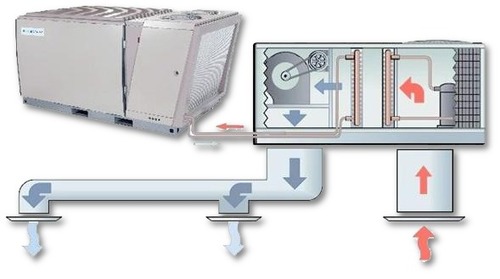
>” […] The Ice Bear system is an intelligent distributed energy storage solution that works in conjunction with commercial direct-expansion (DX) air-conditioning systems, specifically the refrigerant-based, 4-20 ton package rooftop systems common to most small to mid-sized commercial buildings.

The system stores energy at night, when electricity generation is cleaner, more efficient and less expensive, and delivers that energy during the peak of the day to provide cooling to the building.

Daytime energy demand from air conditioning – typically 40-50% of a building’s electricity use during peak daytime hours – can be reduced significantly by the Ice Bear. Each Ice Bear delivers an average reduction of 12 kilowatts of source equivalent peak demand for a minimum of 6 hours daily, shifting 72 kilowatt-hours of on-peak energy to off-peak hours. In addition, the Ice Bear can be configured to provide utilities with demand response on other nearby electrical loads – effectively doubling or even tripling the peak-demand reduction capacity of the Ice Bear.

When aggregated and deployed at scale, a typical utility deployment will shift the operation of thousands of commercial AC condensing units from on-peak periods to off-peak periods, reducing electric system demand, improving electric system load factor, reducing electric system costs, and improving overall electric system efficiency and power quality.

The Ice Bear is installed behind the utility-customer meter, but the Ice Bear system was designed for the utility as a grid asset, with most of the benefits flowing to the utility and grid as a whole. Therefore Ice Bear projects are typically funded either directly or indirectly by the utility.[…]

At its most basic, the Ice Bear consists of a large thermal storage tank that attaches directly to a building’s existing roof top air-conditioning system.

The unit makes ice at night, and uses that ice during the day to efficiently deliver cooling directly to the building’s existing air conditioning system.

The Ice Bear energy storage unit operates in two basic modes, Ice Cooling and Ice Charging, to store cooling energy at night, and to deliver that energy the following day.

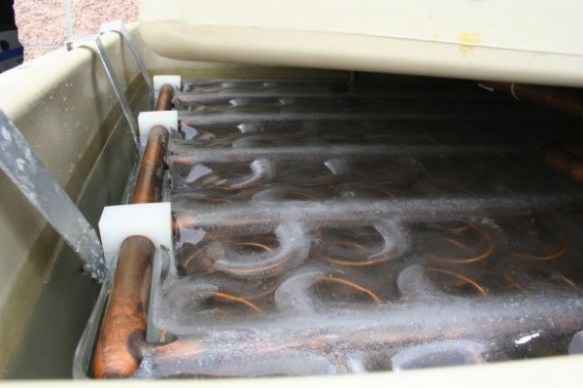
During Ice Charge mode, a self-contained charging system freezes 450 gallons of water in the Ice Bear’s insulated tank by pumping refrigerant through a configuration of copper coils within it. The water that surrounds these coils freezes and turns to ice. The condensing unit then turns off, and the ice is stored until its cooling energy is needed.

As daytime temperatures rise, the power consumption of air conditioning rises along with it, pushing the grid to peak demand levels. During this peak window, typically from noon to 6 pm, the Ice Bear unit replaces the energy intensive compressor of the building’s air conditioning unit.

[…]

The Ice Cooling cycle lasts for at least 6 hours.

Once the ice has fully melted, the Ice Bear transfers the job of cooling back to the building’s AC unit, to provide cooling, as needed, until the next day. During the cool of the night, the Ice Charge mode is activated and the entire cycle begins again. […]”<

See on Scoop.itGreen Energy Technologies & Development

CAN NYC REDUCE ITS CARBON FOOTPRINT 90% BY 2050?

“The building sector is the source of 75 percent of New York City’s greenhouse gas emissions. 90 by 50’s modeling of eight typical building types shows that heating and cooling loads can be reduced through retrofit measures to a point where all thermal loads can be met by heat pumps, eliminating building fuel use. The resulting electric energy used in 2050, supplied by carbon-free sources, will be slightly more than today’s, while peak demand will increase significantly. “

RO Engineers & Architects's avatarRO Engineers & Architects

In an article by urban green council,

“The building sector is the source of 75 percent of New York City’s greenhouse gas emissions. 90 by 50’s modeling of eight typical building types shows that heating and cooling loads can be reduced through retrofit measures to a point where all thermal loads can be met by heat pumps, eliminating building fuel use. The resulting electric energy used in 2050, supplied by carbon-free sources, will be slightly more than today’s, while peak demand will increase significantly. “

How will we meet this goal when there are a number of behavioral, institutional and infrustructural issues?

Let’s name a few…..

  1. The NYC subway still has outdated lighting with T12 with magnetic ballasts
  2. A large # of residential buildings the tenants leave their window a/c units installed year round which results in heat loss
  3. Alternate side parking- numerous places throughout the city people sit and idle their…

View original post 174 more words

Efficient HVAC Systems

Gallery

This gallery contains 15 photos.

Originally posted on Energy Systems & Sustainable Living:
Heating, Ventilation and Air Conditioning systems (HVAC) controls the indoor climate by adding or extracting heat and adding or removing mass (e.g. water vapour and dust). To combat summer heat and winter…

BEMS for Smaller Buildings $6 Billion Growth from 2014 to 2022

The market for building energy management systems (BEMS) for small and medium-sized commercial buildings is expanding as building owners and managers demand more energy savings and easier ways to manage energy use in their facilities, notes Navigant Research.

Source: www.achrnews.com

>” […]“Lower expenditures on energy management in the small and medium-sized building market, along with the lower penetration of advanced controls and building management systems, has limited the penetration of BEMS in this sector,” said Noah Goldstein, research director with Navigant Research. “Given the increasing importance of energy savings, however, BEMS are poised to be a tool that enables savings in both cost and carbon emissions in small and medium buildings.”

The most rapid growth in the BEMS market for smaller buildings, according to the report, is expected to occur in Europe and Asia Pacific, where new construction and regulation are promoting the installation of BEMS equipment and in turn creating demand for associated services and software. In the North American market, BEMS sales are expected to be concentrated in software, driven by utility and regulatory initiatives that promote energy efficiency and building energy reporting. […]”<


See on Scoop.itGreen Building Operations – Systems & Controls, Maintenance & Commissioning
DOE Proposes Major Energy Efficiency Changes for Commercial Air Conditioners

The White House announced a number of commitments to energy efficiency this morning, not the least of which is a proposed energy efficiency standard for rooftop air conditioners that could produce the largest electricity savings under any U.S. appliance efficiency…


image courtesy of http://akbrown.com/?page_id=278

Source: switchboard.nrdc.org

>”[…] NRDC strongly applauds today’s White House’s efficiency and clean energy announcements which come the same week that a new energy-savings standard became effective for refrigerators and freezers, with the majority of models cutting their energy use by 20 to 25 percent, thanks to a 2010 consensus recommendation to the Department of Energy (DOE) from refrigerator manufacturers, efficiency advocates, consumer groups and states.

According to the White House, the rooftop air conditioner proposed standard announced would help cut carbon pollution by more than 60 million metric tons, and could save consumers nearly $10 billion on their energy bills through 2030.  […]

The announcement follows significant groundwork by DOE in this product category, including DOE’s High Performance Rooftop Unit Challenge, a competition among manufacturers to produce efficient cooling units that cut their energy use almost in half and are still affordable in the commercial and industrial real estate space. DOE worked with members of its Commercial Building Energy Alliances (CBEA), which includes many large commercial building owners, to create a challenge specification that rooftop air conditioning manufacturers could meet. As part of the challenge, CBEA members, including Target, Walmart, Macy’s and McDonald’s, expressed strong interest in potentially purchasing high-efficiency roof-top units, helping to drive buyer support for the challenge levels. Manufacturers Daikin McQuay and Carrier succeeded in producing rooftop ACs that met the challenge specifications and resulted in substantial energy reductions.

Also included in today’s announcement are further savings from building energy codes. DOE will issue its final determination that the latest commercial building energy code – ASHRAE 90.1-2013 – saves energy compared to the previous version. Once DOE issues a positive determination that the new code saves energy compared to the previous code, individual states will consider the code for adoption leading to energy savings in new buildings and major retrofits in those states. DOE will also issue its preliminary determination on the latest residential energy-saving building code – the IECC 2015. DOE estimates that the updated commercial building standards will reduces energy bills for states and the federal government, while cutting emissions by 230 million metric tons of carbon dioxide through 2030.  […]”<

See on Scoop.itGreen Building Design – Architecture & Engineering

Advanced Controls Devices for HVAC in Buildings shows growth

Worldwide revenue from advanced HVAC controls is expected to grow from $7 billion annually in 2014 to $11.7 billion in 2023, according to a new report

Source: www.businesswire.com

BOULDER, Colo.–(BUSINESS WIRE)–Heating, ventilation, and air conditioning (HVAC) in commercial buildings typically accounts for roughly 40% of total building energy consumption. While advancements have been made in the efficiency of HVAC equipment, the actual energy consumption of HVAC equipment depends largely on their operation – which can be made much more efficient and less energy-intensive through the application of advanced HVAC controls. […]

“The drive to reduce energy use in commercial buildings has put a spotlight on improving the efficiency of HVAC systems, and HVAC controls retrofits offer a compelling value proposition through reduced energy consumption in existing buildings.”

[…]

New building certification and benchmarking regulations are driving faster retrofits of controls in existing buildings, according to the report, and changing how automation is designed into new buildings. The wider adoption of open standards for controls functions (such as BACnet), and of communications based on the Internet Protocol (IP) suite and Ethernet connectivity, is expected to help bring advanced HVAC technology to a wider market.

[…]

See on Scoop.itGreen Building Operations – Systems & Controls, Maintenance & Commissioning

Maintaining High Performance HVAC Control Systems for Cost Savings in Building Operations

The performance level of a building is directly related to the performance level of its control systems. You cannot manage a high performance building without high performing control systems.


Source: www.automatedbuildings.com

>”We rely on control systems to monitor and manage our building systems. For the most part it’s been assumed that once the control system is installed and configured it will work for years with little attention and minimal maintenance. Some systems may be trouble-free, but the majority of them will need regular attention and maintenance. Over time hardware will fail, software parameters and versions change and slowly the control system will “drift” from its original configuration and performance.

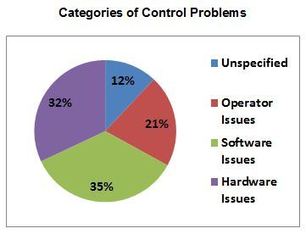
The role of control systems is somewhat undervalued. When you examine the most complex system in most buildings, the HVAC infrastructure, you find that it’s the HVAC control system, not the HVAC equipment, which produces the most operational issues and is the leading cause of inefficient energy use. Lawrence Berkley National Laboratories examined 60 buildings and found the highest frequency of common problems with HVAC was in the control system. Texas A&M research determined that of the operational and maintenance measures that could produce significant energy savings, 77% of the savings were from correcting control problems.

Maintaining a high performing control system involves regular maintenance, software and data management and organizational policies. The issues that can cause problems with a building control system are the same challenges all of us have had at one time or another with our computer or smartphone: problems related to software, hardware, communications networking and “user” mistakes. What follows is an overview of some of the typical control system issues and recommendations as to how to keep it performing at a high level.”<

See on Scoop.itGreen Building Operations – Systems & Controls, Maintenance & Commissioning

Deep Energy Retrofits–A Necessity for Old Buildings

“Studies show that focusing on energy efficiency and usage from buildings and homes is still a more effective and less expensive choice than investing in new energy sources. After all, on a global scale, residential and commercial buildings account for 40% of total final energy consumption, from HVAC, lighting, water heating, and further building functions, so a push on diminishing wastefulness in this area will have a much greater and more immediate effect than focusing on other, less sure practices (such as building wind turbines). At the moment, revamping a building to be more energy efficient will have instant effects on savings and efficiency, which is where retrofitting comes into play. Retrofitting involves giving older buildings, which often have out-of-date heating, cooling and lighting systems, an internal and external update. The entire process isn’t cheap, but it’s far less pricey than starting from the bottom up, and causes far less havoc for businesses who can’t afford to move offices while construction is taking place.”

via From Guest Blogger Blake Meredith: Deep Energy Retrofits–A Necessity for Old Buildings.