The Datacenter & Cloud Computing: Design of Warehouse-Scale Machines


Clipped from http://www.morganclaypool.com/doi/pdfplus/10.2200/S00516ED2V01Y201306CAC024

“While we draw from our direct involvement in Google’s infrastructure design and operation over the past several years, most of what we have learned and now report here is the result of the hard work, insights, and creativity of our colleagues at Google. The work of our Technical Infrastructure teams directly supports the topics we cover here, and therefore, we are particularly grateful to them for allowing us to benefit from their experience.”

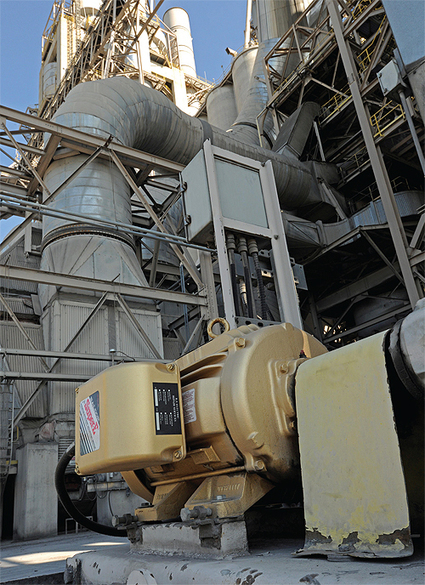
DOE Regulations: Energy Efficiency Improvements for Motors cause Industry Challenges

See on Scoop.itGreen Building Design – Architecture & Engineering

The United States has had efficiency regulations for industrial electric motors in place since October 1997, when the Energy Policy Act of 1992 (EPAct 92) set minimum efficiency levels for 1- to 200-hp general-purpose three phase motors. EPAct 92 was upgraded when the Energy Independence and Security Act of 2007 (EISA) went into effect in December 2010.

Duane Tilden‘s insight:

>Several years ago, the U.S. Department of Energy (DOE) conducted a technical study as to what could be done to raise the efficiency levels of “small” motors. After years of study and litigation, the Small Motor Rule was passed that covers two-digit NEMA frame single- and three-phase 1/3 through 3 horsepower motors in Open enclosures.

Although the Small Motor Rule seems simple, it has the effect of creating motors with much larger footprints, particularly on single phase designs where capacitor start/induction run motors may largely be discontinued in Open enclosures. In some cases, a TEFC motor may be more cost effective and smaller than an Open motor.

The DOE is presently conducting another technical study on “medium” AC induction motors of 1- to 500-hp. In their study, DOE is evaluating a possible increase in nominal motor efficiency of 1 – 3 NEMA bands (approximately 0.4 to 1.5%) above NEMA Premium Efficiency levels as defined in MG 1-2011 table 12-12. Although this sounds simple to do, such a motor redesign could entail new laminations, winding equipment and in many cases, new frames to fit the extra material. Some designs may not fit where existing motor designs of the same ratings fit today. This means that OEMs would need to redesign their machine if that is an issue and end users may have trouble fitting the new higher efficiency replacement motor into their equipment or existing envelope.<

See on www.designworldonline.com

Air Conditioning the World stresses Global Energy Supply

See on Scoop.itGreen Building Design – Architecture & Engineering

The United States currently uses more energy for air- conditioning than all other countries combined—a sobering statistic from Stan Cox of the Land Institute in Salina, Kansas.

Duane Tilden‘s insight:

>According to the U.S. Energy Information Administration, 87 percent of American households are equipped with air-conditioning, and the United States expends about 185 billion kilowatt hours of energy annually on residential cooling.  […]

Rapid increases in the ownership of air conditioners are already occurring in many developing countries. According to research by McNeil and Letschert, the percentage of urban Chinese households with an air conditioner jumped from less than 1 percent in 1990 to 62 percent in 2003. In 2010 alone, 50 million air-conditioning units were sold in China.  […]

[…] eight countries have the potential to exceed the United States’ yardstick of high air-conditioning usage, because of their warm climates and significant populations. Furthermore, the top three could surpass the United States by substantial amounts: India, China, and Indonesia by factors of 14, 5.2, and 3.1, respectively, if they adopt American standards of cooling.

[…] Several institutions have recently made major technical advances in the design of more energy-efficient air conditioners. For example, developments at the National Renewable Energy Laboratory suggest that efficiency improvements of 20 to 70 percent are possible compared to current models of air conditioners. Changes in housing design and urban planning are also needed […]<

See on www.americanscientist.org

Quantitative Analysis of Factors Contributing to Urban Heat Island Intensity

See on Scoop.itGreen Building Design – Architecture & Engineering

Ryu, Young-Hee, Jong-Jin Baik, 2012: Quantitative Analysis of Factors Contributing to Urban Heat Island Intensity. J. Appl. Meteor. Climatol., 51, 842–854.

Duane Tilden‘s insight:

>This study identifies causative factors of the urban heat island (UHI) and quantifies their relative contributions to the daytime and nighttime UHI intensities using a mesoscale atmospheric model that includes a single-layer urban canopy model. A midlatitude city and summertime conditions are considered. Three main causative factors are identified: anthropogenic heat, impervious surfaces, and three-dimensional (3D) urban geometry. Furthermore, the 3D urban geometry factor is subdivided into three subfactors: additional heat stored in vertical walls, radiation trapping, and wind speed reduction. To separate the contributions of the factors and interactions between the factors, a factor separation analysis is performed. In the daytime, the impervious surfaces contribute most to the UHI intensity. The anthropogenic heat contributes positively to the UHI intensity, whereas the 3D urban geometry contributes negatively. In the nighttime, the anthropogenic heat itself contributes most to the UHI intensity, although it interacts strongly with other factors. The factor that contributes the second most is the impervious-surfaces factor. The 3D urban geometry contributes positively to the nighttime UHI intensity. Among the 3D urban geometry subfactors, the additional heat stored in vertical walls contributes most to both the daytime and nighttime UHI intensities. Extensive sensitivity experiments to anthropogenic heat intensity and urban surface parameters show that the relative importance and ranking order of the contributions are similar to those in the control experiment.

Keywords: Urban meteorology

Received: May 7, 2011;<

See on journals.ametsoc.org

NASA – Ecosystem, Vegetation Affect Intensity of Urban Heat Island Effect

See on Scoop.itGreen Building Design – Architecture & Engineering

NASA researchers studying have found that the intensity of the “heat island” created by a city depends on the ecosystem it replaced and on the regional climate.

Duane Tilden‘s insight:

I have measured the heat island effect in the Greater Vancouver area, specifically Metrotown, Burnaby to be in the order of 6 deg C, during a late summer evening.

>”The placement and structure of cities — and what was there before — really does matter,” said Marc Imhoff, biologist and remote sensing specialist at NASA’s Goddard Space Flight Center in Greenbelt, Md. “The amount of the heat differential between the city and the surrounding environment depends on how much of the ground is covered by trees and vegetation. Understanding urban heating will be important for building new cities and retrofitting existing ones.”

Goddard researchers including Imhoff, Lahouari Bounoua, Ping Zhang, and Robert Wolfe presented their findings on Dec. 16 in San Francisco at the Fall Meeting of the American Geophysical Union.

Scientists first discovered the heat island effect in the 1800s when they observed cities growing warmer than surrounding rural areas, particularly in summer. Urban surfaces of asphalt, concrete, and other materials — also referred to as “impervious surfaces” — absorb more solar radiation by day. At night, much of that heat is given up to the urban air, creating a warm bubble over a city that can be as much as 1 to 3°C (2 to 5°F) higher than temperatures in surrounding rural areas.

The impervious surfaces of cities also lead to faster runoff from land, reducing the natural cooling effects of water on the landscape. More importantly, the lack of trees and other vegetation means less evapotranspiration — the process by which trees “exhale” water. Trees also provide shade, a secondary cooling effect in urban landscapes.

Using instruments from NASA’s Terra and Aqua satellites, as well as the joint U.S. Geological Survey-NASA satellite Landsat, researchers created land-use maps distinguishing urban surfaces from vegetation. The team then used computer models to assess the impact of urbanized land on energy, water, and carbon balances at Earth’s surface. <

See on www.nasa.gov

Construction Materials Scarcities in India spurs alleged Mafia-Political corruption

See on Scoop.itGreen Building Design – Architecture & Engineering

In several areas, Indian rules and regulations make honest business impossible. The only choice is illegal business or no business.

Duane Tilden‘s insight:

>Sand is essential for construction. Sand, gravel and cement are mixed to produce concrete. But an acute sand shortage has been created by licensing and environmental bottlenecks. So, mafia groups are mining river beds illegally across India. It’s easy: one mechanical excavator can extract several truckloads of sand every night.

Sand helps retain monsoon water in river beds, releasing the water gradually in the dry season. Excessive mining endangers this. Central and state governments have detailed environmental rules for extraction, made even tougher by court interventions. Ideally, we should have environmentally safe mining that meets rising construction demand.

Instead we have grossly insufficient legal mining, huge illegal mining, sand scarcity for construction, and big illegal profits split between the mafia and politicians.

A former cabinet minister recently declared that political parties are now funded mainly by the mafia, not by big business. This again is part of the untold Durga Sakthi story.

Politicians used to demand bribes for mining licences. Now, they deliberately hold back leases to make sand scarcer, and more profitable. […]<

See on www.cato.org

Debunking the Renewables “Disinformation Campaign”

See on Scoop.itGreen & Sustainable News

Misleading coverage fuels policy uncertainty and doubt, reducing investment security and industry development. Disinformation hurts the industry and retards its—and our nation’s—progress

Duane Tilden‘s insight:

The Fox Business example is not a singular incident. Some mainstream media around the world have a tendency to publish misinformed or, worse, systematically and falsely negative stories about renewable energy. Some of those stories’ misinformation looks innocent, due to careless reporting, sloppy fact checking, and perpetuation of old myths. But other coverage walks, or crosses, the dangerous line of a disinformation campaign—a persistent pattern of coverage meant to undermine renewables’ strong market reality. This has become common enough in mainstream media that some researchers have focused their attention on this balance of accurate and positive coverage vs. inaccurate and negative coverage.

Tim Holmes, researcher for the U.K.’s Public Interest Research Centre (PIRC), points out press coverage is important because it can influence not only “what people perceive and believe” but also “what politicians think they believe.” […]

The disinformation campaign about job creation is not limited to Europe. A Cato Institute article claimed that if people believe a commitment to renewables will fuel job growth “we’re in a lot of trouble.” Yet in 2012 alone, more than 110,000 new U.S. clean-energy direct jobs were created, and in 2010, the U.S. had more jobs in the “clean economy” than in the fossil-fuel industries. The Bureau of Labor Statistics reportsthat direct employment in May 2012 totaled 181,580 for oil and gas extraction, 87,520 for coal mining, and 93,200 for iron and steel production. BLS doesn’t similarly classify solar or wind jobs, but reputable analysts have determined from bottom-up industry surveys that in September 2012, for example, the U.S. had 119,016 direct solar jobs (89 percent full-time, the rest at least half-time), up 27 percent in two years—more than in steel-making or coal-mining. Had you heard that before? Why not?

THE COST OF DISINFORMATION

The sad truth is that the debate on clean and renewable energy is unbalanced, and seldom by accident. The CCGroup’s study showed that only 10 percent of articles focusing on renewables even contained comment from a spokesperson from the renewable energy industry. This violates basic journalistic standards. Renewables must be a part of their own conversation. Much of the conversation on renewables is misinformed and misrepresented. And when bad news does happen, says ACORE president and retired U.S. Navy Vice Admiral Dennis McGinn, opponents of renewables are pushing it “as if it’s the only news. They are dominating the conversation through misrepresentation, exaggeration, distraction, and millions of dollars in lobbying and advertising.”<

See on blog.rmi.org

Creating Value: Energy Retrofits for Buildings

See on Scoop.itGreen & Sustainable News

Buildings in the U.S. consume[…] 42 percent of the nation’s primary energy and 72 percent of its electricity. Much of that energy is needlessly wasted through inefficient design and operation.

Duane Tilden‘s insight:

>Rather than examine energy costs in isolation, our approach assesses how energy and sustainability improvements add value to all parts of a property or company. This approach is not revolutionary, but rather more comprehensive, applying industry-accepted valuation methods to the full set of retrofit value contributions, including saved energy costs, health and productivity benefits, reputation and leadership, and risk reduction.

Energy investment (and resultant property outcomes) should be treated as one of many factors that influence value, including location, tenant mix, quality of design, and more. Evaluating retrofits within the broader context of property/company value enables a logical, defensible calculation and assessment of a deep retrofit’s relative contribution to value. Previous attempts to value energy retrofits have ignored retrofits’ value contributions and overlooked standard approaches to valuing properties and companies.<

See on www.rmi.org

Jobs for the Future: Energy Efficiency creates Employment — ECEEE

See on Scoop.itGreen & Sustainable News

Energy efficiency initiatives create jobs, and normally very good jobs.  Recent analysis shows that between 17 and 19 net jobs can be created for every million euros spent.

Duane Tilden‘s insight:

>Jobs to improve energy efficiency in all end-use sectors are of high value.  Many require technical qualifications, such as engineering or architectural degrees.  Many require re-training from existing jobs. There will be a demand for financial specialists, construction engineers, behaviour specialists, project managers, auditors, data base managers, policy analysts and the like.  And these jobs are available to all, regardless of age or gender.

The hard work of creating these jobs begins once the Directive is finally approved.  The long-term policy framework needs to be in place and the funding and implementation strategy need to be well developed. But in the longer term, opportunity is knocking at the door, and it deserves a welcome mat.<

See on www.eceee.org

Net Metering And Rooftop Solar For The Utility Of The Future

See on Scoop.itGreen Energy Technologies & Development

Net metering makes small-scale renewable energy, such as rooftop solar panels, more affordable by crediting the “distributed generation” owners for the excess energy they produce.

Duane Tilden‘s insight:

>Why the new focus on net metering?  The cost for rooftop solar panels has fallen 80% since 2008, including 20% in 2012 alone.  Installed rooftop solar energy has increased by 900% between 2000 and 2011.  As consumers install more rooftop solar panels and net meter them, utility revenues will decrease.

Net metering policies vary from state-to-state, including the amount of the payback for excess energy.  The most favorable policy for distributed generation owners is an excess energy credit equal to the full retail energy rate consumers pay for energy, i.e. the amount consumers are charged for using energy.  Most states use this measure.  However, utilities claim this prevents them from recovering their full costs and overpays distributed generation owners, unfairly shifting costs to other consumers.  Utilities say the credit should be equal to the utilities’ wholesale energy cost at the time of day when excess energy flows back to the grid.

Despite attempts by utilities to change net metering policies, state regulators are keeping these policies intact.  Earlier this month, the Idaho Public Utilities Commission rejected Idaho Power’s request to pay less than the full retail rate and to impose higher charges on net metering consumers.  Last month, the Louisiana Public Service Commission rejected similar requests by Louisiana utilities.  More recently, Arizona Public Service Company raised the issue in a ne[…]<

See on blogs.edf.org