Methods of Improving Data Centers’ Energy Efficiency and Performance

America’s data centers are consuming — and wasting — a surprising amount of energy.

Source: www.livescience.com

>”Our study shows that many small, mid-size, corporate and multi-tenant data centers still waste much of the energy they use. Many of the roughly 12 million U.S. servers spend most of their time doing little or no work, but still drawing significant power — up to 30 percent of servers are “comatose” and no longer needed, while many others are grossly underutilized. However, opportunities abound to reduce energy waste in the data-center industry as a whole.  Technology that will improve efficiency exists, but systemic measures are needed to remove the barriers limiting its broad adoption across the industry.

How much energy do data centers use?

The rapid growth of digital content, big data, e-commerce and Internet traffic more than offset energy-efficiency progress, making data centers one of the fastest-growing consumers of electricity in the U.S. economy, and a key driver in the construction of new power plants. If such data centers were a country, they would be the globe’s 12th-largest consumer of electricity, ranking somewhere between Spain and Italy.

In 2013, U.S. data centers consumed an estimated 91 billion kilowatt-hours of electricity. That’s the equivalent annual output of 34 large (500-megawatt) coal-fired power plants — enough electricity to power all the households in New York City, twice over, for a year.  […]

Fixing the problem

While current technology can improve data center efficiency, we recommend systemic measures to create conditions for best-practices across the data center industry, including:

Adoption of a simple, server-utilization metric. One of the biggest efficiency issues in data centers is underutilization of servers. Adoption of a simple metric, such as the average utilization of the server central processing units (CPUs), is a key step in resolving the energy-consumption issue.  […]

Rewarding the right behaviors. Data center operators, service providers and multi-tenant customers should review their internal organizational structures and external contractual arrangements and ensure that incentives are aligned to provide financial rewards for efficiency best practices.  […]

Disclosure of data-center energy and carbon performance.Public disclosure is a powerful mechanism for demonstrating leadership and driving behavior change across an entire sector. […]

If just half of the technical savings potential for data-center efficiency that we identify in our report is realized (taking into account market barriers), electricity consumption in U.S. data centers could be cut by as much as 40 percent.  […]”<


See on Scoop.itGreen Energy Technologies & Development

California Real Estate Assn’ Educates Members on Building Energy Performance & Benchmarking

In California, brokers are at the heart of every non-residential sale or lease. Can the AIR organization get them on board with benchmarking?

Source: www.greenbiz.com

>”Commercial buildings are some of California’s largest energy- and water-guzzlers. With 58 percent of the state locked in the highest category of drought, many commercial property owners are seeing increased utility bills, and with a new building energy benchmarking and disclosure law on the books, building owners seek energy efficiency solutions as a common-sense way to ease some of the pressure. One key trade association in California, the AIR Commercial Real Estate Association, is taking the lead by educating its members on the benefits of energy efficiency.

AIR, founded in 1960, is a regional commercial real estate brokers association with more than 1,700 members across southern California, and is one of the nation’s largest organizations of its kind. It’s recognized across the U.S. for its ever-expanding library of sample lease forms, which members use to stay updated on industry and lease language trends — several of which now include sustainability. When California’s energy benchmarking law, AB 1103, went into effect in January, AIR responded by creating sample energy disclosure lease and sale addenda (PDF) and began educating its members on these new tools.

Brokers are in the thick of it

The law states that any time a non-residential building owner finances, sells or leases a whole building, the property owner is required to use Energy Star portfolio manager to benchmark the building and provide the Energy Star rating and supporting consumption information to the lender, buyer or tenant in the transaction. As brokers are central to every aspect of a commercial transaction, their participation is essential for the law to have its intended effect. AIR’s lease and sale addenda effectively address these energy disclosure requirements in one document, providing real estate professionals, building owners, tenants and attorneys with a framework template for compliance with the regulation.

Brokers hold the key to increasing stakeholder awareness, potentially boosting compliance rates, benchmarking data quality and ultimately better building performance and energy management — and educating the community about new regulations and tools is essential to unlocking this potential.”<

See on Scoop.itGreen & Sustainable News

CEC Delays Energy Benchmarking and Disclosure Requirements 2 Years for Smaller Buildings


>”[…]Compliance with AB 1103 is not suspended, and will continue to be required, for the sale, lease, or financing of buildings over 10,000 square feet that are otherwise subject to the regulations based upon occupancy type.

Significant barriers to compliance with AB 1103

An Emergency Rulemaking Action requires a description of specific facts justifying the immediate action. In justifying the two-year delay, the CEC explained that several stakeholders had expressed concerns about significant barriers to compliance with AB 1103. The CEC noted the following factors in justifying the two-year delay:

  • Some utilities have required tenant consents before releasing utility usage data despite letters sent from the CEC to utilities in July 2013 prohibiting such requirement. This requirement to obtain tenant consents significantly increases compliance costs.
  • Smaller utilities have expressed concerns with their ability to comply given limited staff and resources.
  • The Portfolio Manager platform and software has experienced significant technical problems.
  • The expansion in scope to smaller buildings would increase the number of compliance requests received by utilities, impeding their ability to address barriers to compliance.
  • Smaller building owners may lack the expertise, resources, or capacity necessary to overcome current barriers to compliance without incurring undue expense.
  • Based on initial disclosure data following the January 1, 2014 implementation, it became apparent that “the required disclosures were not being made for the majority of transactions for which they were required.”
  • The development of best practices approaches is lowering compliance costs and paving the way to greater compliance. The additional two years will facilitate lower costs and higher compliance rates before further expanding the program to smaller buildings.”<

See on Scoop.itGreen Building Operations – Systems & Controls, Maintenance & Commissioning

Advanced Controls Devices for HVAC in Buildings shows growth

Worldwide revenue from advanced HVAC controls is expected to grow from $7 billion annually in 2014 to $11.7 billion in 2023, according to a new report

Source: www.businesswire.com

BOULDER, Colo.–(BUSINESS WIRE)–Heating, ventilation, and air conditioning (HVAC) in commercial buildings typically accounts for roughly 40% of total building energy consumption. While advancements have been made in the efficiency of HVAC equipment, the actual energy consumption of HVAC equipment depends largely on their operation – which can be made much more efficient and less energy-intensive through the application of advanced HVAC controls. […]

“The drive to reduce energy use in commercial buildings has put a spotlight on improving the efficiency of HVAC systems, and HVAC controls retrofits offer a compelling value proposition through reduced energy consumption in existing buildings.”

[…]

New building certification and benchmarking regulations are driving faster retrofits of controls in existing buildings, according to the report, and changing how automation is designed into new buildings. The wider adoption of open standards for controls functions (such as BACnet), and of communications based on the Internet Protocol (IP) suite and Ethernet connectivity, is expected to help bring advanced HVAC technology to a wider market.

[…]

See on Scoop.itGreen Building Operations – Systems & Controls, Maintenance & Commissioning

Data Centers and Energy Efficiency

New analysis suggests there’s still an opportunity to cut power consumption and save billions in 2014.

Source: www.greenbiz.com

>”A new tally by the Natural Resources Defense Council (NRDC) suggests there’s still a big opportunity to cut energy usage by 40 percent, saving more than $3.8 billion in 2014 alone.  Put another way, that’s like switching off 39 billion kilowatt-hours of electricity, the equivalent of 14 large, coal-fired power plants.

“Most of the attention is focused on the highly visible hyperscale ‘cloud’ data centers like Google’s and Facebook’s, but they are already very efficient and represent less than 5 percent of U.S. data center electricity consumption,” said Pierre Delforge, NRDC’s director of high-tech energy efficiency. “Our small, medium, corporate and multi-tenant data centers are still squandering huge amounts of energy.”

Here’s the likely outcome: By 2020, U.S. data centers will probably require about 140 kilowatt-hours of electricity to keep online.

The biggest culprits in wasteful IT power consumption are underutilized servers using significant amounts of electricity without performing any useful purpose, according to NRDC.  […]

Figures suggest the average server operates at just 12 percent to 18 percent of its capacity, which means businesses could stand to be far more aggressive about consolidating or virtualizing them. That’s particularly true of the smallest server rooms, ones that crop up with little advance planning.

“The more work a server performs, the more energy-efficient it is—just as a bus uses much less gasoline per passenger when ferrying 50 people than when carrying just a handful,” the analysis notes.

Among the recommended fixes for this persistent problem are the adoption of metrics that provide deeper insight into average server utilization, more public disclosure of data center energy performance information, and “green” data center leases that provide incentives for energy savings.

The reason why these green data center service contracts work, according to the report, is because they create financial incentives for companies to consider their energy use. […]”<

See on Scoop.itGreen Energy Technologies & Development

Manufacturer Installs 10 ORC “Machines” to Municipal District Heating System in Europe

RENO, NV–(Marketwired – Aug 7, 2014) – ElectraTherm, a leader in distributed heat to power generation, commissioned 10 Green Machine 4400s in Levice, Slovakia in June 2014.

Source: www.cospp.com

>”[…]The 10-machine installation utilizes the waste heat from two Rolls Royce gas turbines through a combined cycle. Exhaust from the turbines goes through a heat recovery steam generator, and lower temperature exhaust gas that cannot be utilized produces hot water to meet demand for heating on the municipality’s district heating system. The remaining heat runs through ElectraTherm’s Green Machines to generate clean energy and attain attractive feed-in-tariff incentives.

Hot water enters the Green Machine at between 77-116°C (170-240°F), where it heats a working fluid into pressurized vapor, using Organic Rankine Cycle (ORC) and proprietary technologies. As the vapor expands, it drives ElectraTherm’s patented twin screw power block, which spins an electric generator and produces emission free power. Run in parallel, the Green Machines in Levice generate approximately 500 kWe. While combined cycle gas turbines are widely used throughout Europe for power generation and district heating, this is the first application of its kind to utilize ElectraTherm’s ORC technology for the lower temperature waste heat.

The Green Machines help the site reach maximum efficiency levels through heat that would otherwise go to waste. ElectraTherm’s Green Machine generates power from waste heat on applications such as internal combustion engines, biomass, geothermal/co-produced fluids and solar thermal. ElectraTherm’s product line includes units with 35, 65 and 110 kW outputs and offers stand alone or packaged solutions. Read more about Green Machine products at http://electratherm.com/products/.  […]”<

See on Scoop.itGreen Energy Technologies & Development

Maintaining High Performance HVAC Control Systems for Cost Savings in Building Operations

The performance level of a building is directly related to the performance level of its control systems. You cannot manage a high performance building without high performing control systems.


Source: www.automatedbuildings.com

>”We rely on control systems to monitor and manage our building systems. For the most part it’s been assumed that once the control system is installed and configured it will work for years with little attention and minimal maintenance. Some systems may be trouble-free, but the majority of them will need regular attention and maintenance. Over time hardware will fail, software parameters and versions change and slowly the control system will “drift” from its original configuration and performance.

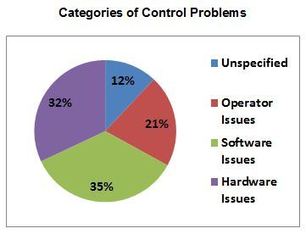
The role of control systems is somewhat undervalued. When you examine the most complex system in most buildings, the HVAC infrastructure, you find that it’s the HVAC control system, not the HVAC equipment, which produces the most operational issues and is the leading cause of inefficient energy use. Lawrence Berkley National Laboratories examined 60 buildings and found the highest frequency of common problems with HVAC was in the control system. Texas A&M research determined that of the operational and maintenance measures that could produce significant energy savings, 77% of the savings were from correcting control problems.

Maintaining a high performing control system involves regular maintenance, software and data management and organizational policies. The issues that can cause problems with a building control system are the same challenges all of us have had at one time or another with our computer or smartphone: problems related to software, hardware, communications networking and “user” mistakes. What follows is an overview of some of the typical control system issues and recommendations as to how to keep it performing at a high level.”<

See on Scoop.itGreen Building Operations – Systems & Controls, Maintenance & Commissioning

Deep Energy Retrofits–A Necessity for Old Buildings

“Studies show that focusing on energy efficiency and usage from buildings and homes is still a more effective and less expensive choice than investing in new energy sources. After all, on a global scale, residential and commercial buildings account for 40% of total final energy consumption, from HVAC, lighting, water heating, and further building functions, so a push on diminishing wastefulness in this area will have a much greater and more immediate effect than focusing on other, less sure practices (such as building wind turbines). At the moment, revamping a building to be more energy efficient will have instant effects on savings and efficiency, which is where retrofitting comes into play. Retrofitting involves giving older buildings, which often have out-of-date heating, cooling and lighting systems, an internal and external update. The entire process isn’t cheap, but it’s far less pricey than starting from the bottom up, and causes far less havoc for businesses who can’t afford to move offices while construction is taking place.”

via From Guest Blogger Blake Meredith: Deep Energy Retrofits–A Necessity for Old Buildings.

UK Bioenergy: Dedicated Biomass Plants no Competition for CHP Plants

See on Scoop.itGreen Energy Technologies & Development

As Ed Davey, U.K. Secretary of State for Energy & Climate Change, spoke to the Environment Council in Brussels, saying: “We call for urgent action on reaching an ambitious 2030 energy and climate change agreement, to spur on investment in green, reliable energy,” at home in Britain t

Duane Tilden‘s insight:

>”Biomass with CHP

In contrast with dedicated power only biomass plants, biomass-fired combined heat and power installations are continuing to attract investment in the UK, given that they still qualify for significant government support.

A number of these projects have made advances over the previous few months. For instance, RWE Innogy UK (formerly RWE npower renewables), is in the final stages of commissioning its Markinch Biomass CHP plant in Fife, Scotland. This 65 MW plant will supply up to 120 tonnes of industrial steam per hour to paper manufacturer Tullis Russell. RWE Innogy is investing some £200 million (US$300 million) in the development, which was built by Metso and Jacobs.

In October 2013 Estover Energy revealed that planning consent has been granted by Dover District Council for its proposal to develop a £65 million (US$100 million) biomass-fired CHP in the South East of England at Sandwich, in Kent. Generating 11-15 MWe and 8-12 MWth, the plant will use locally sourced low-grade wood as fuel.

Construction is forecast to begin in spring 2014 at the Discovery Park science and technology park.

And in the July, the Helius Energy-developed CoRDe biomass energy plant in Rothes, Speyside, Scotland began operations, using by-products from nearby malt whisky distilleries to produce renewable energy and an animal feed protein supplement, Pot Ale Syrup. Construction began in 2011 on the 8.32 MWe and 66.5 t/h pot ale evaporator plan. The total development and construction costs of the project were £60.5 million. …”<

See on www.renewableenergyworld.com

Shaw partners with City of Calgary to offer free public WiFi

See on Scoop.itTwitter & Social Media

The City of Calgary has reached an agreement with Shaw Communications to provide free Wi-Fi at city-owned locations.

Duane Tilden‘s insight:

>After reviewing applications, the city decided Shaw had the best proposal and technical expertise, and awarded Shaw the contract.

Shaw will partner with the city to install free WiFi zones in a variety of public locations including recreation facilties, parks and LRT stations.

“The City manages a variety of public spaces and we were looking to partner with an organization that would be able to provide reliable WiFi services, at no cost to citizens, as well as meet industry regulations and provide technical support,” says Heather Reed-Fenske, the city’s manager of  Information Technology.

During the initial launch of the program, public WiFi will be available in a select number of public spaces. […]

Mayor Naheed Nenshi says free public WiFi will give Calgarians better access to city services.

Once the initial zones are up and running, the city will collect feedback from Calgarians to evaluate the success of the program.

An announcement is expected soon on when the service will be available.<

See on globalnews.ca