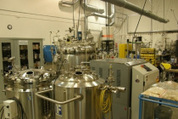
Energy scavenging by U.S. Army Research Laboratory using SmartBED – Energy Harvesting Journal

See on Scoop.itGreen Energy Technologies & Development

Energy Scavenging is just one way ARL experts are getting more from existing resources, said Dr. Edward Shaffer, who is the Energy and Power Division Chief at the lab. Energy harvesting is critical to realize “net zero” energy use, a key element of the…

Duane Tilden‘s insight:

Department of Defense operational energy is an emerging area being shaped. It is what is required to train, move, and sustain forces, weapons, and equipment for military operations. It accounted for 75 percent of all energy used by DOD in 2009, according to the Energy website for DOD. It was in May 2011, when the Assistant Secretary of Defense for Operational Energy, Plans and Programs defined an operational energy strategy, and then published Operational Energy for the warfighter, a guide that would transform the way the DOD consumes energy in military operations.

Shaffer has a wide view of the energy needs across Army, DOD and interagency forums that explore complimentary ways of addressing energy and power technology gaps and reduce duplicated efforts, including the DOD Energy and Power Community of Interest and the Interagency Advanced Power Group that includes agencies like the Department of Energy and NASA. These communities are comprised of scientists, engineers, subject matter experts, technologists and program managers with a common interest in promoting innovative energy and power solutions for the nation.

At ARL, the future is a seamless energy architecture that begins with concepts like SmartBED, Long-lived Power and Fuel-Reforming for better energy convergence.


See on www.energyharvestingjournal.com

Aemetis Announces Restart of 60 Million Gallon Per Year Keyes Biofuels Plant – WSJ.com

See on Scoop.itGreen Energy Technologies & Development

Aemetis, Inc. (OTCQB: AMTX), an advanced fuels and renewable chemicals company, announced today that the Aemetis 60 million gallon per year capacity ethanol facility in Keyes, California has completed planned maintenance and preparations for the production of Advanced Biofuel under recent EPA rulings, and is now restarting production.

Duane Tilden‘s insight:

The plant will start up using corn as the principal feedstock, with grain sorghum or a feedstock blend used after startup to maximize operating income. In December 2012, the Environmental Protection Agency (EPA) approved the use of grain sorghum feedstock along with biogas in a combined heat and power system to produce an Advanced Biofuel containing approximately 50% lower carbon content than gasoline. Advanced Biofuel generates D5 Renewable Identification Numbers (RINs) that have traded at a premium to traditional ethanol D6 RINs.

[…]  “About $5 million of capital investment and new working capital has been invested since mid-January for maintenance and to enable the plant to produce Advanced Biofuel in a flexible configuration that enables the use of multiple feedstocks and energy sources.”

McAfee added, “The Keyes plant has sustainable cost advantages in Advanced Biofuels production. The plant’s location enables both rail and ocean shipping access to advanced biofuel feedstock from lower-cost supply sources. The Keyes plant is also equipped with an energy-efficient Combined Heat and Power (CHP) system to reduce energy costs and decrease the carbon content of fuel. By using grain sorghum feedstock and sourcing biogas for the CHP system instead of natural gas, the Keyes facility is now able to produce Advanced Biofuel to support EPA requirements for advanced fuels.”

See on online.wsj.com

Revolutionary Green Energy Storage Technology Issued Australian Patent

See on Scoop.itGreen Energy Technologies & Development

Texzon Utilities announces 4th patent for Invention that stores AC power as real AC power, making it the first and only AC battery.

Duane Tilden‘s insight:

“This technology is a game-changer. The ability of the RPM to clean (get rid of all harmonics), magnify power, and store energy as a traveling electro-magnetic wave enables it to react instantaneously as a continuous “elastic reservoir,” which is an innovative and timely solution for Smart Grids,” said General Mike Miller, CEO of Texzon.

About James Corum, Inventor:
Dr. Corum was cited as a “National Treasure” by The Office of the US Secretary of Defense for his work on the DARPA National Panel of Radar Experts on Ultra-Wideband Radar and Phenomenology. His electromagnetic research has been recognized by prestigious scientific organizations and professional societies around the world.

See on www.prweb.com

Recycling makes $en$e – Waste Management World

See on Scoop.itGreen & Sustainable News

For an increasing number of municipalities across Pennsylvania, recycling is as good for the pocketbook as it is for the environment.  That’s been the case in Cranberry, where modern collection methods and recycling programs have lowered collection fees for residents.

Duane Tilden‘s insight:

By limiting how much goes into landfills and boosting totals of recycled goods, municipalities such as Cranberry have become eligible for state grants – either to operate recycling programs or to expand existing ones.

The amount of waste the municipality sends to landfills was 7,619 tons last year, compared with 11,030 tons in 2004. The average amount recycled per person was 670 pounds last year, up from 115 pounds in 2004.

See on www.waste-management-world.com

Biofuels Suffering from High Corn Prices and Dropping Demand | The Energy Collective

See on Scoop.itGreen Energy Technologies & Development

Nearly 10 percent of the nation’s ethanol plants have stopped production over the past year, the drought having pushed commodity prices so high that ethanol has become too expensive to produce.

Duane Tilden‘s insight:

The other half of this is falling demand for gasoline — a result of both the recession, and a renewed policy push for electric and hybrid vehicles and tougher fuel economy standards. […]

Globally, the combined effect of U.S. and European biofuel policy has been a massive divergence of corn crops into biofuel production, which in turn drove up the price of corn and contributed to global food insecurity. […]

Cellulosic biofuels, by relying on crops that don’t double as food, could provide a solution. But whether they can be widely commercialized without requiring high levels of water and land use remains an open question.

See on theenergycollective.com

Next-gen biofuels making slow, slow, slow progress in 2013

See on Scoop.itGreen Energy Technologies & Development

Companies that are still looking to produce biofuels from plant waste (and not corn) are making slow, but steady progress on milestones in 2013.

Duane Tilden‘s insight:

According to Bloomberg’s energy research arm New Energy Finance, ethanol made from plant waste could cost the same to produce as corn-based ethanol by 2016. Currently cellulosic ethanol costs 94 cents a liter to produce, or about 40 percent more than ethanol made from corn, says Bloomberg.

See on gigaom.com

Historic Energy Decisions in U.S. and Canada | The Energy Collective

See on Scoop.itGreen & Sustainable News

Renewable energy in the U.S. and Canada will rise while the consumption of fossil fuels lessens.Wishful thinking by some people to the contrary, fossil fuels are here to stay for at least the next 30-40 years. In North America this timeframe will be an era of transition as the proportion of renewable energy in the U.S. and Canada will rise while the consumption of fossil fuels lessens.

Duane Tilden‘s insight:

The increase in U.S. oil production is the result of advances in non-traditional drilling technologies, including oil hydrofracking […].  For its natural gas production, the U.S. is in the throes of a hydrofracking frenzy, producing natural gas in unprecedented amounts. […]

The U.S. trend toward energy self sufficiency represents a precarious situation for Canada’s economic wellbeing since 95 percent of Canada’s energy exports (including hydroelectric power) today go to the U.S.  […]

See on theenergycollective.com

EU faces fresh calls to strengthen biofuel rules

See on Scoop.itGreen Energy Technologies & Development

Greenpeace-backed report argues EU can meet green transport targets without relying on controversial land-based biofuels

Duane Tilden‘s insight:

NGOs are increasingly fearful that member states’ efforts to meet the targets through an increase in the use of biofuels will have a negligible impact on greenhouse gas emissions and in some cases could lead to increased emissions as companies source biofuels made from food and energy crops that are alleged to have contributed to deforestation and food price inflation.

The EU Commission has acknowledged the risk and last year proposed a new limit on the use of biofuels made from food crops that would ensure such fuels could only count towards half of the 10 per cent target for renewable fuel use.

The proposals have encountered lobbying from some member states who have argued the binding 10 per cent goal cannot be met if limits are placed on the use of biofuels made from food crops.

But the CE Delft report argues the targets can be met through greater investment in fuel efficiency measures, waste and residue-based biofuels, and electric vehicles, alongside tighter rules to phase out the use of biofuels made from land-based food or energy crops.

See on www.businessgreen.com