Buildings are biggest source of GHG’s in Vancouver & City recommends Energy Retrofits

Buildings spew more than half of all Vancouver’s total greenhouse gas (GHG) emissions every year and detached houses are the biggest culprit […] That fact is key to a staff recommendation that council adopt an energy retrofit strategy for existing buildings to drastically cut GHG emissions.

Source: www.vancouversun.com

>”About 40,000 of Vancouver’s 77,000 detached homes were built before 1960. The report said most older homes could improve their energy efficiency with weather sealing, wall and attic insulation, furnace/boiler/hot water heater replacements and replacing old windows with new energy-efficient glazing.

About 55 per cent of GHG emissions in Vancouver come from buildings and of those detached homes create 31 per cent of building emissions, the report said.

That compares with industry’s 20-per-cent share and 18 per cent from multi-unit residential buildings.

The city’s Greenest City Action Plan has targeted a 20-per-cent reduction in GHG emissions from Vancouver buildings by 2020, which would eliminate 160,000 tonnes of emissions annually — the equivalent of taking 40,000 cars off the road.

The report recommends the city partner with BC Hydro and/or FortisBC to study the effectiveness of using thermal imaging to identify poorly insulated homes.

[…]

… common energy-efficient building practices today include using vinyl or wood window frames instead of aluminum, along with the use of heat pumps, solar panels and drainwater recovery systems.

But Kerchum noted it can cost nothing to improve a home’s energy efficiency.

[…]

A recent Vancouver city initiative to improve energy efficiency in Vancouver homes — the Home Energy Loan Program — had a very low participation rate among homeowners.

The program called for homeowners to have an energy audit by a federally licensed auditor, who would recommend the best ways to reduce a home’s carbon footprint.”<


Grid Scale Energy Storage Solutions For Future Virtualization

Examines grid scale energy storage solutions ranging from pumped hydro, compressed air, thermal storage, advanced batteries, fuel cells and purely electric storage systems.

Source: greeneconomypost.com

Renewable energy sources often have a common problem of matching supply with demand, hence the need for energy storage to bridge the gap.  One major component of future VPP (Virtual Power Plants) is energy storage, in the form of battery storage, fuel cells, pumped hydro, flywheels, compressed air or other forms of existing and new technologies.

One promising form of energy storage combines gravity with water where energy is stored in raising heavy weights.  Electrical energy is converted to potential energy during periods of over-supply and then converted back to electricity when demand is greater than supply.

>”A Cutting Edge Variation of Pumped Hydro

Gravity Power, LLC, a privately-held company, based in Southern California (in Goleta, CA just north of Santa Barbara) is developing a novel grid-scale energy storage system for global commercialization called the Gravity Power Module (GPM). Like pumped hydro the working energy carrier is water that is pumped between a high pressure and a low pressure reservoir running a reversible generator/pump assembly to either produce power by drawing down the high pressure reservoir or store it up by pumping water from the low pressure store back into the high pressure store. In this sense it operates on the very same principles – and thus can also benefit from existing capital equipment, such as the reversible hydro generator/pump assemblies for example – as traditional pumped hydro.

Gravity Powers technology circumvents traditional pumped hydro difficulties related to siting, negative environmental impact, huge land demands, permitting, long-lead times and the very large investment required, by burying it all underground…. literally.

The GPM system uses a very large and very dense high mass piston that is suspended in a deep, water-filled shaft. The piston is equipped with sliding seals to prevent leakage around the piston/shaft interface and its immense mass pressurizes the supporting water column beneath it. A high pressure pipe from the bottom of this shaft enables water to be run or pumped through a generator/pump assembly of the same types now used in pumped hydro systems. The low pressure low energy potential water is returned above the piston adding somewhat to its weight and further pressuring the remaining high energy potential water column.

The massive piston moves up and down the shaft, storing and releasing power in a closed sealed cycle. It is compact with a small land footprint and the units can be clustered together into larger groups. It also is environmentally benign, no toxic chemicals or explosive dangers.

I like the scalable nature of this store that makes it suited to incremental growth of capacity. I also like how this energy storage system could be placed very near the big urban areas of greatest need for this kind of electric capacity. The fact that this energy storage system can take advantage of a lot of already existing infrastructure and technical knowhow from the existing pumped hydro sector is a definite advantage.

I would like to see more details on the costs of the boring of the immense vertical shafts; the long term performance metrics of the shaft seals (that would be an expensive repair job I would think. All in all I think this or something like it is a strong contender in the energy storage sector.”<

Read more: http://greeneconomypost.com/fifteen-grid-scale-energy-storage-solutions-watch-15924.htm#ixzz35bedEesM

Affordable Housing Designed for Net Zero

See on Scoop.itGreen Building Design – Architecture & Engineering

Lexington Farms, a single family affordable housing development in Illinois, looks to be LEED Platinum and net zero via clean energy on each house.

Duane Tilden‘s insight:
“The model under which these modular homes are made available to residents is rather unique. They were built for those making less than $41,000 a year, and were reportedly provided to these people in a rent to own situation at a set monthly lease cost of $590. Each 1,425 square foot, three bedroom dwelling is green down to its core via an array of eco technologies. Owners apparently had to be provided with a special manual to educate them about the various green technologies they are living with. So what exactly is under the hood of each green home in Lexington Farms? According toUrban Green Energy, the impressive list includes one of the firm’s 1,000 watt eddyGT vertical axis wind turbines; 7,200 watt photovoltaic solar roof panels; Energy Starappliances; U35-rated, argon gas filled windows; R-21 wall and R-49 attic insulation; low-flow water fixtures and WaterSense toilets; sustainable landscaping with efficient irrigation systems; recycled construction materials; low VOC paints and energy efficient, fluorescent light fixtures. At the time of construction is was said the IHDA invested more than $2.5 million into the project, providing federal American Recovery and Reinvestment Act (ARRA) funds and federal Low-Income Housing Tax Credits to finance it. The federal tax credits, noted the IHDA, “were a result of a special allocation for counties hit by severe flooding [and] generated an additional $6.7 million in private equity for the development.” Overall, these green homes aimed for net zero energy usage via the renewable energy features. An additional $260,000 grant from the Illinois Department of Commerce and Economic Opportunity further supported the development.”

See on earthtechling.com

UN and World Bank promote sustainable energy financing

See on Scoop.itGreen & Sustainable News

The United Nations and the World Bank announced what they call “a concerted effort” by governments, international agencies, civil society and the private sector to scale up financing for sustainable energy.


Duane Tilden‘s insight:

>Kim stressed that financing is key, with $600 billion to $800 billion a year needed from now until 2030 to reach the goals for access to energy, energy efficiency, and renewable energy.

“We are now starting in countries in which demand for action is most urgent,” he said. “In some of these countries, only one in 10 people has access to electricity. It is time for that to change.”

Ban praised achievements already attained such as Brazil’s ‘Light for All’ programme that has reached 15 million people, Norway’s commitment of 2 billion kroner ($330 million) in 2014 for global renewable energy and efficiency, and Bank of America’s Green Bond that has raised $500 million for three years as part of its 10-year $50 billion environmental business commitment.<

See on www.renewableenergymagazine.com

California Building Code Title 24 Will Revolutionize Efficiency Financing for Buildings

See on Scoop.itGreen Building Design – Architecture & Engineering

If successful, Title 24 will open the door to increased amounts of energy efficiency financing, expanded sources of capital and lower financing costs.

Duane Tilden‘s insight:

>California’s Title 24

Title 24 is California’s body of state building codes. These codes have been revised to move the building industry toward comprehensive building solutions with a goal of achieving Zero Net Energy (ZNE) residential and commercial buildings. In a ZNE building, the annual building’s energy consumption is equal to the building’s onsite renewable energy generation. California has set a goal for all new residential construction to be ZNE by 2020 and for all new commercial construction to be ZNE by 2030. Additionally, the repurposing and remodeling of existing buildings that are of a size-threshold defined by Title 24 will also have to comply with Title 24 revised codes.

Financing a “smart” Zero Net Energy building

The challenge of financing any energy efficiency or renewable energy project is in providing assurances to the source of capital that the project will actually generate sufficient cost savings to cover financing costs plus repayment of invested capital. The number one challenge for winning energy efficiency investments is the uncertainty in documenting bill savings results. Too often, the cost savings generated by an investment in energy efficiency is lost in higher electric bills as new loads are added and utilities raise rates.

Information technologies that monitor, control and financially operate a building through links to real time prices of grid-supplied electricity are the foundation for enabling Title 24 project financing. Smart ZNE buildings will operate to optimize the economics between reducing building demand, reducing energy consumption, on-site generation, use of on-site energy storage and purchases of grid electricity.

What will further enable the financing of ZNE buildings is the ability of enabling information technologies to “look forward” in time to proactively shape a building’s operation and grid purchases to financially support the building’s project financing. The technologies that can achieve these results have already been invented. What California is pursuing through its Title 24 code revisions is a massive economies of scale push for these technologies to drive their costs down and increase their ability to be financed.

The sales pie just got bigger…a lot bigger

Beginning in 2014, Title 24 will blow the sales doors open for smart building technologies, energy efficiency technologies, onsite energy storage and renewable energy technologies. Title 24 will create a new competitive landscape for architects, general contractors, sub-contractors and vendors based upon their ability to offer price competitive services and products that comply with Title 24 codes. The construction industry’s sales path for energy efficiency projects will no longer be anchored by utility incentives that support targeted energy efficiency upgrades like re-lamping a building with more efficient lights. The new sales path will be based upon cost-effectively delivering code compliance to achieve financeable building performance. New competitive advantages will be won by contractors and architects that offer building performance assurances to building owners and financing sources.<

See on www.triplepundit.com

The 10 Most Energy-Efficient U.S. States: The Forgotten ‘Fifth Fuel’

See on Scoop.itGreen & Sustainable News

Access to energy in the U.S. — and the effects of generating it — are a national concern.

Duane Tilden‘s insight:

>The Forgotten ‘Fifth Fuel’

Access to energy in the U.S. — and the effects of generating it — are a national concern. Debates persist over the most cost-effective and environmentally friendly mix of nuclear energy, coal, gas and liquid hydrocarbons and renewable sources.

Too often left out of these discussions is the so-called fifth fuel: energy efficiency. States have driven benefits for consumers and the environment with policies that both reduce energy use and encourage economic growth.

The American Council for an Energy-Efficient Economy (ACEEE) yesterday issued its annual scorecard for each state based on multiple factors, including reductions in greenhouse gas, energy codes for buildings and switching to cleaner fuels.<

See on www.bloomberg.com

Kyocera Opens Japan’s Largest Offshore Solar Power Plant

See on Scoop.itGreen & Sustainable News

The Kyocera Corporation just opened a 70 megawatt solar power plants off the southern coast of Japan.

Duane Tilden‘s insight:

>Kyocera partnered with six other companies to develop the solar plant, which is located in the Kagoshima Prefecture. The company hopes that this latest offshore venture will set a precedent for a cleaner Japan, especially in light of the 2011 Fukushima disaster. The solar plant is designed to inspire and encourage Japan to make the switch to more renewable energy sources.

The Kagoshima Nanatsujima Solar Power Plant was made possible in part because of Japan’s revised feed-in-tariff (FIT) program, which was restructured in July, 2012 to better accommodate solar energy. The adjusted FIT plan requires local utilities to purchase 100 percent of the power generated by solar plants that produce more than 10 kW.<

Read more: Kyocera Opens Japan’s Largest Offshore Solar Power Plant | Inhabitat – Sustainable Design Innovation, Eco Architecture, Green Building

See on inhabitat.com

Utilizing Renewable Energy Tax Incentives to Finance First Nations Energy Projects

See on Scoop.itGreen & Sustainable News

Duane Tilden‘s insight:

>We recommend that a tribe use a request for proposal (RFP) or other competitive process to identify an appropriate taxable development partner, so that they can obtain the best available proposal for the renewable energy project and the best value for the 30% investment tax credit and potentially depreciation. Under the RFP strategy, the tribe would make taxable developers aware of its renewable energy development plans, as well as potentially its willingness to pay for a portion of the renewable energy project.

The RFP would request the taxable developers to provide their best proposals regarding the development and financing of the renewable energy facilities, including proposals regarding:

The overall cost of the renewable energy facilities.The particular equipment to be installed and the warranties on that equipment.The developer’s willingness to limit the amount of the financial contribution by the tribe.The developer’s willingness to limit, in time and amount, any payments by the tribe for energy from or for leasing the renewable energy facilities.

The tribe could then select the taxable development partner that provides the best financial and other terms. A potential result of the RFP process could likely be that if the tribe is willing and able to pay for one half of the renewable energy facilities, a taxable developer might be willing to finance the rest of the facilities. Even if the developer does not share any of the value of the depreciation, it may be willing to at least provide the tribe full value for the investment tax credit. This would mean that there would be only 20% of the project cost to be paid over time. This could be accomplished by having the tribe pay a reduced rate for electricity for a period of at least five years (to avoid any recapture of the tax credits under IRS rules), and then for the developer, once it is made whole on its investment, to turn the facilities over to the tribe, potentially free of charge.

This transfer could be accomplished by allowing the tribe to use its 50% contribution to the LLC to purchase the taxable developer’s interest in the LLC, and for the tribe to have the right to purchase this interest based upon the renewable energy facilities’ value under a theoretical removal and sale of the facilities. Thus, under this scenario, the tribe’s initial capital outlay for the renewable energy facilities would be reduced by half, and the tribe would be able to receive reduced-priced energy for an interim period of time and then obtain full ownership of the renewable energy facilities.<

See on www.gklaw.com

Supercritical CO2 refines cogeneration for Industry

See on Scoop.itGreen Energy Technologies & Development

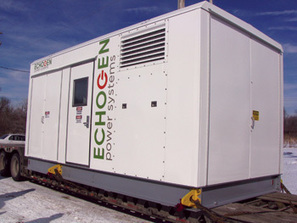
The first production unit of the EPS100 7.5 MWe heat engine is completing factory checkout tests at Dresser-Randbtd…

Duane Tilden‘s insight:

>Energy-intensive manufacturing

In an increasingly competitive environment, manufacturers are seeking to cut their costs. Fluctuating energy prices often channel this investment into cost-effective energy-saving technologies and practices that will reduce operating costs while maintaining or increasing product quality and yield.

Energy-efficient technologies often bring other benefits, such as higher productivity or environmental gains, reducing the regulatory ‘burden’. Waste heat can be captured from many industrial processes through waste heat recovery technology. […]

Waste heat recovery represents the greatest opportunity for reducing energy loss in these industries while simultaneously reducing their carbon footprint and associated greenhouse emissions with improved overall energy production efficiency.[…]

The outlook for scCO2

Supercritical CO2 heat engines are scalable across a broad system size range, from 250 kWe to 45 MWe and above, with net electrical output to support the widest possible variety of industrial and utility-scale applications.

The sCO2 Cycle is thermal source neutral − suitable with a wide range of heat sources from 200°C to 500°C with efficiencies up to 30%. New energy production can be offset with recovered energy without increasing greenhouse emissions while improving overall energy production efficiency. The scCO2 heat engine can add up to 35% more power to simple-cycle gas turbines, 10–15% more power to reciprocating engines, and can significantly improve the energy efficiency and bottom line performance at steel mills, cement kilns, glass furnaces and other fuel-fired industrial processes by converting previously wasted exhaust and flue gas energy into usable electricity.

Alex Kacludis is an Application Engineer at EPS LLC; www.echogen.com

See on www.cospp.com

Supercritical CO2 turbine for Power Production & Waste Heat Energy Recovery

See on Scoop.itGreen Building Design – Architecture & Engineering

A former scientist at Sandia National Lab is bringing the technology to market

Duane Tilden‘s insight:

>Because of its physical properties as a liquid, it has become a target fluid of opportunity to run turbines and thus make electricity. Steven Wright, Ph.D., who recently retired from Sandia National Laboratory (SNL), has set up a consulting company called Critical Energy LLC to bring this technology to a commercial level.

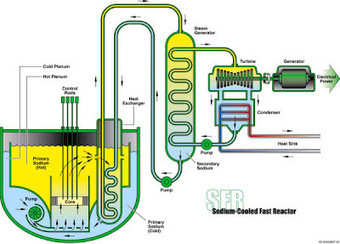
The objective of using supercritical CO2 (S-CO2) in a Brayton-Cycle turbine is to make it much more efficient in the transfer of heat. Wright points out that a steam turbine is about 33% efficient, but that an S-CO2 turbine could be as high as 48% efficient, a significant increase.

A closed loop supercritical CO2 system has the density of a liquid, but many of the properties of a gas. A turbine running on it, “is basically a jet engine running on a hot liquid,” says Wright.

“There is a tremendous amount of scientific and industrial interest in S-CO2 for power generation. All heat sources are involved…<

See on theenergycollective.com