Virtual Energy Audits: The Next Big Thing in Buildings?

See on Scoop.itGreen Building Operations – Systems & Controls, Maintenance & Commissioning

Virtual energy audits use software to collect meter data, weather information, etc. and algorithms to develop energy efficiency recommendations.

Duane Tilden‘s insight:

>The goal of any energy audit is to identify savings by analyzing data, determining how and where a building is using energy, and then providing operational and capital energy efficiency measures that improve overall performance.

A traditional ASHRAE Level II Audit includes a manual inspection of data related to a facility’s Building Envelope, Lighting, Heating, Ventilation, and Air Conditioning (HVAC), Domestic Hot Water (DHW), Plug Loads, and Compressed Air and Process Uses (for manufacturing, service, or processing facilities). Analysis is conducted to quantify baseloads and account for seasonal variation. A Level II Audit will also include an evaluation of lighting, air quality, temperature, ventilation, humidity, and other conditions that may affect energy performance and occupant comfort. The process also includes detailed discussions with the building owners, managers, and tenants – there is a lot you can learn just by talking to people about what they think is working and not, what the financial objectives of the organization are, and how that should feed into the recommendations.  […]

Ok, I get it: So what’s a virtual energy audit?

Essentially a virtual energy audit is much like a traditional audit: the goal is to synthesize a whole bunch of data and come up with a list of recommendations that are going to deliver you the biggest bang for your buck. Unlike a detailed ASHRAE Level II audit, it’s better to think of virtual audits as delivering against the 80/20 rule. For a lot less physical effort, it’s going to get you about 80% of the detailed insights that a traditional ASHRAE Level II energy audit would deliver. And for many organizations, that’s OK – because their biggest, most obvious energy hogs are the ones driving the biggest bills at the end of the month.<

See on energysmart.enernoc.com
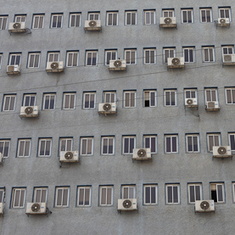
Call for Energy Efficient Air-Conditioning with Technological Development

See on Scoop.itGreen Building Design – Architecture & Engineering

Innovations could cut the growing amount of energy used for air-conditioning and refrigeration

Duane Tilden‘s insight:

>Conventional air conditioners employ refrigerants such as chlorofluorocarbons to absorb heat from the room to be cooled. That heat is then expelled outside, requiring electrically powered pumps and compressors.

One idea to conserve energy is to replace coolant fluids and gases—which are often super-powered greenhouse gases capable of trapping more than 1,000 times more heat than CO2—with solid materials, such as bismuth telluride.

A new device from Sheetak, developed in part with ARPA-E funding, uses electricity to change a thermoelectric solid to absorb heat, and could lead to cheaper air conditioners or refrigerators.

Such refrigerators, which lack moving parts and are therefore less likely to break down, can be lifesavers in remote, rural areas for keeping medicines cool or food fresh.<

See on www.scientificamerican.com

Waste Heat Energy Recovery – ThermoAcoustic Refrigeration for Transportation Industry

Revisiting the Automotive ThermoAcoustic Refrigerator – ATAR

Diagram of Simplified ThermoAcoustic Engine

I wish to further investigate the idea of thermoacoustics for waste heat recovery processes.  Also, will in future look into latest developments in thermoacoustics, including any applications, studies, reviews or products and manufacturers.

In today’s new economy of energy efficiency, there are technologies available that are worth further investigation that can be utilized for improved performance.  Automotive air conditioning is one industry which could bear further scrutiny, where running compressors consume valuable fuel, decreasing the energy efficiency and increasing operating cost of a vehicle.

For professional drivers where fuel consumption increases will come out of pocket, the utilization of air conditioning is an important consideration.  The idea of using the waste heat in the exhaust system to provide the cooling energy necessary to provide air conditioning is a novel approach to improving vehicle efficiency and comfort.  The concept of thermoacoustic refrigeration is not new, and was previously reviewed by concerns of the ozone layer depletion and refrigerants, which ultimately lead to changes in the refrigeration and HVAC industries.

See original reference paper presented at 2005 Proceedings of Acoustics:  http://bit.ly/17qwTYK

Detroit Completes One of Nation’s Largest LED Parking Garage Retrofits – WSJ.com

See on Scoop.itGreen Building Design – Architecture & Engineering
Sixty-one Acres of LED Lighting will reduce garage energy-use by 80 percent; Entire property by 7 percent

Duane Tilden‘s insight:

>LED technology is one of the highest performing, currently available methods of lighting. Energy savings of 50 to 80 percent are common when compared to the lamps that are typically used in garages. LED lamps also have much longer operating lives, resulting in fewer materials and transportation resources needed over time. The MGM Grand Detroit LED retrofit, will save enough electricity to power more than 350 average homes per year. […]

Earlier this year, the company initiated a program to install 1,600 induction technology lighting fixtures covering 160 acres of open lot parking area at its resorts in Las Vegas. These lamps are ideal for the hot Las Vegas climate and will have an operating life of up to 20 years. An estimated 2.7 million kWh will be saved annually following the project’s completion.

Additionally, MGM Resorts recently announced the planned installation of one of the largest rooftop solar photovoltaic arrays in the world at the Mandalay Bay Resort Convention Center. The 6.2-megawatt installation will be MGM Resorts’ first commercial solar project in the United States and will generate enough electricity to power the equivalent of 1,000 homes.<

See on online.wsj.com

The Datacenter & Cloud Computing: Design of Warehouse-Scale Machines


Clipped from http://www.morganclaypool.com/doi/pdfplus/10.2200/S00516ED2V01Y201306CAC024

“While we draw from our direct involvement in Google’s infrastructure design and operation over the past several years, most of what we have learned and now report here is the result of the hard work, insights, and creativity of our colleagues at Google. The work of our Technical Infrastructure teams directly supports the topics we cover here, and therefore, we are particularly grateful to them for allowing us to benefit from their experience.”

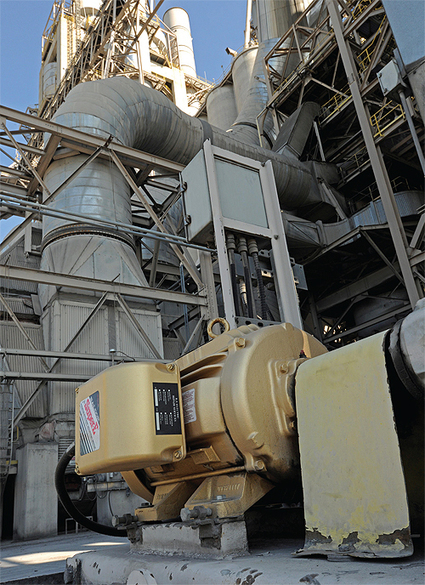
DOE Regulations: Energy Efficiency Improvements for Motors cause Industry Challenges

See on Scoop.itGreen Building Design – Architecture & Engineering

The United States has had efficiency regulations for industrial electric motors in place since October 1997, when the Energy Policy Act of 1992 (EPAct 92) set minimum efficiency levels for 1- to 200-hp general-purpose three phase motors. EPAct 92 was upgraded when the Energy Independence and Security Act of 2007 (EISA) went into effect in December 2010.

Duane Tilden‘s insight:

>Several years ago, the U.S. Department of Energy (DOE) conducted a technical study as to what could be done to raise the efficiency levels of “small” motors. After years of study and litigation, the Small Motor Rule was passed that covers two-digit NEMA frame single- and three-phase 1/3 through 3 horsepower motors in Open enclosures.

Although the Small Motor Rule seems simple, it has the effect of creating motors with much larger footprints, particularly on single phase designs where capacitor start/induction run motors may largely be discontinued in Open enclosures. In some cases, a TEFC motor may be more cost effective and smaller than an Open motor.

The DOE is presently conducting another technical study on “medium” AC induction motors of 1- to 500-hp. In their study, DOE is evaluating a possible increase in nominal motor efficiency of 1 – 3 NEMA bands (approximately 0.4 to 1.5%) above NEMA Premium Efficiency levels as defined in MG 1-2011 table 12-12. Although this sounds simple to do, such a motor redesign could entail new laminations, winding equipment and in many cases, new frames to fit the extra material. Some designs may not fit where existing motor designs of the same ratings fit today. This means that OEMs would need to redesign their machine if that is an issue and end users may have trouble fitting the new higher efficiency replacement motor into their equipment or existing envelope.<

See on www.designworldonline.com

Air Conditioning the World stresses Global Energy Supply

See on Scoop.itGreen Building Design – Architecture & Engineering

The United States currently uses more energy for air- conditioning than all other countries combined—a sobering statistic from Stan Cox of the Land Institute in Salina, Kansas.

Duane Tilden‘s insight:

>According to the U.S. Energy Information Administration, 87 percent of American households are equipped with air-conditioning, and the United States expends about 185 billion kilowatt hours of energy annually on residential cooling.  […]

Rapid increases in the ownership of air conditioners are already occurring in many developing countries. According to research by McNeil and Letschert, the percentage of urban Chinese households with an air conditioner jumped from less than 1 percent in 1990 to 62 percent in 2003. In 2010 alone, 50 million air-conditioning units were sold in China.  […]

[…] eight countries have the potential to exceed the United States’ yardstick of high air-conditioning usage, because of their warm climates and significant populations. Furthermore, the top three could surpass the United States by substantial amounts: India, China, and Indonesia by factors of 14, 5.2, and 3.1, respectively, if they adopt American standards of cooling.

[…] Several institutions have recently made major technical advances in the design of more energy-efficient air conditioners. For example, developments at the National Renewable Energy Laboratory suggest that efficiency improvements of 20 to 70 percent are possible compared to current models of air conditioners. Changes in housing design and urban planning are also needed […]<

See on www.americanscientist.org

Jobs for the Future: Energy Efficiency creates Employment — ECEEE

See on Scoop.itGreen & Sustainable News

Energy efficiency initiatives create jobs, and normally very good jobs.  Recent analysis shows that between 17 and 19 net jobs can be created for every million euros spent.

Duane Tilden‘s insight:

>Jobs to improve energy efficiency in all end-use sectors are of high value.  Many require technical qualifications, such as engineering or architectural degrees.  Many require re-training from existing jobs. There will be a demand for financial specialists, construction engineers, behaviour specialists, project managers, auditors, data base managers, policy analysts and the like.  And these jobs are available to all, regardless of age or gender.

The hard work of creating these jobs begins once the Directive is finally approved.  The long-term policy framework needs to be in place and the funding and implementation strategy need to be well developed. But in the longer term, opportunity is knocking at the door, and it deserves a welcome mat.<

See on www.eceee.org

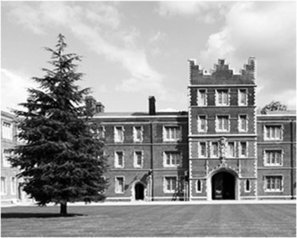
Cambridge Plans Massive Energy Efficiency Retrofit

See on Scoop.itGreen Building Design – Architecture & Engineering

This medieval English city is investing $1.5 billion for energy upgrades for the entire city.

Duane Tilden‘s insight:

>It’s one thing to build super-energy-efficient new homes and offices – it’s another matter entirely to bring ancient buildings up to par. But the medieval university city of Cambridge, England, plans to do just that with a $1.5 billion retrofit program.

The newly launched Cambridge Retrofit Project aims to reduce carbon emissions from buildings 30% before 2050 through a massive, city-wide retrofit scheme.  […]

While the primary goal is reduced energy consumption and carbon emissions, the program also aims to build up local businesses, create warmer homes and increase the value of properties.

Energy savings alone are expected to be worth $2.3 billion and the city’s carbon footprint, currently 830,000 tons a year, is expected to fall 1% a year, eventually reaching 500,000 tons a year as a result of the retrofit program.<

See on www.sustainablebusiness.com

Sustainable Heating and Cooling of Buildings | Leonardo ENERGY

See on Scoop.itGreen Energy Technologies & Development

In many non-residential buildings across Europe, the energy consumed for heating and cooling is more than half the total energy consumption of the building. This is not inevitable. The introduction of simple design concepts and currently available technologies can lead to significant reductions in the energy consumption, operating costs, and carbon emissions of both new and existing buildings.

See on www.leonardo-energy.org