Whisky distilleries start powering biomass energy plant

See on Scoop.itGreen Energy Technologies & Development

A cluster of Scottish whisky distilleries have started supplying a new biomass energy plant with enough waste to power 9,000 homes.

Duane Tilden‘s insight:

The innovative Helius CoRDe energy plant was opened in Rothes, Speyside, this week to transform the by-products from the local whisky industry into power.

Adrian Bowles, Helius Energy CEO said: “This is renewable energy in action using innovative technology to provide enough power for 9000 homes, and produce animal feed using by-products from local whisky distilleries.

See on www.clickgreen.org.uk

Is Gasification Better Than Incineration? Read: Global Markets for Gasifiers – WSJ.com

See on Scoop.itGreen Energy Technologies & Development

NEW YORK, April 15, 2013 /PRNewswire/ — Reportlinker.com announces that a new market research report is available in its catalogue:

Global Markets for Gasifiers

Duane Tilden‘s insight:

INTRODUCTION

Gasification is a centuries–old thermochemical energy conversion technology that has slowly achieved modernity over the decades. The technology is undergoing its third evolutionary surge. Fuel shortages in WWII spurred widespread adoption for vehicle fuels. The oil crisis 1973 spurred a re–evaluation and renewed development. Rising oil prices, globally increasing fuel demand, and overwhelming scientific evidence of climate change have spurred this last leg to full industrialization.

The central concept of gasification is that by raising carbon–rich materials to high temperatures in an oxygen–deficient containment, the material will break down thermochemically instead of burning. If the same material is combusted (burned), it emits carbon monoxide and a host of pollutants, besides being incompletely consumed. If gasified, the products are hydrogen (H2), carbon monoxide (CO) and carbon dioxide (CO2). This is synthetic gas, simply called “syngas.” It can be burned, captured, stored, or its molecules rearranged to form fuels and chemical feedstocks.

The process is moderately more efficient than incineration, has significantly fewer emissions and waste, and the syngas can be shaped into a myriad of products for power production, chemical industries, liquid fuels, and heat.

Feedstock for gasification can be coal, the organic components of municipal waste, industrial waste streams, chemical feedstocks, forestry residues, forest products and crop residues, medical waste, unrecycled plastic or, in the case of plasma gasifiers, almost any nonradioactive material.

A gasifier is the central component of a gasification plant. Surrounding it are the feedstock conditioning and delivery systems, oxygen, steam and air input systems, waste removal components, syngas cooling and cleaning systems, power plants, heat recovery units, Fischer–Tropsch molecule rearrangers, and so on. This report focuses on the markets for gasifier units that are in place and will be installed by application segment and geographic location through the year 2017.

See on online.wsj.com

Law Firms Plays Key Role In Green Deal

See on Scoop.itGreen & Sustainable News

The UK Top 100 firm [Ward Hadaway] has advised renewable energy company JFS & Associates on the latest in its series of joint ventures with farmers to install and build anaerobic digestion (AD) plants to generate green energy.

Duane Tilden‘s insight:

The plant being built at Howla Hay Farm will be capable of generating 250kWh of electricity enough to power 250 homes.

Matthew Flint, director at JFS & Associates, which is based in Stokesley, North Yorkshire, said: “It is great news to be able to announce the second in what we aim to be a whole series of these developments which provide a win-win for both parties in the joint venture.

“The farmer gets to share in the proceeds of the electricity generated opening up a new revenue stream as well as getting the benefit of the by-products of the process, such as heat and bio-fertiliser to further improve the profitability of their existing business.

“We get a readily available source of feedstock for the AD plants and, by using our expertise and experience in the renewable energy sector, we can generate and sell electricity to feed back into the National Grid.”

See on www.power-eng.com

Town looks at way to dispose of its sludge

See on Scoop.itGreen & Sustainable News

GREENFIELD — The town is looking at how it might dispose of its own sludge in the future to save

Duane Tilden‘s insight:

Town officials believe an anaerobic digester and combined heat and power facility would eliminate the costs associated with shipping the wet solids, as well as the cost to heat and provide electricity to the transfer station.

This is not just a matter of saving money, though,” said Collins. “It is also a social justice issue. A lot of these plants, like the ones we transport to, are closing down. We really need to be dealing with our own sludge, not sending it off into other communities.”

[…]  anaerobic digestion is a natural process where sludge (plant and animal waste) is broken down by micro organisms, which release the methane, or biogas, that can be used to generate heat and electricity.

“This helps cut fossil fuel use and reduce greenhouse gas emissions,”[…] “The remaining material is rich in nutrients and can be used as fertilizer.”

See on www.recorder.com

German village delivers great green energy blueprint

See on Scoop.itGreen Energy Technologies & Development

Nations as diverse as North Korea and the United States have sent personnel to a tiny village in the east of Germany in a bid to understand its successful energy transformation.

Duane Tilden‘s insight:

…Feldheim is powered by a mix of 43 wind turbines, a woodchip-fired heating plant and a biogas plant that uses cattle and pig slurry as well as maize silage.

Local energy costs of 16.6 euro cents per kilowatt hour (kWh) are just a little more than half of the 27-30 cents Germans pay on average …

Feldheim’s rates are not far off those in Poland, which generates nearly all its electricity from carbon-intensive coal-fired plants.  Households there paid on average 14 cents per kWh in 2012, while those in the Czech Republic, which relies on nuclear for about a third of its power generation, paid about 15 cents per kWh.

DT:  Current electricity pricing in Canada is 6.3 to 11.8 cents/kWh (US$) & United States is 8 to 17 cents/kWh (US$) ~ wiki

See on www.businessspectator.com.au

Biofuels Suffering from High Corn Prices and Dropping Demand | The Energy Collective

See on Scoop.itGreen Energy Technologies & Development

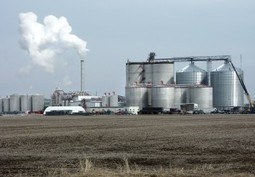
Nearly 10 percent of the nation’s ethanol plants have stopped production over the past year, the drought having pushed commodity prices so high that ethanol has become too expensive to produce.

Duane Tilden‘s insight:

The other half of this is falling demand for gasoline — a result of both the recession, and a renewed policy push for electric and hybrid vehicles and tougher fuel economy standards. […]

Globally, the combined effect of U.S. and European biofuel policy has been a massive divergence of corn crops into biofuel production, which in turn drove up the price of corn and contributed to global food insecurity. […]

Cellulosic biofuels, by relying on crops that don’t double as food, could provide a solution. But whether they can be widely commercialized without requiring high levels of water and land use remains an open question.

See on theenergycollective.com

EPA proposes 2013 biofuels quota, RIN verification program – Oil & Gas Journal

See on Scoop.itGreen Energy Technologies & Development

The US Environmental Protection Agency proposed 2013 biofuels quotas representing a more than 1.35 billion gal increase from what it mandated for 2012. Officials from two leading petroleum trade associations immediately called the 16.55 billion gal total representing 9.63% of total projected US motor fuel production unrealistic and unreasonable.

Duane Tilden‘s insight:

“We are disturbed that EPA is mandating 14 million gallons of cellulosic ethanol when zero gallons are available for compliance as of today,” AFPM President Charles T. Drevna said on Jan. 31. […]

“[…] This stealth tax on gasoline might be the most egregious example of bad public policy, and consumers could be left to pay the price. EPA needs a serious reality check.”

“[…] it is shocking that the Agency would mandate such high biodiesel volumes this year since 140 million biodiesel credits turned out to be fraudulent,” […] it is unrealistic to assume the biodiesel industry will actually produce 1.28 billion gal of real biodiesel this year.”

See on www.ogj.com

Biofuels groups downplay ruling’s impact on investment – The Hill’s E2-Wire

See on Scoop.itGreen Energy Technologies & Development

Biofuels groups are downplaying a Friday federal court decision that some believe could cut off investments in advanced green fuels.

Duane Tilden‘s insight:

The rule requires refiners to blend 36 billion gallons of biofuel into traditional transportation fuel by 2022. Of that total, 21 billion gallons must come from cellulosic and “advanced” biofuels, which are made from non-edible feedstock.

But the court said EPA acted in “excess of the agency’s statutory authority” in projecting refiners could blend 10.45 million gallons of cellulosic biofuel in 2012, as only 22,000 gallons were produced.

[…]

In its lawsuit against the EPA, the American Petroleum Institute (API) argued refiners were forced to buy credits to fill the gap in the agency’s projections and actual production levels.

The court sided with API on that point, giving the oil-and-gas lobby its first victory in its full-court press to repeal the biofuel mandate.

API is pushing Congress to tear down the rule and is fighting the rule through the courts. It also has a lawsuit on file challenging EPA’s projections for 2011.

“We are glad the court has put a stop to EPA’s pattern of setting impossible mandates for a biofuel that does not even exist. This absurd mandate acts as a stealth tax on gasoline with no environmental benefit that could have ultimately burdened consumers,” API Group Downstream Director Bob Greco said in a Friday statement.

See on thehill.com

EU faces fresh calls to strengthen biofuel rules

See on Scoop.itGreen Energy Technologies & Development

Greenpeace-backed report argues EU can meet green transport targets without relying on controversial land-based biofuels

Duane Tilden‘s insight:

NGOs are increasingly fearful that member states’ efforts to meet the targets through an increase in the use of biofuels will have a negligible impact on greenhouse gas emissions and in some cases could lead to increased emissions as companies source biofuels made from food and energy crops that are alleged to have contributed to deforestation and food price inflation.

The EU Commission has acknowledged the risk and last year proposed a new limit on the use of biofuels made from food crops that would ensure such fuels could only count towards half of the 10 per cent target for renewable fuel use.

The proposals have encountered lobbying from some member states who have argued the binding 10 per cent goal cannot be met if limits are placed on the use of biofuels made from food crops.

But the CE Delft report argues the targets can be met through greater investment in fuel efficiency measures, waste and residue-based biofuels, and electric vehicles, alongside tighter rules to phase out the use of biofuels made from land-based food or energy crops.

See on www.businessgreen.com

Could Some Midwest Land Support New Biofuel Refineries?

See on Scoop.itGreen Energy Technologies & Development

Millions of acres of marginal farmland in the Midwest — land that isn’t in good enough condition to grow crops — could be used to produce liquid fuels made from plant material, according to a study in Nature. And those biofuels could, in theory, provide about 25 percent of the advanced biofuels required by a 2007 federal law.

Duane Tilden‘s insight:

But some researchers in the field aren’t convinced the resource is nearly that big. Adam Liska at the University of Nebraska in Lincoln says a lot of this acreage is in the Great Plains, which wouldn’t produce a reliable crop year after year.

“One year you may have high rainfall and high crop yields and be able to sustain your facility, [but] the next year you may have a drought,” Liska says.

Indeed, Brent Erickson […] says nobody has plans just yet to use this kind of plant material to make biofuels. […]

“Every region of the country has some form of biomass — so the Northwest would have sawdust and wood waste; the California area might have rice straw or wheat straw, … Refiners in the Midwest are looking at corn cobs, and a plant that’s actually operating in Florida uses dead citrus trees.”

“As this technology progresses we’re going to see a great diversification of biomass supply,” Erickson predicts.

… Timothy Searchinger, an associate research scholar at Princeton University.

The 27 million acres identified in the latest study would provide less than 0.5 percent of our national energy demand, he says. And the more we try to expand biofuels, the more we risk displacing crops for food, or chopping down forests, which store a huge amount of carbon.

Searchinger says Europe has recently recognized those potential hazards and is scaling back its biofuels ambitions.

“They realize that it was a mistake, and their compromise for the moment is essentially to cap what they’re doing and then they promise by 2020 to phase out all government support for biofuels.”

See on www.opb.org