Algae Biofuel Emits at Least 50% Less Carbon than Petroleum Fuels

See on Scoop.itGreen Energy Technologies & Development

Algae-derived biofuel can reduce life cycle CO2 emissions by 50 to 70 percent compared to petroleum fuels, and is approaching a similar Energy Return on Investment (EROI) as conventional petroleum according to a new peer-reviewed paper published in…

Duane Tilden‘s insight:

>The study entitled Pilot-scale data provide enhanced estimates of the life cycle energy and emissions profile of algae biofuels produced via hydrothermal liquefaction (HTL) is the first to analyze data from a commercial-scale algae-to-energy farm. Researchers examined field data from Sapphire Energy facilities in Las Cruces and Columbus, New Mexico.

Researchers at the Pacific Northwest National Laboratory recently concluded that 14 percent of land in the continental United States, or the combined area of Texas and New Mexico, could be used to grow and produce algae for conversion into transportation fuels. In 2008, the U.S. Department of Energy found that for algae fuel to completely replace petroleum in the United States it would need roughly 30,000 square kilometers of land, or half the area of South Carolina, so the potential is certainly there for a massive transition from dirty oil-based transportation fuels to cleaner burning domestic green crude from algae.<


See on inhabitat.com

Biofuel Production from Palm oil plantation waste

See on Scoop.itGreen Building Design – Architecture & Engineering

NextFuels to produce biofuels from palm plantation residue – Renewable Energy Magazine, at the heart of clean energy journalism

Duane Tilden‘s insight:

>Edible palm oil has surpassed soybean to become the largest source of cooking oil in the world, accounting for over 50 million tons of oil annually.

While plantation owners have managed to increase the productivity of their land by 15X since the late 80s, the growth of the industry has created a corresponding residue problem. Approximately 4.4 to 6 metric tons of agricultural waste is generated for each metric ton of oil. There are over 1,000 crude palm oil (CPO) mills in Southeast Asia and a single (60 tons per hour) mill can generate 135,000 tons of agricultural residue a year.

NextFuels uses a system called bio-liquefaction that efficiently transforms agricultural biomass to green energy. Biomass is placed into the plant mixed with water. The mixture is then heated to 330-degree Celsius while pressure is increased to 220 bar. Increasing the pressure keeps the water from coming to a boil, which conserves energy.

When cooled, the hydrocarbons form a putty-like substance called GreenCrude. Roughly 25 percent of the GreenCrude can be burned as a solid fuel in industrial boilers. The remaining 75 percent can be converted into a liquid-fuel equivalent to petroleum that is compatible with existing pipelines and vehicles.

The equipment required to convert GreenCrude into liquid fuels, in a process called hydrodeoxygenation, is already installed at most refineries and can… <

See on www.renewableenergymagazine.com

Waste to Energy – Incinerator Operations threaten Community recycling programs

See on Scoop.itGreen Building Design – Architecture & Engineering

Rise in number of plants burning waste may be disincentive to greener methods of disposal

Duane Tilden‘s insight:

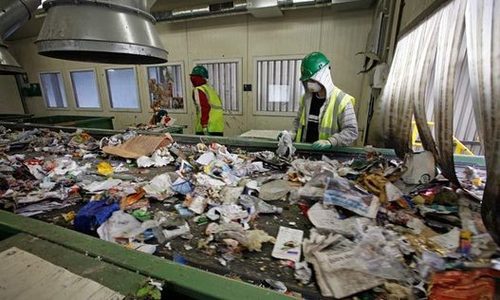
>Experts said the use of incinerators had consequences for recycling as local authorities were forced to divert waste to feed the plants. “The choice to invest in thermal treatment can hold back recycling efforts,” Adam Baddeley, principal consultant at Eunomia, said. “At one level, the money invested in such plant simply isn’t available to put into building recycling plants or collection infrastructure. And once you’ve built an incinerator or gasifier, there’s a strong incentive to keep it fed with waste, even if that means keeping on collecting as ‘black bag’ rubbish, material that would be economically practicable to collect separately for recycling.”

Charmian Larke, technical adviser for Cornwall Waste Forum, which unsuccessfully opposed a large incinerator in the south-west, questioned the planning process that resulted in incinerators being approved. “Some of them [planning officers] have spent their entire careers trying to get this incinerator so they are wedded to the idea,” Larke said. “But if the council members understood how bad these contracts were, the officers would lose their jobs.”

Larke claimed that many of the incinerators were built in poorer areas. “There’s a feeling that people who are downtrodden have a harder time getting their act together to object, and hence it’s easier to place nasty things next to them.”<

See on www.theguardian.com

London Sewers Fatberg’s used for Clean Energy

See on Scoop.itGreen & Sustainable News

Giant Fatberg Found Under London Has Surprising Use

Duane Tilden‘s insight:

>”Clean” Energy?

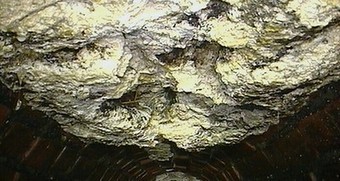
Despite the disgust, as well as the inconvenience, there’s actually some good news about fatbergs. Made of dense fats and oils, the structures are highly caloric, which makes them helpful for producing energy.

Rob Smith, a man with the enviable title of London’s “chief flusher,” told us that simply removing the fat and burning it in a turbine can produce more than 130 gigawatts of power each year, or about enough to power 40,000 London homes. The city plans to put the 15-ton berg to the same use, creating some very real cracks in the term clean energy.<

See on news.nationalgeographic.com

Glut of Natural gas squeezes biofuel market

See on Scoop.itGreen Energy Technologies & Development

Farm Power Northwest has built five anaerobic digesters in Oregon and Washington in recent years, but the brothers who founded the company say the outlook for new projects has lost its luster.

Duane Tilden‘s insight:

>The Mount Vernon, Wash.-based company, founded by brothers Daryl and Kevin Maas, uses manure from dairy farms to create methane gas, then burns it in generators and sells the resulting electricity to power utilities.

[…]

While power utilities paid up to 9 cents per kilowatt-hour several years ago for digester-produced electricity, the rate has now fallen to 5 cents per kilowatt-hour, said Kevin Maas.

The reason is the price of natural gas — a common fuel for electrical generation — has plummeted as domestic production has skyrocketed. Natural gas is now trading at below $4 per thousand cubic feet, compared with nearly $13 per thousand cubic feet in 2008.

That’s because new technology known as hydraulic fracturing, or fracking, has greatly increased the amount of natural gas that can be economically extracted from the ground.

With the cost of natural gas so much lower, other energy feedstocks like biogas from digesters become less competitive, experts say.<

See on www.capitalpress.com

Three Types of Climate Action for Europe and Central Asia Region

See on Scoop.itGreen Energy Technologies & Development

Under current trajectories, the world is headed toward a world that will be 4 degrees warmer by the end of this century.

Duane Tilden‘s insight:

>[…] However, as we try to show in our recent publication, Growing Green: the Economic Benefits of Climate Action, strategic investment in climate action can benefit these countries in the medium- and long-terms – thus offsetting the negative consequences of these investments.

Above all, countries need to focus on three types of climate action: climate action as aco-benefit, climate action as an investment, and climate action as insurance.

This first area of climate action is simply a co-benefit of policies that make sense even if we were not concerned about climate change. These are things like supporting energy efficiency investments or restoring degraded soils to make agriculture more productive (while also increasing carbon storage in soils).

The second area is what we call climate action as an investment. This gets at the issue of how countries can benefit from greening their economies – doing well by doing good. What we have seen in the last few years is that new firms emerge in countries that have implemented ambitious green policies early and take advantage of the economic opportunities that have sprung from these policies. […]<

See on blogs.worldbank.org

USDA Renews Dairy Energy Pact – Domestic Fuel

See on Scoop.itGreen & Sustainable News

Agriculture Secretary Vilsack today renewed a historic agreement with U.S. dairy producers to accelerate the adoption of innovative waste-to-energy projects and energy efficiency improvements on U.S. dairy farms…

Duane Tilden‘s insight:

USDA support for agricultural and waste-to-energy research has played a key role in the agreement’s success to date. Since signing the MOU, USDA has made nearly 180 awards that helped finance the development, construction, and biogas production of anaerobic digester systems with Rural Development programs, such as the Rural Energy for America Program (REAP), Bioenergy Program for Advanced Biofuels, Business and Industry Guaranteed Loan Program, Value Added Producer Grants, amongst others. These systems capture methane and produce renewable energy for on-farm use and sale onto the electric grid. Additionally, during this period, USDA awarded approximately 140 REAP loans and grants to help dairy farmers develop other types of renewable energy and energy efficiency systems at their operations.

See on domesticfuel.com

Biofuel Used to Make Stronger Building Materials

See on Scoop.itGreen Building Design – Architecture & Engineering

Biodiesel Fuel. Image Source: Tomorrow Is Greener Civil engineers have developed a tougher and more resilient form of concrete by using waste material created during the manufacture of biofuel as a proxy for cement.

Duane Tilden‘s insight:

Biofuel manufactured from cellulose materials such as wood and straw creates a residue called lignin, which is generally deemed a waste product and disposed of via burning or burial.

Engineers at the University of Kansas have found that the lignin has immense potential as a green building ingredient. When 20 per cent lignin waste was added to a concrete mix as a replacement for cement, the ensuing chemical reaction created a building material endowed with 30 per cent more strength.

The findings could have tremendous implications for both the biofuel and concrete industries, as well as the carbon footprint of the construction sector, which generates immense CO2 emissions due to cement production.

See on designbuildsource.com.au

Aemetis Announces Restart of 60 Million Gallon Per Year Keyes Biofuels Plant – WSJ.com

See on Scoop.itGreen Energy Technologies & Development

Aemetis, Inc. (OTCQB: AMTX), an advanced fuels and renewable chemicals company, announced today that the Aemetis 60 million gallon per year capacity ethanol facility in Keyes, California has completed planned maintenance and preparations for the production of Advanced Biofuel under recent EPA rulings, and is now restarting production.

Duane Tilden‘s insight:

The plant will start up using corn as the principal feedstock, with grain sorghum or a feedstock blend used after startup to maximize operating income. In December 2012, the Environmental Protection Agency (EPA) approved the use of grain sorghum feedstock along with biogas in a combined heat and power system to produce an Advanced Biofuel containing approximately 50% lower carbon content than gasoline. Advanced Biofuel generates D5 Renewable Identification Numbers (RINs) that have traded at a premium to traditional ethanol D6 RINs.

[…]  “About $5 million of capital investment and new working capital has been invested since mid-January for maintenance and to enable the plant to produce Advanced Biofuel in a flexible configuration that enables the use of multiple feedstocks and energy sources.”

McAfee added, “The Keyes plant has sustainable cost advantages in Advanced Biofuels production. The plant’s location enables both rail and ocean shipping access to advanced biofuel feedstock from lower-cost supply sources. The Keyes plant is also equipped with an energy-efficient Combined Heat and Power (CHP) system to reduce energy costs and decrease the carbon content of fuel. By using grain sorghum feedstock and sourcing biogas for the CHP system instead of natural gas, the Keyes facility is now able to produce Advanced Biofuel to support EPA requirements for advanced fuels.”

See on online.wsj.com

Waste and Recycling Industry – Landfill Gas Collection Almost 50% of Renewable Energy Supply USA

See on Scoop.itGreen & Sustainable News

WASHINGTON, April 18, 2013 /PRNewswire-USNewswire/ — The waste and recycling industry is continuing to reduce its release of greenhouse gases — even as waste volumes increase, according to the latest greenhouse gas inventory released by U.S. Environmental Protection Agency (EPA).

Duane Tilden‘s insight:

Despite the fact that we are landfilling 6 percent less than 20 years ago, we have greatly improved our ability to reduce methane emissions. As a result, these emissions declined by 30 percent during the same period. This has happened as a result of converting methane to energy, flaring of methane emissions and oxidation techniques.

There are 594 landfill gas-to-energy sites in the United States that generated 1,813 megawatts (MW) of energy and 312 million standard cubic feet a day (mmscfd) of gas. This is enough energy to directly power 1 million homes and heat 729,000, respectively.

Methane gas collected at landfills is used to power home, businesses and government facilities across the nation. Some of it is even used to fuel garbage trucks. Landfill-gas-to-energy projects and other forms of biomass-derived energy make up the almost half of the nation’s renewable energy supply, almost the same amount as is derived from solar, wind, geothermal and hydropower combined.

See on online.wsj.com